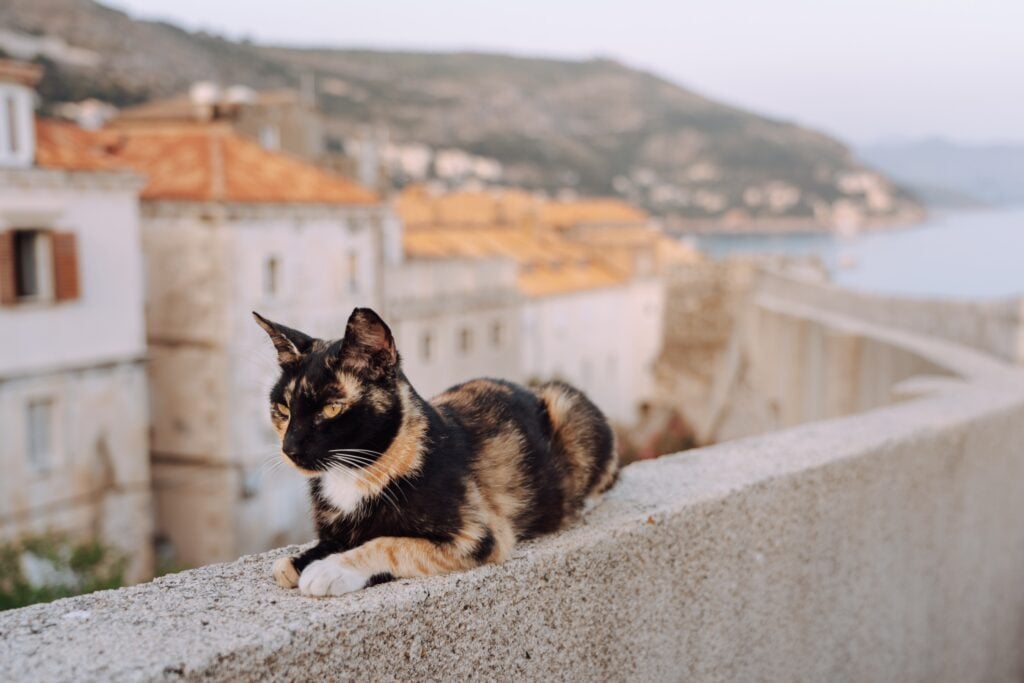
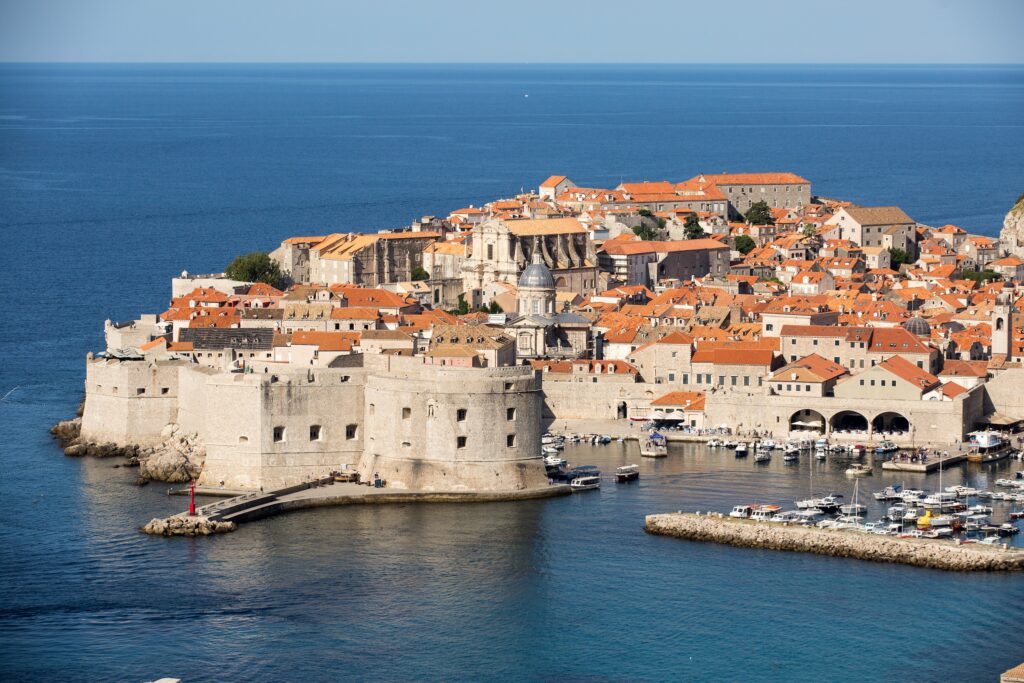
Coastal Dubrovnik in southeastern Croatia was originally founded over 1,400 years ago, but one demographic that’s been there for centuries had nothing to do with its incorporation. The city is home to a thriving stray cat community, and likely has been since the Middle Ages.
Today, photos of Dubrovnik’s felines are all over social media, and there’s an entire souvenir store dedicated to them in the ancient seaport. Locals and visitors can even take part in the SOS Dubrovnik Cat Safari 2026 this summer, a campaign encouraging people to snap pics of the kitties and share them online. Five winning shots will be selected for a charity postcard collection, with proceeds supporting an animal rescue that helps care for the cats.
But even before they were tourist attractions, the city’s cats played a very important role in its prosperity: pest control. While hard facts about their history are hard to find online, locals refer to the four-legged mainstays as Dubrovnik’s “oldest citizens,” suggesting they were brought there around the 13th century to hunt rats, which were believed to carry the bubonic plague and other diseases.
Indeed, a medieval manuscript from Dubrovnik marked with inky, feline paw prints made headlines over a decade ago. Photographed in 2011 by then-graduate student Emir O. Filipović, the manuscript dates back to the 1400s — capturing a cat quite literally “walk[ing] through history,” as National Geographic put it.
The cats now stick primarily to Dubrovnik’s Old Town, a seafront neighborhood largely encircled by medieval walls that once fortified it against attacks. Visitors list the Church of the Holy Annunciation, a Serbian Orthodox church at the center of the neighborhood, as a prime spot to see them, though they can also be found near restaurant doorways and lounging around the harbor.
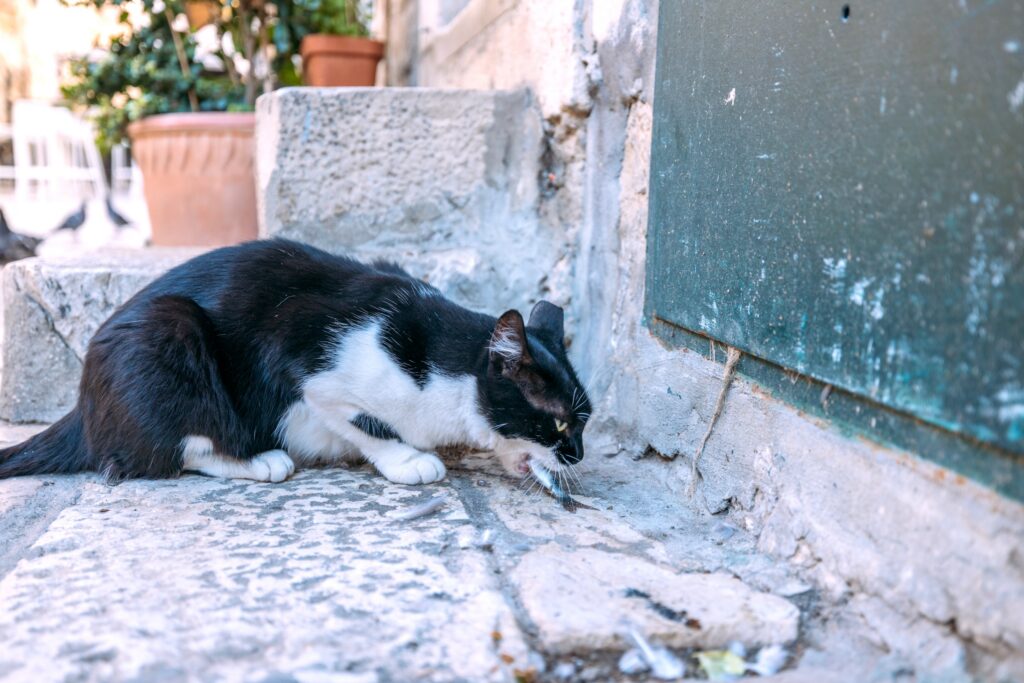
“They are very patient and rarely beg; they know that a small fish is usually coming their way as a ‘tax’ for their presence,” reads a post by local company Cava Tours.
Residents care for the kitties, and SOS Dubrovnik Cats, which is based outside of Croatia, assists from afar. The organization collects donations and arranges for medical care and foster homes where injured cats can recuperate.
In 2018, a volunteer-run sterilization program funded in part by the city itself was launched to help keep the population in check, and it was ongoing as of 2022, though Nice News was unable to verify its continued existence.
Other groups looking out for the city’s whiskered denizens include Nellys Trust, which spays and neuters strays in addition to providing food and veterinary care and facilitating adoptions; and Dubrovnik Cat Angels, a volunteer duo who educate people and “rescue, feed, treat, spay/neuter, and adopt cats.”
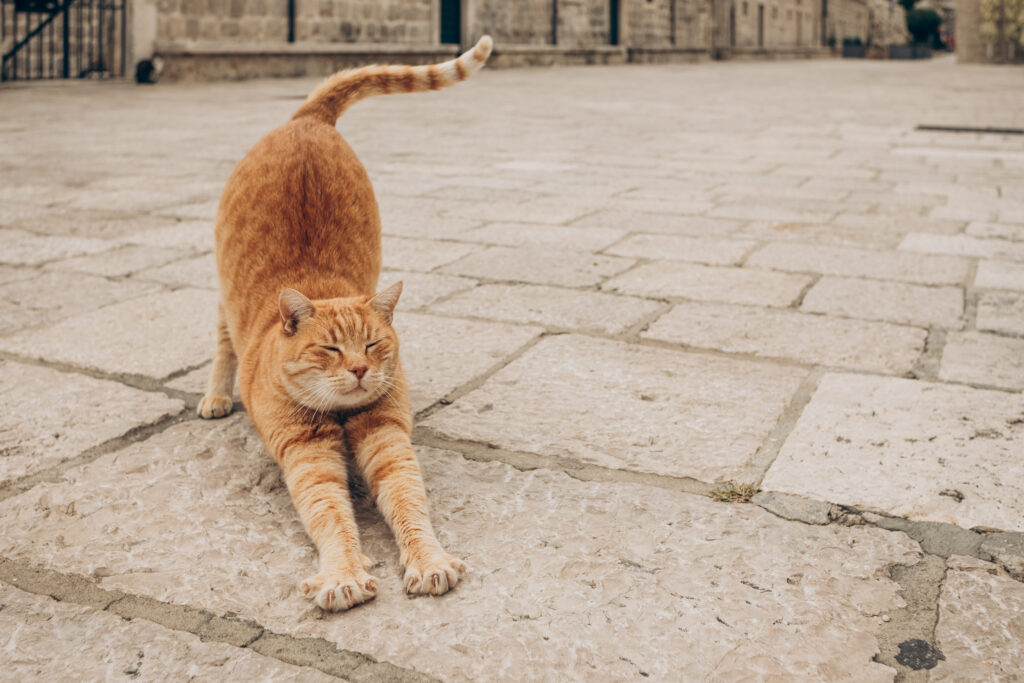
As eager to spend time with the cats as visitors to Dubrovnik may be, they should take note of the Croatian term “fjaka,” defined as “the art of doing absolutely nothing,” per Cava Tours. “If a cat is fast asleep on a warm stone or an ATM, they are in a deep state of fjaka,” the company explains. “The best thing you can do is take a quiet photo and let them enjoy their rest without forcing a cuddle.”
This writer has yet to visit Dubrovnik — known as the Pearl of the Adriatic for its stunning views and rich history — but thankfully, just about everyone who has been there has chronicled their experience with the kitties. In a piece on Medium subtitled “The Street Cats of Dubrovnik,” photographer George Vekic writes that the felines are “as much a part of the city as the ancient stone walls and pavements underfoot.”
RELATED: Ancient Archaeological Site in Rome, Home to World-Famous Stray Cat Colony, Opens to Tourists