Nearly half of U.S. renters and a quarter of homeowners were housing cost-burdened in 2024, meaning they spent more than 30% of their income on housing. Hundreds of thousands of others can afford no home at all.
Where can change come from? The question is one of the most complex and pressing of our time, engaging residents, policymakers, and government agencies. But to Kristian Ventura and his co-founders at Actum, the answer is simple.
“People want their freedom back, and the best way to do it is to eliminate the biggest burden preventing that, which is rent,” the 26-year-old told Nice News. He established the Los Angeles-based nonprofit, which launched in earnest this year, to put that belief into action: It aims to give away free permanent housing via a lottery system to anyone interested.
Because the organization doesn’t strictly serve people “in need” by traditional definitions, the leadership team, all friends from high school, had a bit of a hurdle securing its tax-exempt status. The issue lay in the idea that anyone could apply, which made it less clear to the IRS how Actum qualified as a charity, per Ventura.
“It’s supposed to be for everyone,” he explained. “That is the point. Homeless individuals are encouraged to apply. Middle class people are allowed to apply.” He added: “Our mission is that universal housing means universal.”
Specifically, at least 75% of Actum’s units must be awarded to lottery applicants who make 80% or less of their area’s median income, per its eligibility requirements. The other 25% could technically go to anyone who earns above the median, though Ventura doubts the very wealthy would be interested in living in the basic units the nonprofit plans to purchase and build.
As of now, Actum is still in the early stages of fundraising, with a goal of purchasing its first building, likely a duplex or fourplex, when it hits $1 million in donations. The org follows an endowment model for its donations, meaning everything that comes in is immediately funneled into an investment fund, so it can grow at a similar rate to a retirement account. And a live transparency dashboard on its website shows every transaction in real time.

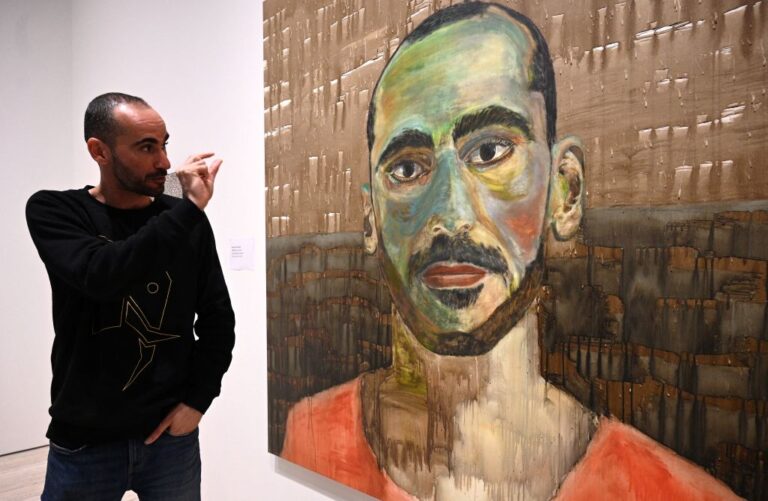
Kristian Ventura (upper left), Edmarck Sosa (upper right), and Surya Singh
A big part of Actum’s ethos is efficiency. “We actually only run on less than a thousand dollars a year. We have a P.O. box, a website, no paid staff, no pizza parties. We don’t need name tags,” Ventura said, alluding to what he considers wasteful behavior by some charity leaders. “If you actually strip down what a nonprofit has to do operationally, it’s very slim, and that’s what shocks people.”
He and his co-leaders, founding members Edmarck Sosa and Surya Singh, met as teens in La Puente, a city in LA’s San Gabriel Valley, and each had come face to face with financial hardships growing up. Singh was born in New Delhi, and would step over children sleeping on the ground outside on his way to school, per Ventura, and Sosa is from Honduras, where his family lived in poverty.
Now a rising actor, Ventura bounced around as a child — he and his mother once lived in the garage of a senior care home. After he received a scholarship from the University of Southern California, he had no place to return to during the COVID lockdown; his mom was living out of her car, and his father, who spent years unhoused in San Francisco, died in a government housing unit there in 2023.

“Since we all come from backgrounds of poverty, we take extra efforts to make sure that people who are extremely low income, like single family parents or those living in shelters, know about our lottery,” he explained, adding: “We care about those who sleep in tents, because that’s where the founders come from.” Still, the overarching goal is bigger than just altruism, and the response to Actum’s social media content, which has racked up millions of views, has solidified that they’re onto something.
“We’re trying to establish a new standard, which is, it’s technically really unfair for someone to spend 80 hours a week just for a roof over their head. There’s a problem,” Ventura said. “And that’s why we’re going viral, as people understand, ‘Wait, wait, wait. I’m not super, super poor, but I have no time for myself and I feel empty and lonely. So that’s the problem we’re tackling, is this middle class problem as well.”
He shared that multiple business owners and other individuals have been reaching out wanting to get involved. “It’s people all coming together with different jobs, different kinds of walks of life, and saying, ‘I believe housing is a human right, and it’s heartbreaking it took this long.’”
At the time of this writing, Actum had raised around $14,000. “In a way, it’s kind of like a global experiment. Can we actually reach the number that we need to? Can people give to the world they’re going to inherit? It’s a very straightforward model, and it kind of just depends on us. It’s up to us.”