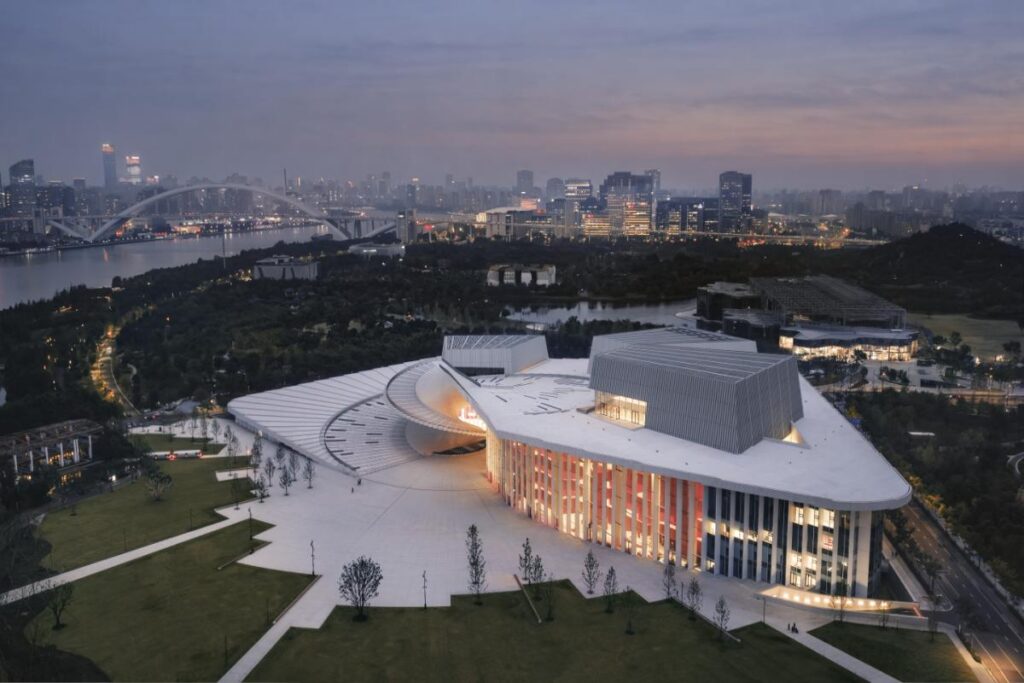
The Sydney Opera House, with its bold, innovative architecture, is said to be one of the world’s most photographed buildings — and it may soon share that status with another venue of its kind. Opening last week along China’s Huangpu River, the Shanghai Grand Opera House truly lives up to the adjective in its title.
At nearly 1.6 million square feet, the performing arts center has three auditoriums seating 4,200 guests in total and will showcase everything from baroque opera and classical music to experimental productions. But what is perhaps its most awe-worthy attraction lies not within its walls but outside them: a stunning, spiral staircase that appears to be almost suspended in air.
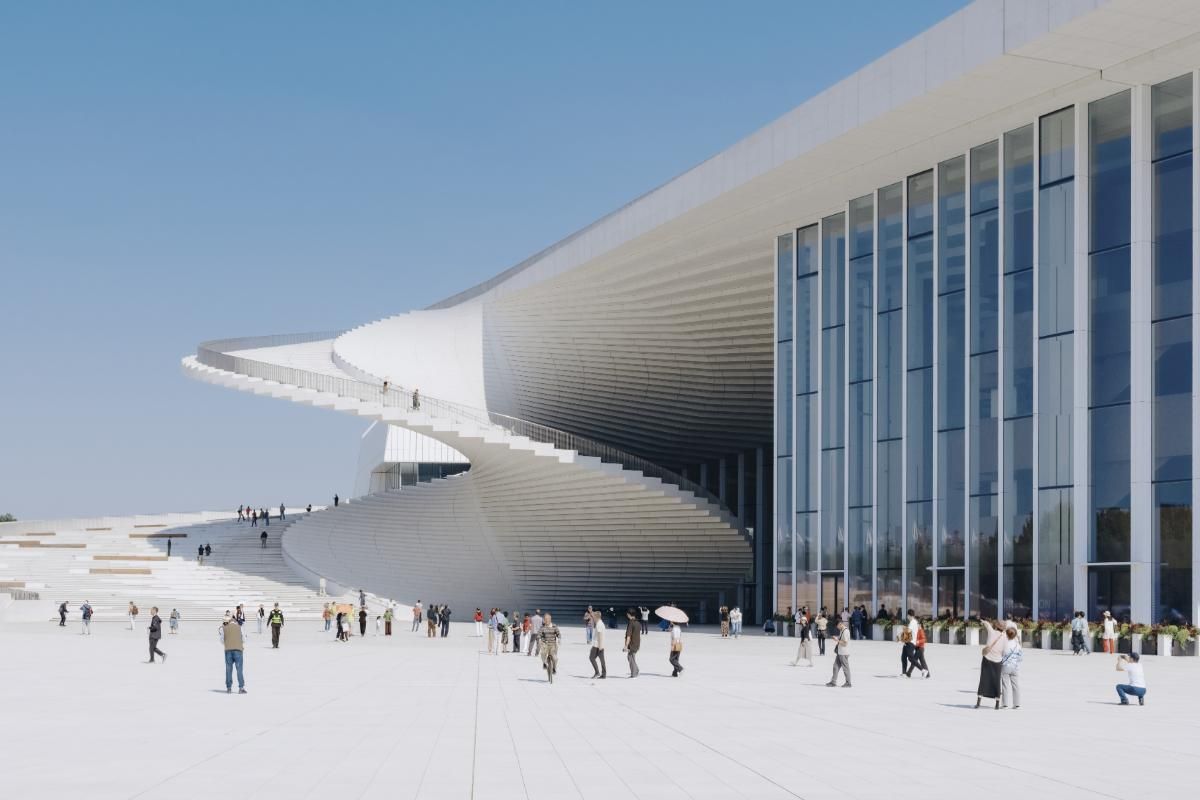
The staircase connects the ground level to a rooftop observation deck that also serves as a stage, and visitors can access it regardless of whether they’re attending a show (cue the onslaught of social media selfies).
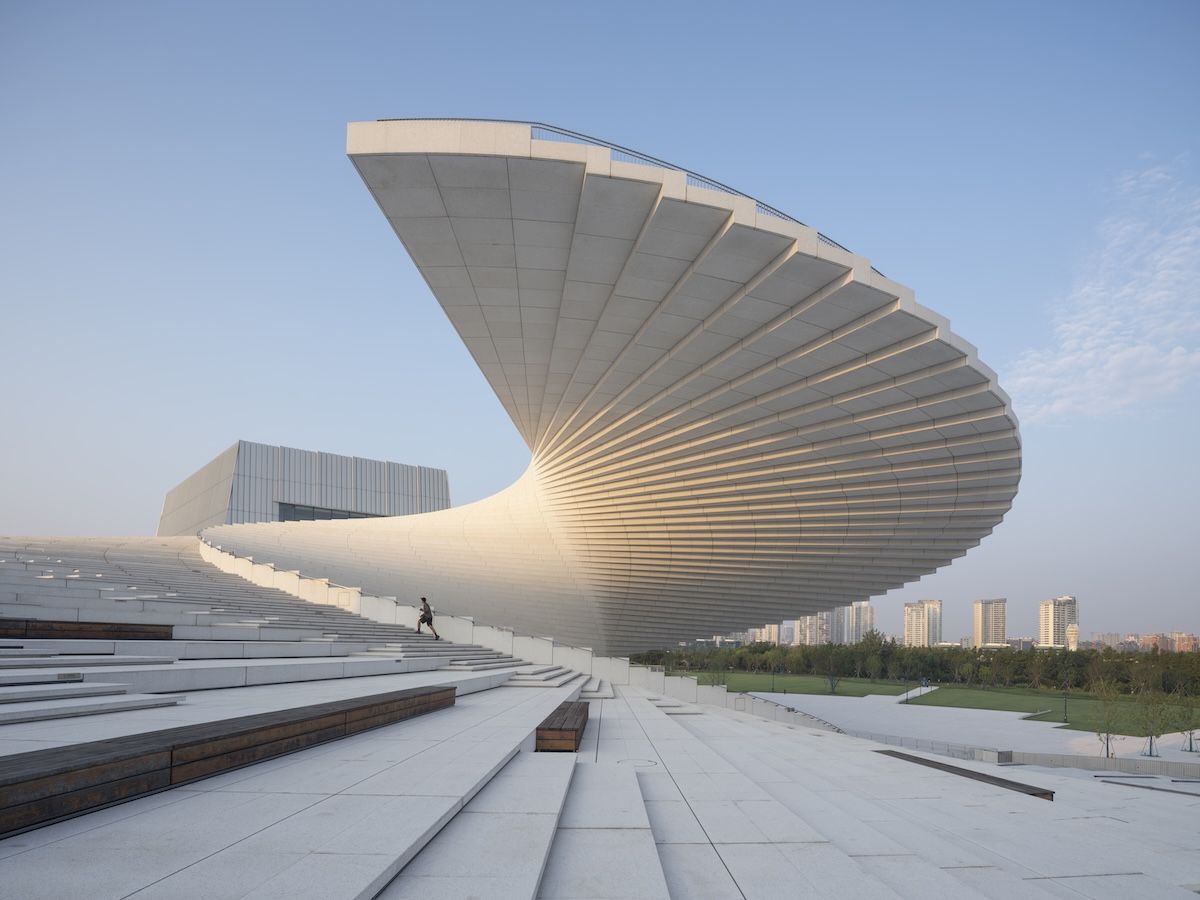
Restaurants, galleries, educational facilities, and other public spaces in and around the building are designed to welcome residents and tourists alike, positioning the opera house as a cultural landmark more than merely a ticketed institution.
“People should be able to enjoy the building without attending a performance. It should become part of everyday life, a place to spend time, meet others, and experience the city,” Kjetil Thorsen, co-founder of Norway-based firm Snøhetta, which designed the building, told Dezeen. “A successful landmark is not only recognized by visitors, it is also embraced by the people who live around it and make it part of their everyday lives.”
Snøhetta’s proposal won an international competition in 2016, and the firm teamed up with East China Architectural Design & Research Institute, Theatre Projects, and Nagata Acoustics in 2019 to bring the project from concept to completion.
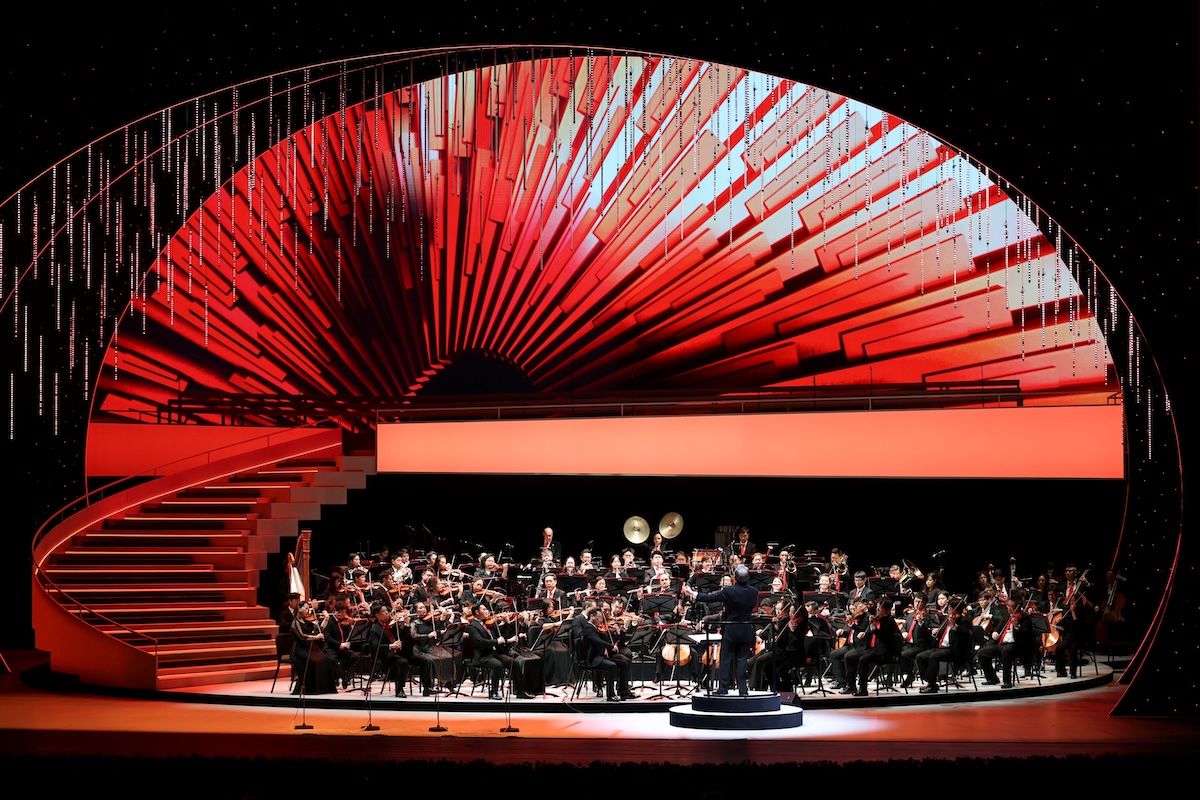
The 2,000-seat main auditorium, called Harmony Hall, has five levels and three balconies. Soar Theatre, with a capacity of 1,200, is intended for more intimate productions, like operettas and plays, while the third auditorium, dubbed Open Stage, seats 1,000 and features adaptable stage and seating configurations, making it ideal for experimental works.
The theme of movement was intentionally woven into the building’s architecture and aesthetic, a nod to the flowing river it sits adjacent to and the bustling city in which it’s located. Large glass windows let ample light in during the day and shift the mood for visitors as the sun sets or the weather changes. Tall outdoor towers are illuminated at night, marking the venue’s place within Shanghai’s skyline.
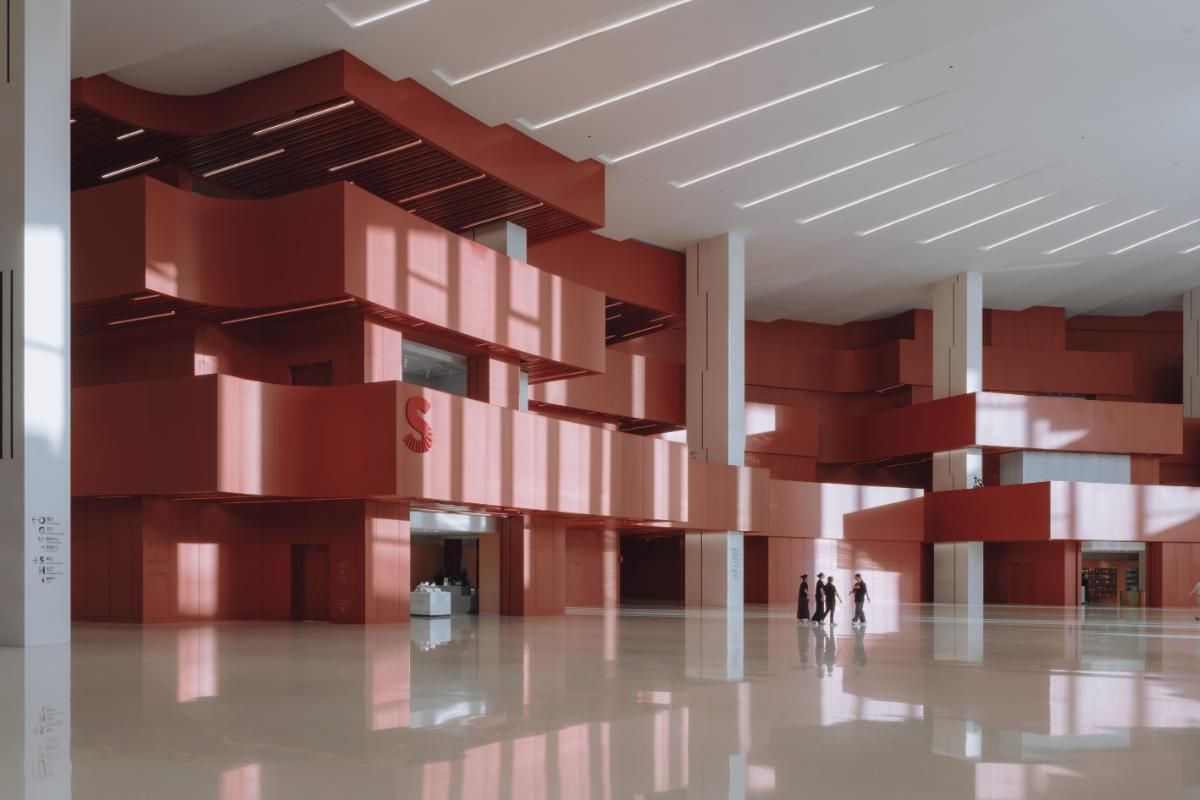
“A cultural building, any building for that matter, must respond to its surroundings, the people who use it, the performers it serves, and the city it becomes part of,” Thorsen told Dezeen. “When I last visited the site, I was asked by a Chinese architecture student how we managed to create a building that felt so Chinese despite not being from China. The answer lies in observation and understanding context.”
RELATED: “First of Its Kind”: World’s Longest Outdoor Escalator Opens in China — Take a Virtual Ride