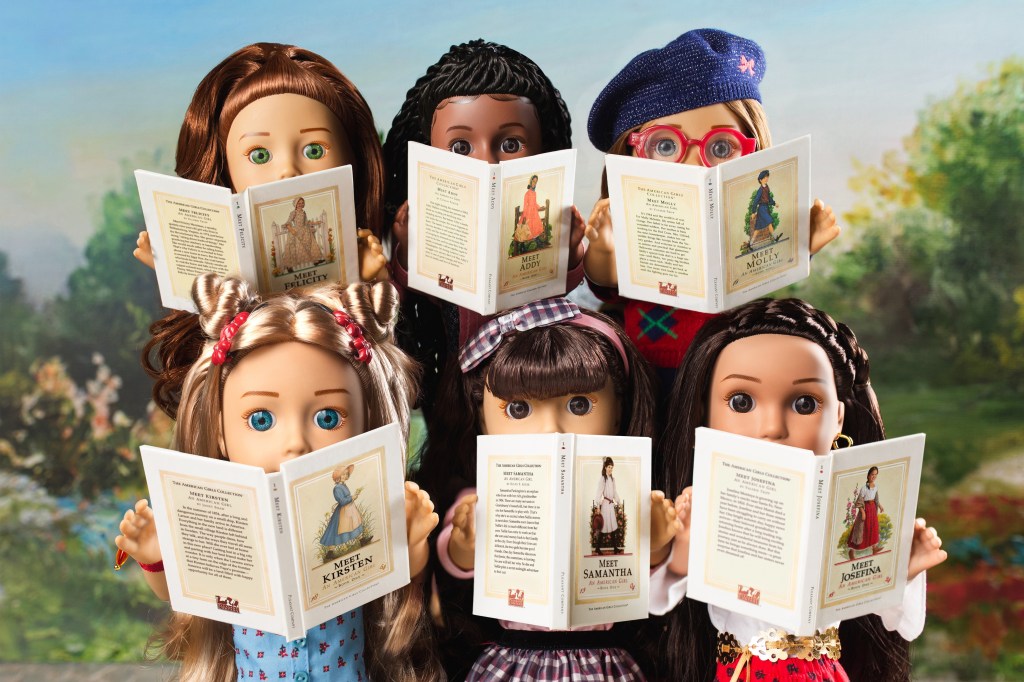
The year is 1986, and Samantha Parkington, Kirsten Larson, and Molly McIntire have just begun capturing the hearts of kids around the country. Each character has her own backstory, helping bring the dolls to life and offering young fans a glimpse into a specific slice of American history. Fast forward to this year, and just like many of the millennials who played with American Girl’s iconic dolls growing up, the brand is celebrating a major milestone: its 40th birthday.
In 1984, during a trip to Colonial Williamsburg, Virginia, teacher and textbook author Pleasant T. Rowland was inspired to create a book series that would immerse kids in history using “the very playthings — books and dolls — that girls have always loved,” she told Fortune in 2002, per the United States Patent and Trademark Office.
“I remember sitting on a bench in the shade, reflecting on what a poor job schools do of teaching history, and how sad it was that more kids couldn’t visit this fabulous classroom of living history,” Rowland said. “Was there some way I could bring history alive for them, the way Williamsburg had for me?”
So she set out to do just that, fleshing out the three original characters and the concepts for their books in one weekend. With Samantha’s story, readers view upstate New York in the Edwardian era through the eyes of an orphan learning to think for herself — and climbing a tree or two along the way — while being raised by her wealthy grandmother. In Kirsten’s narrative, we’re brought on a Swedish family’s journey as they immigrate to Minnesota and adapt to American life in the 1850s. And in Molly’s tale, we follow a girl in Illinois who learns to become a leader, helping others while her father serves as a doctor in England during World War II.
When the inaugural trio burst onto the scene, “it was really to put girls in the center of the story with characters their own age,” Jamie Cygielman, global head of dolls at American Girl’s parent company, Mattel, recently told The Washington Post.
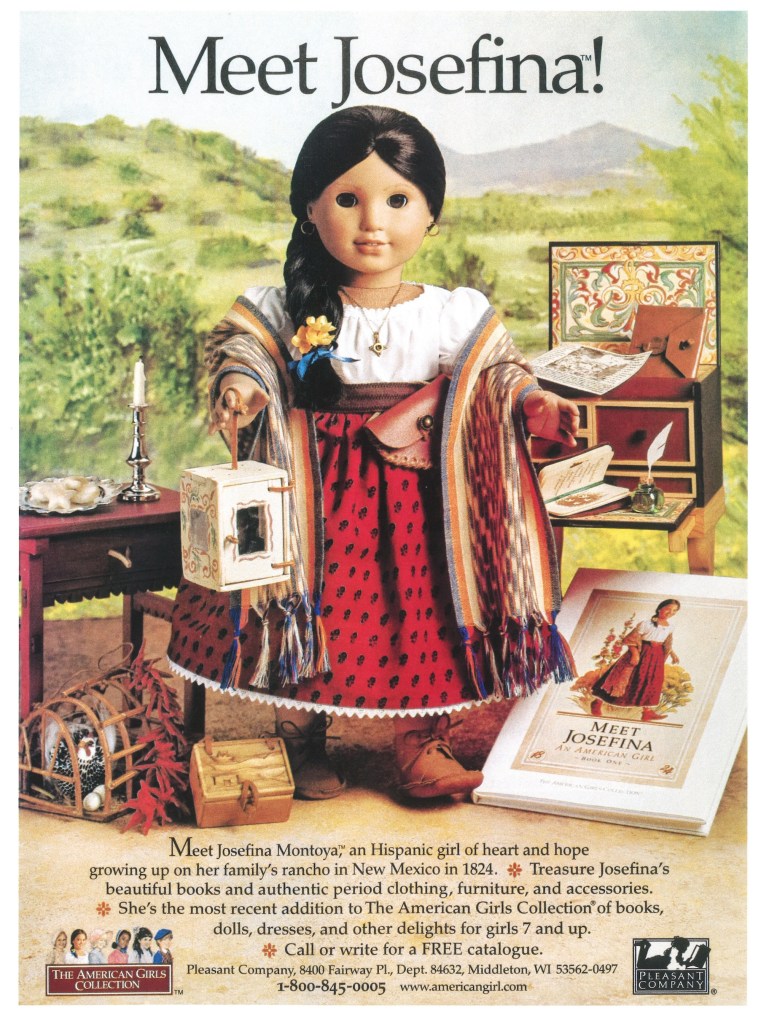
Rowland’s vision was unconventional for its time: Unlike glamorous Barbies, American Girls were designed to have bodies that accurately reflected real girls, and as heirloom toys, they were more expensive than many other dolls on the market. Those decisions paid off quickly, and Rowland’s newly formed company, Pleasant Co., made $7.6 million in its second year.
Over the past four decades, American Girl has blossomed in a multitude of directions. American Girl magazine debuted in 1992, delivering page-turning stories and advice to girls across the country (you can scroll through one of its early issues from ’93 here). Now-iconic dolls like Addy and Josefina were added to the historical character lineup shortly after: in 1993 and 1997, respectively. In 1995, the company launched Truly Me, an assortment of modern dolls that encourage self-expression, as well as Bitty Baby, a series of baby dolls designed to teach nurturing skills. And the first American Girl store opened in Chicago in 1998, the same year Mattel acquired the brand. Today, the chain has seven locations in the U.S., plus three in Mexico.
In 2001, the brand debuted its Girl of the Year line, which features a new doll annually that spotlights a theme relevant to girls today. This year’s character, Raquel Reyes, is Samantha’s great-great-granddaughter, and in her story, she celebrates her mixed heritage (her father is Mexican-American) and helps animals in need during a family reunion. As of March 2026, American Girl boasts nearly 200 dolls in total, spanning a wide range of skin tones and hair types.
The company is celebrating its 40th anniversary by rolling out even more mini companions: On Feb. 11, it announced the American Girl Modern Era Collection, featuring historical characters reimagined for today’s world (Kirsten, for instance, sports blond space buns a la Baby Spice).
Two new books are also available for presale, including The Making of American Girl, a coffee-table book releasing on May 12 that tells the brand’s story through original, never-before-seen material, such as sketches, letters, and product designs. Perhaps a nod to millennial fans, the other book is Samantha: The Next Chapter, an adult novel coming Oct. 13 that follows 25-year-old Samantha’s experience as part of the women’s suffrage movement in the ’20s.
According to Jodi Goldberg, senior director of content development for American Girl and the editor of The Making of American Girl, the reason for the dolls’ longevity has to do with their messages of empowerment and authenticity.
“What [Rowland] had achieved with historical characters in fiction, these strong, capable, smart girls — we wanted to inspire girls to be that,” she told The Washington Post. “So the guiding principle was always, ‘These girls are great, just the way they are.’ They don’t need to wear makeup, they don’t need to have a boyfriend. I think that was the secret sauce of its success, that girls felt that and really felt they could be themselves.”
RELATED: 100 Years of Winnie the Pooh: A Look Back at the Beloved Bear’s History
When you buy books through our links, Nice News may earn a commission, which helps keep our content free.