This article was originally written by Charlie Fenton for SWNS — the U.K.’s largest independent news agency, providing globally relevant original, verified, and engaging content to the world’s leading media outlets.
What happens to Christmas trees after the holiday festivities are over? Countless are tossed in the trash each year, and many wind up slowly decomposing in landfills, releasing harmful methane as they do. But along northwest England’s Fylde Coast, wildlife volunteers have come up with a novel way of repurposing their evergreens: using them to battle coastal erosion.
Funded by the U.K.’s Environment Agency, The Lancashire Wildlife Trust’s Fylde Sand Dunes Project aims to conserve and restore the area’s sand dunes, 80% of which have eroded over the past 150 years due to growing coastal towns.
“The sand dunes along the Fylde Coast are home to a diverse and specialized ecosystem, hosting a variety of unique plants and animals,” the project’s senior engagement officer, Amy Pennington, said in a statement on the project website, adding, “They play a crucial role in providing habitat for flora and fauna of international and national importance.”
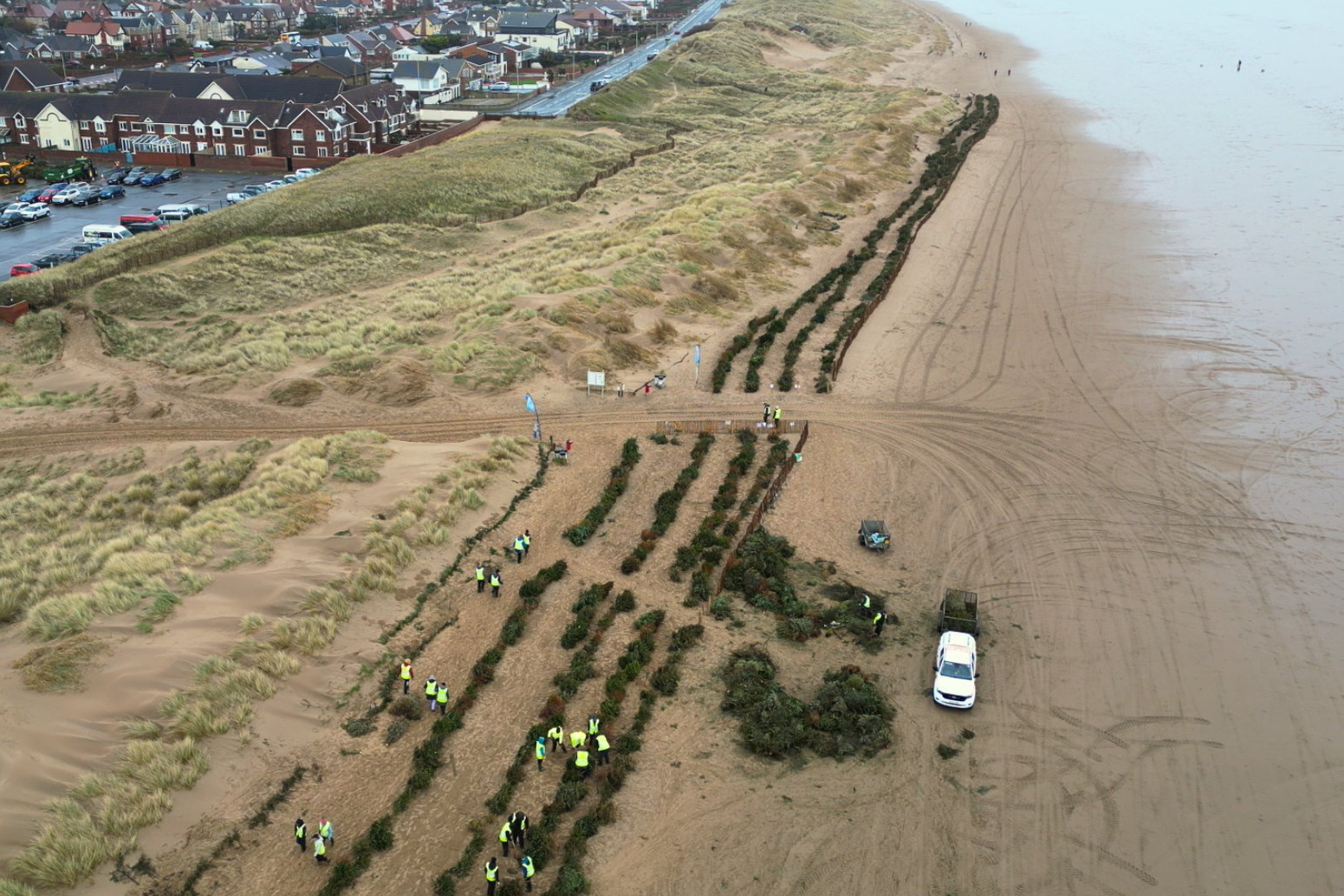
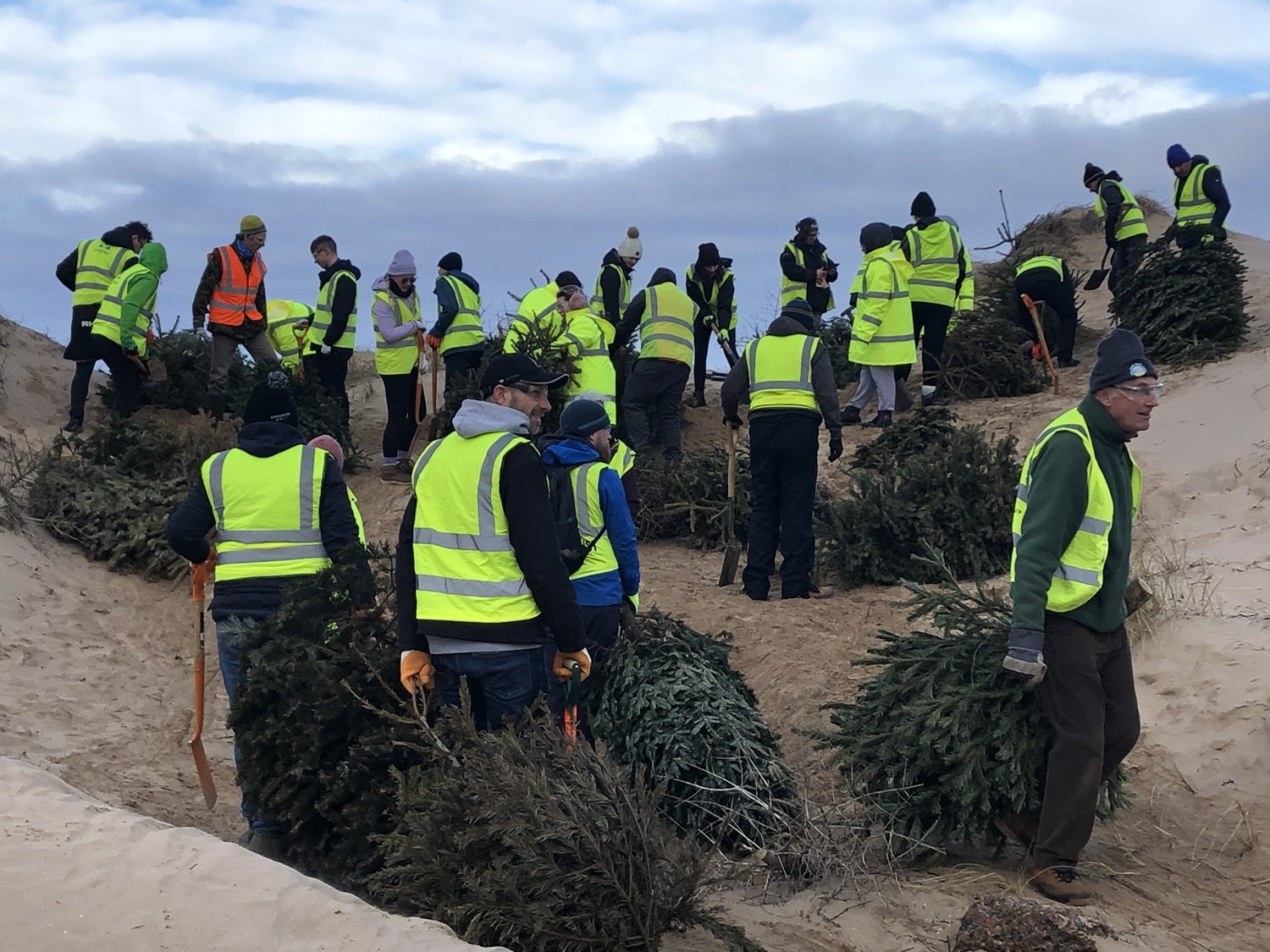
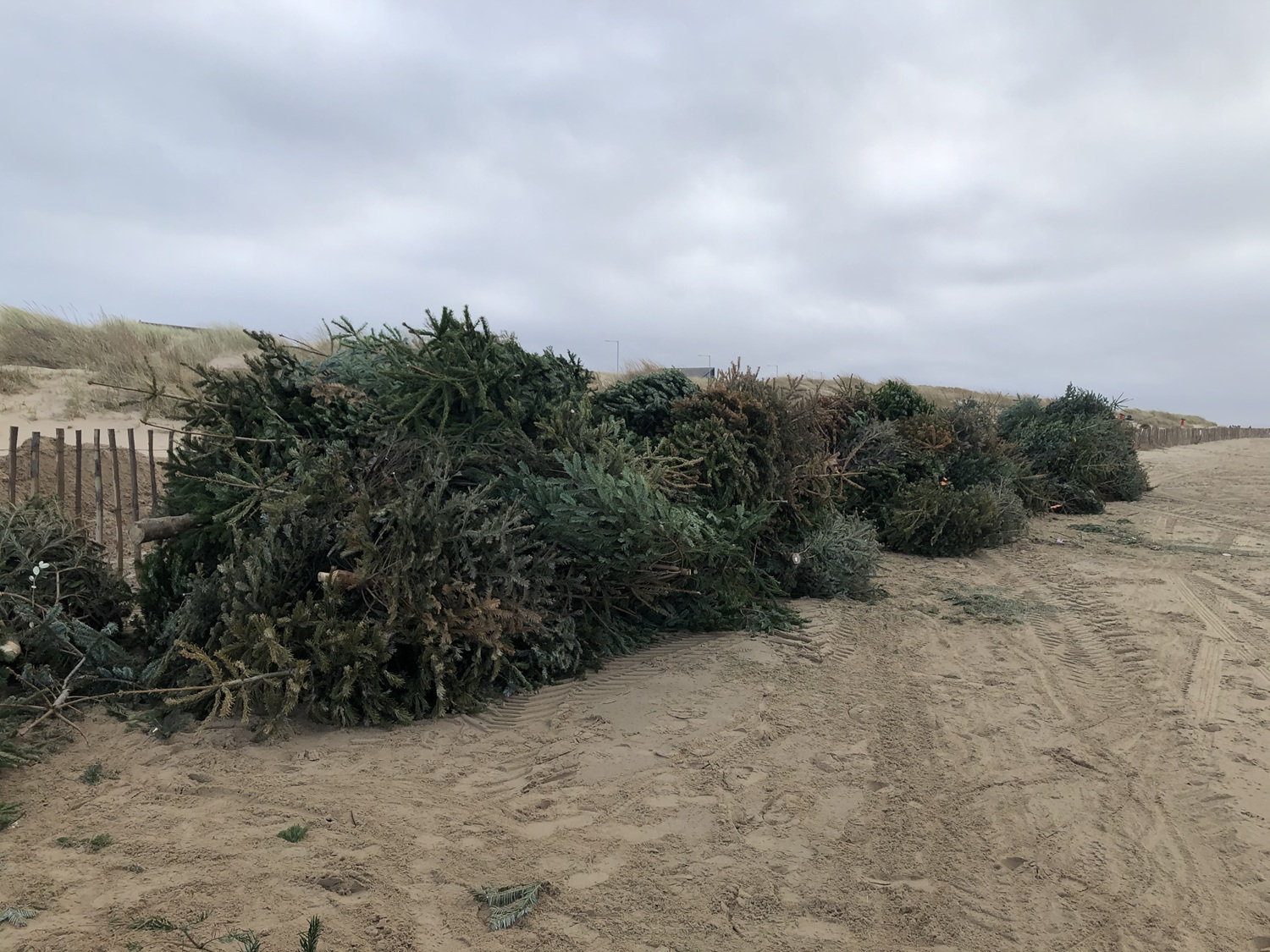
To help conserve the dunes, the restoration team aims to grow them seaward to “enhance their effectiveness as a natural sea defense,” Pennington explained. So during their annual Christmas tree planting event, which will take place from Feb. 10-12 this year, staffers and volunteers strategically place donated trees in front of the existing dunes along the coast.
The trees serve a couple purposes: When the wind blows, their branches trap sand, creating new dunes over time that help prevent further erosion. They also aid in creating a barrier against tides, sand, and wind, protecting homes, roads, and the local nature reserve. Over 2,000 trees were donated for the 2025 event, and since its inception in 2013, it’s helped the dunes widen by nearly 300 feet.
The Trust offers several ways for those in the area to donate this month, including doorstep collection and drop-off locations. Volunteers can join the event individually or with a group from their school or place of work, and in February, they can contribute by either planting the trees in pre-dug trenches or chopping off branches and sticking them in the sand.
For the Trust’s team members, the planting can be a welcome opportunity to get out of the office and get their hands dirty. After the 2019 event, the org’s marketing officer wrote in a blog post: “It wasn’t an easy job, but totally worth it when you understand the positive effects it has on the environment, the local community, and your own mindfulness.”
If you’re too far away to participate but still want to recycle your tree, search online for local pickup schedules or drop-off locations — or look for options on Earth911. And for those with a green thumb who want to save big bucks in the years to come, learn how to propagate your own Christmas tree.
RELATED: The Donation Collection Gives Formerly Incarcerated Individuals — and Fallen Trees — a Second Chance