
Having a grandparent around to babysit can give parents much-needed time off to catch up on self-care — but grandparents themselves may reap some health benefits from this arrangement, too. A new study published by the American Psychological Association suggests that looking after grandkids can boost cognitive abilities and, in some cases, slow cognitive decline.
Some previous research has suggested that consistent grandchild caregiving improves cognitive functioning. In the recent study, the authors not only evaluated the significance of caregiving frequency but also delved deeper into specifics, comparing grandfathers to grandmothers and the impacts of different activities.
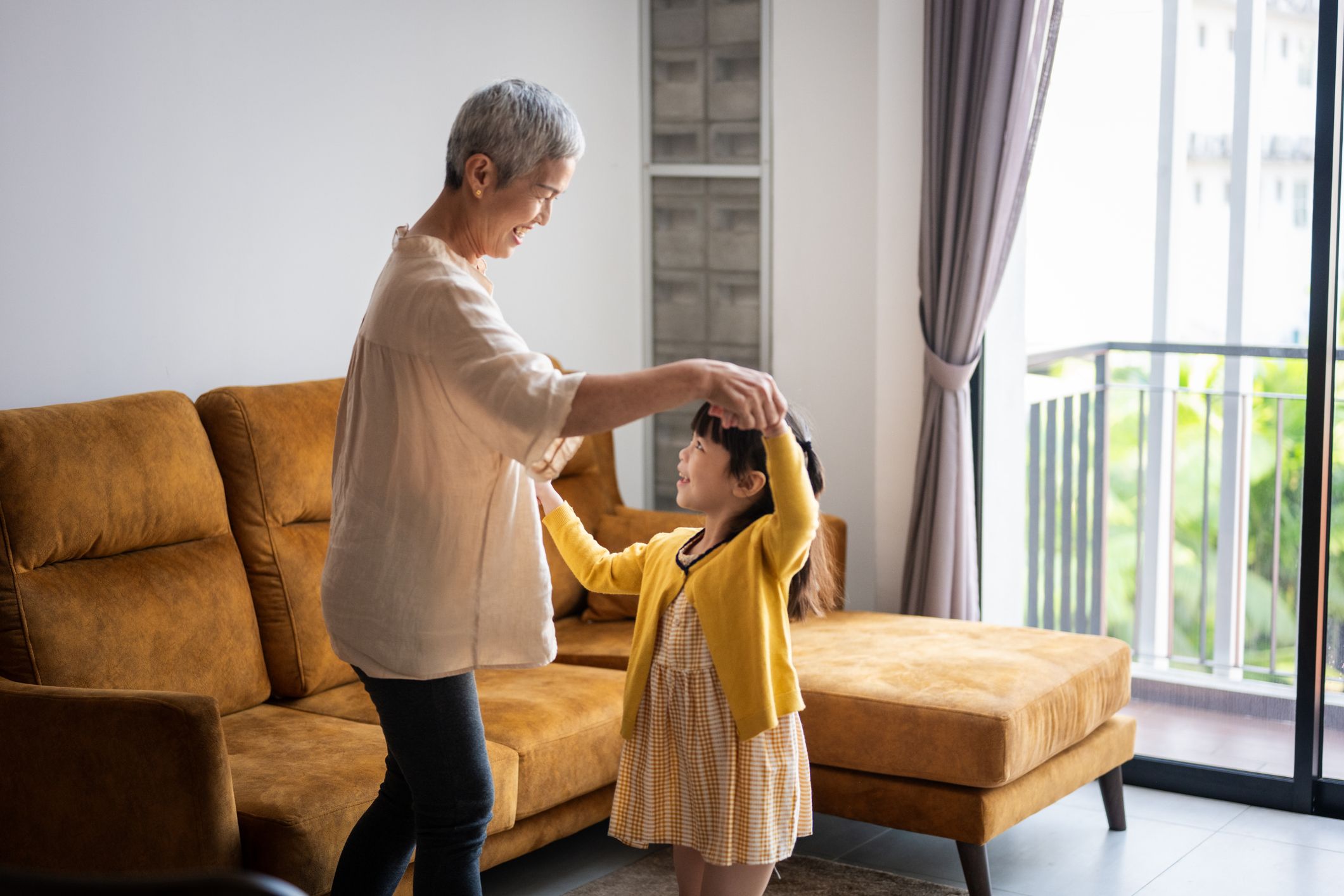
“Many grandparents provide regular care for their grandchildren — care that supports families and society more broadly,” lead author Flavia Chereches said in a press release. “An open question, however, is whether caregiving for grandchildren may also benefit grandparents themselves. In this research, we wanted to see if providing grandchild care might benefit grandparents’ health, potentially slowing down cognitive decline.”
She and her colleagues used data from nearly 3,000 grandparents ages 50 and older, with a mean age of 67, who had completed surveys and taken cognitive tests three times between 2016 and 2022. The grandparents studied had provided supplementary care to their grandkids, didn’t live in nursing homes, and reported themselves to be cognitively healthy.
Survey questions involved frequency of care and the type of activities participants did with their grandkids, such as playing with them, making meals for them, and helping them with homework. The cognitive tests evaluated episodic memory and verbal fluency, or the ability to quickly retrieve and express words.
The findings? For both grandmothers and grandfathers, caregiving was associated with higher levels of verbal fluency and episodic memory. Caregiving grandmothers also experienced slower decline over time than noncaregiving grandmothers, although the number of days spent caregiving was not associated one way or the other with cognitive decline.
As far as the type of activities performed, the researchers discovered that grandparents who frequently participated in leisure activities and helped kids with homework displayed higher cognitive functioning levels. But overall, whether or not a grandparent was a caregiver mattered most.

“What stood out most to us was that being a caregiving grandparent seemed to matter more for cognitive functioning than how often grandparents provided care or what exactly they did with their grandchildren,” said Chereches. “More research is needed to replicate these findings, yet, if there are benefits associated with caregiving for grandparents, they might not depend on how often care is provided, or on the specific activities done with grandchildren, but rather on the broader experience of being involved with caregiving.”
However, she added that further research should also be done to determine if family dynamics play a role as well: “Providing care voluntarily, within a supportive family environment, may have different effects for grandparents than caregiving in a more stressful environment where they feel unsupported or feel that the caregiving is not voluntary or a burden.”
RELATED: It (Still) Takes a Village to Raise a Child, but Today’s Look Different From the Past