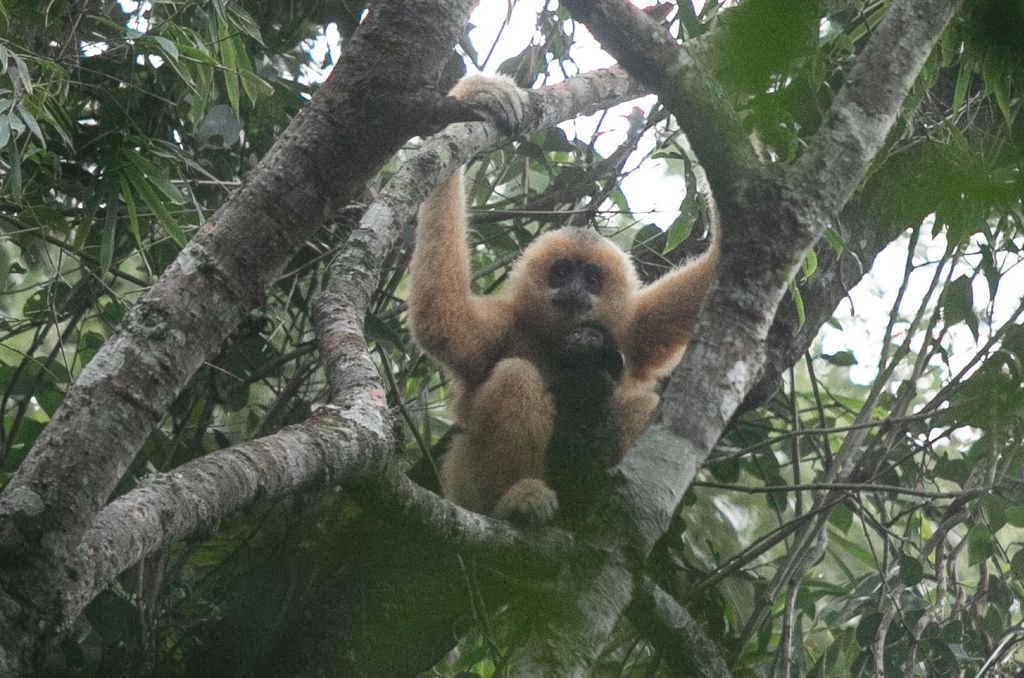
You’re looking at the world’s rarest primate: the Hainan gibbon. Back in 2003, there were just 13 of these tree-dwelling apes living on the island of Hainan in the South China Sea due to deforestation and hunting. (For context, roughly 2,000 roamed the island in the 1950s.)
But against the odds, the species has more than tripled its population to 42 individuals. Not only that, but scientists have found the primates are in surprisingly good genetic health given how close they came to extinction, as low numbers can lead to inbreeding.
They came to this conclusion in a new study after finding evidence that the current population has a low genetic load, meaning a low presence of harmful genes and mutations, as well as high local genomic recombination. Not only does the primates’ genetic health help explain why the modern population rebounded, but the researchers wrote that it’s also a hopeful sign for their population growth in the future.
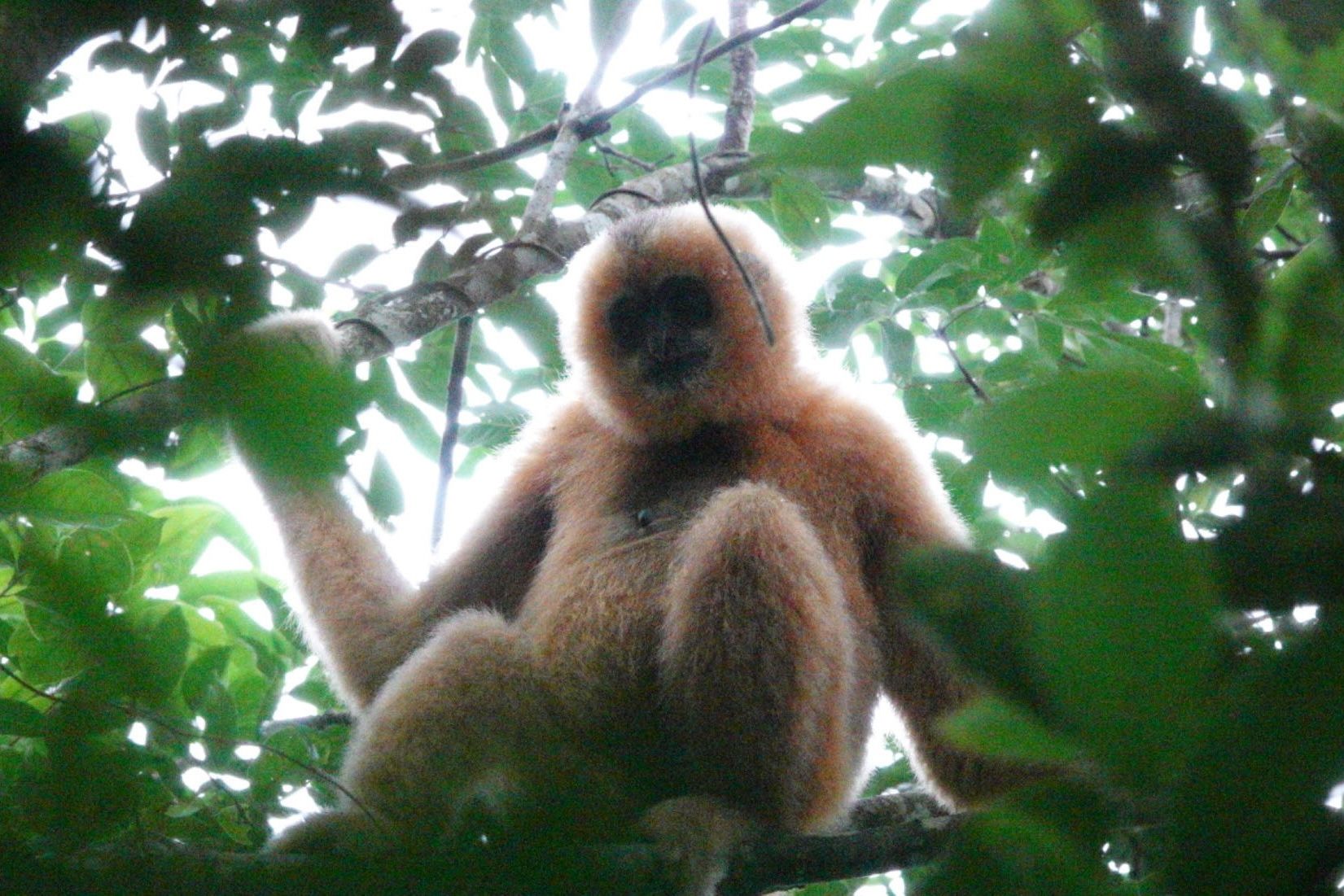
So what’s the Hainan gibbon’s secret to avoiding such hazards? The study found the species went through a previous population crash during the last Ice Age, about 20,000 to 26,000 years ago. Over the millennia that followed, the species rebounded — and two long-separated genetic lineages recently reconnected, mixing their DNA in a way that left them with a surprisingly resilient genetic foundation.
To figure this out, the study authors tested fecal samples from 18 living gibbons and DNA from four museum specimens. They learned that when faced with large-scale deforestation in Hainan, some gibbons expanded to new areas over the past two decades, which led to the two genetic lineages mixing for the first time in around 450 years.
And efforts have been underway to help the recovery of the species, which is now confined to one patch of forest in Hainan Tropical Rainforest National Park. After the Kadoorie Conservation China Department confirmed the remaining 13 individuals in 2003, it began studying the gibbons, raising awareness in the local community, and planting the animals’ favorite food trees. By 2020, the population had increased to 30 individuals spanning five family groups.
“I can’t imagine how sad it would be if Hainan rainforest lost this beautiful animal and its wonderful song,” senior conservation officer Philip Lo told the BBC at the time, referring to the gibbons’ territory-claiming calls. He added that the milestone was “a piece of good news that could cheer up other dedicated conservation colleagues.”
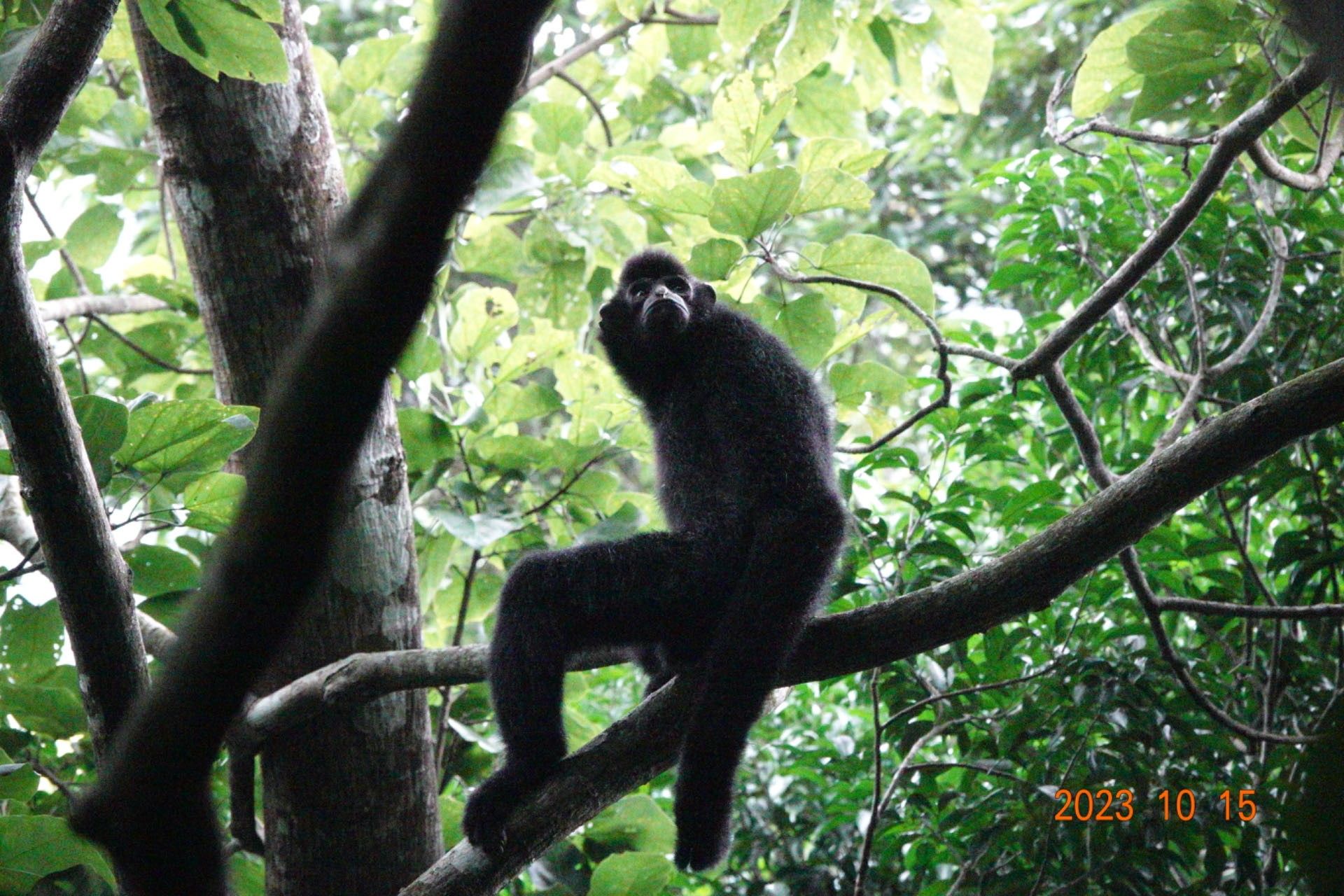
The Zoological Society of London is also developing new technology to monitor the population and aims to help restore the forest to enable the gibbons to expand their habitats even further. It brought Chinese and international stakeholders together to develop an emergency response plan for the species in 2016, and continues to build partnerships with Chinese organizations that promote conservation efforts.
In the recent research, the authors highlighted how evaluating genomes can help analyze at-risk species: “Our study reveals the importance of demographic history, genome architecture, and behavioral regulation in the recovery of endangered species and highlights the great potential of fecal genomic research in conservation biology.”
RELATED: The Atlantic Puffin Population Is Booming Again in Maine After Almost Disappearing