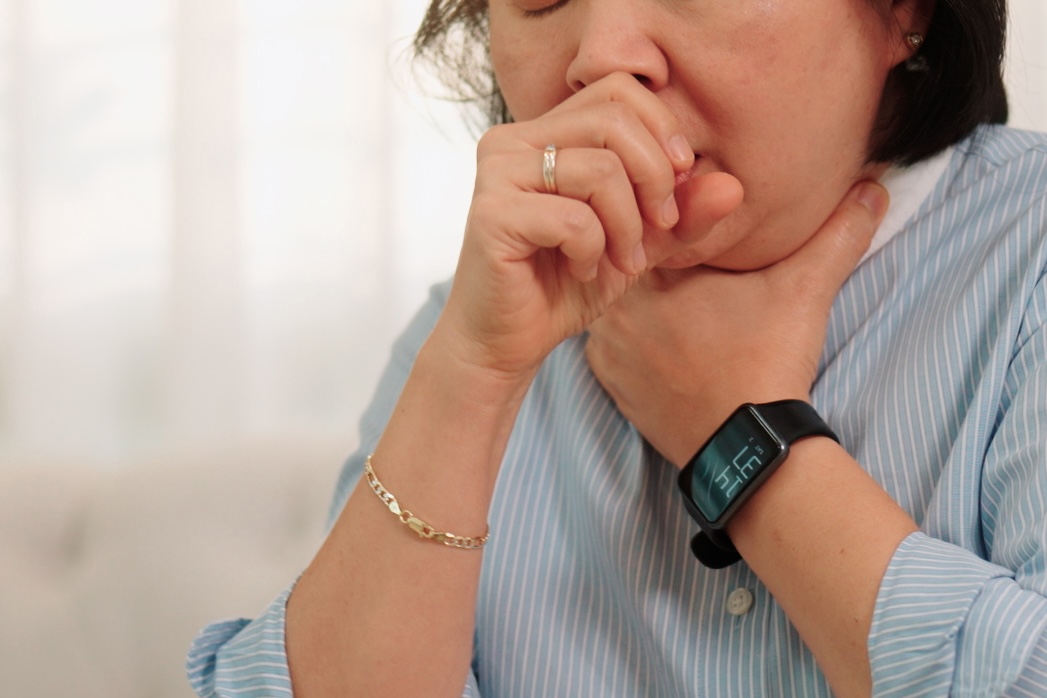
Indiana resident Patricia Webster was eating a sandwich in her car last May when something suddenly became lodged in the back of her throat, she told NBC affiliate WDTN. Realizing she was choking with no one around to help, she exited her vehicle and began attempting the Heimlich maneuver on herself, leaning over the trunk for added pressure. It took several attempts, but eventually the culprit — an avocado pit — came out.
If a similar situation happened to you, would you know which steps to take? The idea of choking alone obviously isn’t fun to imagine, but being unprepared when an emergency actually occurs can make an already scary situation worse. If you’ve learned the correct response ahead of time, you can focus on taking action rather than racking your brain for the right move, Lynn White, director of workplace programs at the American Red Cross, explained to Nice News.
We spoke to White about what to do if you start choking when you’re by yourself — and how to help prevent it from happening to begin with.
Minimize Your Risk
Choking occurs when a foreign object like a piece of food completely or partially obstructs our airway, preventing or hindering us from breathing, so it’s important to be mindful when eating.

“Like your mother always told you, chew your food. Don’t take big bites,” said White. “It’s all common sense, but sometimes we just get in a rush.” Similarly, not talking or laughing with your mouth full isn’t just good etiquette; it can help lower the risk of something going down the wrong pipe. You should also take care not to eat too quickly, tend to any dental issues that make chewing difficult, and avoid wearing ill-fitting dentures.
Additionally, it’s a good idea not to eat while driving. Aside from increasing your likelihood of an accident, if you start choking on the road, you’ll be wasting precious time by finding a safe space to pull over.
The two groups at highest risk of choking are young children and older adults, though it can and does occur in people who fall between those two ends of the spectrum. Risk factors for older adults include muscle weakening, the difficulty swallowing that accompanies certain diseases, decreased saliva production, and other age-related issues. Click here to learn more about how to prevent choking for senior citizens, and here for prevention tips for small kids.
Steps to Take if You Start Choking When Alone
First off: If you begin to choke when someone else is present, make the universal sign for choking by placing both hands around your throat. That person should call 911, then deliver five back blows, followed by five abdominal thrusts (also known as the Heimlich maneuver) if the choking continues. Repeat these two methods until help arrives. Here’s a video demonstration.
If you’re alone, follow these steps:
Call 911. A benefit of the digital age is that we’re rarely without a phone, so wherever you are, the first step is to call for help — even if you can’t speak. “If you call 911 and don’t say anything, the dispatcher is going to be alerted that something’s going on, and so they’ll listen for whatever sounds they can hear,” said White, adding: “We always tell people to dial first, and that at least sends help on its way.”
Try to cough (and then keep coughing if you can). If your airway isn’t completely blocked, you should be able to cough. “If you can cough, that’s the best thing,” White explained. “Coughing creates a whole lot of intrathoracic pressure and can push out the object if it’s not too lodged in there. And that is fortunately what happens most of the time.”
Perform abdominal thrusts on yourself. If you can’t cough or coughing doesn’t dislodge the object, begin performing abdominal thrusts on yourself (or move on to the step below). To do this correctly, make a fist with one hand and place it just above your navel and below your rib cage. Clasp your other hand tightly around your fist and press both hands forcibly into your abdomen with an upward motion five times. Repeat this step or the following until help arrives.
Lean over an object, like a chair. You can also try — either before the thrusts or after — pushing your abdomen firmly into an object, like the back of a chair or the edge of a table, to create the air pressure needed to push the obstruction out. If you’re in a car, you can try using the trunk, hood, or your steering wheel.
(Note: If you’re pregnant, first call 911 and try to cough, then perform the thrusts above the baby bump, or lean onto an object at a higher point on your torso, right below the breastbone. Watch a demonstration here.)
Hopefully, following these steps will dislodge the object and open up your airways before you lose consciousness — at which point you’ll need chest compressions to keep the oxygen in your blood circulating.
Following any serious bout of choking, it’s a good idea to go see a doctor, White advised. “You should go get checked afterward by your health care provider just to make sure that there’s nothing damaged or nothing going on that needs to be checked out,” she said, adding: “You should follow up even if it’s resolved.”