This article was originally written by Lauren Beavis for SWNS — the U.K.’s largest independent news agency, providing globally relevant original, verified, and engaging content to the world’s leading media outlets.
If you asked most people where they get their weekly haul of fruit and vegetables, they’d likely say a grocery store or farmers market. A garbage dump surely wouldn’t be on the list — but a project in England may have folks rethinking the idea. In a world first, a huge dome installed at a landfill site will use gas from waste to grow produce.
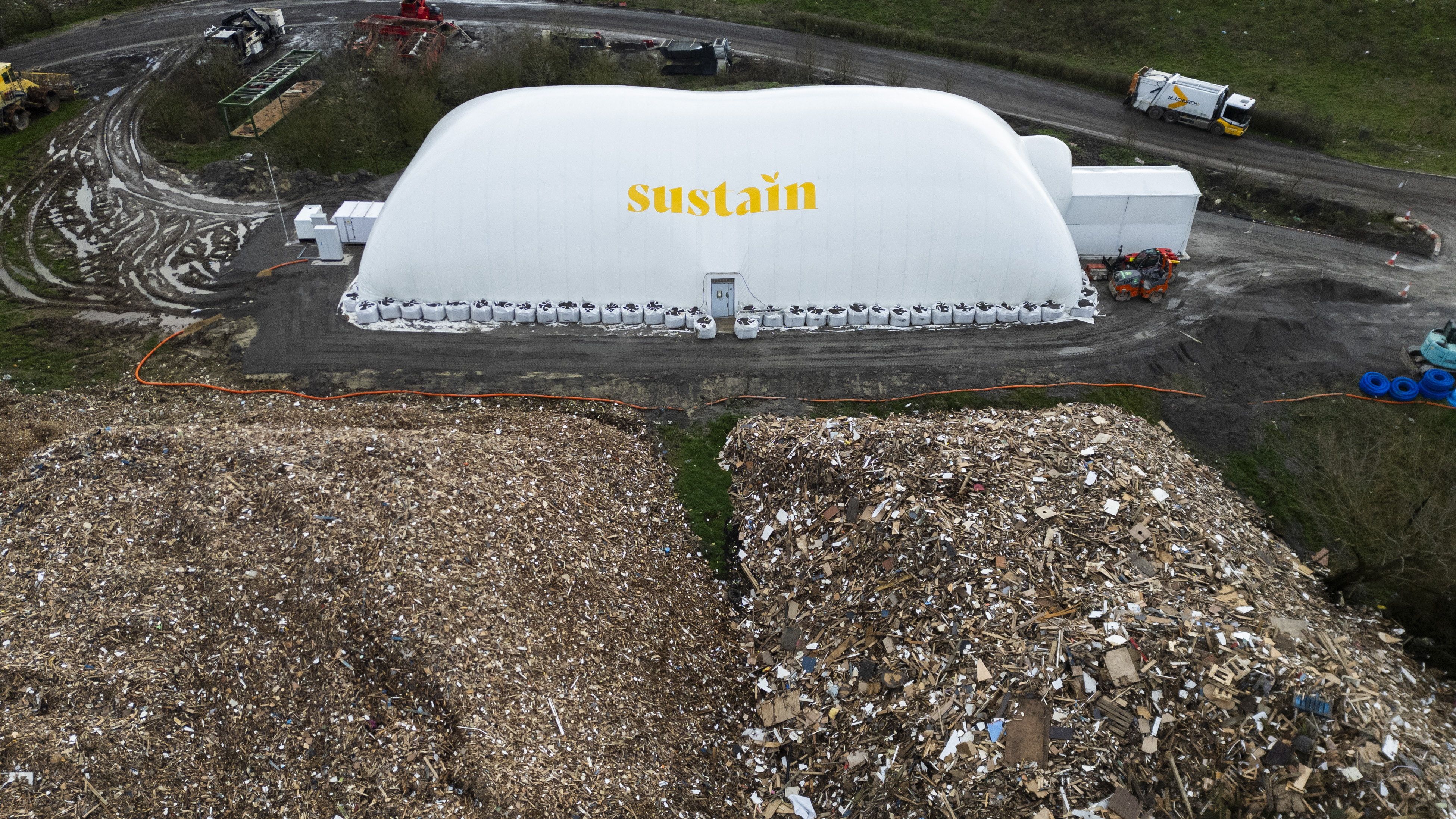
Created by Sustain Wiltshire, an initiative from Crapper & Sons Landfill, the new “Super-Midden” technology is capable of growing food year-round, reducing the U.K.’s dependence on imports. It could even allow avocados, which don’t normally grow in the U.K., to be produced there in “the depths of winter,” per a news release.
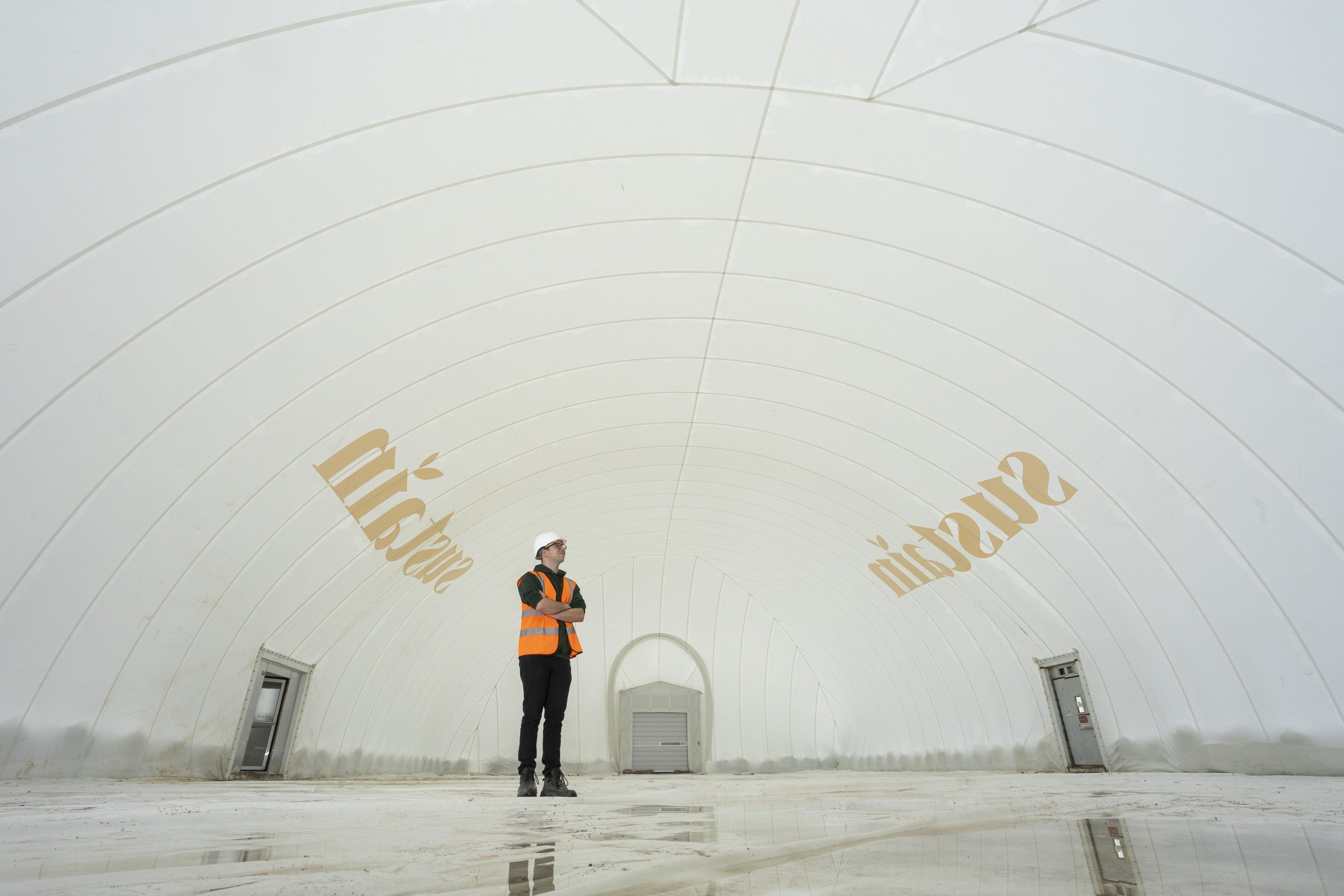
Located near Royal Wootton Bassett in the county of Wiltshire, the landfill already has a system for generating electricity from methane produced by trash, a process that results in carbon dioxide as a by-product. With the new tech, the electricity will be pumped into the dome to create “perfect” growing conditions for fruit and veg via heating, power, ultraviolet horticulture lighting, and fans. Meanwhile, the CO2 will be used to boost plant growth through photosynthesis.
The dome measures 65 feet by 131 feet and 29 feet tall — three times the size of a standard tennis court — and can grow 11 tons of produce.
Crop trials will begin this spring, using a mix of hydroponics, raised growing beds, and plant containers. A broad selection of produce, including carrots and onions, will be grown for 10 local families. If the trial is successful, Sustain Wiltshire plans to install an additional 110 domes on the landfill site.
The hope is that the locally grown food will cost less than what’s available in major supermarkets. Sustain Wiltshire plans to sell its produce through an app that delivers to families’ doors. Afterward, the food waste would be collected and brought back to the site to be used in the process again — cutting transport fuel miles and energy storage.
“On this one site alone, we have the potential to produce over [8,818 tons] of affordable fruit and vegetables annually, creating 130 new jobs, while preventing the release of [4,188 tons] of CO2 each year,” said Nick Ash, project director for Sustain Wiltshire and Crapper & Sons Landfill. “Rolled out globally, this technology has the potential to change the face of food production as we know it.”
The initiative aims to supply up to 80% of all fruit and veg needs for Royal Wootton Basset, as well as the nearby towns Purton and Brinkworth. But Ash hopes to one day expand even further: “Combined with plans to capture polymers from landfill plastic that cannot yet be recycled, we believe our Super-Midden solution has the potential to transform the future of landfill internationally, turning it into one of the most climate-friendly methods of waste treatment.”
RELATED: Sustainable Sheep: Why Ranchers Are Repurposing “Waste Wool” Into Fertilizer