They say necessity is the mother of invention, but sometimes it takes a thoughtful observer to notice and address a particular need. For rising high school senior Jay Jung, a lightbulb went off while he was crossing the street.
Jung is the creator of SmartBlink, an adaptive traffic light system that adjusts its signal changes based on the speed at which pedestrians move through the crosswalk, rather than prioritizing vehicular traffic patterns. The idea stemmed not from his own ability to walk across before the lights change but the trouble his grandparents often have in doing so.
The 18-year-old attends boarding school in Massachusetts, but on breaks he returns home to Daegu, one of South Korea’s largest cities. “Whenever I would go out with them, my grandparents, we would not even be halfway when the traffic light turned red,” he told Nice News. “Multiple of these moments made me question: ‘Is it really OK for public-facing infrastructure that’s meant for everybody in the city to be discriminating based on human differences and their abilities?’”
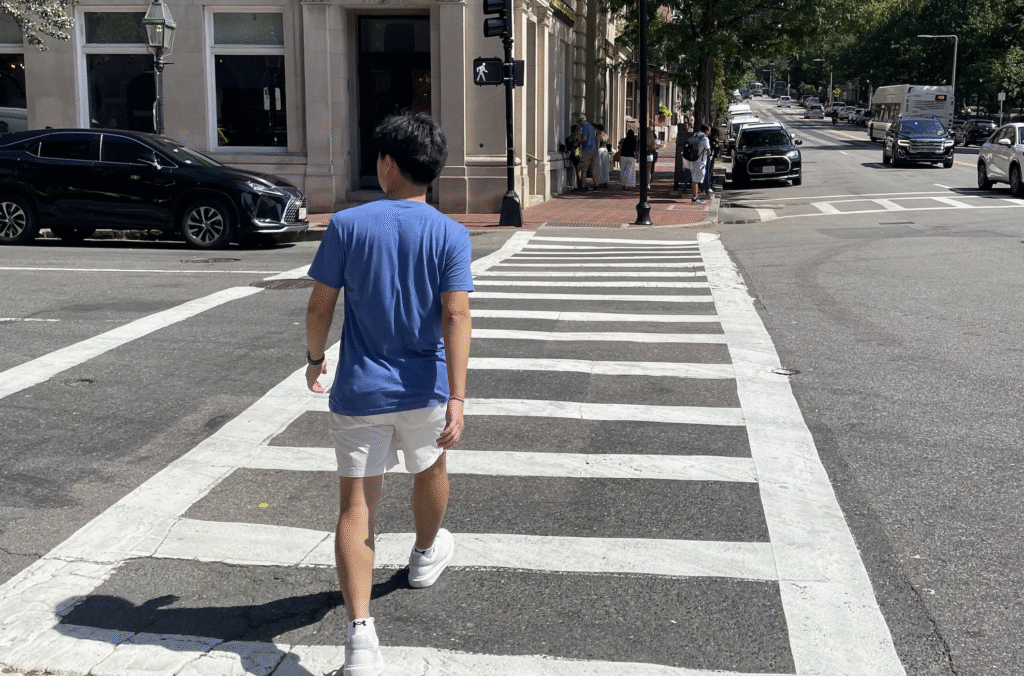
The answer, to Jung, is no. So the techy teen got to work designing a cost-effective system that adapts to real-time crossing behavior using a combination of commercially available software and hardware. It functions in varying lighting conditions; delivers tactile, visual, and audio alerts via an app; and detects assistive devices like crutches and wheelchairs with 90%-95% accuracy.
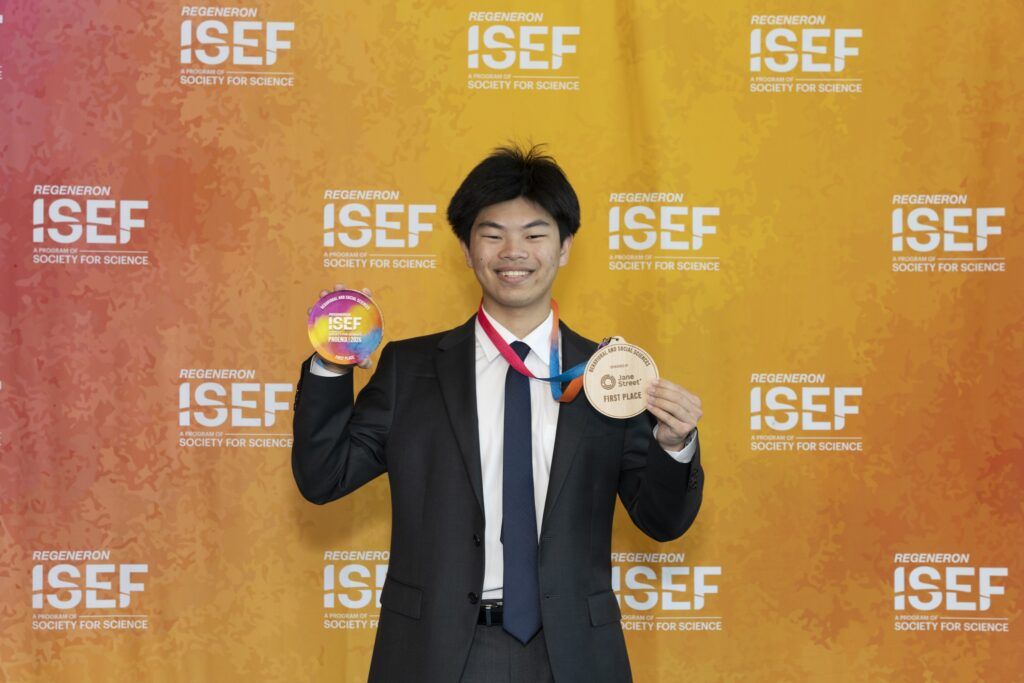
SmartBlink earned him first place in the Behavioral and Social Sciences category at the 2026 Regeneron International Science and Engineering Fair. Hosted by the Society for Science, the fair is the world’s largest pre-collegiate STEM competition. This year, it drew over 1,700 finalists from 60 countries to Phoenix, Arizona, where they showcased their projects in hopes of winning and taking home a portion of the $7 million in awards and prizes.
In his submission video, Jung explains that fixed traffic signals assume an average pedestrian walking speed of 3.9 feet per second — but that “96% of adults over 60 and people with mobility disabilities walk slower” than that.
The teen, who runs on his school track team and enjoys producing hip-hop and pop music in his free time, started development on his system by spending hours at a local crosswalk, capturing data. He then began building, adjusting, and iterating. The end product combines multiple algorithms with an object detection model that detects pedestrian speed.
“By knowing their real-time speed, I was able to calculate how much time was needed for each pedestrian to cross a certain length of the crosswalk,” Jung told Nice News. “And by doing this, people can cross without having that enhanced perceived safety of, ‘Oh, I know that the crosswalk will extend time so I don’t have to rush or think about different accidents that can happen, like a car not waiting for them to cross.”
Jung said he’s still figuring out what exactly he wants to do after graduating next year but is interested in continuing to explore the ways in which technology can ensure “that the spaces we inhabit are accessible for everyone.” For now, he’s reaching out to policymakers and tech companies with the aim of mass-producing SmartBlink and implementing it in communities.
As for what his grandparents think of his invention? “They were kind of touched because they didn’t realize that I was, like, taking notes of those small moments,” Jung shared. “And when they saw that I made this for them, they were really impressed and also heartwarmed that I thought so deeply about these issues and also these day-to-day experiences that we had together.”
RELATED: With 100% Youth-Led Nonprofit, Teen Is Breaking Down Mental Health Stigmas for Young People of Color