It doesn’t take much on a dog’s part to elicit a smile from their owner — or from passersby on the street, many of whom often begin cooing at the pup before even taking stock of the person holding the leash.
While previous research has suggested that canines can differentiate people’s facial expressions (something any pet parent can attest to), less is known about the biology involved. A new study investigated what actually takes place inside a dog’s brain during this process, finding that images of smiling faces activated the same region that lights up when pups anticipate tasty treats.
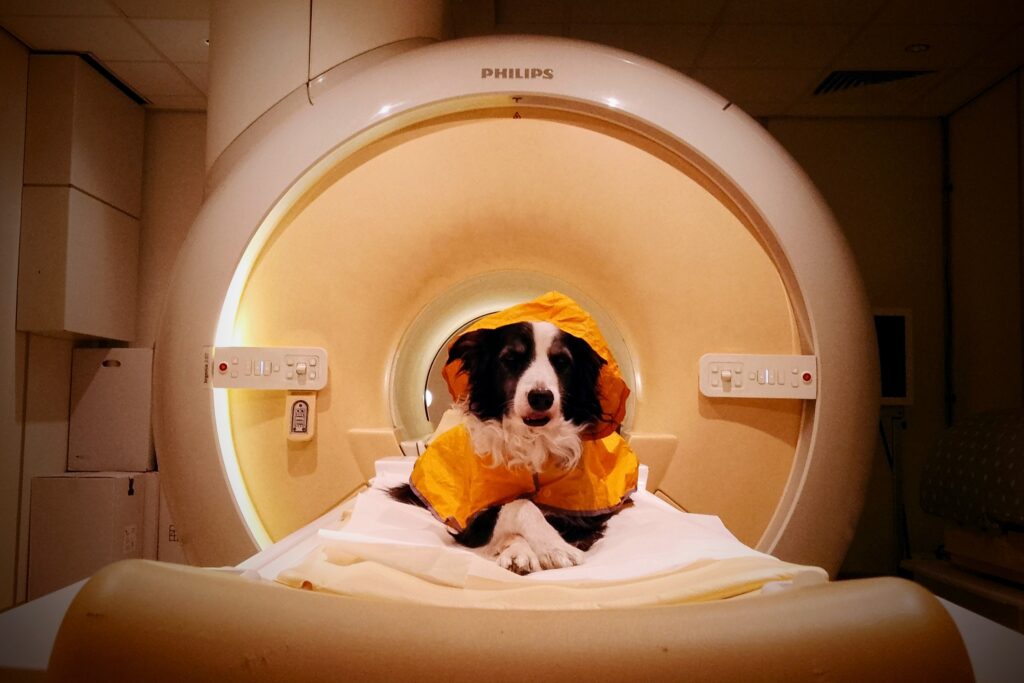
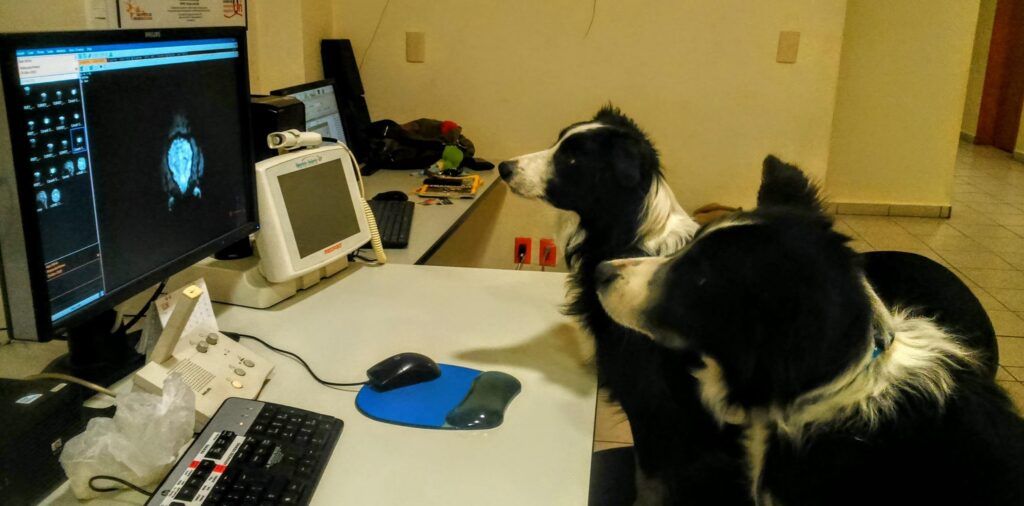
In the study, published Aug. 10 in the journal iScience, researchers conducted brain scans on eight dogs while the animals were shown photos of strangers with either neutral or happy expressions. The happy faces triggered activity in the temporal cortex, which is associated with cognitive processing, and the caudate nucleus, associated with reward processing.
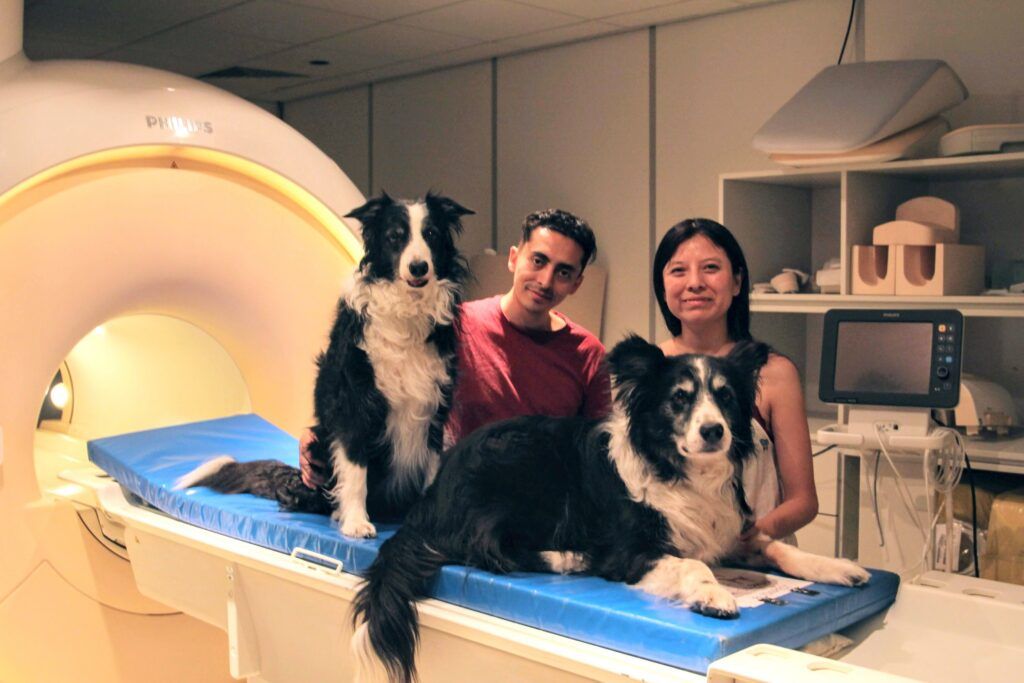
Laura Cuaya, Raúl Hernández-Pérez, and their two dogs, Odín and Kun-kun
“The activity in the caudate nucleus is particularly interesting,” co-author Laura Cuaya, with the University of Vienna, said in a news release. “It suggests that happy human faces may have emotional significance for dogs.” Cuaya’s own pups — two border collies named Odín and Kun-kun whom she shares with partner and co-author Raúl Hernández-Pérez — participated in the research, the BBC reported.
In a second experiment, the scientists showed 12 dogs images of people displaying happiness, anger, fear, and sadness. Neither of the regions activated by happy expressions lit up in response to the negative emotions, making it easy for the team to distinguish whether the animals were looking at smiles versus negative expressions. But they said the results don’t suggest that dogs simply see the world in terms of good or bad; the team also observed distinct patterns of activity indicating the canines could differentiate between fear and sadness.
“Humans are really good at picking up small details on the face, and so are dogs,” said Hernández-Pérez. “This makes dogs very interesting. By studying their brains, we can understand what adaptations have developed to support their remarkable social and emotional understanding of humans.”
The authors noted that all the dogs involved were from loving families, and that stray animals that navigate a different social environment may process human expressions differently. They also acknowledged that still images don’t tell the whole story. In the real world, dogs pick up on human body language, vocal tones, and odors to get a sense of how a person is feeling.
“I would like people to see dogs as emotional beings,” said Cuaya. “They have evolved with us to understand our expressions and cooperate with us, and recognizing that can change how we communicate with and care for them.”
RELATED: Can “Button Dogs” Really Understand Words Recorded Onto Soundboards? New Study Says Yes