The year I turned 30, I moved to a peaceful neighborhood on Los Angeles’ Westside. I was 10 minutes from Venice Beach and had an apartment all to myself. The only catch (besides street parking)? It was 450 square feet.
A couple of friends helped me optimize the place: We assembled a custom Murphy bed, installed a wall-mounted folding table, and chose decor that made it feel joyful and airy. Though I lamented not having more space at times, I discovered that my scaled-down quarters came with some perks. Styling the studio so intentionally felt empowering, and because it was so small, I often enjoyed my meals out in the courtyard under the sun.
Years later, despite having married and moved into a comfortable condo, I still occasionally yearn for more square footage, particularly during dinner parties or when family visits for the holidays. To refresh my perspective, I spoke to interior design experts and therapists who helped illuminate some of the unexpected benefits of having a smaller home — and offered tips for making the most of yours.
Benefits
Cost and Cleaning
We’ll start with perhaps the most obvious but still occasionally overlooked perks: “Less square footage means less time cleaning and organizing. Owning less means spending less time managing and maintaining your belongings,” Phoenix-based interior designer Mackenzie Collier explained in an email to Nice News. “That frees up more time for hobbies, socializing, and anything else you’d rather be doing!”
She added that smaller spaces force us to be more thoughtful about what we buy and why (a welcome mindset shift for many), and that the money we save on quantity can be used to invest in quality — e.g., well-built furniture, bespoke decor, art.
And it’s not just our shopping carts that feel the difference, Sierra Troitsky, an interior designer in Indianapolis, pointed out. “Smaller spaces are often more economical and environmentally friendly as they cost less to heat and cool,” she said.
Mental Well-Being
Less square footage can contribute to a greater sense of well-being because it can encourage us to be neat and organized, “which is calming for the brain,” said Sipora Weissman, a licensed therapist in Ventura, California. In a tiny room, a pile of unfolded laundry is a lot more noticeable than in a large one, for example, so we may be more inclined to actually, you know, put it away.
“As a therapist who works with adults who get overstimulated easily, living in a small space can be overwhelming or it can actually be very supportive to someone’s nervous system,” Weissman explained. “If you fill that small space with tchotchkes and clutter, that will be a recipe for an unsettled brain. There are many scientific studies that show the negative impacts of clutter on the brain. But if you take this small space living situation as an opportunity, it can be very conducive to your mental health.”
More Intentional Decor
Just as I experienced when decorating my tiny quarters, less to work with can have a focusing effect. “A small living room lends itself to intentional decorating because you’re forced to narrow in on fewer, impactful pieces that set the tone for the space — say, a beautiful sofa, a well-sized rug, task and accent lighting, and some meaningful artwork,” said Elena Navarro, an interior designer and professional organizer at Sparkly Maid Austin.
She added: “I love that limited square footage forces you to really think through everything that you bring in the door, from new dishes to cozy throw blankets to holiday decor. Where is the item going to live? Do you use it enough to warrant giving it a permanent home?”
Better for Gathering and Bonding
The reason celebrity chef Ina Garten considers six people the ideal number for a dinner party is the same reason your modest home might lend itself to more meaningful gatherings: intimacy.
“Small group events tend to produce an environment that allows for more personalized conversation,” explained Whitney Willborn, a Texas-based licensed clinical social worker, adding that it’s easier to not only include everyone in the conversation but also to spot when others appear to be excluded. If guests are spread out in different rooms or fragmented into groups, it’s trickier to notice when a new friend is standing awkwardly by themself, for example.
Your own family might benefit from a smaller floor plan, too. Collier recently moved out of a 900-square-foot home, and her household has experienced some nostalgia for the cozier living situation. “There was nowhere to escape to, so we’d sit together, watch a movie, or play games,” she said. “Those shared moments became some of our favorite memories.”
Spend More Time in Community
My al fresco dining habit of yore highlights how the wide world can beckon when your indoors isn’t vast. Collier had the same experience. “I’ve found that living in a small space encourages me to spend more time outdoors and in my community,” she shared. “Whether it was tending to my garden, or heading to a local coffee shop to work, living small naturally pushed me to get out into the community more.”
Tips
Double Duty
Interior designer Preeti Shah made her name in New York, where minuscule apartments are no big deal (one of the tiniest is an infinitesimal 55 square feet!). When she moved to an area of Houston filled with massive homes, she was bemused. At around 3,000 square feet, her house is among the smallest — yet she said it’s where her neighborhood pals prefer to hang out.
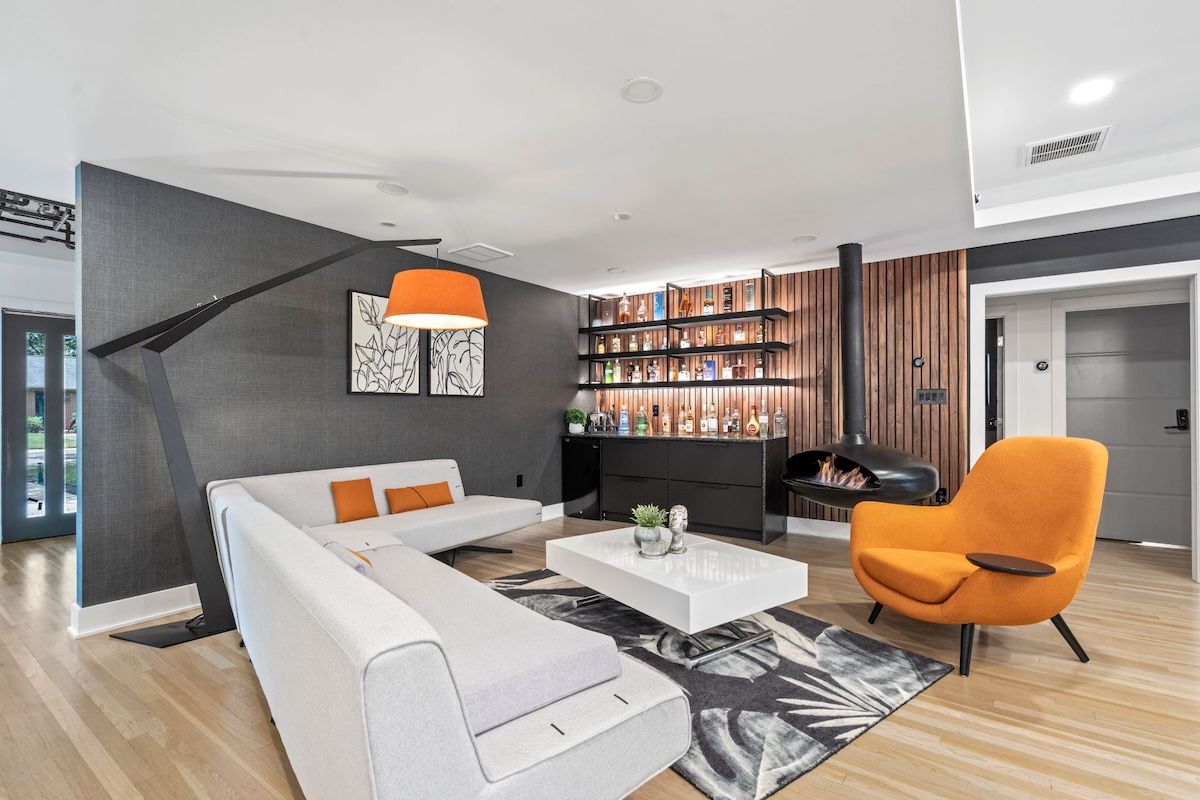
Shah’s lounge area with convertible coffee-to-dining room table
A design principle Shah prioritizes, in any sized space, is double duty. “Anything I purchase, I would like for my client to be able to use it in more than just one way,” she shared. Ottomans are great for seating and storage, twin beds can become kings when guests stay over, and dining chairs should be comfy enough to be used as additional living room seating.
In her own house, rather than a dining room table that sits unused, she opted for a convertible coffee table that lifts and extends to seat 10.
Size and Amount Matter
Troitsky explained that getting furniture that’s sized correctly can help a lot with how large your home feels (e.g., an enormous couch in a tiny bedroom might make the space seem small).
But that doesn’t mean you should automatically purchase miniature versions of everything you’d buy for a bigger area. “It’s best to take inventory of what you actually use, need, and love, and start there,” Navarro said. She added: “For holiday decor, instead of trying to deck out every inch of your small living space, pick one or two areas to really lean into — the Christmas tree, the mantel, the coffee table, etc.”
Get Comfortable With Borrowing
Why use up valuable storage space on extra glassware and guest seating for your one annual holiday get-together when you can call a friend and ask to borrow theirs? As a bonus, it gives you both an excuse for a visit. Another option is to rent what you need when you need it.
Ultimately, do your best to remember that, as Navarro put it, “the goal is always to make your guests feel at home — not to impress them with how big your place is!”
RELATED: Make Your Home Happier With These Dopamine-Inducing Decorating Tips