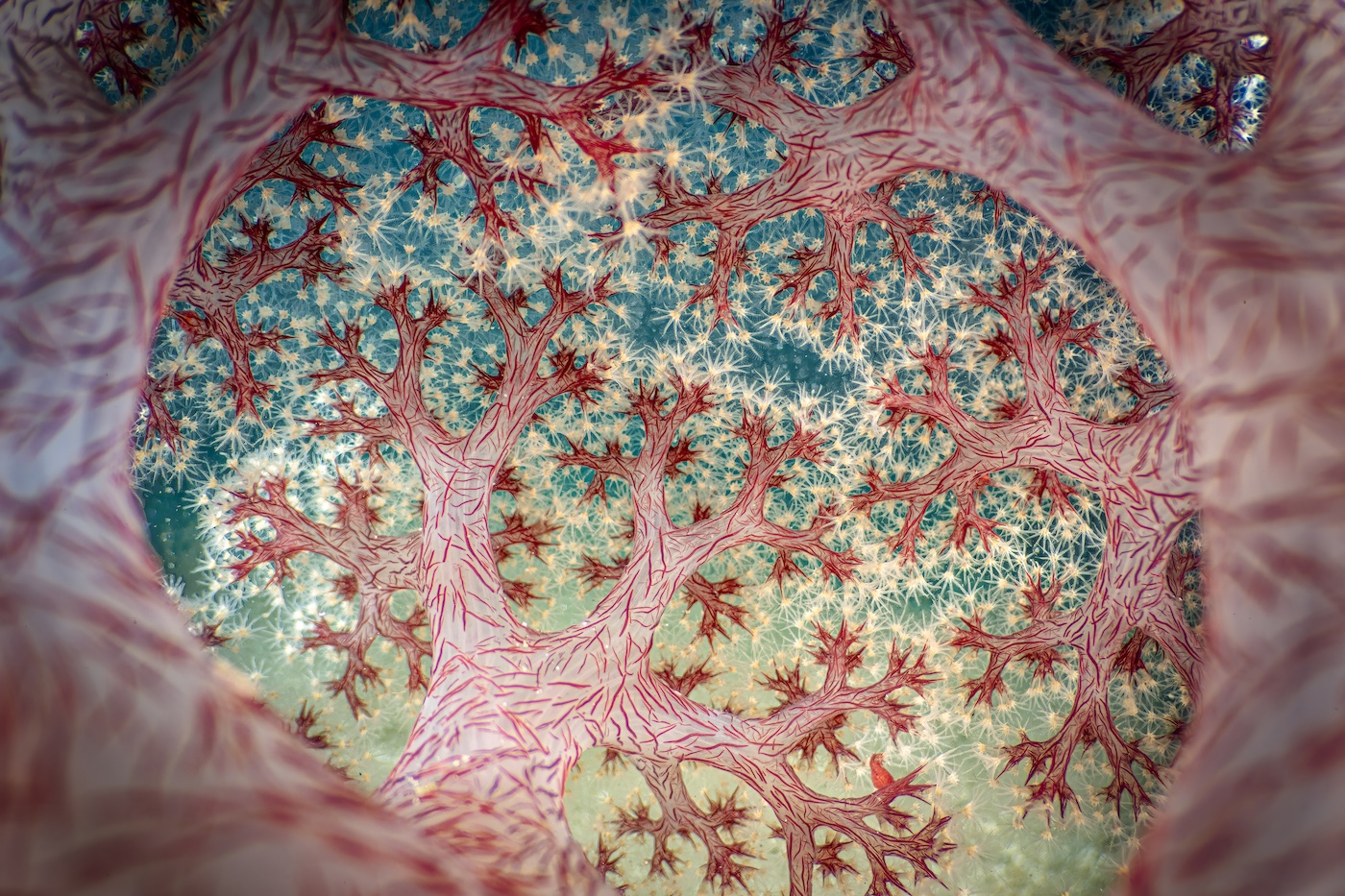
Australian photographer Ross Gudgeon’s image of the inside of a cauliflower soft coral is now a two-time photography contest champion. Not only did “Fractal Forest” claim the top spot in the 2025 Australian Geographic Nature Photographer of the Year competition, but it also just won the seventh annual Close-up Photographer of the Year contest.
The latter shines a spotlight on nature via macro, micro, and close-up imagery across 11 categories. It was launched in 2018 by Tracy and Dan Calder, a married couple who work in the photo magazine industry and live in the U.K. After receiving over 12,000 submissions from 63 countries, this year’s 22 judges spent more than 20 hours on Zoom calls to choose the victors in what Tracy called “the toughest competition yet,” per a press release.
Gudgeon’s grand prize-winning photo, which also took first place in the Underwater category, was captured beneath the ocean in Indonesia’s Lembeh Strait. “Named for its cauliflower-like form, this soft coral is made up of countless small, rounded polyps that give it a puffy texture,” he said. “I wanted to explore a perspective that isn’t possible with conventional lenses, and an underwater probe lens allowed me to do that. By carefully threading the lens through the coral’s branches without disturbing them, I was able to photograph the subject from the inside looking out, offering a different view of a common marine organism.”
In addition to bragging rights, Gudgeon was awarded around $3,400 for his winning shot, which Tracy said “embodies everything close-up photography can achieve.” She added: “It shows us a perspective we’ve never seen before and reveals hidden beauty in a familiar subject. The judges were captivated.”
Check out the rest of the winning images below, along with portions of their descriptions provided by the competition.
Animals | “Amphibian Galaxy,” Filippo Carugati
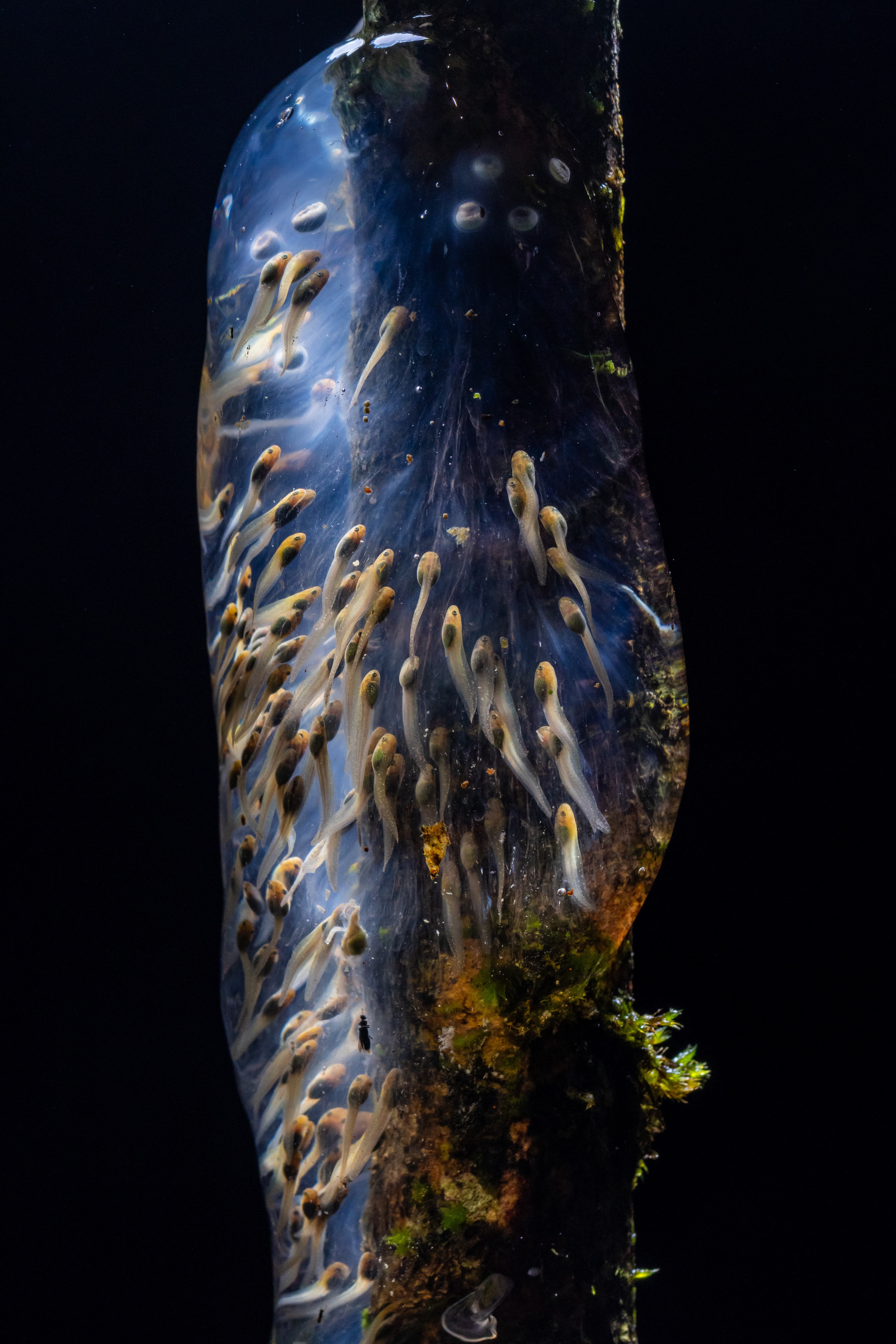
A Malagasy frog (Guibemantis sp.) egg clutch hangs on a small trunk next to a pond in Maromizaha rainforest, Madagascar. “The Maromizaha rainforest, where I spent six months collecting data for my PhD thesis, hosts an outstanding richness of amphibians, with at least 74 endemic species. For many Malagasy frogs, reproduction peaks correspond with winter months, a period characterized by higher temperatures and intense rainfall,” said Carugati.
Arachnids | “Dinner,” Artur Tomaszek
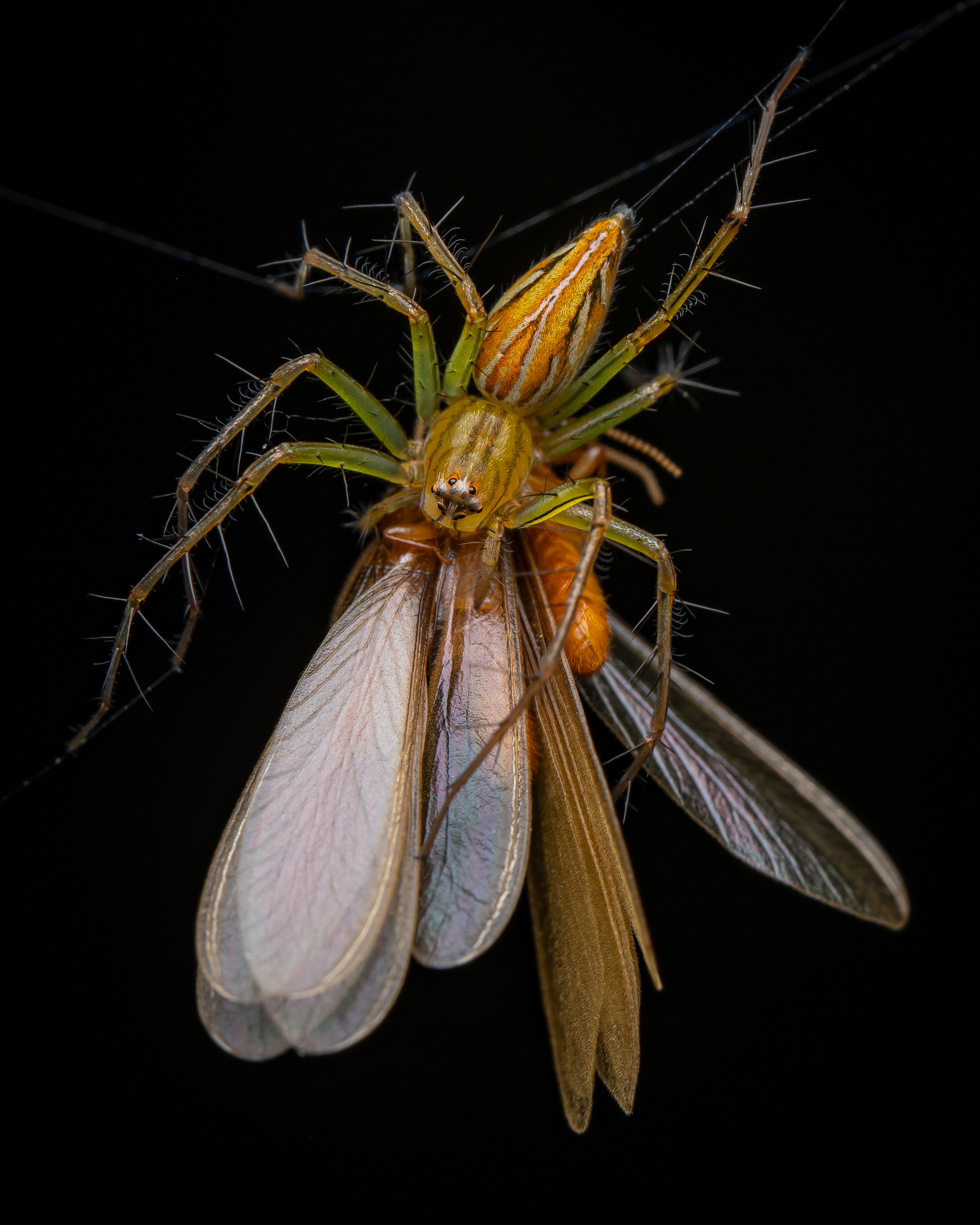
A lynx spider (Oxyopes sp.) feeds on a few termites in Hong Kong. “Lynx spiders are ambush predators that actively hunt prey by sight. Though they produce and use silk, they do not build webs to capture prey. I came across this one during a moth survey on a particularly memorable night. It had been a very hot spring with little rain, but that evening it suddenly started raining, prompting thousands of termites to begin their mating dance and swarm in the air,” said Tomaszek.
Butterflies & Dragonflies | “Butterfly Flash,” Pål Hermansen
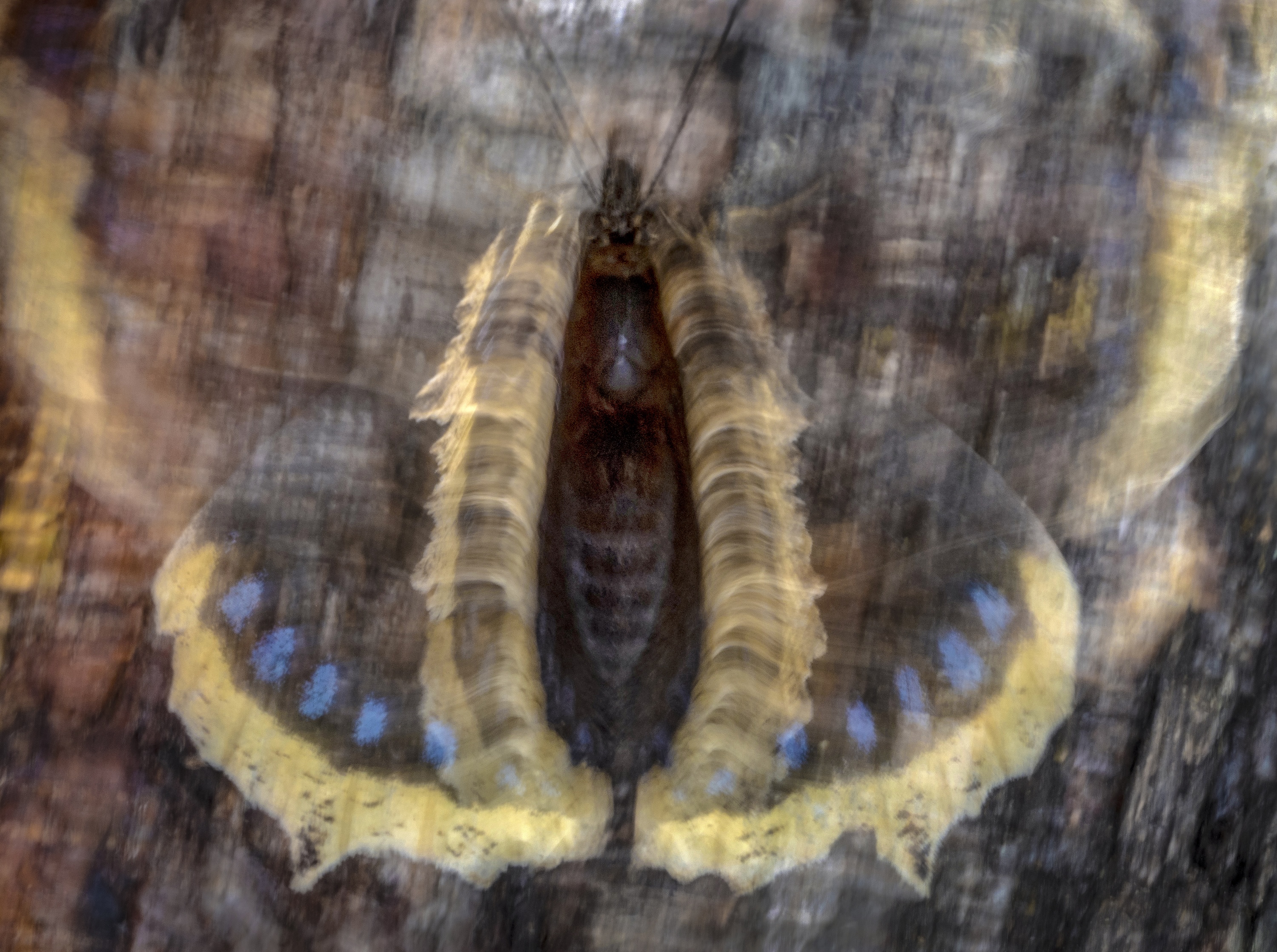
A Camberwell beauty (Nymphalis antiopa) flashes its wings to defend its feeding spot on a birch tree trunk in Follo, Norway. “The butterfly was sitting on a birch tree trunk, drawn by the leaking sap caused by an attack of goat moth (Cossus cossus) larvae. Some red admiral butterflies and wasps were also attracted to the sweet sap. When the wasps approached, the Camberwell beauty did not fly off, but instead defended the spot by suddenly flashing its wings several times,” said Hermansen.
Fungi & Slime Molds | “Mushroom in the ‘Nude’ Style,” Valeria Zvereva
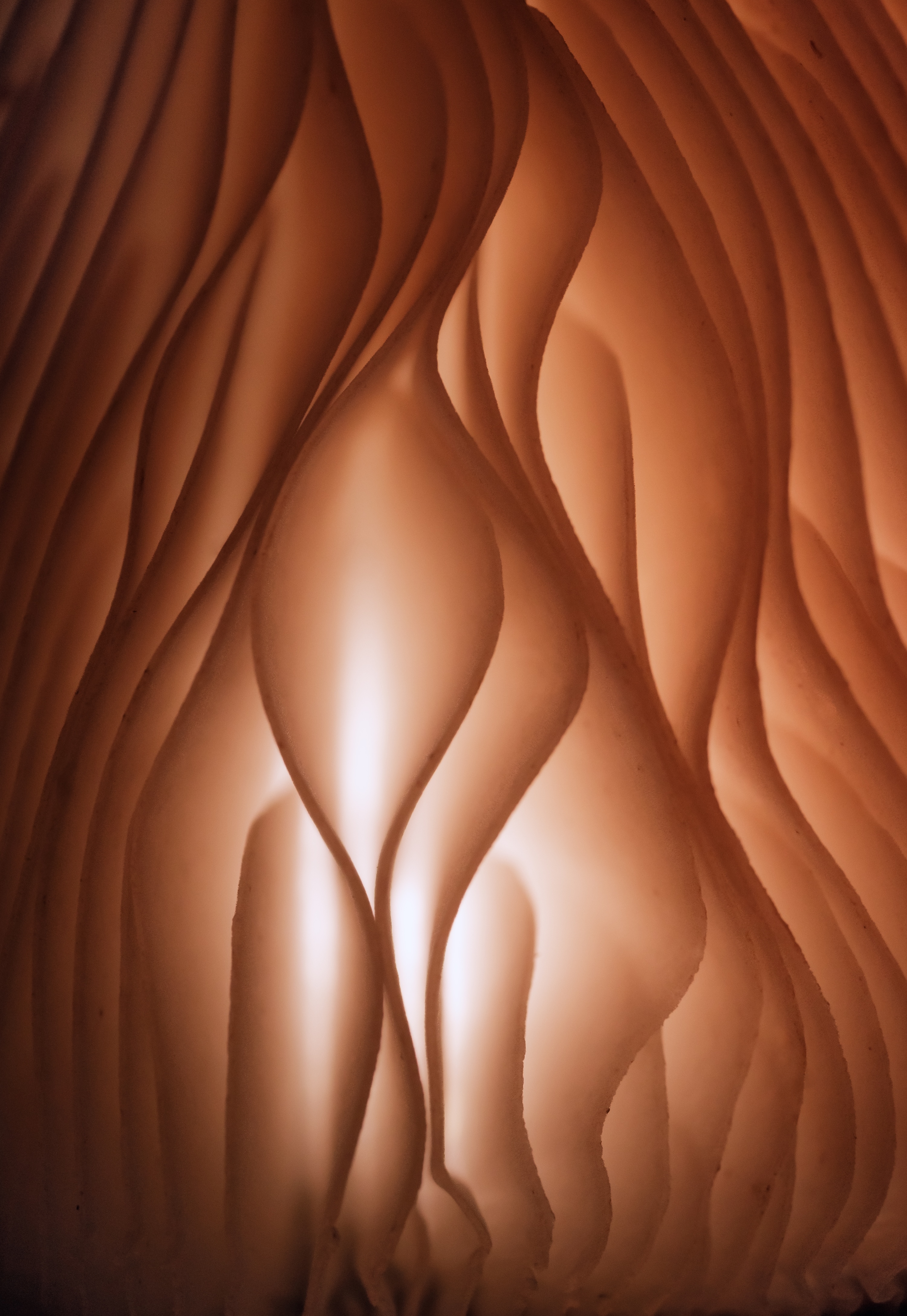
Fragment of the lower part of the cap of a lamellar mushroom in Moscow region, Russia. “The lower part of the cap of a lamellar mushroom. After all, there is something of the ‘nude’ style in this,” said Zvereva.
Insects | “Blue Army,” Imre Potyó
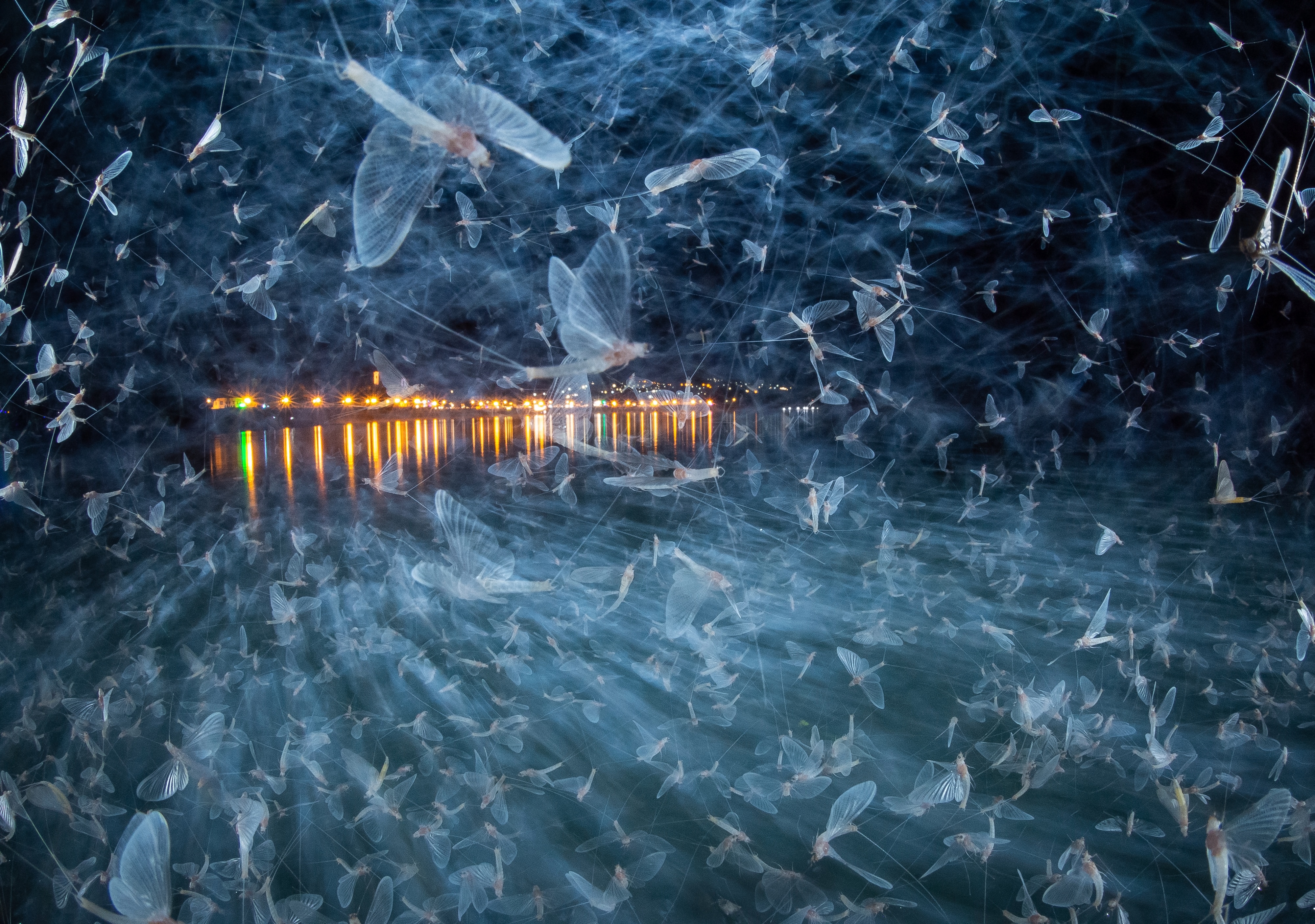
Danube mayflies (Ephoron virgo) swarm in Szentendre, Hungary. “A massive swarm numbering in the millions is approaching the illuminated city of Szentendre. The lights lure the mayflies out due to their positive phototaxis. During the late August festival, dense clouds of mayflies engulfed the restaurants, vendors, wine bars, and concerts, becoming an unmissable and alarming spectacle,” said Potyó.
Intimate Landscape | “Dreamy State,” Sho Hoshino
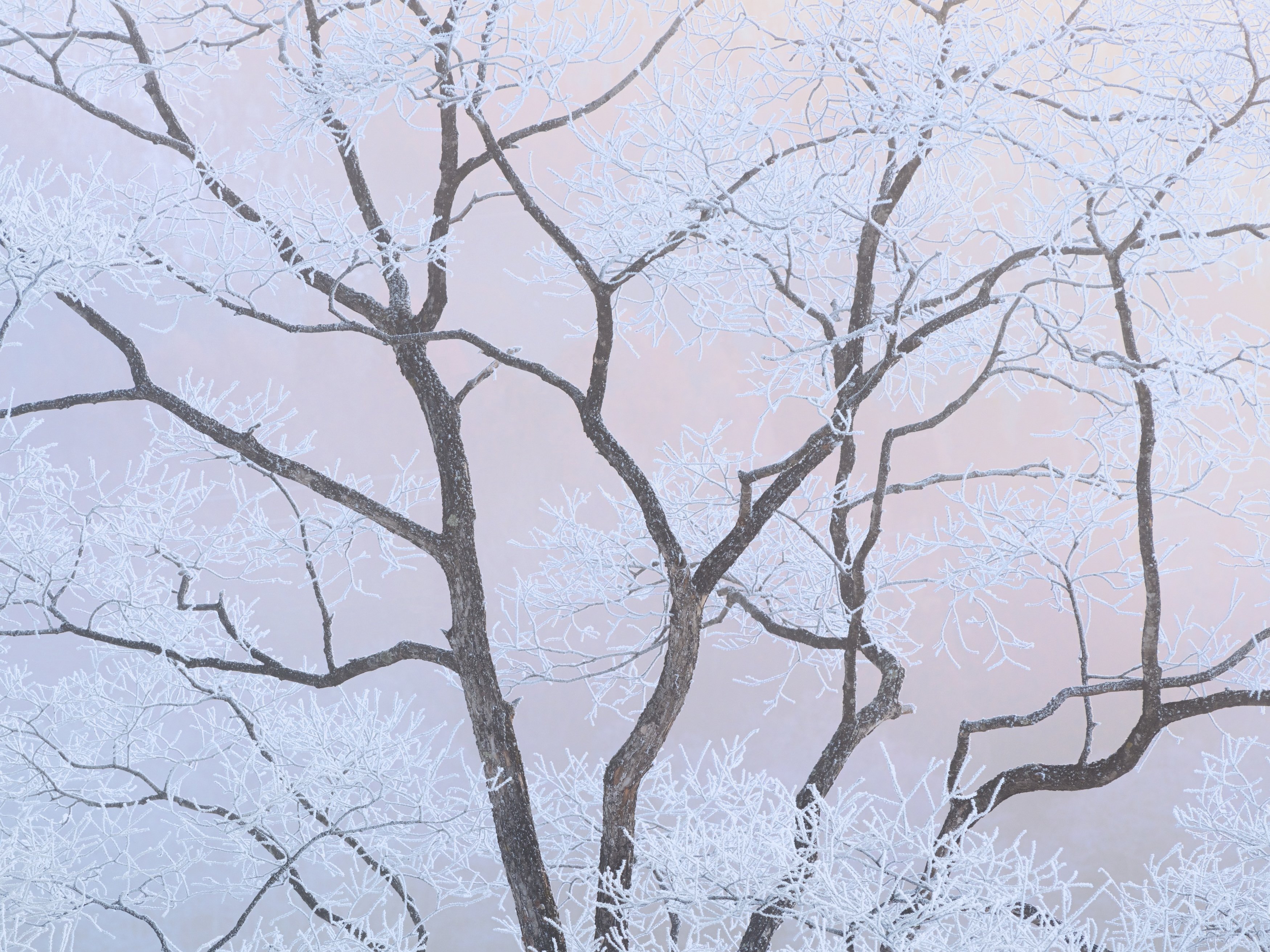
A tree covered with rime ice in Nagano Prefecture, Japan. “I took this photograph when frost-covered trees stood before a mist that turned pink in the morning sunlight. The composition relies on soft, pale tones, anchored by the dark, intricate shape of the tree trunk and its distorted form. I intentionally excluded the base of the tree to highlight the complexity of its trunk,” said Hoshino.
Invertebrate Portrait | “Good Boy,” Laurent Hesemans
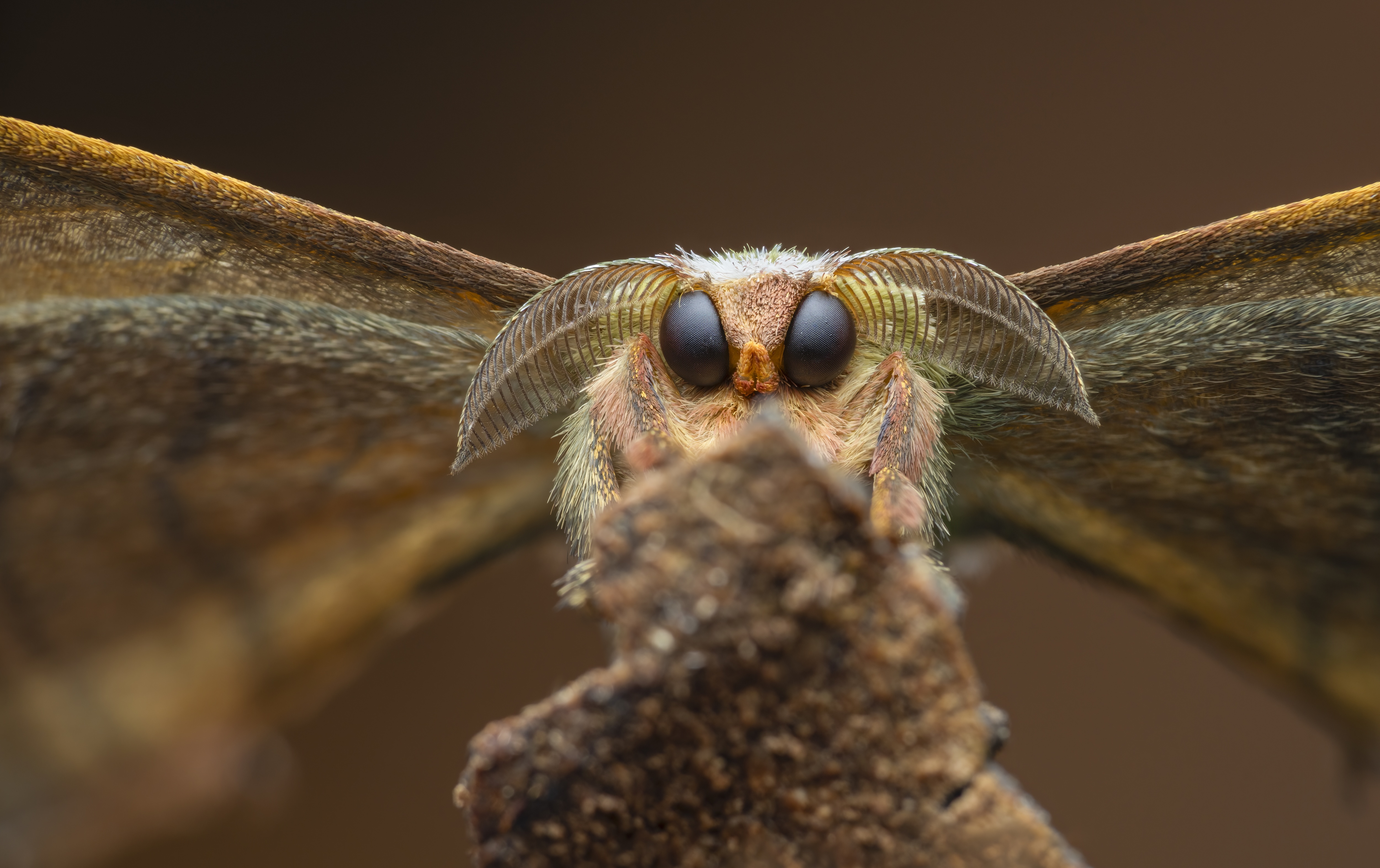
A moth (Bombycidae sp.) in Tinamaste, Costa Rica. “Incredibly photogenic, the large eyes and antenna positions of these moths, especially the males, always lend their portraits a somewhat melancholy feeling. They are a lesson in beautiful subtlety and a reminder to always give even the simplest arthropods and small creatures a second, closer look,” said Hesemans.
Plants | “Rebirth from Destruction,” Minghui Yuan
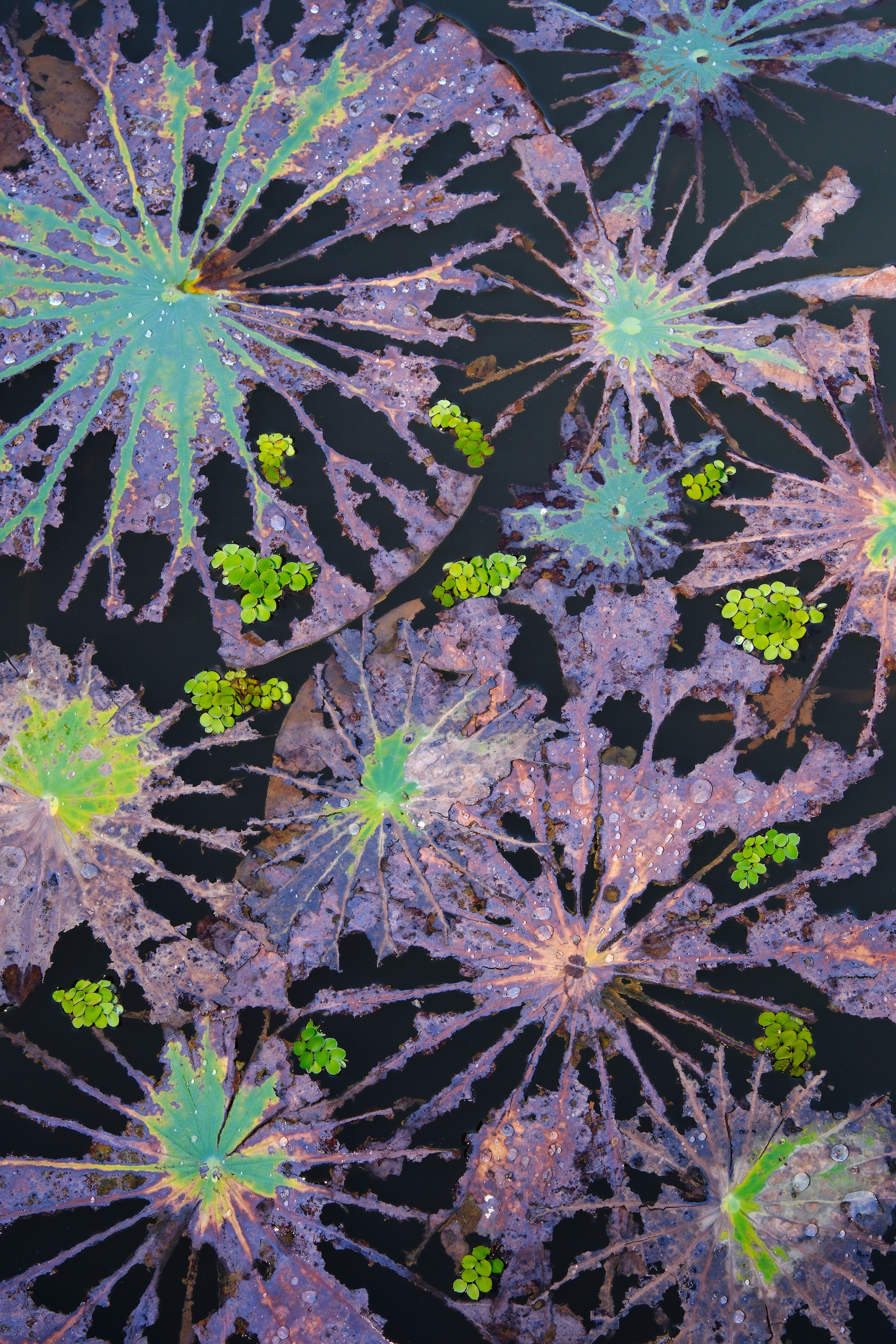
Decaying lotus leaves and floating fern (Salvinia natans) in Xishuangbanna Tropical Botanical Garden, China. “In a pond outside the tropical rainforest in Xishuangbanna, I found these decaying lotus leaves floating on the dark water, their skeletal veins creating a delicate lacework of purple and green. Amongst them, bright clusters of floating fern had taken hold. Floating fern thrives only in warm, clean waters, so finding it here amongst these skeletal leaves felt like the rebirth of hope and a symbol of the continuation of life,” said Yuan.
Studio Art | “COPPER WORKS No.25 – 2024,” Paul Kenny
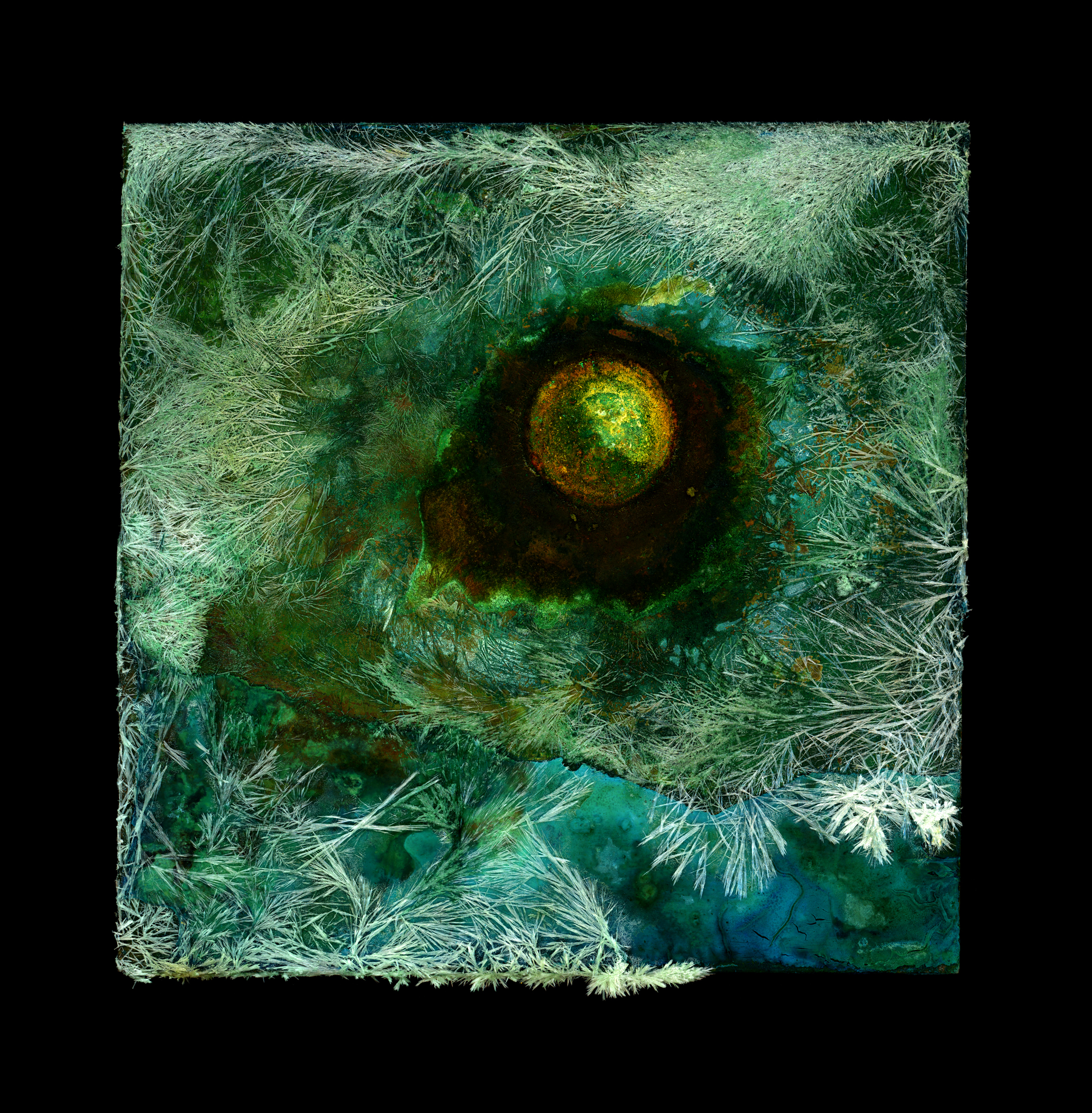
A copper plate distressed and oxidised by everyday household materials. “The fragments of flotsam and jetsam that formed the source of my medium have been replaced with the chemical fragments of common household materials — bleach, cleaners, gardening products, bathroom products. This image is made on a glass plate and captured with a scanner,” said Kenny.
Young Close-up Photographer of the Year | “Guardians of the Hive,” Rithved Girish
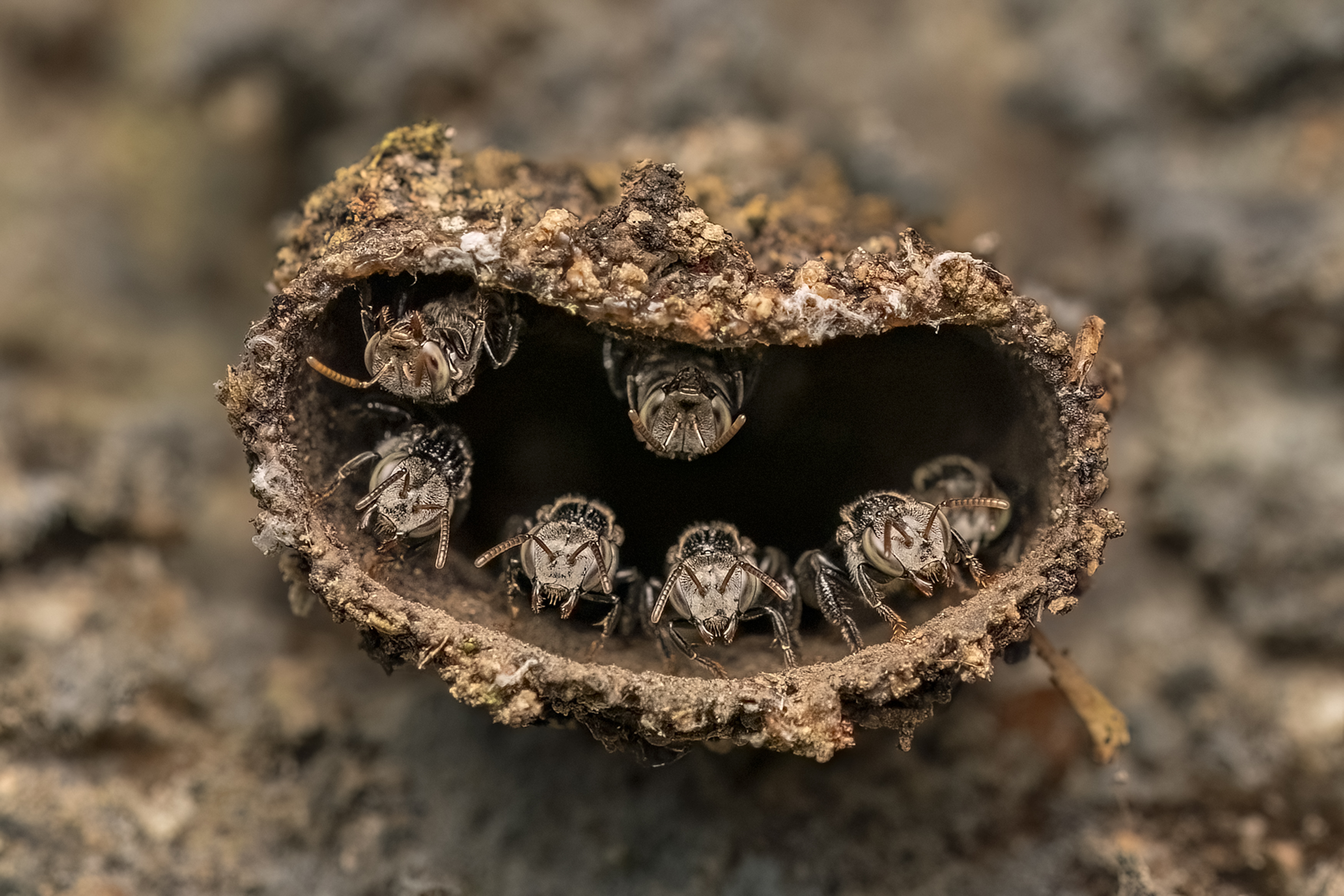
Stingless bee (likely Tetragonula sp.) nest in Mezhathur, Kerala, India. “These small yet remarkable bees had carefully built their home using wax, resin, and mud, creating a unique tube-shaped entrance to safeguard their colony. The guard bees at the entrance remained alert, ensuring the safety of their hive from potential threats. No bait or attractants were used while capturing this moment, allowing their natural behavior to remain undisturbed,” said Girish.