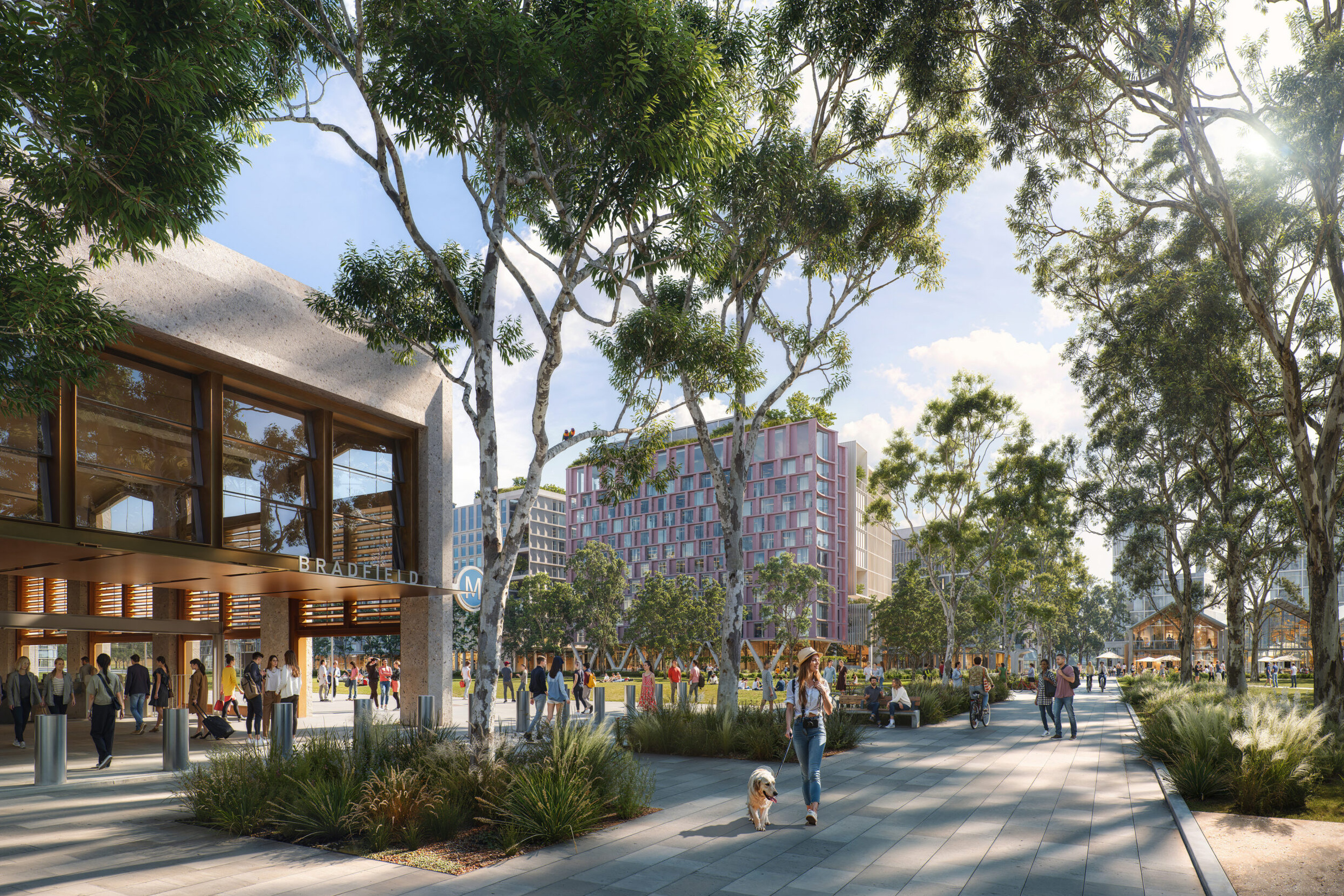
If you’ve been noodling over a trip Down Under, you may want to add Western Sydney to your itinerary. For the first time in over a century, a new major city is coming to the area — and it promises to be a hot spot of diversity and climate resilience. Called Bradfield City, the development will host schools, a 5-acre central park, and up to 10,000 homes, with a minimum of 10% designated as affordable housing.
The $1 billion project, a collaboration between the New South Wales Government, Bradfield Development Authority, and Plenary Group, will be situated about 31 miles west of Sydney’s central business district, next to Western Sydney International Airport. It’s expected to create more than 20,000 jobs and hopefully foster “one of Australia’s major innovation ecosystems,” according to a 2024 master plan.
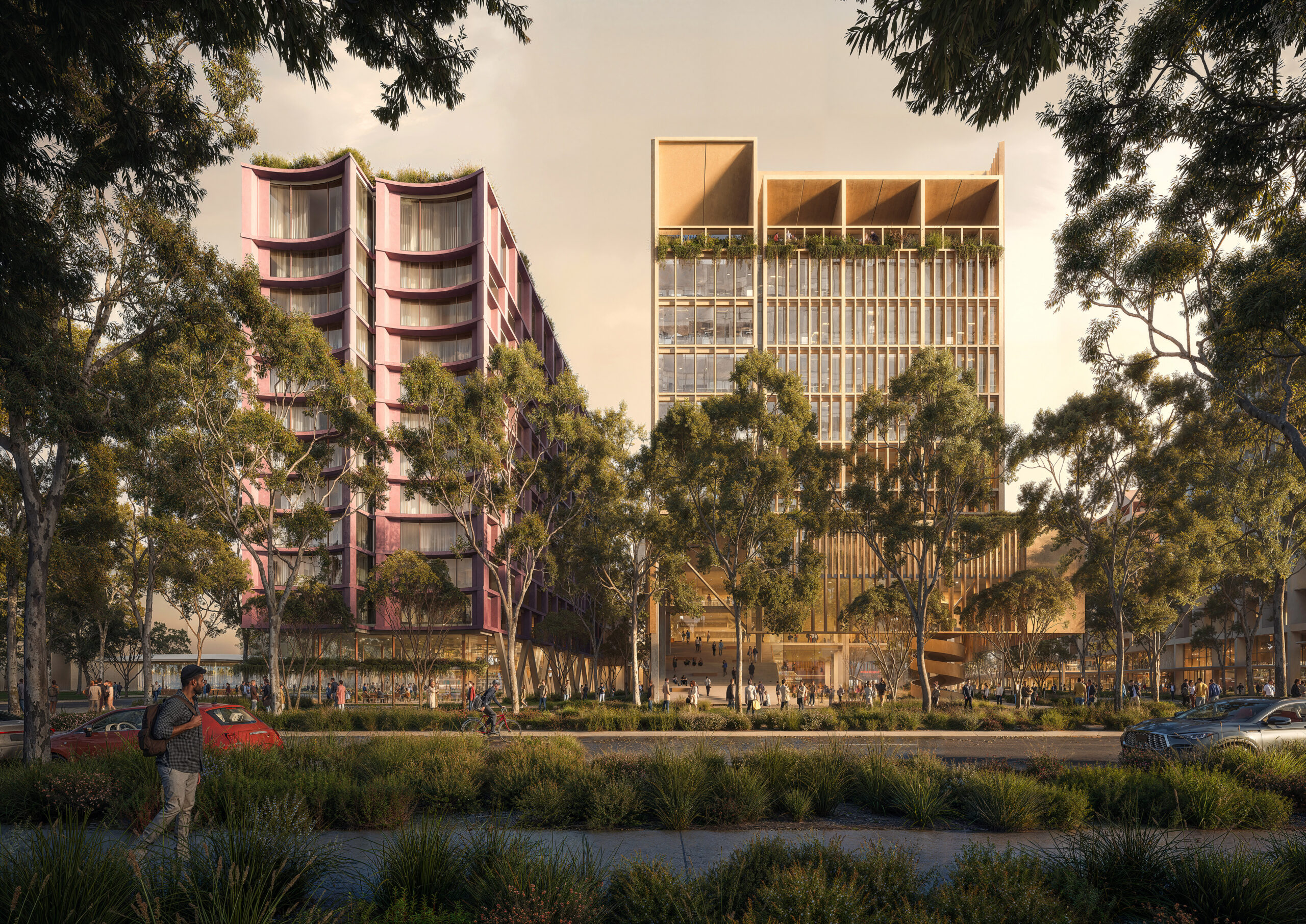
At the same time, the environment will be a major focus. Containing over 88 acres of public open space and green space, the city will support “people, habitats, and pollinators” with green corridors throughout, greenery on buildings, water sensitive design, and around 40% tree canopy cover in public spaces. Residents and visitors can also enjoy biodiverse parklands with swimming opportunities and a large events space.
The first precinct, called Superlot 1, will be built over the next five years and host more than 1,400 homes as well as a university campus, offices, a hotel, retail spaces, and health and child care services. Encompassing about 14 acres total, it will also feature Green Loop: a centrally-located, 16-yard-wide linear park that will connect to Moore Gully, an adjacent nature reserve.
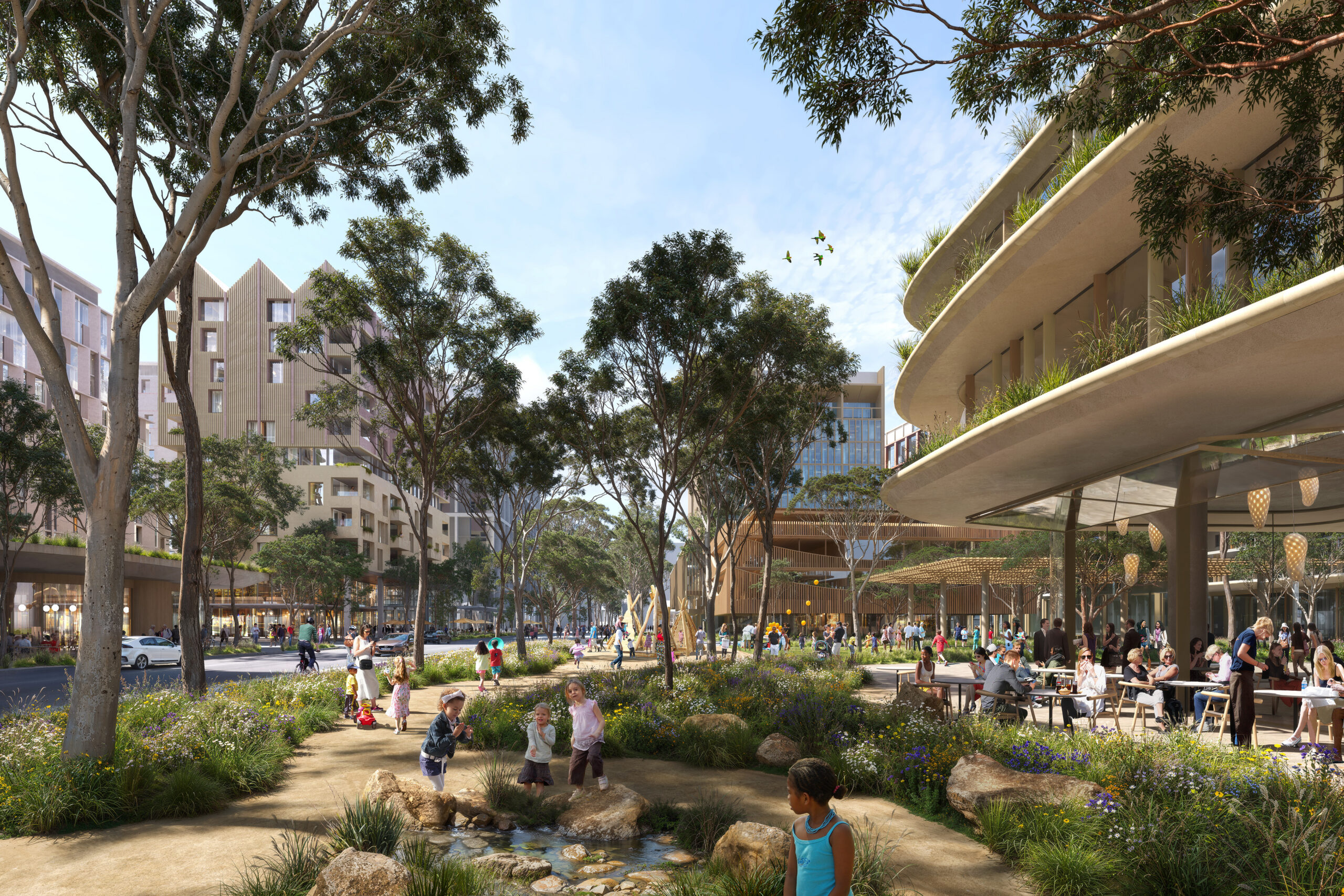
“We set out to create a precinct where nature and urban life are intertwined, ensuring Bradfield City feels welcoming, sustainable, and uniquely of its place,” Kevin Lloyd, an architect at Hassell, a studio helping design the project, said in a Feb. 10 press release.
But as forward-thinking as the city aims to be, it also plans on staying connected to its roots. For thousands of years, Aboriginal people in Western Sydney have looked after “Country” — the term they use for their ancestral domains — and “lived in deep alignment with this important landscape, sharing and practicing culture while using it as a space for movement and trade,” the plan reads.
Working with these communities will be “vital” for Bradfield’s future, it added, noting that “a unique opportunity exists to establish a platform for two-way knowledge sharing, to elevate Country, and to learn from cultural practices that will create a truly unique and vibrant place for all.”
The project leads have already outlined quite a few ways they plan to honor the area’s Aboriginal people: Bradfield City will house a First Nations cultural center among multiple dedicated cultural spaces, and it won’t develop on land that holds an Aboriginal heritage object or is located within a heritage conservation area or place of significance. A high-amenity space called Ridge Park will also offer opportunities to learn about Aboriginal culture.
“To design a new city is both a rare opportunity and a profound responsibility,” Michael Powell, senior associate principal at SOM, another company helping design the city, said in the February press release. “Bradfield City is a chance to shape a vision with Country and community, embedding resilience, sustainability, and innovation into every layer of the city.”
RELATED: “A City in a Park”: Chattanooga, Tennessee, Is North America’s First National Park City