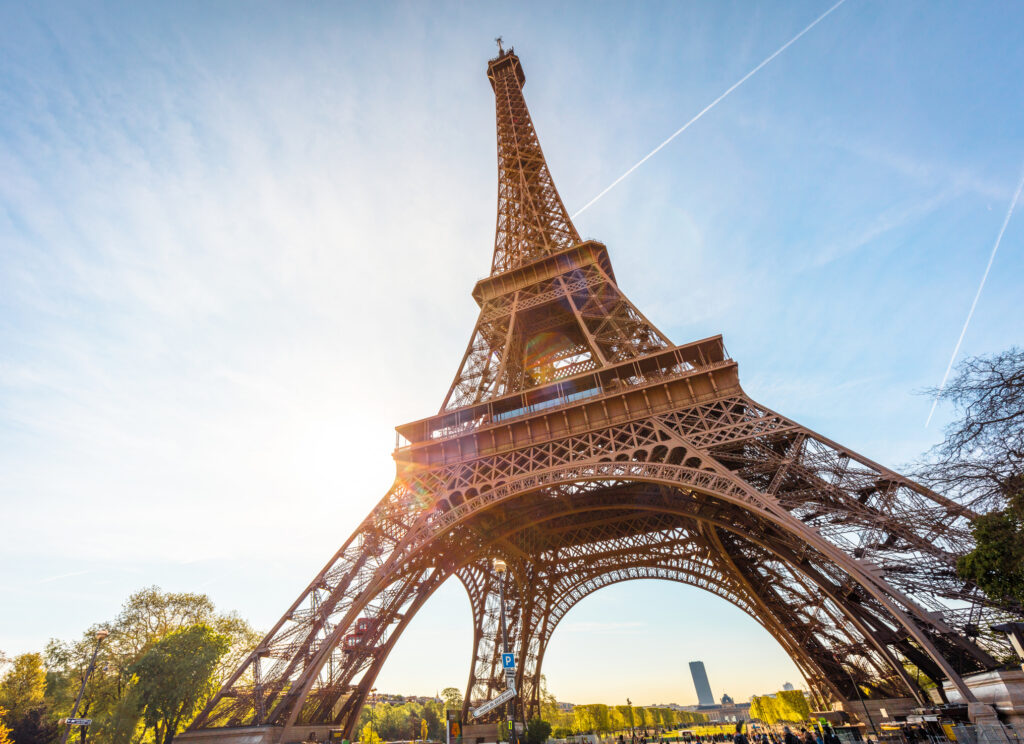
From the Arc de Triomphe to the Louvre Museum, Paris abounds in remarkable architecture, and yet nothing quite compares to the iconic Eiffel Tower. While the world-famous monument has long been a bucket list destination for tourists, it’s undoubtedly even more precious to Parisians. And something special will soon be taking place there: From Sept. 24-27, an independent film group will transform the Iron Lady into a cinema, connecting the tower to an artform that so often immortalizes it.
The Eiffel Tower Operating Company is partnering with mk2, the organization behind Cinéma Paradiso — a free, open-air pop-up film festival. Since its inaugural event at the Grand Palais in 2013, mk2 has hosted the festival at famous Parisian heritage sites, including the Louvre Museum and La Seine Musicale.
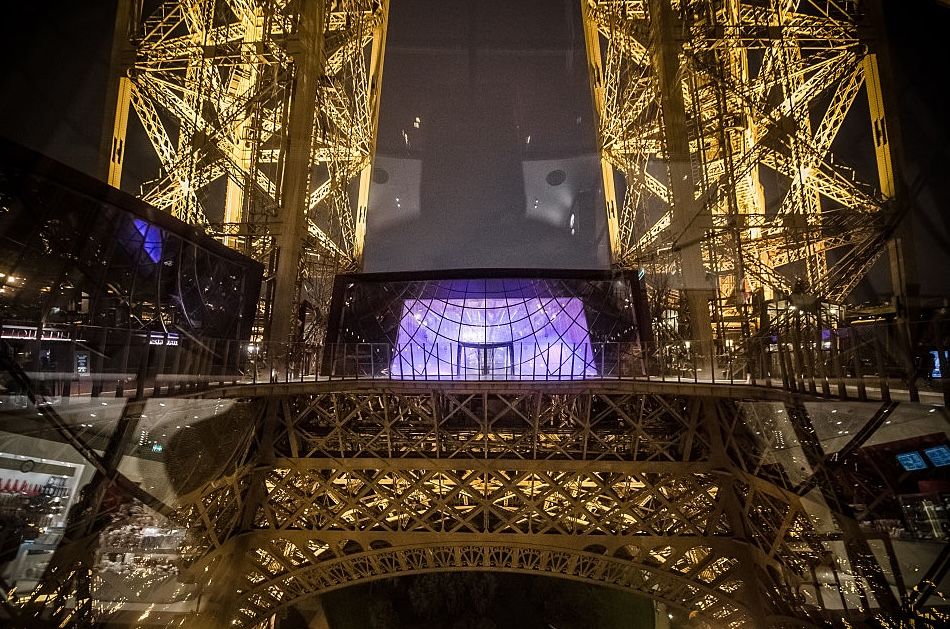
The Gustave Eiffel Lounge during an event in 2015
This month, it will take place in the Gustave Eiffel Lounge, a venue 187 feet off the ground on the monument’s first floor, offering panoramic views of the city. “After the Louvre, taking over the Eiffel Tower is a highly symbolic step,” Elisha Karmitz, mk2’s CEO, said in a statement. “It brings this universal monument closer to Parisians, allows it to be experienced in a new way, and reaffirms mk2’s commitment to a popular, demanding, and accessible culture.”
The Eiffel Tower originally served as the entrance and centerpiece of the 1889 World’s Fair and was intended to stand for just 20 years, until 1909, but the structure’s elegant adaptability proved it to be much more than a monument. Since its inception, it’s served myriad practical, military, commercial, and cultural purposes, hosting everything from an aerodynamic wind tunnel and early TV broadcast station to a world-record roller-skate launchpad. Learn nine more ways it’s been uniquely utilized throughout the decades.
1. Post Office
Attendees of the 1889 World’s Fair could send letters and cards from a small post office located on the Eiffel Tower’s first floor. Artist Léon-Charles Libonis even designed a series of illustrated postcards at the request of the Eiffel Tower company, the first of which became highly sought-after.
2. Apartment
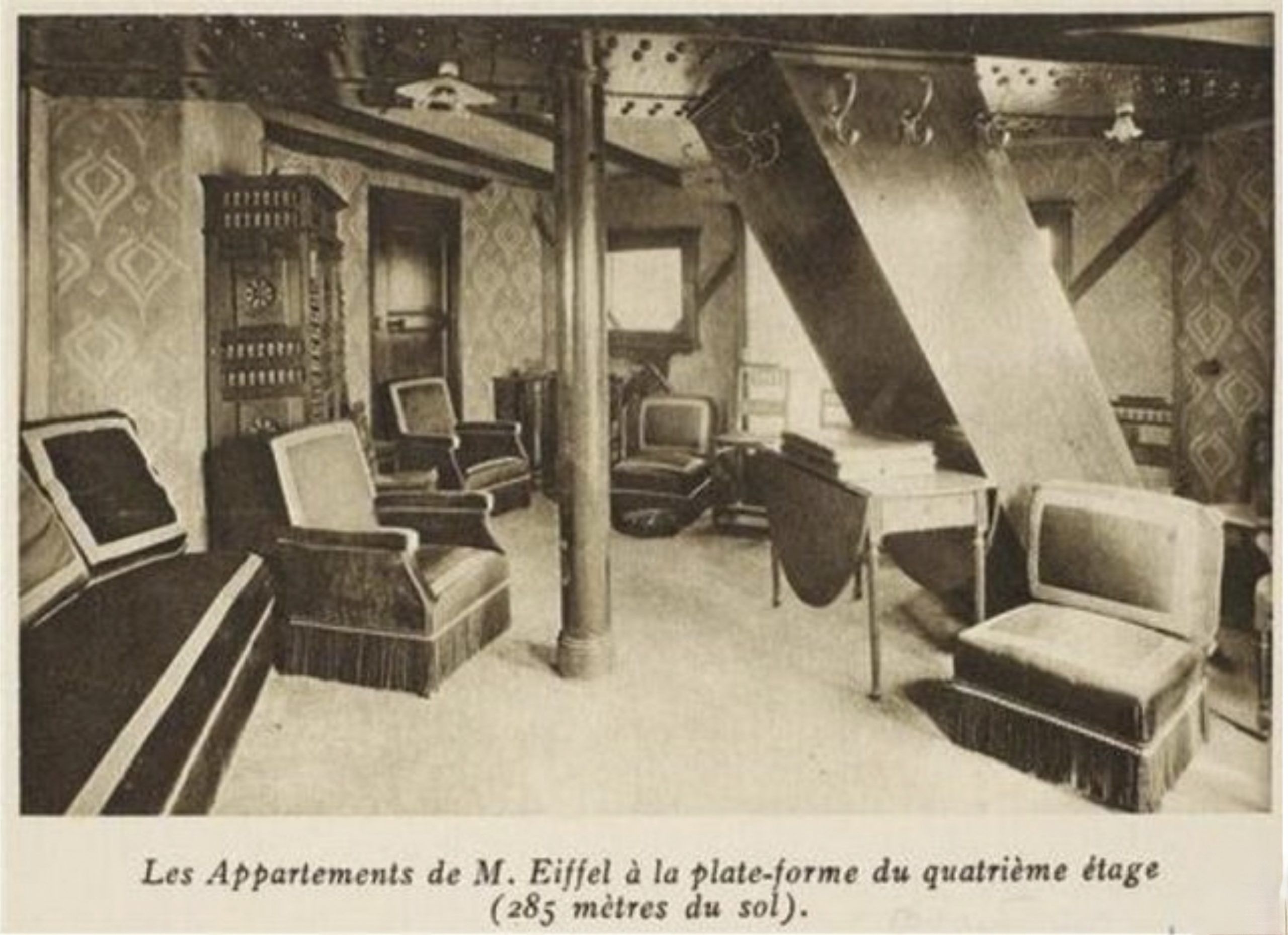
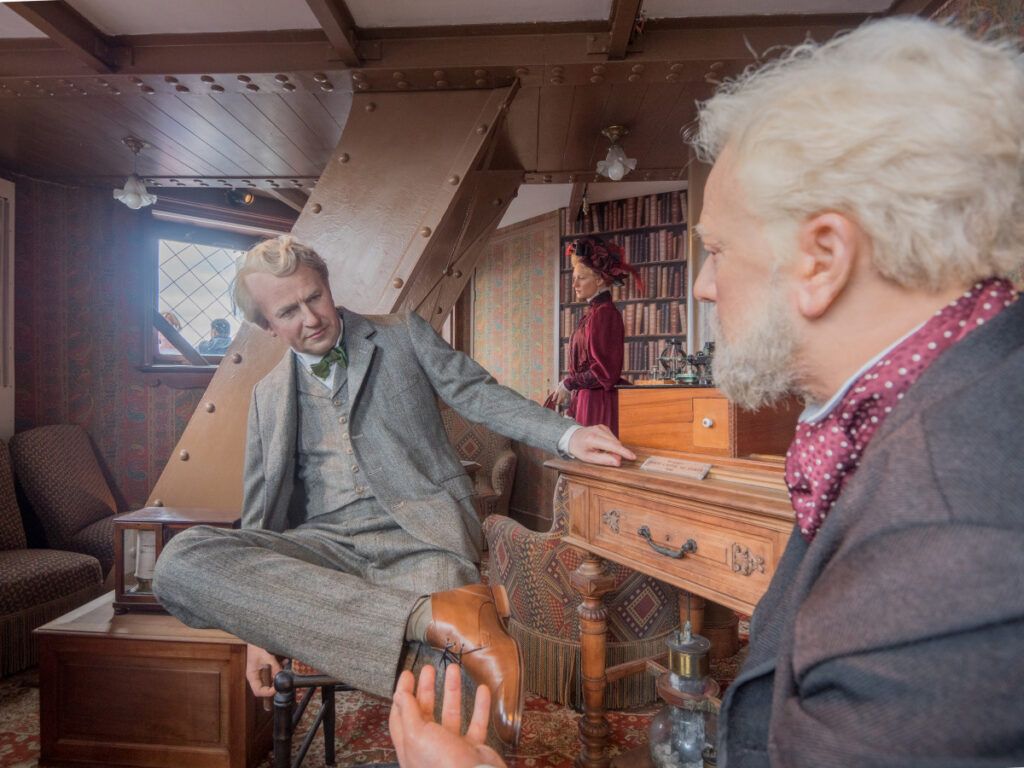
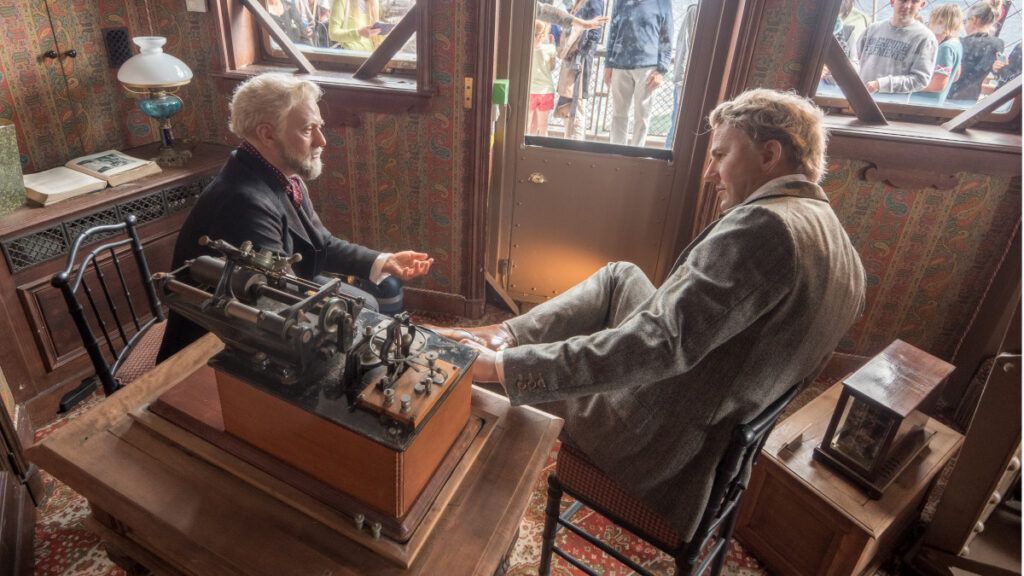
Click through to see the reconstruction
When Gustave Eiffel designed the tower, he included a small private apartment on the third level, featuring bourgeois-style 19th-century decor and furnishings, a wraparound balcony, a living room, a kitchen, and bathroom facilities. Since Eiffel primarily used it as a scientific lab, office, and private reception room, there was no bedroom. That didn’t keep multiple members of the Parisian elite from attempting to rent the apartment, though. Still, Eiffel kept it strictly private, inviting only select guests, including Thomas Edison. Today, visitors can view a reconstruction of Eiffel’s office at the top of the tower.
3. Aviation Turning Point: Santos-Dumont Airship Flight
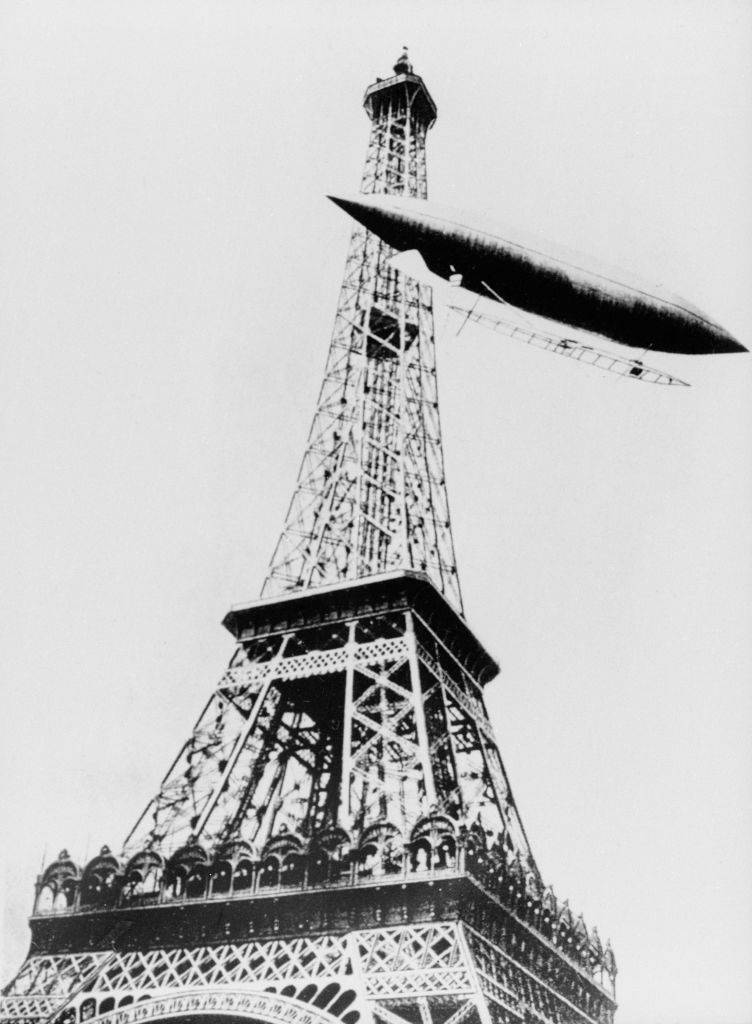
On Oct. 19, 1901, Brazilian aviator Alberto Santos-Dumont flew his airship from the French Aero Club in Saint-Cloud around the structure and back, earning him the Deutsch de la Meurthe prize and 100,000 francs in award money. Although the 30-minute-and-40-second journey would take about twice as long by car today, it was a significant feat for its time, proving that (relatively) speedy airship travel was possible.
4. Aerodynamic Wind Tunnel and Drop Laboratory
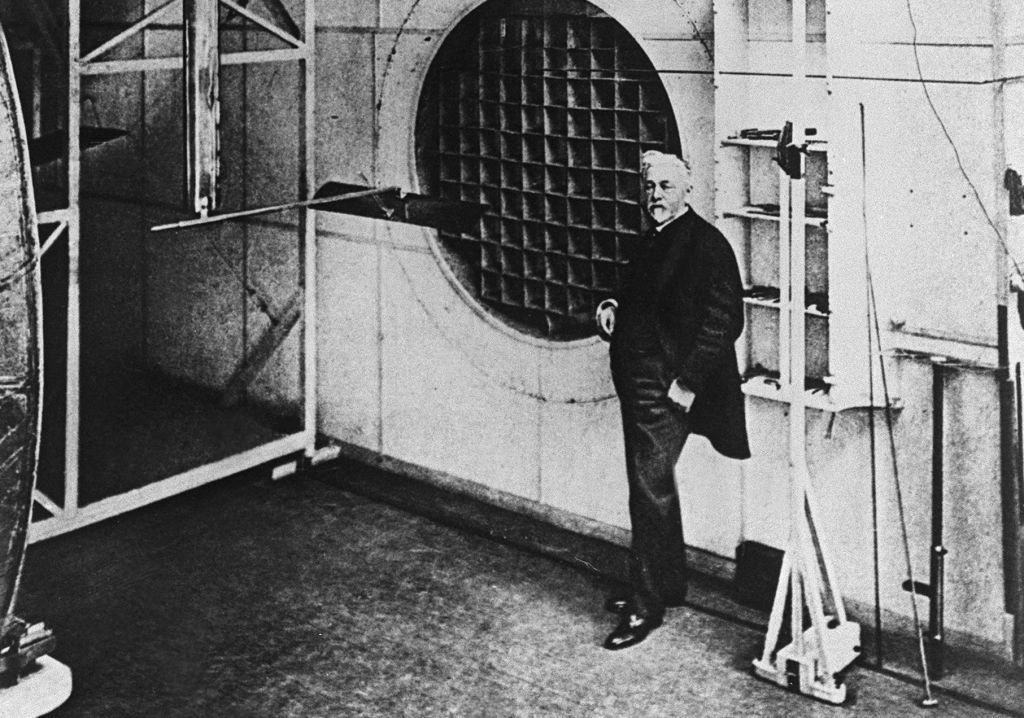
Early in the Eiffel Tower’s history, Gustave Eiffel considered ways to demonstrate its long-term value, including using it as a physics and aerodynamics laboratory. Between 1903 and 1905, he dropped various objects from the second floor to the ground using a cable, allowing him to study the effects of wind resistance. In 1909, he constructed a wind tunnel at the base, powered by the tower’s generator, to further examine the impact of varying levels of wind resistance. Besides informing his building designs, the experiments contributed to early developments in aviation.
5. Military Radio and Interception Station
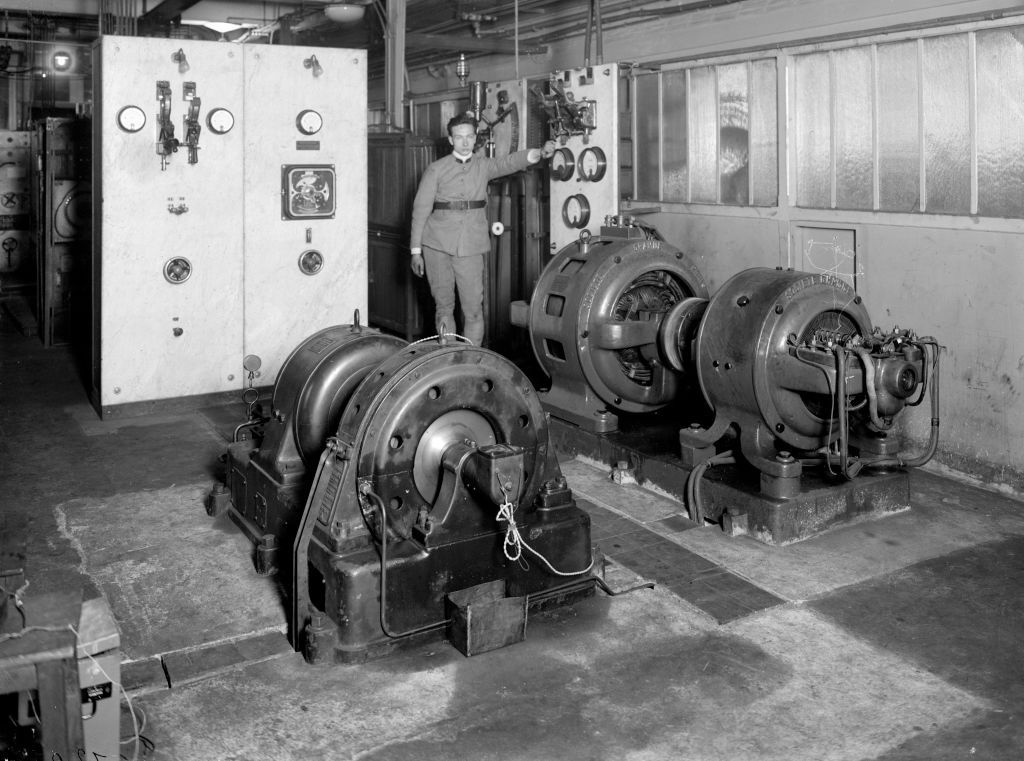
Although the tower was initially intended to be a temporary structure, Gustave Eiffel’s installation of wireless telegraphy equipment and his use of the Iron Lady as a laboratory helped to save it from demolition. In 1898, scientist Eugène Ducretet established the first radio link between the tower and the Pantheon, and during World War I, its military radio equipment intercepted German transmissions. After the war, France’s first radio station launched from the tower in 1921, broadcasting daily programs until 1940.
6. World’s Largest Advertisement
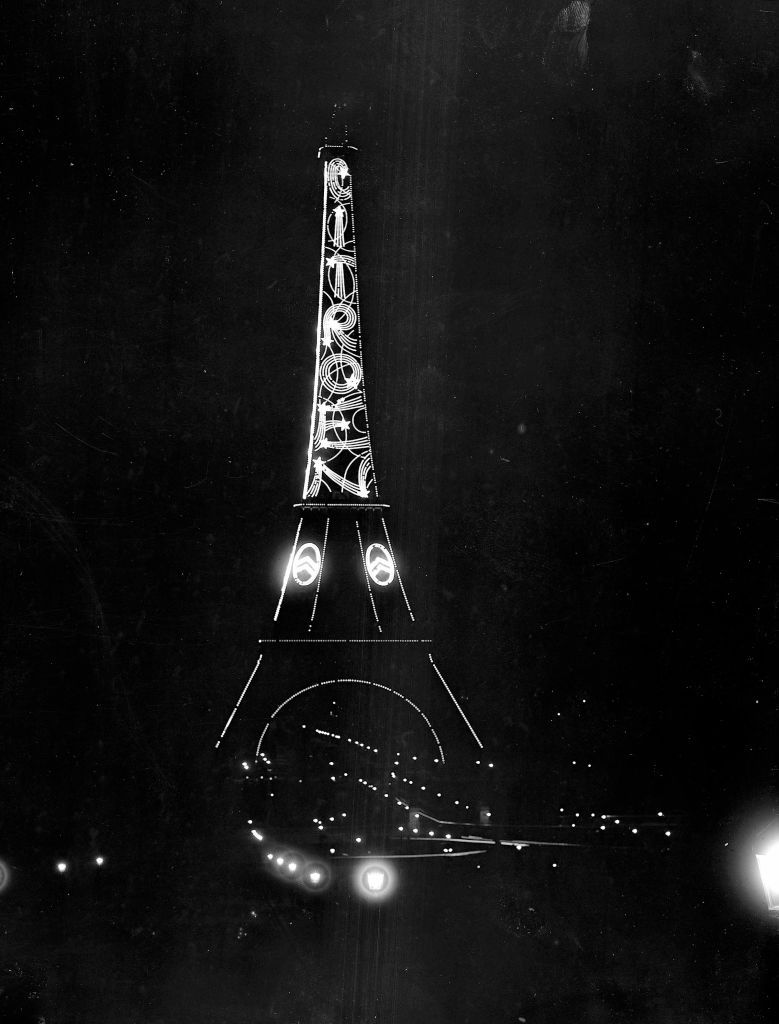
In 1925, French automaker Citroën — founded by André Citroën, who was dubbed “the Ford of France” — emblazoned the tower with 250,000 light bulbs that spelled out the company’s name. Each letter was about 100 feet high, making the ad visible from 25 miles away in all directions. At the time, it was the world’s largest advertisement.
7. Early TV Broadcasting Station
In 1935, the installation of a state-of-the-art television transmitter at its summit turned the tower into a powerful TV broadcast site. The emitter began regularly broadcasting programs in 1937, but it was sabotaged before the German army took possession of it in 1940. French broadcasts resumed after the liberation of Paris in 1944, and when American troops returned control of the summit in October 1945, France’s national broadcaster began transmitting again. The tower has remained an important part of French TV through the decades.
8. Ice-Skating Rink
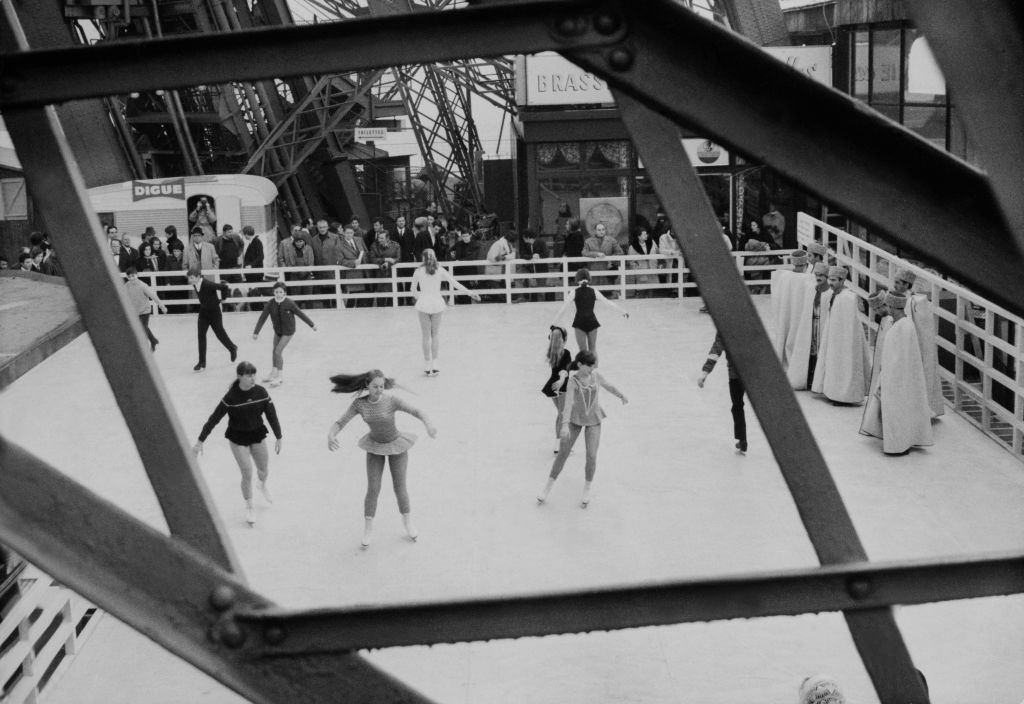
Paris may be known for its gorgeous springtime, but winter can be equally enchanting. In 1969, a public ice-skating rink on the tower’s first floor treated visitors to an especially memorable experience, with the seasonal installation returning regularly until 2017.
9. World-Record Inline Skate Drop
On May 29, 2010, champion extreme inline skater Taïg Khris broke the world record for the highest inline skate drop into a halfpipe. He leapt 41 feet from the first floor onto a 130-foot ramp that sent him sliding into a massive airbag. “How did I feel up there? I mean, it’s just incredible, you know,” he said in a Wall Street Journal video. “The height, you really have to turn your brain to put it off because it’s too scary.”
RELATED: A Walk Through History: The Oldest Homes in the US That You Can Tour Today