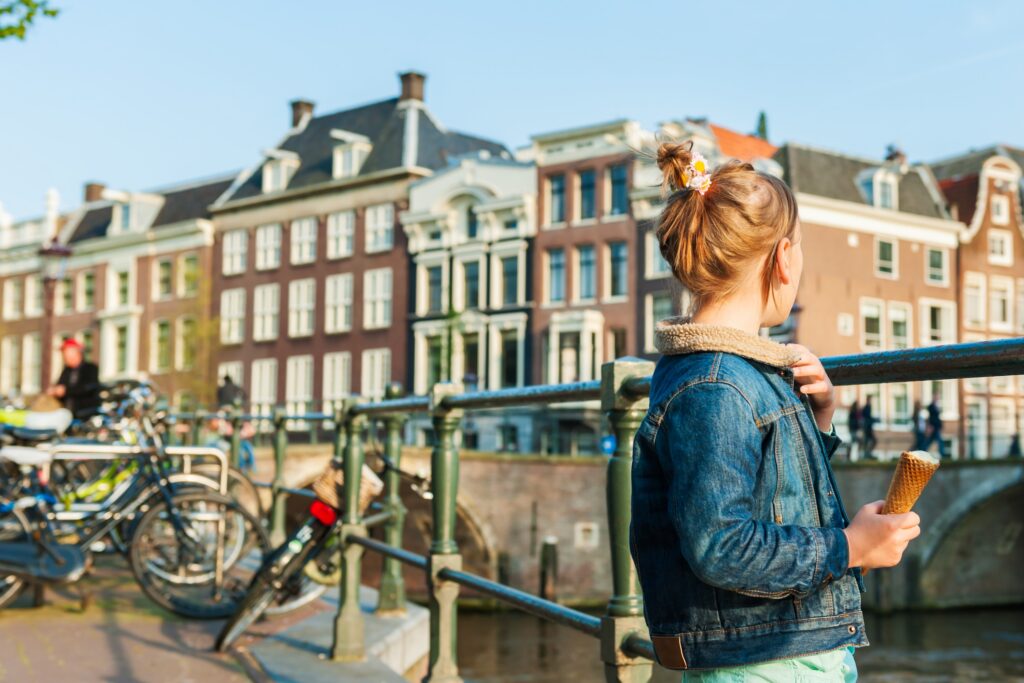
Unicef recently released its latest report on child well-being, and the Netherlands (which routinely ranks among the happiest countries in the world) took the No. 1 spot for mental health. The results spurred a crop of articles discussing why that may be — is it the autonomy Dutch kids have? The ban on phones in schools? The bikes?
Likely, it’s all these factors and more, the gestalt of growing up there. But that doesn’t mean the individual elements can’t be evaluated for their impact on happiness. Positive.News recently dug into the findings with Margreet de Looze, assistant professor of interdisciplinary social science at Utrecht University, who has been studying global child well-being for years.
“Where Dutch children really stand out is that they have very good social relations,” de Looze told the outlet. “The amount of support they receive from family and friends, from teachers and classmates — in all of these areas, Dutch children score high.”
Keep reading to learn more about what may make the Netherlands so adept at raising happy kids.
Parenting
Where there are children, there are, of course, parents — and in the Netherlands, kids might see more of them than elsewhere on the continent. In a 2026 analysis, Dutch people were found to work fewer hours per week than anywhere else in Europe.
“It’s common for Dutch parents — men and women — to work part-time,” de Looze said. “For children, that’s valuable, it brings you closer as a family. But it’s not possible for everyone.”
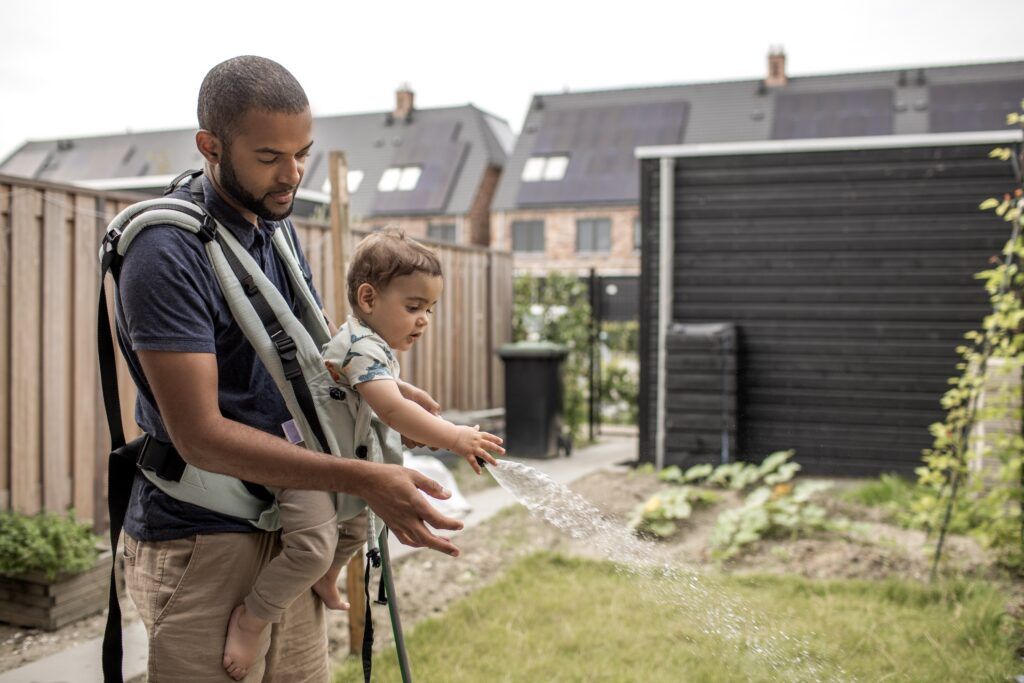
Interestingly, though parents may be around more, their offspring often enjoy a level of independence that some say is a boon for their mental health. “Dutch parenting is all about raising self-sufficient kids,” one American mom living in the Netherlands told Mary Frances Ruskell in a 2025 essay for CNN. “My older two (ages 12 and 14) bike more than 10 kilometers (6 miles) daily to school since there are no school buses.”
And the road doesn’t end at the actions of a child’s actual parents. In a piece for The Times, Mark Smith, a British expat raising his child in Amsterdam, makes the case that it truly does take a village. “The Netherlands doesn’t produce happy children because Dutch parents are more enlightened,” he writes. “It produces happy children because the system is built so that no individual parent has to be.”
In the Classroom
Part of that village are the teachers and other adults involved in the education system. In 2024, the Netherlands implemented a nationwide ban on phones and other electronic devices in primary and secondary schools, and a study commissioned by the government found promising results a year on.
“Less distraction, more attention to the lesson, and more social students. No more mobile phones in the classroom is having wonderful positive effects. It’s great that schools are putting their shoulders to the wheel on this,” State Secretary for Primary and Secondary Education Marielle Paul told Reuters last July.
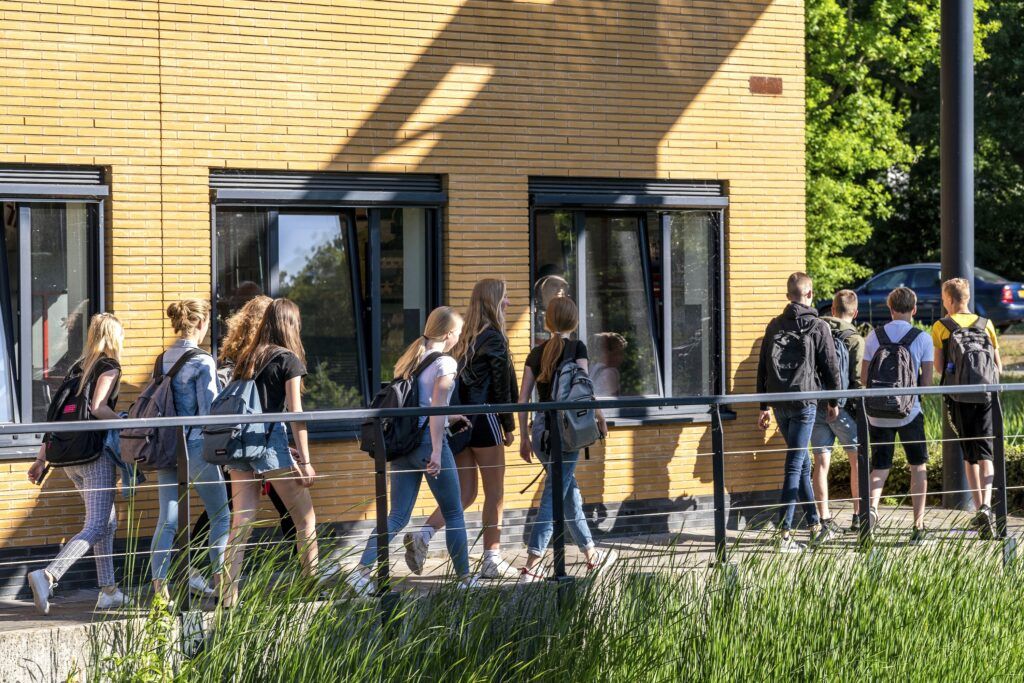
Speaking to the BBC this past March, one Dutch student seemed to confirm those findings: “Maybe now we are a little bit more in the moment. In the break no one is really on their phones.”
Education plays a role in developing autonomy as well. “Agency is very important,” Liesbeth Levy, director of the Knowledge Center for Cultural Education Rotterdam, told Positive.News. “Children must learn to develop their judgment and tastes.” The center runs programs throughout Rotterdam, which is the poorest big city in the country, and partners with other orgs across the nation.
“Cultural education is more than just playing the flute or doing a play, it’s about stimulating the imagination of children, giving them space to see who they are,” she said. “It’s important that children are agents of their own education, but they need teachers to show them. We help children to make their world bigger.”
Gender Equality
Studies suggest that gender equality leads to greater life satisfaction in both men and women, and de Looze has seen similar results in her research on kids’ well-being — so the Netherlands being a leader in this area is likely contributing to the high mental health ranking in the Unicef report.
“We found that in more gender-equal countries, boys and girls were happier than in gender-unequal countries,” de Looze said. “That’s interesting, because often people believe that it’s specifically girls who benefit from gender equality.”
She added: “Where there’s more equality, social support is typically stronger. In countries with high economic inequality, people are unhappier, even the richest. More equality is better for everyone.”
Published in May, the Unicef assessment is the latest in the agency’s Innocenti Report Card series. It evaluated 44 countries, all of which were classified as high-income and/or are members of the Organization for Economic Cooperation and Development. It ranked 37 of them in physical health, mental health, and skills (some couldn’t be ranked due to lack of data).
Mental well‑being was determined based on two measures: the percentage of children with high life satisfaction at age 15, and suicide rates for adolescents ages 15-19. Read the full Report Card here.