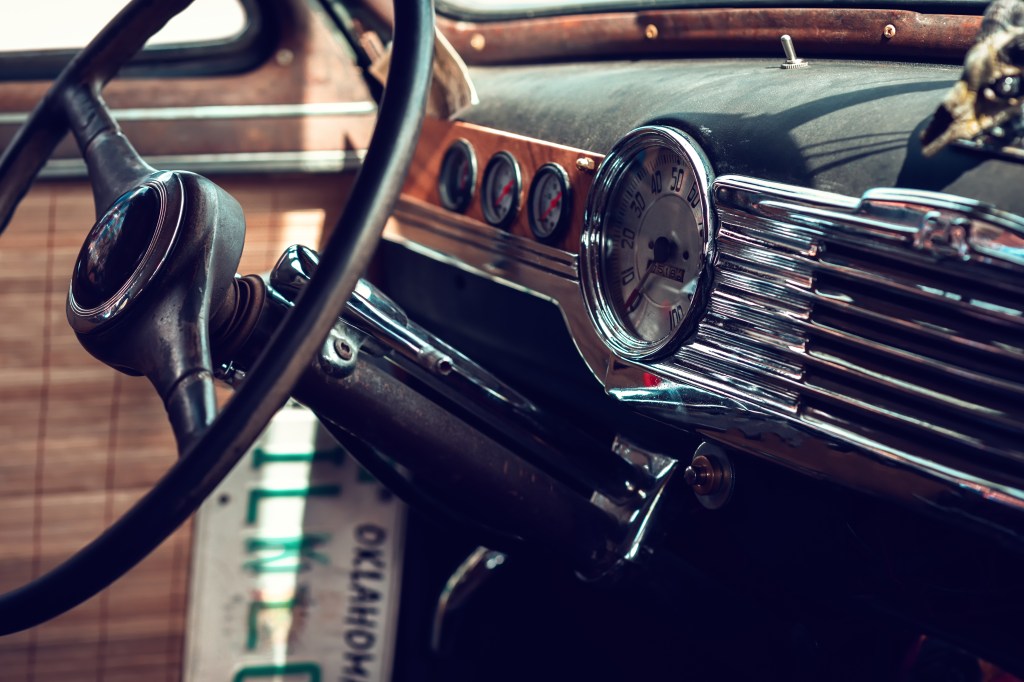
It’ll probably happen sooner than you’d like: waking up to frigid temperatures, scurrying from your house to your vehicle, and rubbing your hands together while waiting for the car heater to kick in. And once that gloriously warm air rushes through the vents, thawing your frozen face and clearing the fog from your windshield, you can finally start heading to your destination.
Our winter morning commutes would be a lot frostier without the genius of Margaret A. Wilcox, a mechanical engineer born in Chicago in 1838. According to Jalopnik, even before automobiles became commonplace on American streets, she’d identified a need for heating in railway cars, which had little insulation despite the Windy City’s icy winters.
Internal combustion engines produce a great deal of heat while they’re running, so Wilcox came up with the idea of recycling that heat by redistributing it throughout the interior of the car. Her design ran a system of water pipes along the car floor through the engine, which warmed the water and circulated the resulting heat in the cabin like a radiator. She received a patent under her name for the brilliant invention in 1893.
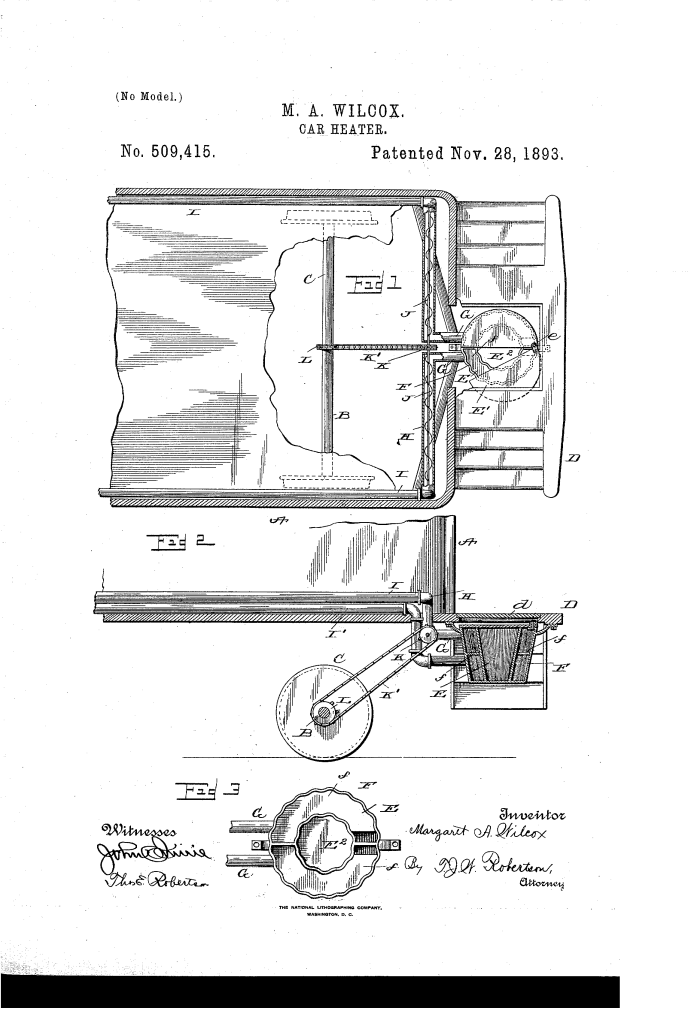
But, as anyone with radiators in their home can attest, this technology often works a little too well and can be difficult to control. Wilcox’s invention didn’t allow for regulating the temperature, so the heat would actually keep increasing throughout the drive, per Jalopnik. Essentially, the temperature settings back then were either “freeze” or “roast.”
Still, by using residual heat already produced by car engines without the need for an additional mechanism, Wilcox’s concept was so ingenious that it formed the basis of subsequent vehicle heating systems, even though it took a few decades. By 1907, when enclosed car cabins had become more widespread, mechanical heating was still considered a luxury. Drivers instead turned to fashionable outerwear, portable heating devices, or incredibly dangerous mechanisms that recirculated hot (but noxious) exhaust fumes into the car.

According to Goodwood Road & Racing, Ford incorporated Wilcox’s engine-heated concept into a luxury add-on for its Model A in the late 1920s. Subsequent companies solved the zero-to-inferno overheating issue of Wilcox’s design by using an engine’s hot liquid coolant to heat a tube of filtered air, which could first be mixed with cooler air from outside to achieve the driver’s desired temperature and then fanned through vents on the dashboard. This method is also more efficient when it comes to keeping the engine cool, as some of its heat gets transferred away to the heater.
Though car climate control systems are much more sophisticated these days, Wilcox still deserves credit for envisioning a way to make motorists more comfortable with just a few extra pipes. In 2020, her invention was named one of Inventors Digest’s top 10 patents filed by women.
The Lemelson Center for the Study of Invention and Innovation points out that the U.S. patent system may have been surprisingly gender blind — women started securing patents at the beginning of the 19th century — a time when Wilcox and her contemporaries still had limited political or property rights. Women inventors also had few opportunities for formal education, faced social pressure to remain homemakers, were often prohibited from owning property in their own names, and had no recourse if their husbands were to steal their patents and profit off their inventions. Many women inventors had to apply for patents under their husbands’ names.
Despite the obstacles of her era, the car heater was just one of Wilcox’s inventions for which she successfully secured patents. Her first, in 1890, was for a combined clothes and dish washer, aiming to ease the manual labor involved in laundry and kitchen cleanup. Two years later, she patented a combined cooking and water-heating stove that could both boil water and heat an entire home via a radiator system. She also patented a dough mixer around the same time as the car heater, as well as a spring-loaded suspended jumping swing for exercise in 1905.
So the next time you climb into your bitterly cold vehicle on a frigid morning and crank up the heat, thank Wilcox for her ingenuity and perseverance. During a period when women engineers and inventors were scarcely heard of or recognized, she foresaw a solution to a problem — and laid the groundwork for us to be comfortable behind the wheel during the bone-chilling months of winter.
RELATED: 8 Tech Inventions That Transformed Our Daily Lives