This article was originally written by Stephen Beech for SWNS — the U.K.’s largest independent news agency, providing globally relevant original, verified, and engaging content to the world’s leading media outlets.
A small trial led by researchers out of China and the U.K. has turned up some promising news for people experiencing anxiety or depression. Half of participants with treatment-resistant severe depression saw clinical improvement after undergoing deep brain stimulation, or DBS, and more than a third experienced an almost total elimination of their symptoms.
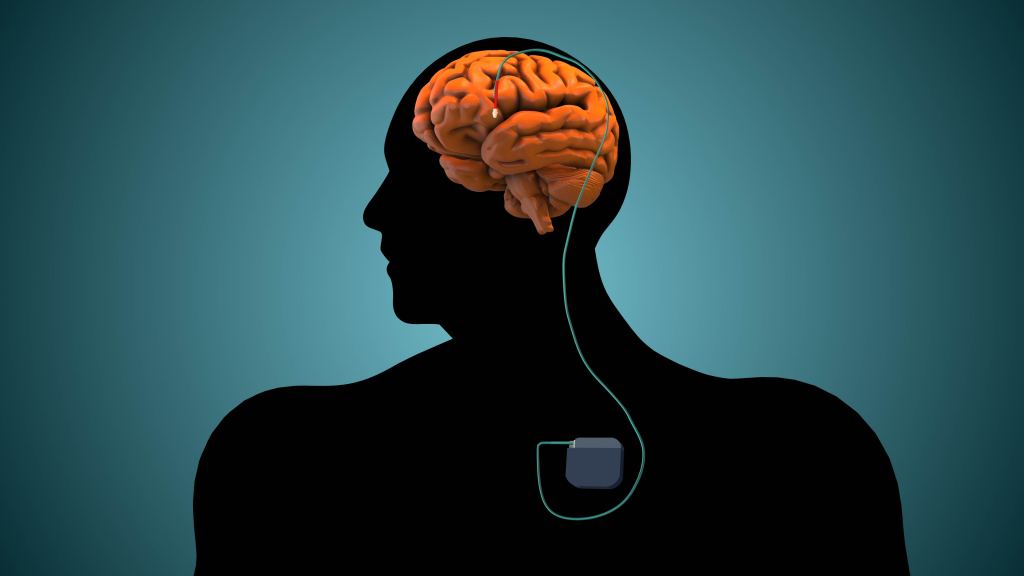
The technique involves thin electrodes being implanted deep into the brain that transmit mild electrical pulses to correct aberrant activity. It’s been used in recent years to treat a range of conditions, including — with noted success — Parkinson’s disease.
The study also identified a “telltale” signature of brain activity that predicted how well individual patients responded to the treatment, a breakthrough that could be used in the future to personalize treatment for those most likely to benefit, per a news release from the University of Cambridge.
Major depressive disorder is one of the most common mental health problems worldwide, and according to Stanford Medicine, at least 10% of Americans will be affected by it at some point in their lives. Antidepressants and cognitive therapies help many patients, but there are still high rates of treatment resistance: Current methods fail for between 3 and 5 people.
“Deep brain stimulation shows real promise at tackling treatment-resistant depression, which can have a huge impact on people’s lives,” study-co-author Valerie Voon said in the Cambridge release. “But our study hasn’t just highlighted this promise, it’s given us a potential and much-needed objective marker to say which patients will respond best.”
For the research, published Nov. 18 in Nature Communications, scientists trialled DBS in 26 participants recruited from Ruijin Hospital at the Shanghai Jiaotong University School of Medicine in China, all of whom had treatment-resistant depression. The trial was “open label” — meaning both researchers and patients were aware that DBS was being administered.
Stimulation was applied to two areas of the brain. The first was the bed nucleus of the stria terminalis, or BNST, an extension of the amygdala that is involved in regulating stress, anxiety, fear, and social behaviors, particularly in response to long-term stresses and fears. The second area was the nucleus accumbens, which is involved in how the brain processes rewards and is a key area for motivation, pleasure, and reinforcement.
Thirteen of the 26 patients saw “significant” improvements, as measured on different scores for depression- and anxiety-related symptoms along with clinically relevant quality-of-life and disability scores. And nine of those patients achieved remission: a “near-complete elimination of their symptoms,” the news release reads.
The research team recorded brain electrical activity from the DBS electrodes in the BNST as well as scalp EEGs and found brain activity at a specific frequency range (4–8 Hz), known as theta activity, to be clinically important.
Theta activity in the BNST correlated with how severe a patient’s depression was and how anxious they felt on a daily basis. Those patients with higher levels of theta activity experienced worse symptoms. Conversely, people with lower levels of theta activity before surgery tended to improve more and reported greater improvements in quality of life in relation to depression and anxiety at three, six, and 12 months post-treatment.

Those patients with greater “coherence” between the BNST and the prefrontal cortex in theta frequencies — in other words, those where these two regions were most closely synchronized — were also likely to have better outcomes. The prefrontal cortex is involved in emotional regulation, and greater coherence implies better communication between these two regions.
During the trial, DBS reduced BNST theta activity, and that reduction matched improvements in symptoms of depression and anxiety. This opens up the possibility of deploying a “closed-loop system” that uses real-time feedback to adjust the electrical stimulation, according to the research team.
“Because theta activity tracks anxiety states in real time, it means that if activity is high, we can say, ‘OK, this person is [in] an anxious state, we need to turn up stimulation,’” Voon explained. “Likewise, if theta activity is low, we can turn down the stimulation.”
Interestingly, the team also identified psychological measures that indicated how well a patient would respond to treatment.
Participants were shown a series of images: some pleasant, such as puppies; some neutral, such as furniture; and some negative, such as accidents.
Patients with the strongest reaction to the negative images were least likely to see benefits from DBS.
“This is the largest study to show that deep brain stimulation of the BNST and nucleus accumbens can treat depression. Depression is a major public health problem in China and globally,” said Bomin Sun, the neurosurgeon who led the research at Shanghai Jiao Tong University School of Medicine, adding: “This study not only tells us how the brain is impaired in depression, it also highlights potential of DBS for depression.”
RELATED: Try These 7 Brain-Soothing Tips When Anxiety Hits