You’ve just finished eating some delicious Chinese takeout. Does the black plastic container that held your General Tso’s chicken belong in your curbside recycling bin? What about the metal can of nonstick cooking spray you used when frying your eggs this morning? And your empty toothpaste tube?
The answers are no; yes, as long as there’s no more fluid in it; and not usually (but special toothpaste tube recycling programs do exist). We wouldn’t blame you if you weren’t sure about any of those scenarios, though. Recycling can be confusing, and what’s accepted often varies by municipality.
To make sense of it all, we tapped Brittany LeTendre, self-described recycling guru and director of strategic alliances for Recycle Across America — the nonprofit behind the standardized recycling labels that can be found in parks, airports, and other public spaces. Read on for a guide to getting recycling right, including specifics on what goes in the blue bin and what doesn’t.
First, Learn Your Local Rules
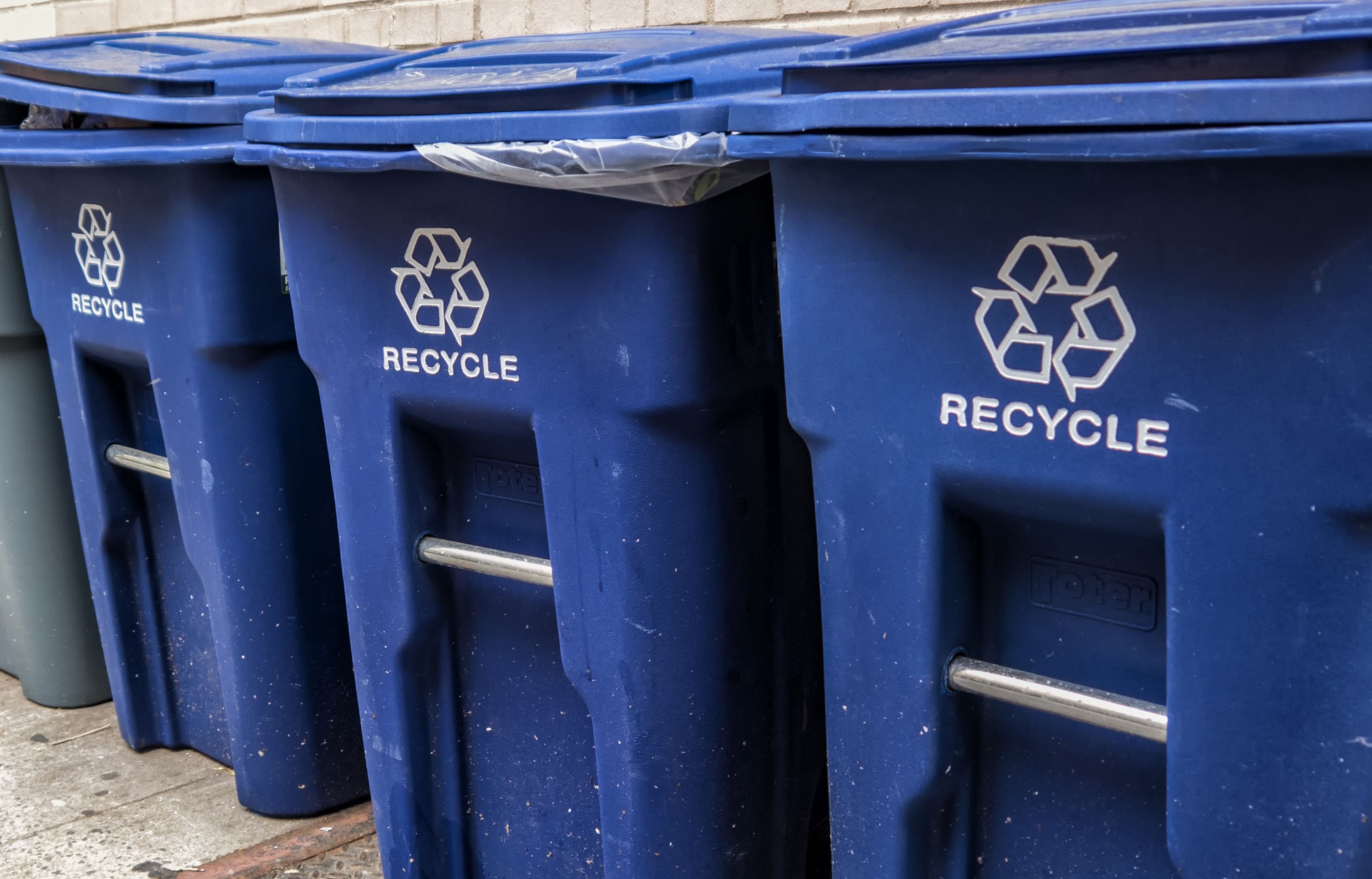
Most curbside recycling programs in the U.S. are single stream, which means all recyclable items go into one bin and then get sorted by a material recycling facility, or MRF. This makes the process easier for the average bear, but it also leads to many nonrecyclable items entering the mix, which aren’t always easily sorted out and can lead to entire loads being rejected.
That’s why it’s essential to understand precisely what your local system accepts and what it doesn’t. The information is typically fairly easy to find through a quick Google search; it’s often listed on official city websites. If you can’t find it online, try calling your local waste management office. You can also check out this nifty AI chat feature, which provides answers to recycling questions in real time, including those about local guidelines.
“Wishcycling” and Contamination
Let’s say you looked up what your local system accepts but still aren’t sure whether an item belongs in the blue bin — maybe a broken mirror, an old garden hose, or some wrapping paper. You should at least try to recycle it, right? Afraid not.
This is called wishcycling, the practice of optimistically placing items in the bin with the hopes that what can be recycled will be (unfortunately, it often isn’t). Wishcycling causes contamination, which is problematic for a number of reasons.
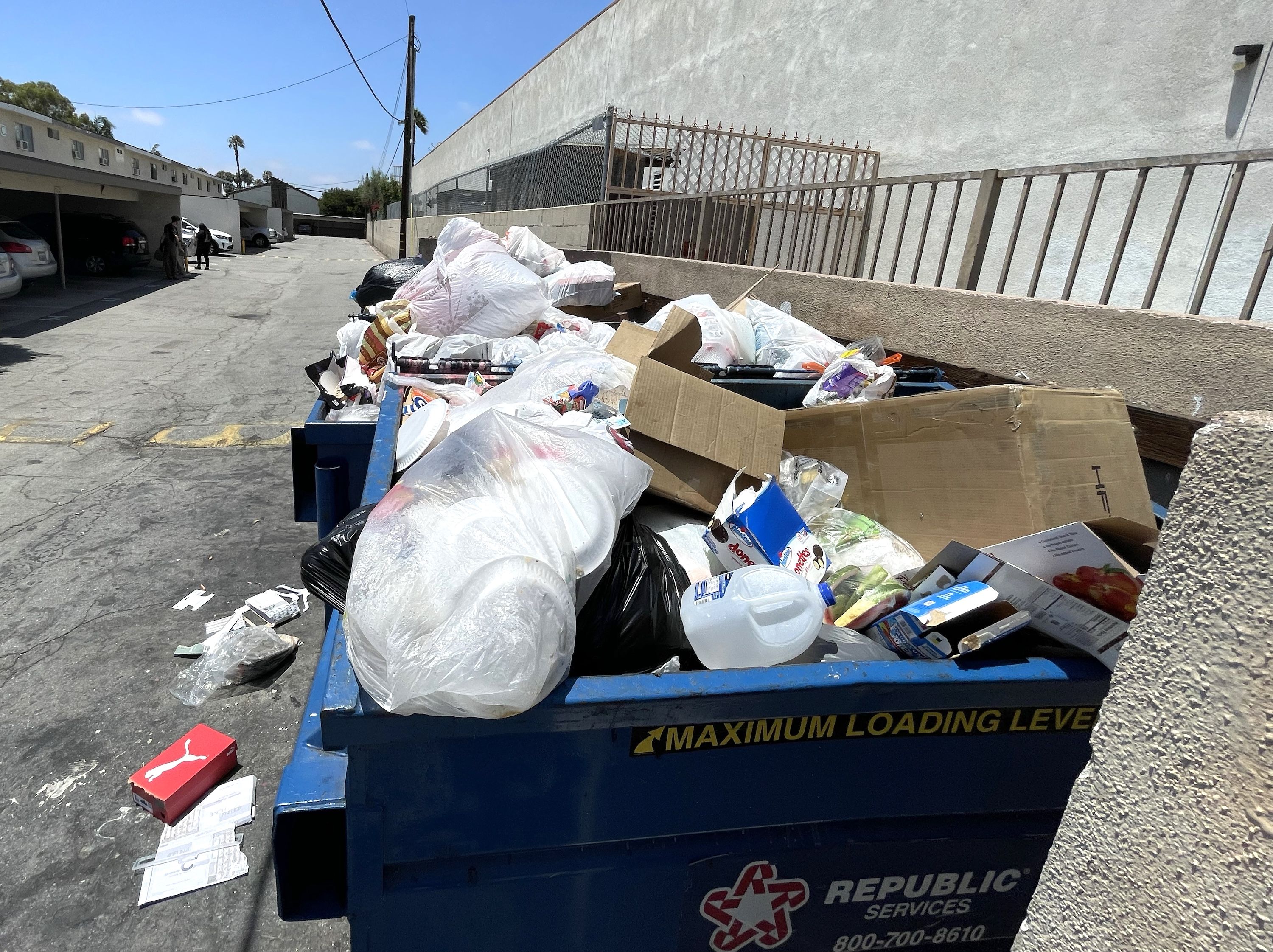
Plastic bags should never go in the recycling bin; they can result in entire loads being diverted to the landfill
“What contamination really means is that you are putting an item in that recycling bin that can’t actually be accepted. And so when that happens, entire truckloads of recyclables can actually be rejected,” LeTendre explained, adding: “Ultimately what happens is the MRF or the hauler will say, ‘There’s too much contamination. We’re actually just going to put that into the landfill instead.’”
Contamination can also waste energy at the plant and be dangerous for workers — more on that in a bit.
When in Doubt, Throw It Out
Though it may feel counterintuitive when you’re trying to protect the planet, throwing away items you’re unsure about is often the more helpful choice. This messaging may differ from what you’ve heard in the past. That’s likely in part because the system changed dramatically after 2018, when China stopped accepting other countries’ waste and recyclables due to high rates of contamination, a move that has contributed to the recycling crisis in the U.S.
Therefore, if you’re ever in doubt — throw it out. You could be preventing a whole load of other things from being recycled for the sake of the one thing you’re trying to save.
What About the Recycling Symbol?
The chasing arrows symbol is the universal sign for recycling, but it’s a bit more complex than just “symbol means recyclable; no symbol means not recyclable.” Today’s chasing arrows often have numbers in their centers, and those numbers convey information about the type of material a product’s made from and how difficult it is for each type to be recycled.
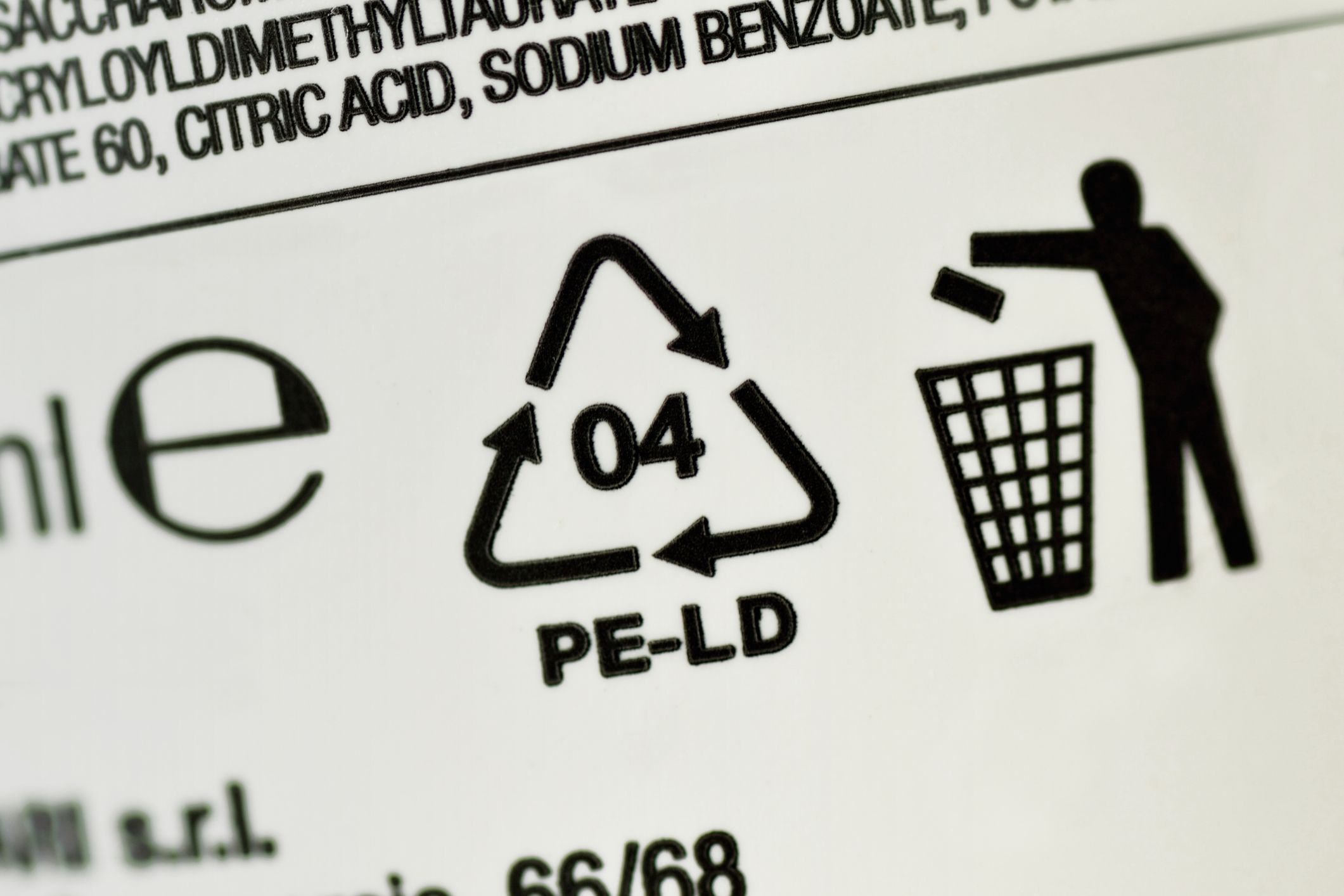
Plastics have a 1 through 7 code and accompanying letters that describe the type of plastic, like PET (polyethylene terephthalate) or low-density polyethylene (LDPE). Higher numbers indicate less chance of recyclability through local curbside recycling programs. Most programs accept codes 1 and 2, and some accept 5, but 3-7 are usually no-gos.
A better idea when it comes to plastic is to check for a “neck,” per LeTendre. These are items like water bottles, ketchup containers, laundry detergent jugs, and peanut butter jars. “If it has a neck, it’s typically recyclable in a single stream system,” she said. “But if it doesn’t have a neck, just throw it away.”
How Clean Do Items Need to Be?
When items are not properly cleaned — i.e., they still have food, liquid, or grease on them — they can make it more difficult for the recycled material to be sold for reuse. If a particular load has a lot of food contamination, an MRF may reject the entire thing.
“Ultimately, it kind of just makes it so that that material isn’t the raw material anymore,” LeTendre explained, pointing out that grease on cardboard pizza boxes is a common culprit. “A little bit [of grease] is OK, but you don’t want oils mixing with that recyclable, because that can cause issues when it comes to just breaking it back down and turning it into something new.”
That said, items don’t need to be spotless: Scraping or giving them a quick rinse usually suffices. When it comes to food particles, the Environmental Protection Agency recommends following the “spatula-clean” rule: As long as there’s nothing in the container that could be removed with a spatula, the item can go in the recycling bin. “Don’t worry about it being squeaky clean,” LeTendre agreed.
The Ins and Outs
All right, on to the ins and outs — as in what goes in the blue bin and what should stay out. Below is a basic list, but remember to always abide by recycling labels and check local guidelines for specifics.
Items That Go in the Bin
- Plastic bottles and jars
- Plastics marked 1 or 2, and sometimes 5 (check with your program)
- Glass containers (some communities no longer recycle glass, so be sure to check)
- Aluminum cans and steel or tin food cans
- Clean aluminum foil
- Printer and notebook paper, newspaper, cardboard, envelopes with plastic windows, poster board, magazines (remove non-paper inserts)
- Empty metal aerosol containers (Note: As in the case of the nonstick cooking spray we previously mentioned, aerosols are generally recyclable only if they’re completely empty. If not, they present a fire and explosion risk at the plant. If there’s anything left in them, they need to be taken to a hazardous waste disposal facility.)
Another thing to bear in mind: If an item has two different materials, like a glass bottle with a metal lid, it’s generally a good idea to separate them before placing them in the bin. If a plastic container has a plastic lid, however, you should typically keep it in place. As always, check your local guidelines.
Items That Don’t Go in the Bin
Plastic bags and other soft plastics: You should not be bagging your recycling in plastic before tossing it in the bin — doing so may result in the whole thing being thrown out. “Never put any plastic bags in recycling, ever,” stressed LeTendre. “That’s like the No. 1 rule. Do not put plastic bags in there.”
That’s because plastic bags, Saran wrap, bubble wrap, plastic shipping mailers, and the like are considered “tanglers,” meaning they can get tangled in sorting machinery at the facility. In addition to being dangerous for workers who must cut them out of the gears, tanglers make facility operations more expensive and less efficient. Thankfully, there are programs specifically for soft plastic, and many grocery stores have bag collection receptacles. Search for a drop-off near you.
Other Plastic: Compostable plastics, cups and straws, utensils, prescription bottles, coat hangers, Styrofoam
Glass: Ceramics, mirrors, light bulbs, non-container glass
Paper: Disposable cups, shiny wrapping paper, paper towels
Textiles: Clothes and linens — like old sheets or pillowcases — are also considered tanglers. To recycle them, you’ll need to search for textile recycling programs in your area (but consider reusing for rags, etc. first).
Other Tanglers: Rope, electrical cords, string lights, garden hoses, shipping mailers
Miscellaneous: Electronics, batteries, paint, wires, metal coat hangers
Remember — just because the above items can’t be recycled in the blue bin, that doesn’t mean there aren’t ways to recycle them. Search for specific recycling programs (TerraCycle has a ton of different free ones) before tossing something in the trash can. Earth911 offers a wealth of advice on recycling what your curbside system doesn’t accept. There are also paid recycling programs like Ridwell, which takes light bulbs, soft plastics, linens, and more.
Reduce and Reuse
One of the best things you can do as a recycler is to limit what ends up needing to be recycled in the first place. That means reducing how much you buy and reusing what you purchase.

“Whether it’s through mining or through water or through cutting trees, if we can reuse, we’re not having to extract from our natural environment as much, so it takes that pressure off of our environment,” said LeTendre, adding: “Always reuse first and then if you can’t reuse it, if it’s recyclable, recycle it.”
She gave the example of repurposing a peanut butter jar for a coin holder rather than buying a new piece of plastic. For gardeners, she suggested using yogurt containers for seed starters instead of the black plastic ones found at nurseries. Here are a few more tips for upcycling everyday objects.
Finally, Relax
All this guidance may be a bit overwhelming, so try not to put too much pressure on yourself to be perfect.
“Ultimately, I don’t want people to be too hard on themselves when it comes to this,” LeTendre emphasized, while also noting that giving up entirely isn’t the answer either. “I hope people know that on the backend, there are people, or organizations like ours, who are really trying to fix it. And that we need people to remain gung ho about recycling and not become apathetic to make sure that it works in the future.”
RELATED: How Single-Stream Recycling Works — Your Choices Can Make It Better