“Describe yourself in such-and-such number of words” is a common directive and near-impossible task, made all the more difficult the lower that number gets. But Erin Weed has no trouble condensing the human essence into a single phrase — she does it on a daily basis.
Weed is the creator of The Dig, a methodology for pinpointing a person’s one-word life purpose. “A dig word is that one word that summarizes both what you’re here to learn and also what you’re here to teach,” she told Nice News.
Since 2012, the Colorado-based keynote speaker has been guiding thought leaders, entrepreneurs, and whole company rolodexes through The Dig, helping people uncover who they are at their core and start living it out. In her new book, Just One Word, she’s adapted the process for people to do themselves.
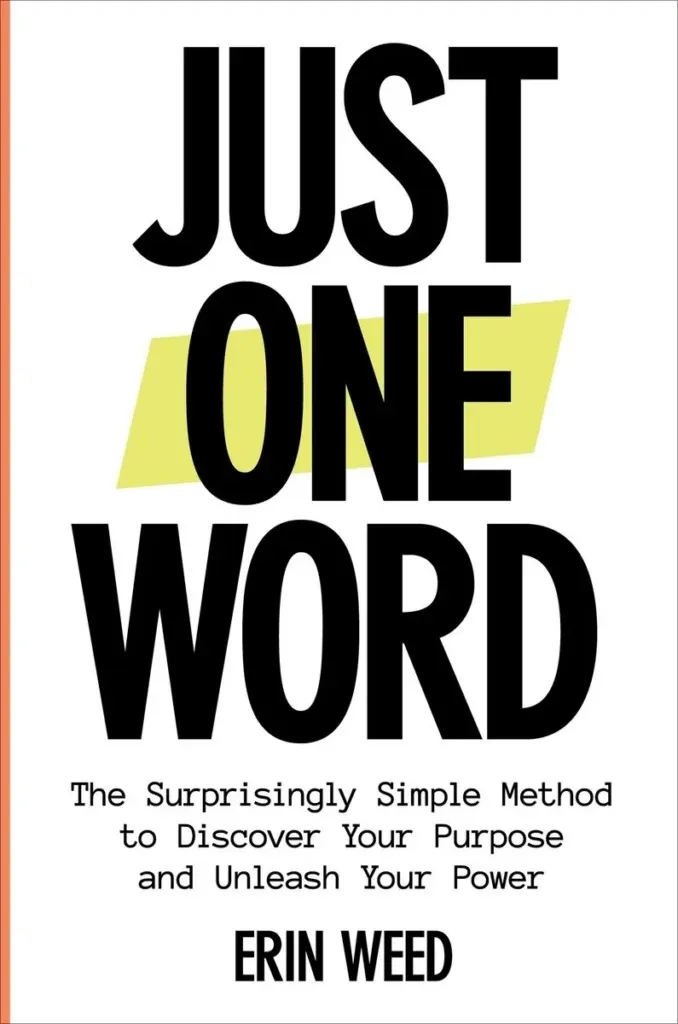
Why just one word? “I have found that we can over complicate our personal growth just too much,” said Weed, 48. “And I believe that the best ideas are the ones that are both the simplest and also the easiest to integrate into your life starting immediately.”
Uncovering Your Dig Word
One of the beauties of Just One Word is how practical Weed’s method is. Rather than abstract soul-searching, it’s like step-by-step directions to a location: Follow them and you’ll arrive at your destination (i.e., your life’s purpose).
That isn’t to say the method is light work or won’t take long. The end goal may be one word, but getting there requires quite a few more. The first step, Weed writes, is to “tell your story.” And she means all of it — “from birth to the present day.”
In our conversation, she pointed out that while many self-help modalities veer toward the aspirational — dressing for the job you want, the person you want to be — hers is about recognizing who you’ve always been.
“The more you unearth from your life story, and the more years you have to go on, the more proof you have of repeating patterns that you can point at and recognize,” she explained. “And my belief is that those patterns are just going to keep going on and on and on. So you might as well align with them.”
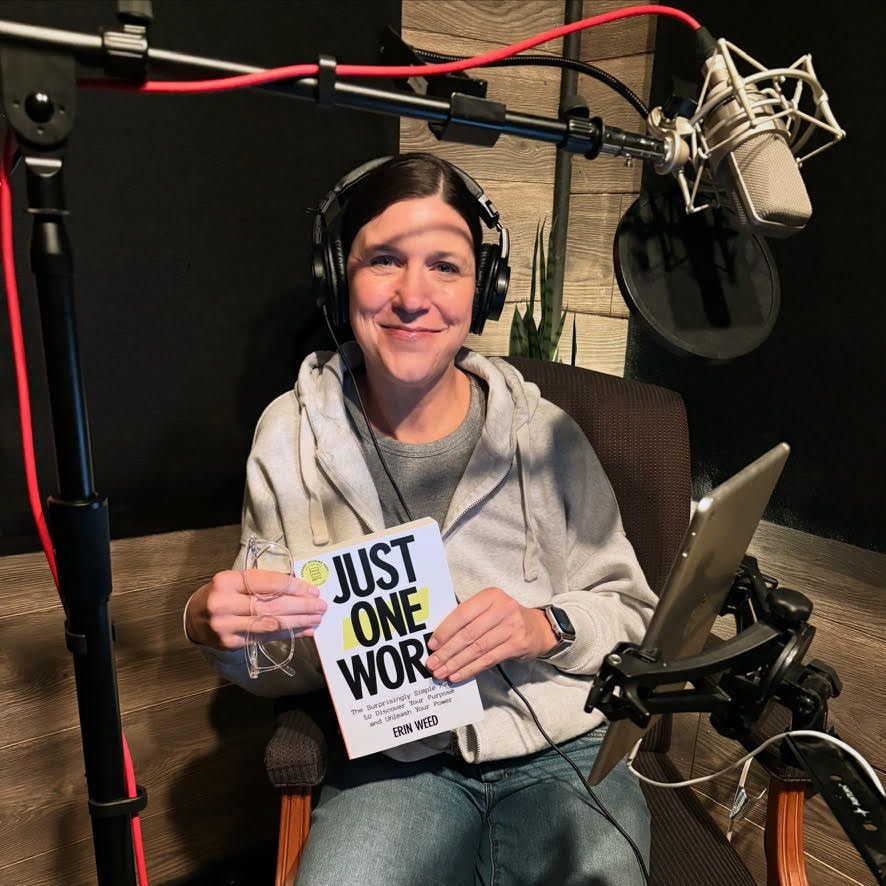
Erin Weed, recording the audiobook version of Just One Word
She helps readers break down their epics into three parts, offering guiding questions and instructing them to dictate the story into a voice recorder. After the story is told, it’s time to examine themes and start distilling.
From there, readers work on identifying their Human Operating System (“the internal framework that guides how you interact with the world”) through key words they’ve arrived on. A few more exercises later, the dig word is revealed. “You’ll know it’s right when it feels like both relief and challenge,” Weed writes. “Trust your body and intuition to signal when you’ve found the word.”
Living Your Dig Word
The point of the dig word isn’t to just set it and forget it; it’s to live it, to incorporate it into your relationships, work, and day-to-day existence. That goes for whether you’re a CEO at a Fortune 500 company, a student, a stay-at-home mom, or a retiree.
“It doesn’t matter as much what you do but how you do it. I believe that you could be any occupation on the planet and still be bringing your dig word into that and you can find more peace, fulfillment, and success in it,” she said.
To start living your dig word, Weed suggests creating and then asking yourself grounding questions during moments of uncertainty or tumult. These queries should be specific to your unique purpose, and thus require some intentional crafting, but there are numerous examples in the book for inspiration. Someone whose dig word is courage might ask “What fear can I face in this moment?” or “What is the brave thing to do right now?” while a person whose word is freedom might ask “Where can I find more ease?”
For Weed (whose word is “authentic”), the question she asks when she’s feeling out of alignment is “How real do you want to be?” She calls it an invitation to herself to be herself — her truest self.
“My theory is that if you can operate from that place, then it’s always going to be better for you on the other side,” she shared. “Even if it’s not your ideal outcome, you are going to show up as the person that you are. And you can fall back on that feeling of fulfillment, of being like, ‘Well, at least it’s true for me.’”
When you buy books through our links, Nice News may earn a commission, which helps keep our content free.