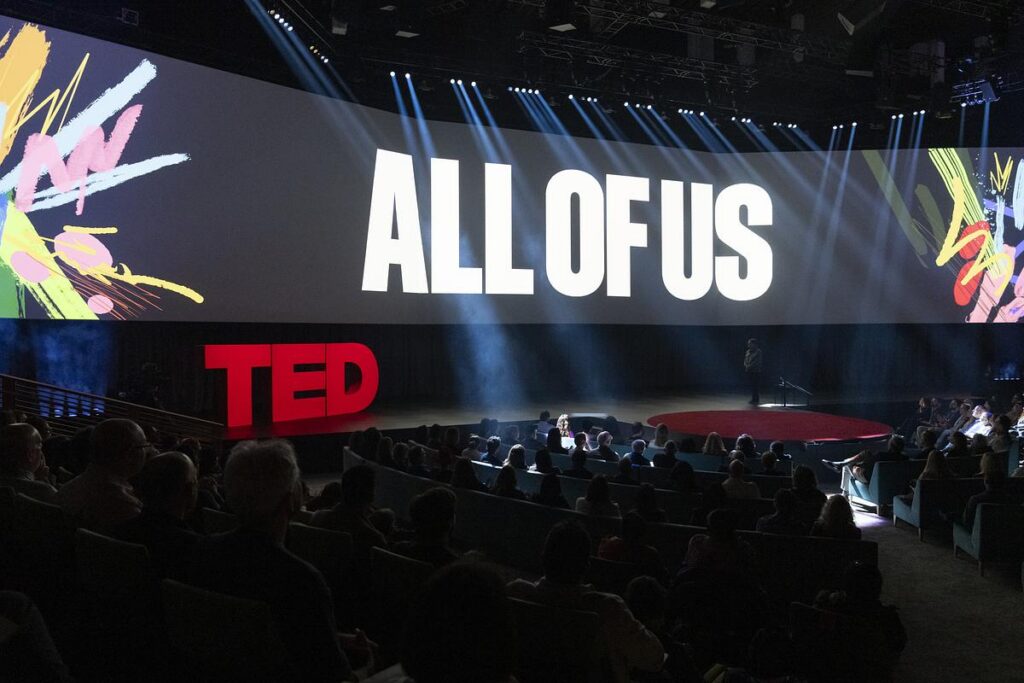
What will it take to build a better future? According to TED2026, everyone — which is why “All of Us” was this year’s theme. The weeklong conference, held April 13-17 in Vancouver, Canada, assembled some of the world’s most inspiring thought leaders for what TED Fellow Lope Gutiérrez-Ruiz described as “Christmas for the brain.”
“TED’s mission is more important today than ever,” donor Ross Rosenberg added in a preview video for the event. “In a world that’s more and more complicated, TED points us to the future and teaches us all to be optimistic.”
We sifted through TED Talks from more than 80 of this year’s speakers to highlight a handful we found particularly thought-provoking. Scroll through our picks below.
Malala Yousafzai: Nobel Laureate and Activist
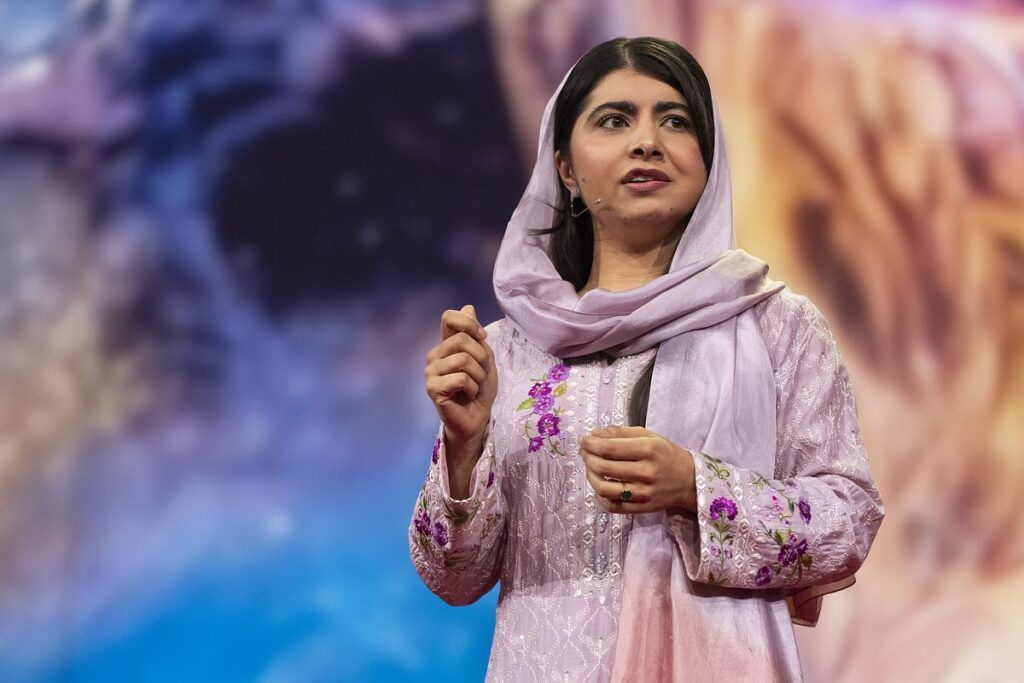
The youngest-ever Nobel Peace Prize winner kicked off the conference with her first TED Talk, in which she reflected on her career as an activist. During the presentation, titled “What I Got Wrong About Changing the World,” Malala Yousafzai recalled her naivete as a child growing up in rural Pakistan. “I thought changing the world was simple: I would tell the people in charge all of my problems, and they would fix them,” she said.
Then, when she was 11, the Taliban took control of her town and declared that girls were banned from school — inspiring Yousafzai to become an activist and teaching her that actually changing the world was going to be more difficult than she realized. The now 28-year-old framed the rest of her talk around three lessons she’s learned since then.
“First, you have to start with something,” she said, citing her initiative to support underground schools in Afghanistan, where girls are prohibited from getting an education beyond the sixth grade. Yousafzai also touted the importance of working with others, referring to two films she’s produced that tell stories about those resisting the Taliban in Afghanistan, as well as her involvement in a campaign to support women athletes in the country.
Finally, she urged listeners to stay ambitious when pursuing lofty goals, even when hope is waning. “I know it may take many years to see the Taliban brought to justice, but I will keep fighting so that these crimes are not committed against another generation of girls anywhere in the world,” she said.
Mark Rober: Science Education Champion
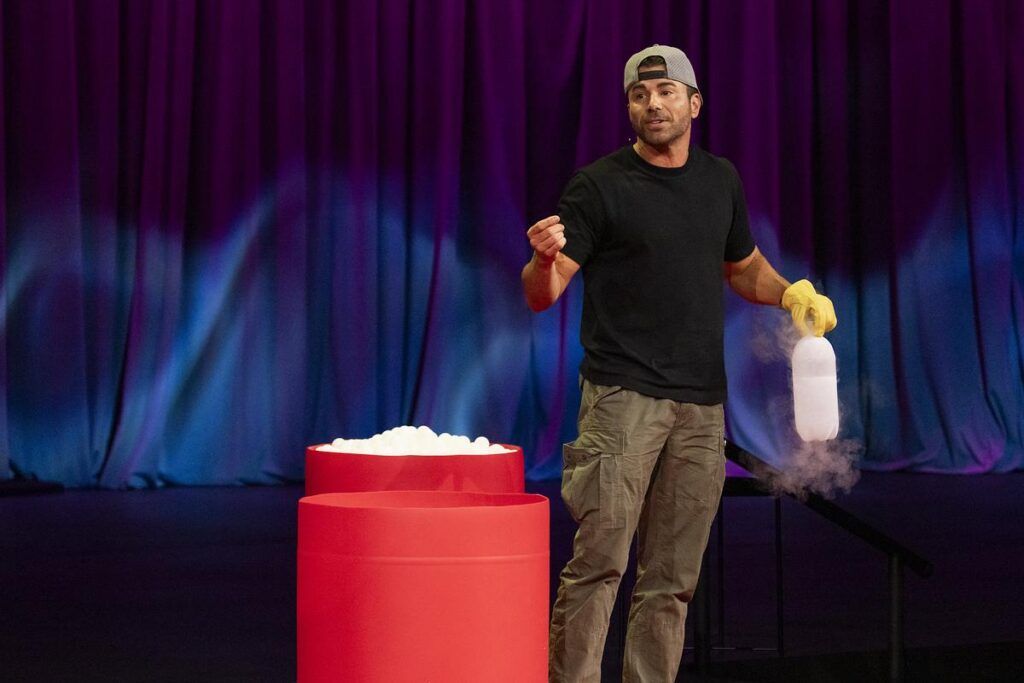
“Let’s finish tonight with a bang,” Mark Rober began his talk before creating an explosion onstage using a bottle of liquid nitrogen and a mountain of Ping-Pong balls. Rober loves creating “aha” moments for others by explaining the science behind events like these — which is why the former NASA engineer launched his YouTube account, now over 75 million subscribers strong.
Through building his online platform over the past 15 years, Rober learned an important lesson about teaching science: “If I can get your attention with something remarkable, now I suddenly have something to attach the learning to.” This teaching style, which he called “hiding the vegetables,” involves leading with fun experiments that help people absorb the why and how along the way. “Learning is best when it’s attached to a visceral experience,” he said, adding, “This is why memorizing a boring equation is hard but remembering that song you sang as a teenager that made you feel all those feels, that’s easy.”
The CrunchLabs founder concluded his talk by announcing a curriculum he co-created for third through eighth graders. Not only does it equip teachers with the tools they need, he said, but it will also make science class exactly what it’s supposed to be: “super freaking fun.” Rober added: “The idea is that … the teacher becomes the hero as we engage the students in real science and engineering they actually care about.”
David George Haskell: Biologist and Matthew Mikkelsen: Field Recordist
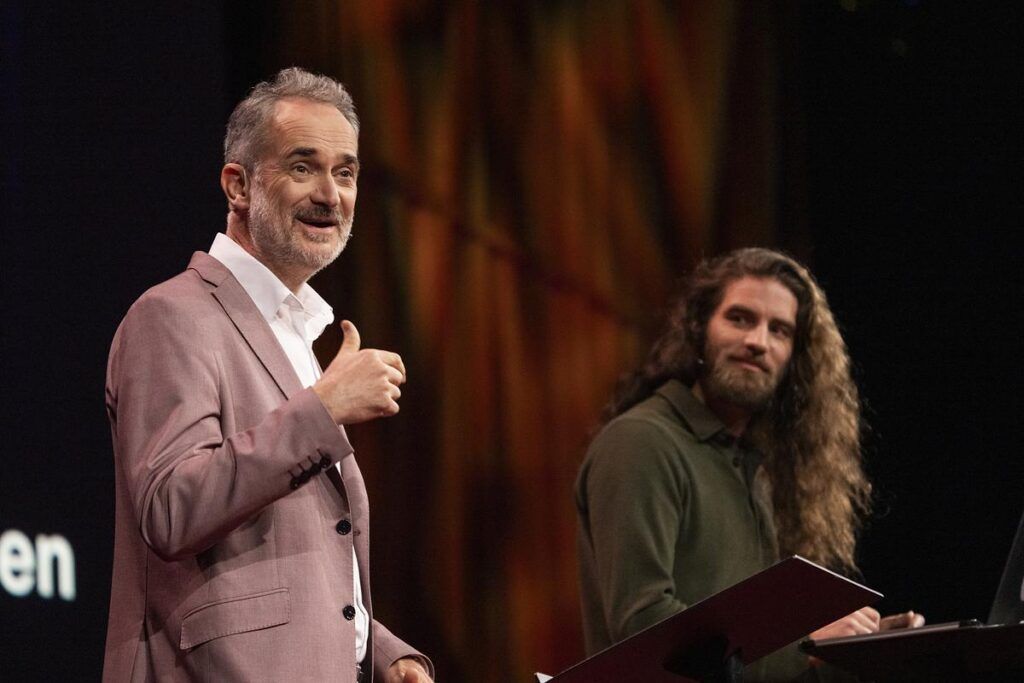
David George Haskell and Matthew Mikkelsen’s TED Talk invited the audience to listen to more than human voice: It was also interspersed with various nature recordings. “Sound is the original wireless communication network,” Haskell said, connecting us to “voices often ignored, those of the more-than-human world.” Over the past 4 billion years, many of these noises — such as rain and thunder — have hardly changed.
As Mikkelsen switched from playing recordings of nature to human-made sounds, like a train and the roar of a crowd, Haskell suggested we look at conservation through a sonic lens. While humans have contributed music and other beautiful noises to Earth’s aural landscape, we also “silence large parts of the planet” by destroying habitats, Haskell explained, adding, “Species extinctions diminish the Earth’s sonic richness forever.”
Our duty, he continued, is to “listen attentively” to the natural world, and in doing so, learn to more deeply value and better protect it. “Beauty and brokenness — listening opens us to both,” Haskell said, adding, “Coming back to our senses restores part of our agency, our humanity, makes us whole again, and gives us a foundation to be in right relationship with the living Earth.”
Jessica Irwin: Disability Disruptor
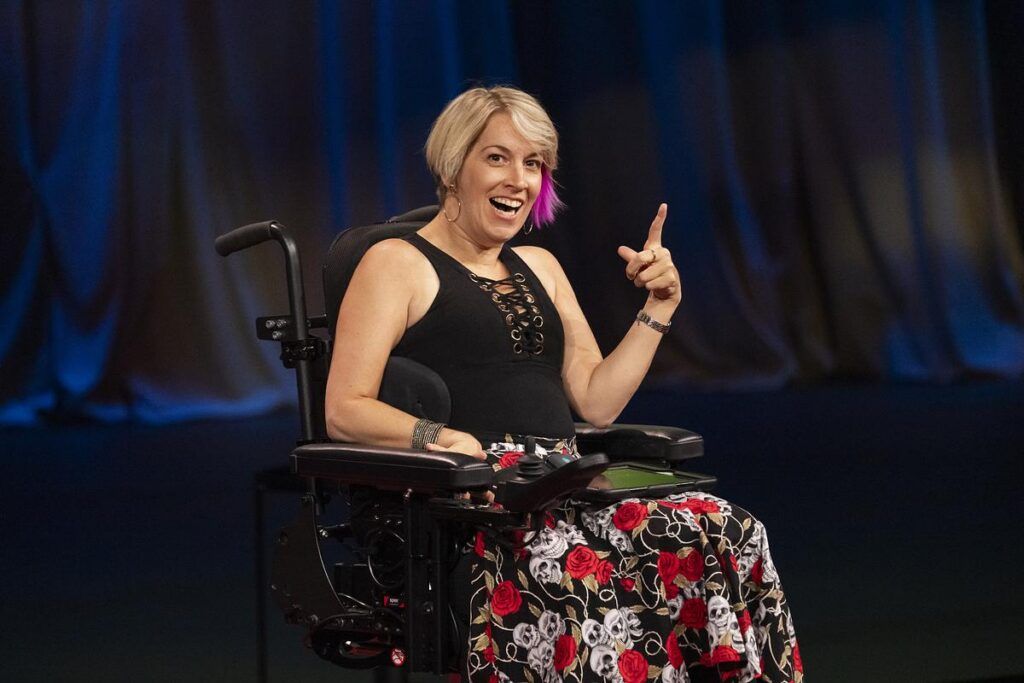
Due to Jessica Irwin’s cerebral palsy, she’s never spoken a word out loud in her life, and instead communicates by typing her thoughts on a device at a rate of seven words per minute. “The robotic voice outputs what I’m saying, but it doesn’t express my quick wit, nor can it quickly express something in an emergency,” Irwin shared in her TED Talk.
She explained that many nonverbal people require frequent medical care, but when lying down in hospital beds, they’re unable to use their devices. This prevents them from conveying important messages to staff about pain or symptoms, or even saying the short but meaningful word “stop.”
That’s why Irwin is on a mission to bring communication training to hospitals. “This problem is solvable. All it takes is knowing one simple thing,” she shared. “Assume the patient is intelligent. Ask yes and no questions. And ask them to look up for yes and look down for no.” She added, “Four simple steps, but they can save a life.”
Irwin also explained that those with brain injuries like hers are often incorrectly assumed to be intellectually impaired, so she offered some advice for communicating with nonverbal folks — including talking at a normal pace and volume, and cracking a joke to check for laughter as a sign of comprehension. Importantly, she urged the audience to always make the effort to connect. “You hold the power to give someone back their voice,” she said. “That is a beautiful thing.”
Eli J. Finkel: Relationship Researcher
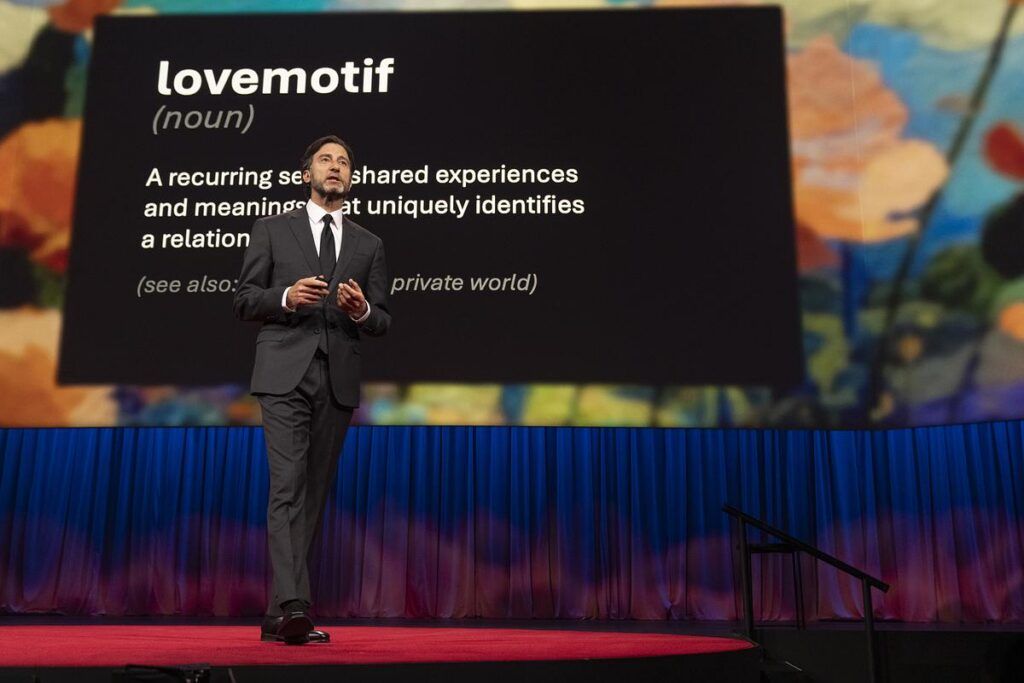
Have you heard of a “lovemotif”? It’s a term social psychologist Eli J. Finkel uses to encompass the inside jokes, unique moral code, and other elements of a private world two people build in a relationship (the word’s etymology is an offshoot of opera’s “leitmotif”). Lovemotifs “matter more today than ever before,” he said, “because a lovemotif isn’t just something you do, it helps to define who you are.”
During his decades of experience studying couples, Finkel found something surprising about compatibility. At speed dating events, traits that participants initially said they were looking for often didn’t end up being that important once they began talking to potential partners. “What actually matters is something smaller and more profound,” he said. “A phrase gets repeated. A joke sticks. A ritual forms. And a private world takes shape. Two people, across countless tiny interactions, building something that never existed before. That’s compatibility.”
This concept can help us stay true to ourselves and our relationships, he explained, because “once our relationship becomes part of our identity, being true to it stops feeling like self-denial.” He posited couples who protect and savor their lovemotifs may be happier and more able to deepen their bond over time.
Finkel walks this walk — he still keeps a Post-it note with an inside joke that his wife wrote a decade ago — so he had some words of advice for the rest of us on how to build a robust private world: Find those small, special moments, revisit and nurture them, and fight for them. “That’s how those shared symbols, small as a Post-it note, become protectors of your private realm,” he said.
RELATED: 6 Inspiring Talks From TED2025: The World’s Largest Ocean Cleanup, a Chocolate Connoisseur, and More