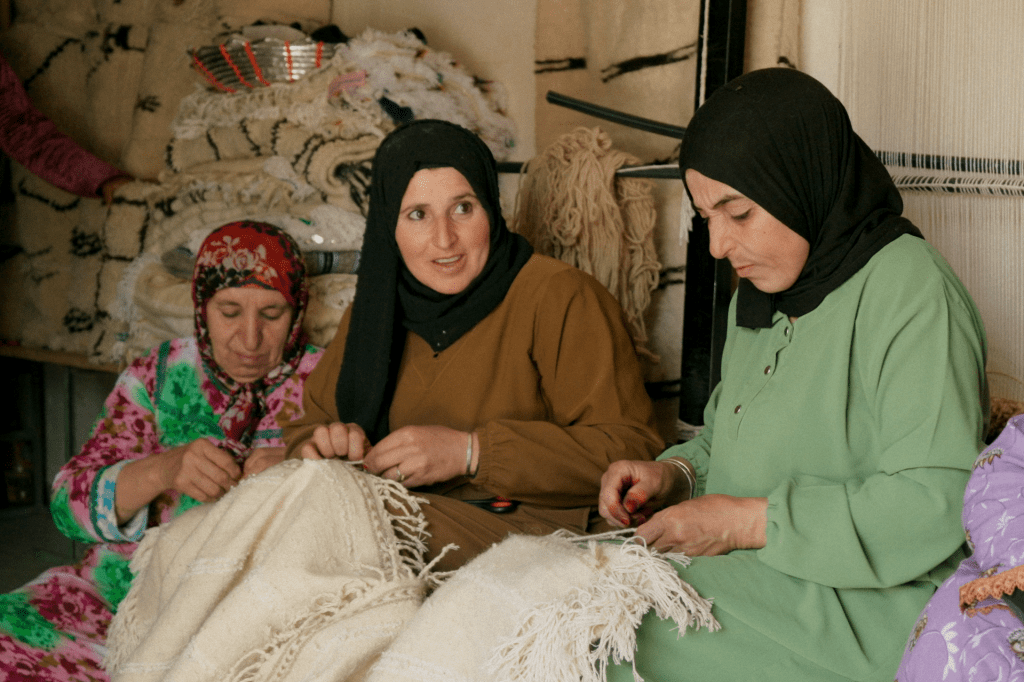
In the sun-drenched High Atlas Mountains of central Morocco, a collective of women — some accompanied by their young children — gather to weave. Together they prepare wool yarn on a loom, then sit in close quarters talking, singing, laughing, and bringing a blanket to life, a process that will take weeks.
They’re craftspeople preserving ancient cultural traditions, and scenes of their daily work, and the work of others like them, are captured in the new nonprofit documentary Handmade Future. In addition to the women of the Numedia Tabudrart Cooperative, the film follows artisans in five other countries who are protecting their heritage while up against profit-draining intermediaries and the ever-growing threat of cheap mass production.
“I wanted to explore the exploitation artisans face and the various examples of both positive and negative middlemen. However, during the editing of the film it became very clear that a much bigger and more hopeful message was emerging,” director Kirsten Dickerson said of her initial motivation in an email to Nice News. “When we interviewed Cynthia [Main], the broom maker of Kentucky, she said that she believed in a ‘handmade future.’ I immediately knew that was the film’s theme and later made it the new title.”
That hopeful message involves the inherent beauty and sense of connection in creating and interacting with items made by humans, with intention.
“If everything becomes mass-produced and looks the same everywhere, we lose the very essence of beauty that makes the world so incredibly special,” Dickerson said. “Craft shows the unique expression of creativity that has existed since humans first looked at the soil, flowers, and trees and learned to make objects that were both useful and beautiful for their everyday needs.”
The artisans featured include beeswax candlemakers in Oaxaca, Mexico; basket weavers in the Kasigau region of Kenya; and textile block printers in Jaipur, India.
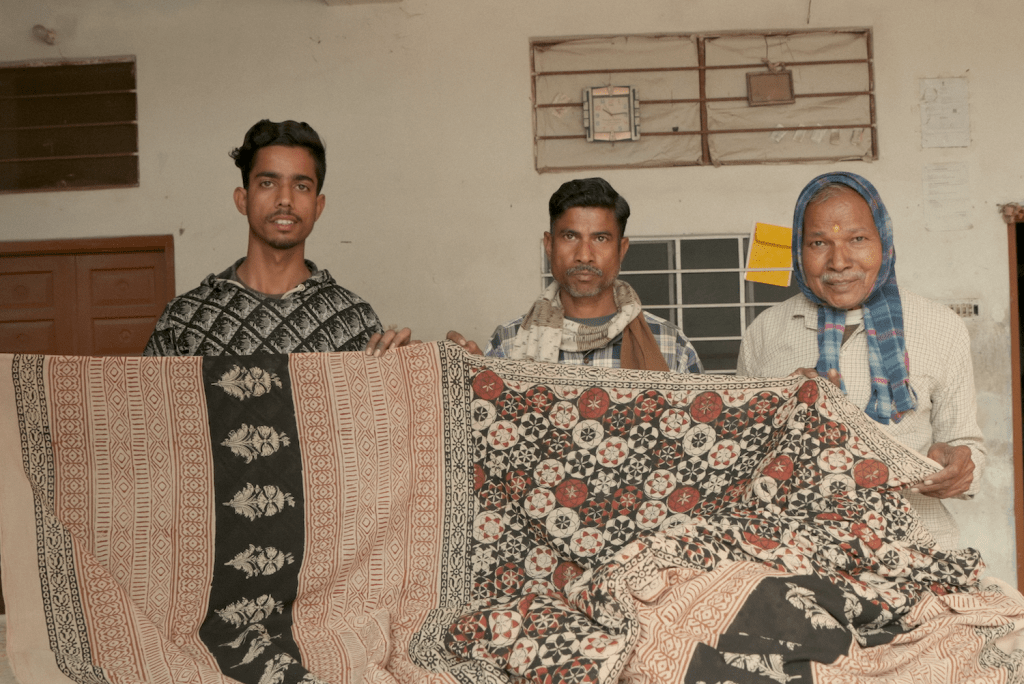
“Five to six generations of my family have been block printers,” Anup Chhipa, who is teaching his young daughter the craft, explains in the film. Chhipa works with Studio Bagru, which collaborates with artisans and designers to develop vibrant, intricately patterned textiles produced with natural inks and dyes.
For Dickerson, Handmade Future is a way to show the world what is lost when we prioritize price and convenience over thoughtfully made wares. She recognizes that not everyone feels they have the time, money, or wherewithal to purchase handmade items. But that’s a mindset she wants to challenge.

“Do we really need so much stuff? I don’t think so,” Dickerson said. “We have been trained to think we can only survive on fast, cheap, and convenient options. However, when we often purchase things that don’t hold value and rarely last, much of it ends up in the landfill. Instead, we can buy less and pay a little bit more.”
She added: “I hope that viewers recognize the beauty, heritage, and value of handcrafted items and are inspired to be more intentional in supporting artisans through their purchases whenever possible.”
The film makes the point that the income, cultural identity, and community that handmade craft provides to people in rural areas especially are irreplaceable. And of course the consumer, too, is a beneficiary of these traditions — because the resulting items reflect something deeper than the surface-level sleekness that large-scale manufacturing offers.

“It’s beautiful. It has no flaws. It’s just perfect. It will be produced in a second,” Isabell Wambui, founder and director of Anchor Leather & Crafts in Nairobi, Kenya, says in the film of mass-produced products. “But there’s something missing. The touch of hand.”
Handmade Future premiered at New York City’s Justice Film Festival in late February. Beginning in May, Dickerson and her husband, Brandon, a co-producer, plan to tour the documentary at film festivals and special screenings. If you’re interested in hosting a screening in your community, click here. You can learn more about each of the artisans featured, and visit the websites where their wares are sold, here.
RELATED: “Underconsumption Core” Is the Sustainable New Trend Saving Young People Money