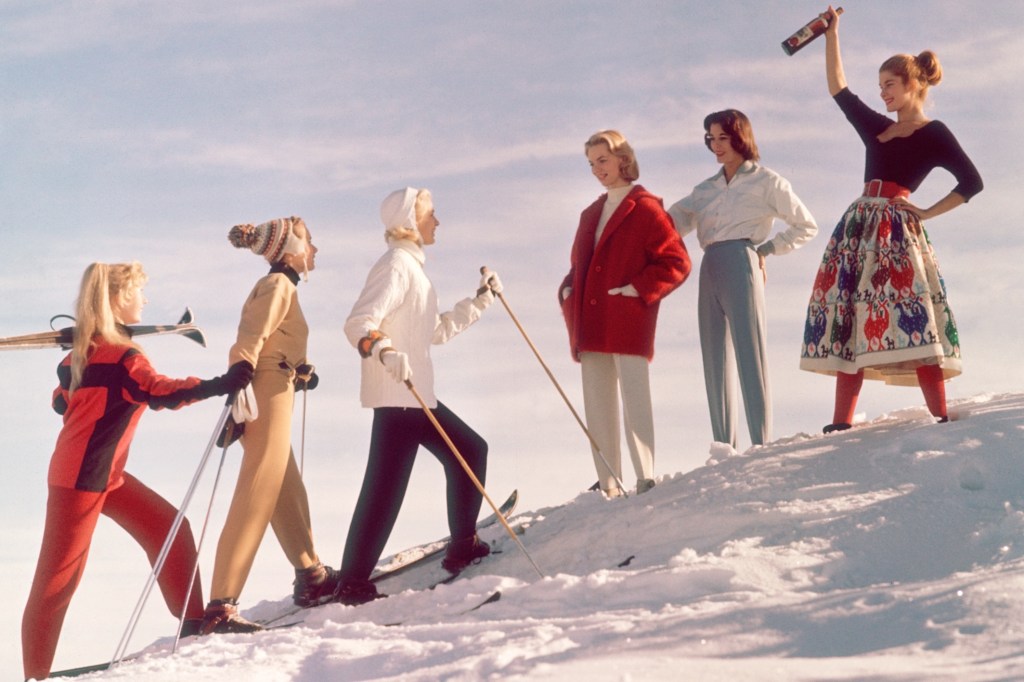
Where some simply see ski slopes as a fun way to zoom down a mountain, others also see a catwalk. And the latter outlook only seems to be growing: Peruse ski outfits on social media, and you’ll find everything from puffy, supersized boots to hot pink one-pieces, along with comments of approval comparing the looks to “ski Barbie” or a “Power Ranger in the snow.”
But the uptick in snazzy suits on social media represents only a small percentage of the global snow apparel market, of which skiwear accounted for over 65% in 2022. It’s expected to reach $41.3 billion by 2030 (up from $17.4 billion in 2022), and increase at a compound annual growth rate of 11.4% from 2023 to 2030, according to Grand View Research.
@bethlawson.x The most extra ski outfit I have ever worn but I LOVE IT 💖💅🏼💕 @prettylittlething @FLAIR MGMT #plt #plthaul #pltski #prettylittlethinghaul #skioutfit
♬ GIVE IT TO ME X LONDON BRIDGE – ALTÉGO
Part of this craze may be credited to the rise in travel after the COVID-19 pandemic. “Aside from travel opening up, the rise of combining a pastime or a hobby with a specific style can also be attributed to people not only finding joy in dressing the part, but also being able to document it for socials,” Jarah Burke, fashion account director at marketing firm Power Digital, told Glossy in 2022. “This is particularly prominent on TikTok, where people play up the aesthetic side of a hobby. The ‘vibification’ of activities can be a way for a brand to bring new people into its fold in an aspirational manner.”
Yet while flaunting outfits on TikTok hasn’t always been a thing, ski fashion goes back at least a century — and according to Barbara Alley Simon, who’s known as the First Lady of Ski Fashion for her work from the ’70s to the ’90s, it may have even helped grow the sport.
“Seeing good-looking people in appealing outfits certainly attracts attention, and it is my personal conviction that stretch pants played a great part in the growth of skiing,” she once said, according to The Salt Lake Tribune. “Everyone looked sexy in them … and wanted to try this new sport of skiing.”
Join us as we glide back in time to trace how ski style has evolved over the years.
When Wool Reigned Supreme

Forget the synthetic puffer coats — in the 1910s, wool was the fabric of choice for winter sports apparel. While men donned thick trousers and long jackets made of the thick material, women wore knee-length skirts over their pants, as well as full-length coats. Colors tended to be muted, and although the bulky garments helped protect skiers from the cold, it surely wasn’t easy for women maneuvering down mountains with limited leg mobility.
Fast-forward a decade, and things got significantly better. At the 1924 inaugural Winter Olympics, held in Chamonix, France, European designers noticed the sport’s rising popularity and created two-piece pantsuits meant for women, many of which boasted art deco patterns. The addition of zippers also made transitioning in and out of these suits much more seamless.
How Coats Became Featherlight
Wool began to take a backseat in the 1930s when the brand Eddie Bauer released the first goose-down jacket, marking a waterproof, much lighter choice of outerwear that still kept skiers warm. For Bauer, the invention came out of necessity: During a January 1935 fishing trip in Washington, he wore a wool shirt to haul fish up a steep climb. The moisture from his sweat and heavy bag froze in the frigid weather, and he began experiencing hypothermia.
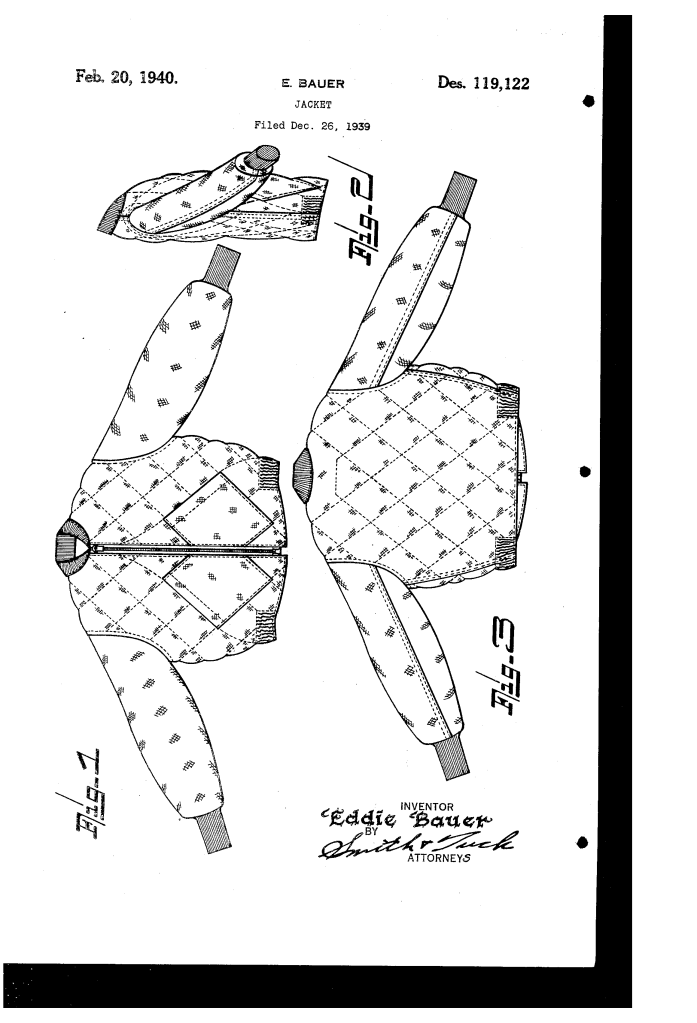
Of course, Bauer ultimately survived the trip, and “he wasn’t about to give up winter fishing or hunting,” company historian Colin Berg told Mental Floss. “He realized what he needed was a really breathable, warm jacket that he wouldn’t have to take off when he was working strenuously in the cold.” So, inspired by stories he’d heard from his uncle about Russian Army officers sporting feather-stuffed coats, Bauer designed his outerwear and launched a version called the Skyliner in 1936, which was an immediate hit.
The following decade, Klaus Obermeyer, a German ski instructor in Colorado (who once fled the Nazis on skis), became frustrated when his students would cancel their lessons due to the cold. So he took it upon himself to create a similar quilted jacket by cutting up a duvet filled with down — an invention that eventually led to an entire clothing business. Fun fact: Obermeyer was still skiing as of February 2024, and at 106, he remains an active member of the community.
Fun Fashion and Flexible Fabrics Followed
The post-World War II era saw significant advancements in ski style. In 1947, Italian designer Emilio Pucci created a one-piece suit for his friends that was much more formfitting than earlier apparel. After it captured the attention of Harper’s Bazaar photographer Toni Frissell, it was published in a winter 1948 edition of the magazine, and its popularity skyrocketed.
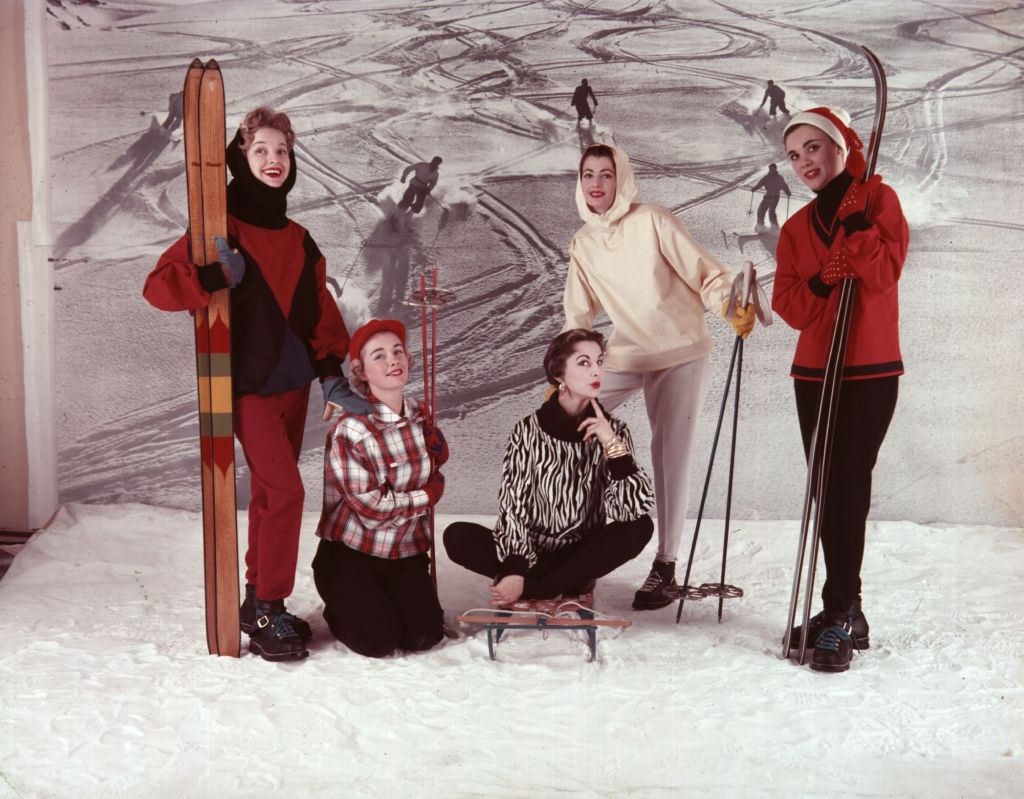
Models in 1955
Synthetic materials, including polyester, also made their way onto the scene during the ’40s, and in the ’50s, a French term emerged that provided a new category for skiwear that was functional and fun: après ski. It coincided perfectly with German designer Maria Bogner’s release of slim-fit stretch ski pants, made of nylon and wool, in 1952. Featuring an array of bright colors, the pants were spotted on notable women of the era as they took to the slopes, including Marilyn Monroe and Brigitte Bardot.
“Early on, Maria brought in that off-mountain fashion element [to more traditional ski wear],” Linda Ashman, vice president of sales and marketing at Bogner, told The Zoe Report. “You could wear her pants while skiing in the Alps or Aspen, then easily walk around the villages in them for that chic [après ski fashion moment].”
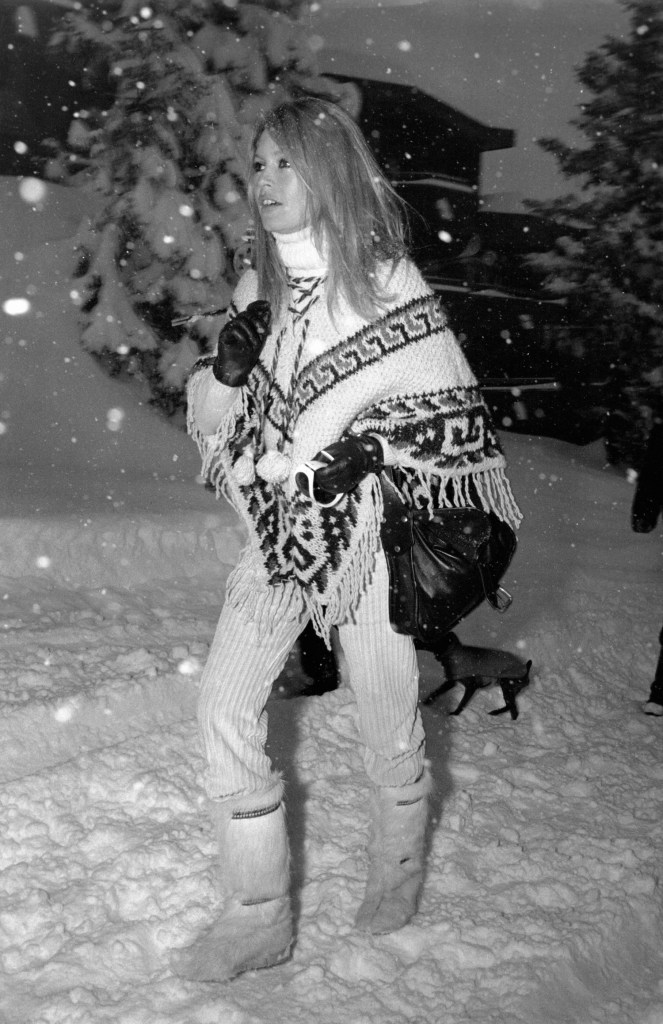
Brigitte Bardot in 1960
Designers in the ’60s and ’70s piggybacked off these trends even more, marking the “golden age of skiwear,” as Luxury London put it. Color options expanded further, and the invention of spandex in 1959 paved the way for tighter, more flexible suits. Streetwear styles began bleeding into ski fashion, including bell bottoms, neon colors, and oversized collars.
Double lens goggles were also introduced to the slopes to help prevent fogging, along with beanies, ear-warming headbands, and plastic boots that knocked leather ones straight off the slopes, so to speak. Space-age style, partially spurred by the 1969 Apollo II mission, also sparked a couple new sporty winter styles: mod ski goggles and the iconic Moon Boots, inspired by the anti-gravity versions astronauts wore in space.
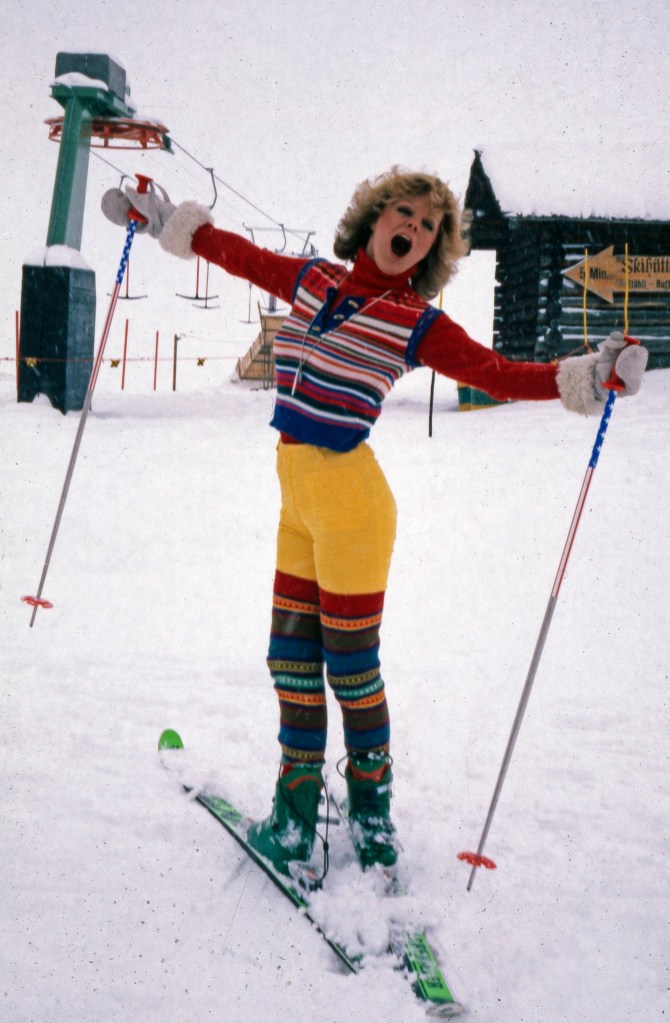
Looser ’Fits Take Over
While Gore-Tex, a waterproof, windproof, and breathable fabric, was technically introduced in 1976, the ’80s were its time to shine. Increasingly lightweight onesies featuring the material took the stage, though they were no less flamboyant than their predecessors. Neon color blocking, fashionable headbands, and animal print rose in popularity, as well as wide-shouldered outerwear and fitted waistbands. Jackets were a onesie alternative, often paired with Levi’s and gaiters. And if we had to point to one style icon who encapsulated many of these trends, it’s Princess Diana.
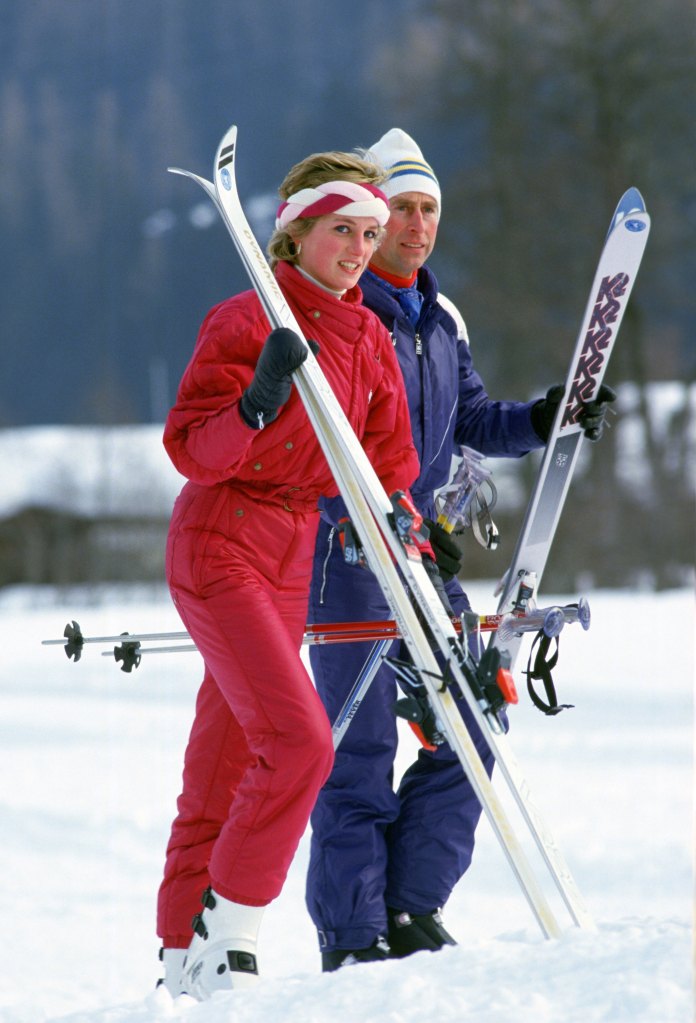
Princess Diana and Prince Charles in Switzerland
Just like in prior decades, street style began to meld with skiwear in the late ’80s and ’90s, thanks to launches from brands like Patagonia and The North Face — the latter of which released its Gore-Tex Mountain Jacket and Pant in 1985, and comparable fleece zip-in in 1989.
The rising popularity of snowboarding in the ’90s and early 2000s, however, significantly dialed down the extravagance of winter sportswear. Baggier outer layers and neutral shades became the norm for snowboarders, which influenced younger skiers to adopt similar styles. Around the same time, technological advancements were making skiwear more functional, including pockets, vents, scuff shields, and layered insulation.
Social media began gaining momentum in the zeitgeist in the 2010s, which ignited skiers to choose outfits they could show off on Instagram — including ones with fur, metallics, and reflective sunglasses.
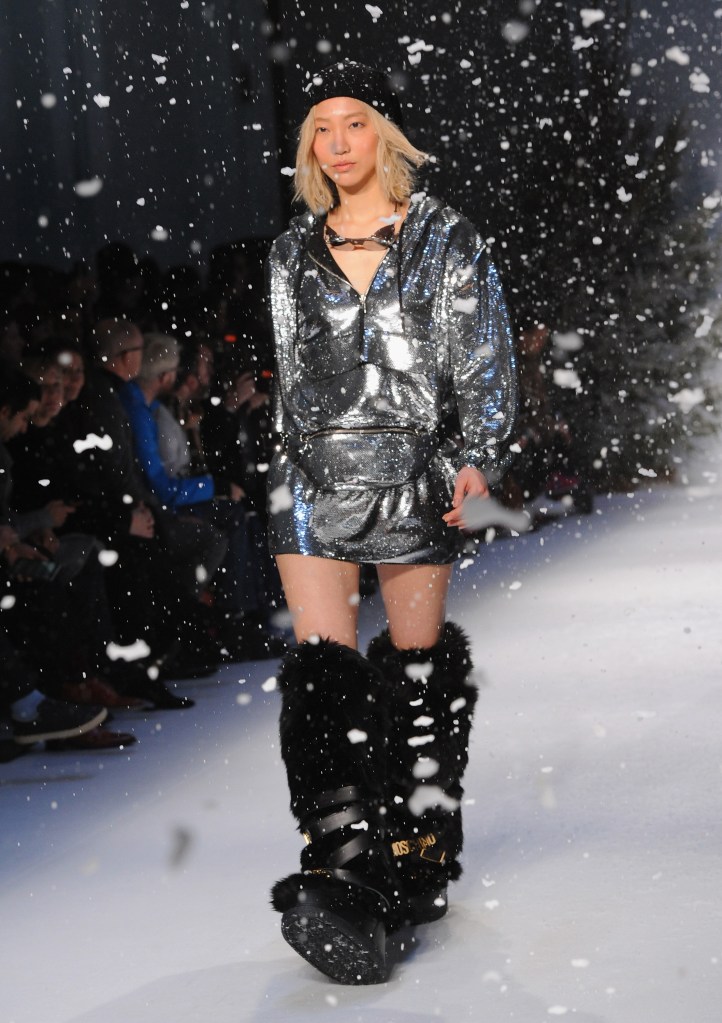
Moschino fashion show in 2015
History Repeats Itself
Modern ski style is a bit of a hodgepodge from the past. While formfitting, colorful hues are often the norm on social media (as mentioned earlier), a good chunk of shoppers are turning to prior decades for their inspiration — after all, fashion is cyclical. Retro suits are making a comeback, and as vintage retailer co-founder Jason Lyon told The Zoe Report, so are classic Americana and ’80s glam.
And with the 2026 Winter Olympics just two months away, we’re unlikely to see skiing and fashionable attire part ways any time soon. In fact, for Olympic skier Eileen Gu, they go hand in hand. “People always think that fashion and skiing are these two completely disparate entities … when in reality, the core aspects are actually very similar,” she told CNN in 2023. “Both are rooted in a sense of self-expression and creativity. Both require a lot of confidence, being able to perform under pressure, and being able to be yourself unapologetically. And I think that those qualities really do carry over.”