Update as of Dec. 3: The Winter Egg sold for a record-breaking $30.2 million Tuesday.
A world record-setting egg is going under the hammer for a third time — though it’s not the kind you’d eat on toast. Carved in rock crystal and adorned with over 4,500 diamonds, The Winter Egg is heading to auction Dec. 2 at Christie’s London, where it’s expected to fetch upward of an eggstraordinary $27 million.
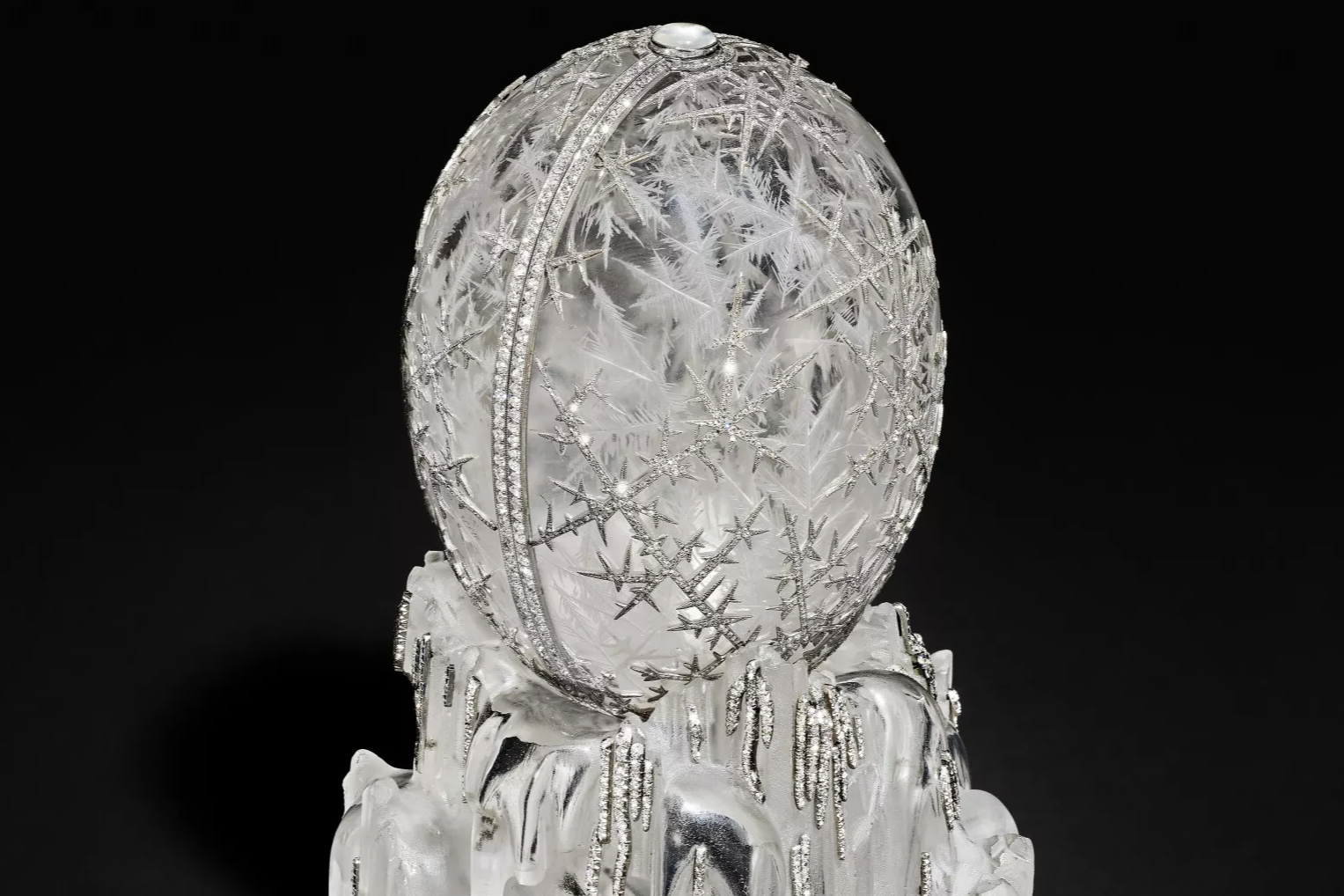
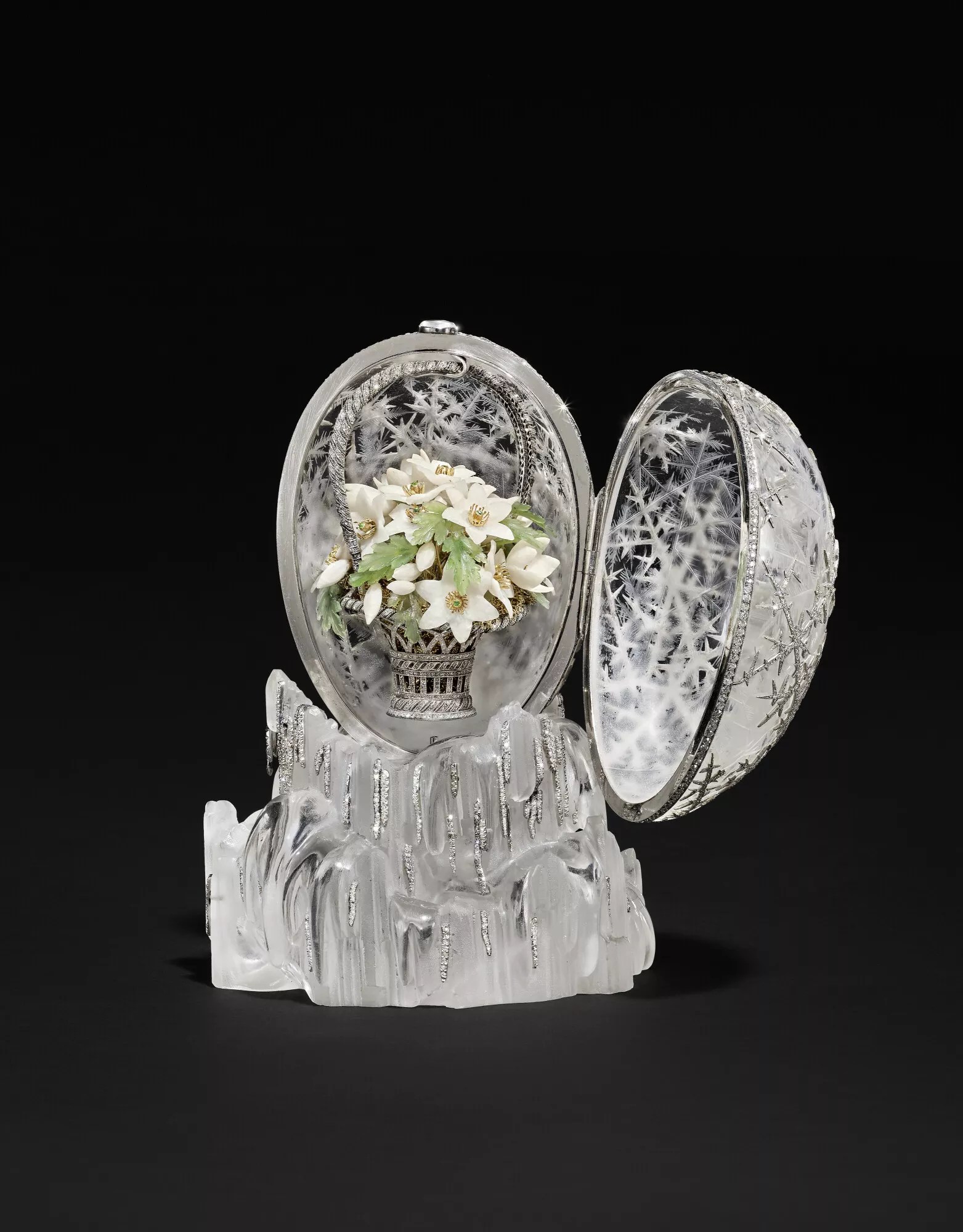
The Fabergé piece, which was designed as an Easter gift over a century ago, is full of symbolism depicting the transition from winter to spring: It features rose-cut, diamond-set platinum snowflake motifs on its exterior, an engraved frost design on its interior, and a rock crystal base meant to look like a block of melting ice.
Cracking the egg open on its hinge reveals a trelliswork platinum basket bearing a bouquet of spring flowers with gold wire stems, demantoid garnets at the center of the buds, and leaves carved in nephrite. The piece “represents the idea of resurrection, capturing the shift from winter’s harshness to the vibrant renewal of spring,” Christie’s said in a news release.
The exquisite piece is literally fit for royalty. Its origins date back to 1913, when Russian Emperor Nicholas II commissioned Alma Pihl to design the item for his mother, Dowager Empress Maria Feodorovna. It was one of 40 eggs the emperor had created for both his mother and wife, Empress Alexandra Feodorovna, as part of the House of Fabergé’s Imperial Easter Egg series.
His father and predecessor, Emperor Alexander III, also had a fondness for these bejeweled eggs. The tsar commissioned the first 10 in the series for his wife, Empress Maria Feodorovna. Forty-three of the pieces still exist today: Most sit in museums around the world, while only seven, including The Winter Egg, are privately owned.
“The designs of the Easter eggs did not have to be approved by Court and Fabergé was given complete freedom in design and execution,” Fabergé’s then-chief designer, Franz Birbaum, wrote in his 1919 memoirs, per Christie’s. Birbaum added: “Most Imperial Easter eggs took almost a year to complete. Work began soon after Easter and was hardly finished by Holy Week of the following year.”
Largely self-taught, Pihl was one of the jeweler’s rare women designers. Inspiration for The Winter Egg struck when she saw ice crystals forming “like a garden of exquisite frozen flowers” while looking out of her frost-covered workshop window, according to Christie’s. Albert Holmström, her uncle, who was already a workmaster at Fabergé when he discovered Pihl’s talent and brought her into the fold, executed his niece’s vision of the egg.
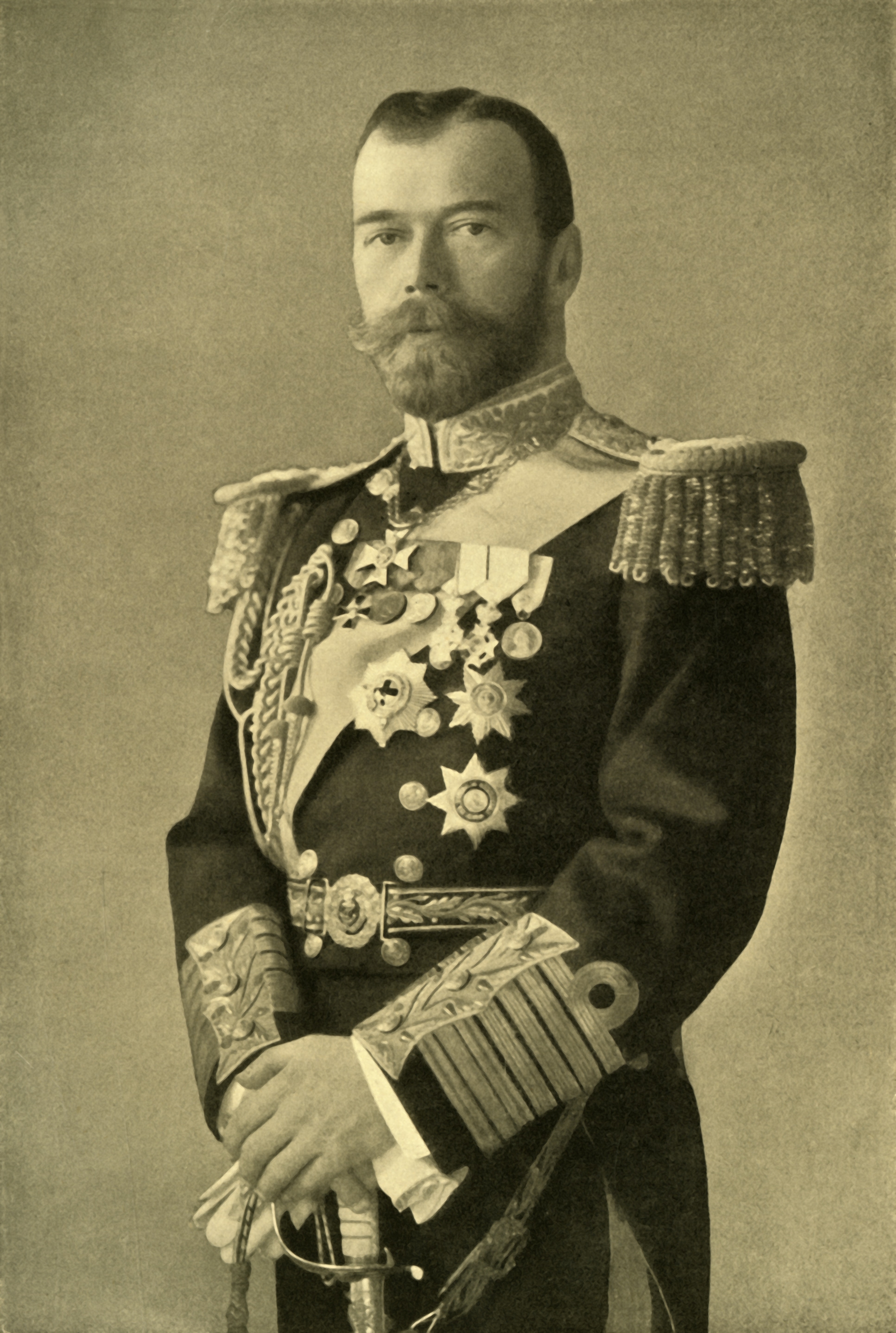
Emperor Nicholas II
Less than four years after the dowager empress received the piece, it was moved to Moscow for safekeeping following Nicholas II’s abdication in 1917. From there, it passed through a number of hands, including the London jeweler Wartski, who purchased it for a mere 450 pounds — around $590 — in the 1920s or ’30s. The last two times it was auctioned, however, it set world records for a work by Fabergé, and soon, it’ll have the opportunity to set another.
The Winter Egg isn’t the only beautiful Fabergé item up for grabs Dec. 2 — take a look at the rest of the collection.