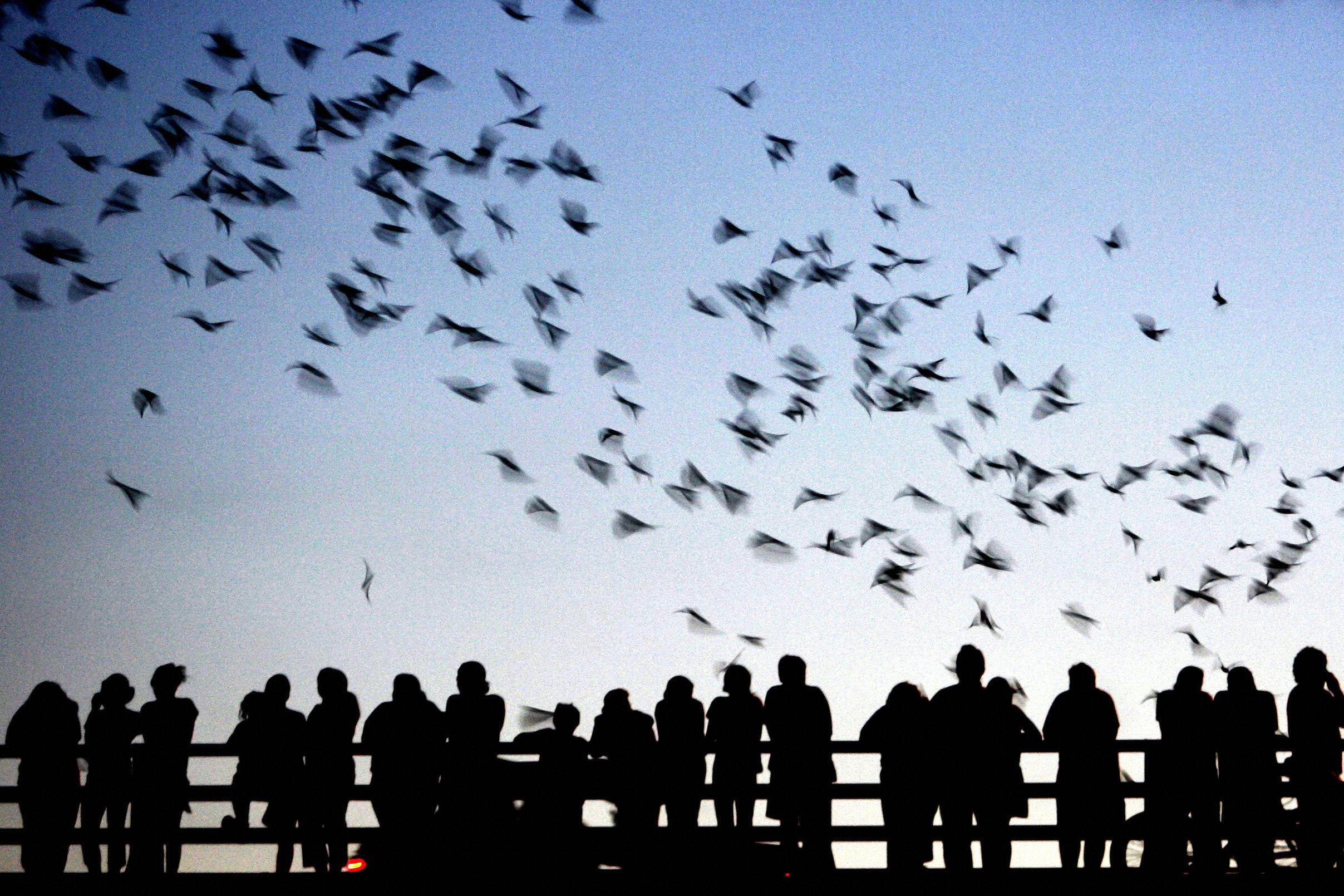
Every March, hordes of creatives flock to Austin, Texas, for the famed South by Southwest music and film festival. But another annual event is unfolding there this month as well. The city is home to the world’s largest urban bat colony, and just after sunset each evening, hundreds of thousands of the winged creatures emerge from beneath a bridge to soar into the night across Lady Bird Lake.
Mexican free-tailed bats have been migrating to the city for hundreds of years, but it wasn’t until a 1980 expansion of the Congress Avenue Bridge that the numbers really took off. The renovation resulted in deep, dark, concrete crevices that roosting bats find ideal to raise their young. Now, the bridge serves as a nursery, hosting as many as 1.5 million bats each year. When the weather cools between October and November, the colony takes off again for warmer climes.
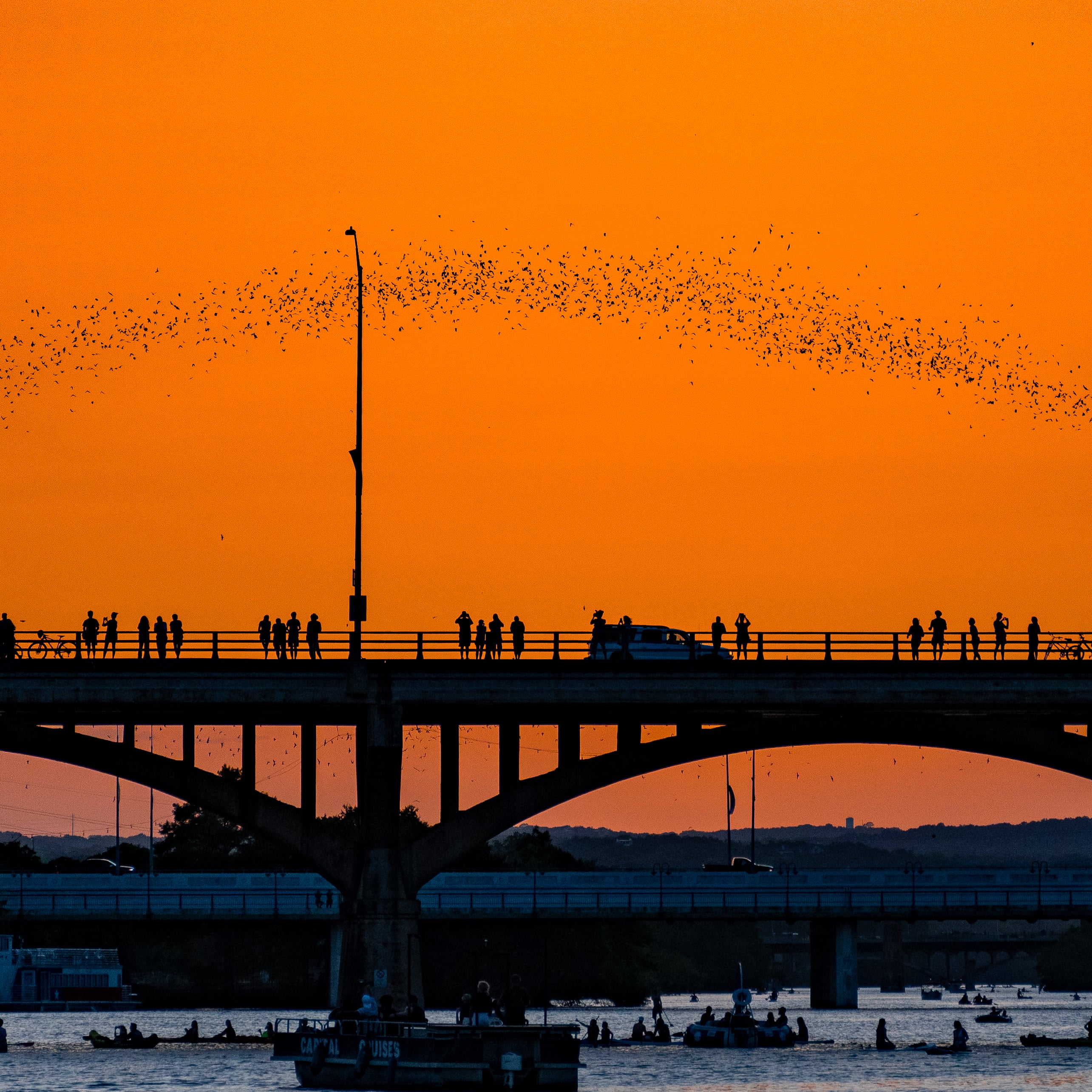
On a recent trip to Austin, Nice News’ managing editor, Natalie Stone, had the opportunity to witness the phenomenon, calling it a “serendipitous” experience, as the bats typically arrive in late March. She perched on a small hill with hundreds of people nearby, some on an adjacent walking trail or atop the bridge and others taking group kayak or boat tours on the lake. When the bats finally emerged that Feb. 28 evening, everyone tilted their heads up in unison to watch.
Footage Nice News Managing Editor Natalie took of the bats on Feb. 28, 2026
“Nature has a beautiful ability to bring strangers together over a shared experience, and the bats were a perfect example of that,” Natalie told me. “We all came from different backgrounds, and many of us likely wouldn’t cross paths in our day-to-day lives, yet we all carved out time on a Saturday night to see the little flyers.”
These days, the mammals’ emergence is considered wholesome family entertainment, but in the early days of the bridge’s bat colony, residents were apprehensive — to put it mildly.
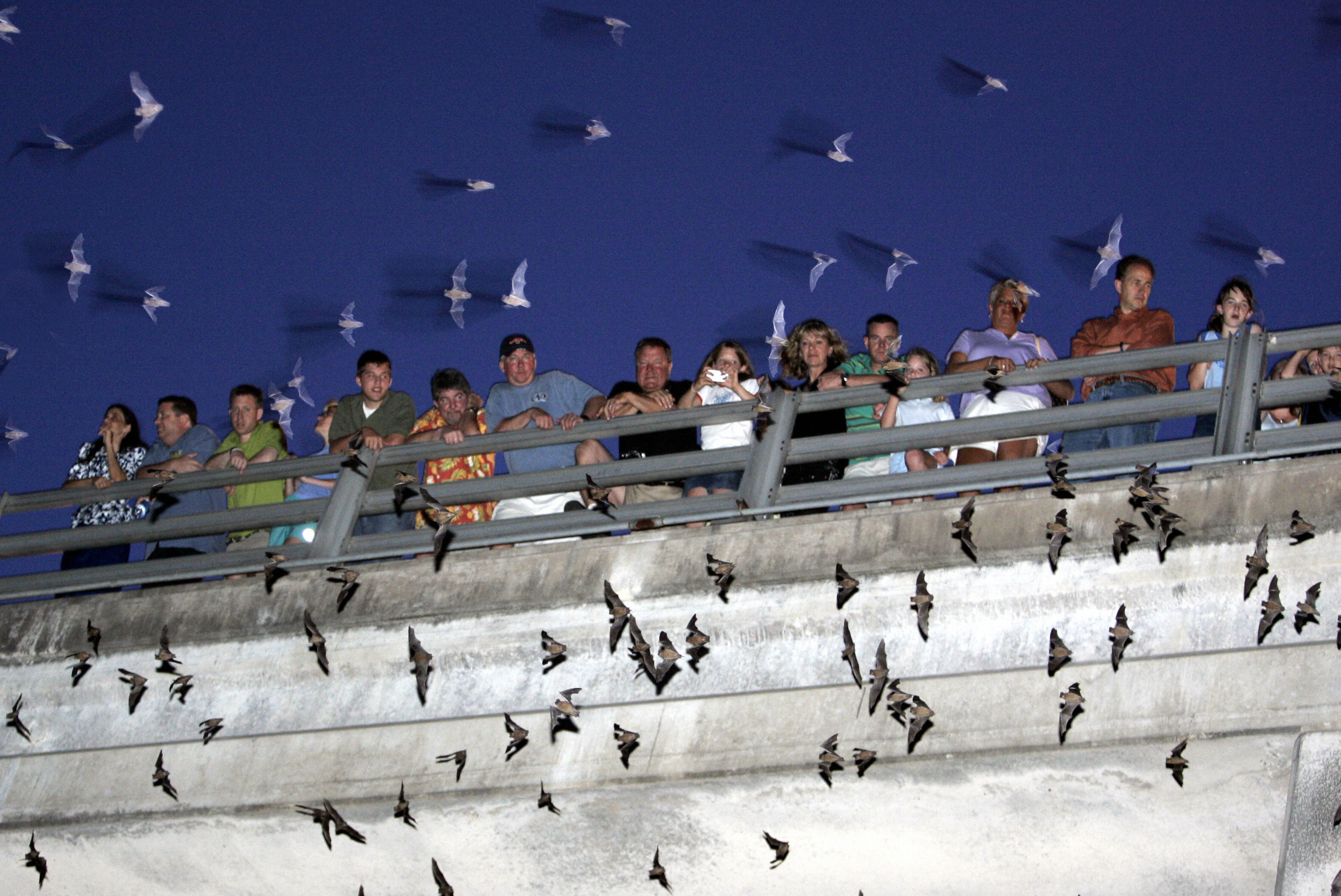
“There was panic and pandemonium,” Merlin Tuttle, founder of Bat Conservation International, told PBS’ Urban Nature. “The problem is people are afraid of what they don’t understand, and I came down and showed them what the bats are about, and next thing we knew, this was becoming a huge, international tourist attraction.”
Indeed, the critters help bring in up to 140,000 visitors and $10 million for the state capital each year, and on a busy night, as many as 2,000 people gather to see them make their appearance. Peak viewing takes place in summer, after the pregnant bats have had their babies, which nearly doubles the size of the colony.
“Viewing gets better after the pups are flying, around the third week of July, and August is normally prime time for bat watching,” Dianne Odegard and Lee Mackenzie, with the Austin Bat Refuge, explained to Austin Monthly. “With the pups joining their mothers, there are twice as many bats flying then.”
And the bats do more than just put on a show. They also provide free pest control, consuming between 10,000 and 30,000 pounds of insects every night. Of course, all that food has to go somewhere, so it’s a good idea to wear clothes you don’t mind getting dirty — and, as multiple locals joked to Natalie, keep your mouth closed when looking up.
Learn more about how to see the bats, and get details on booking tours.