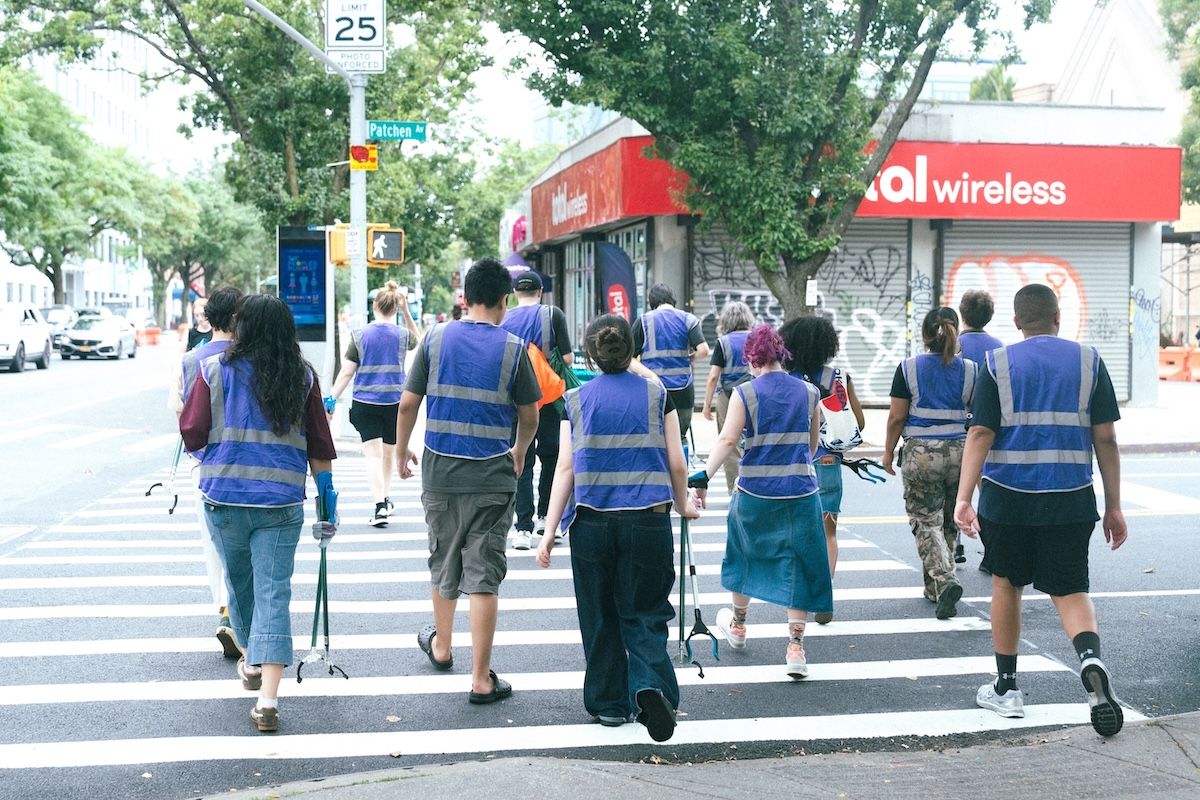
He started by filming himself picking up litter near his apartment in Washington Heights, a neighborhood in northern Manhattan. Now, he’s raised over $55,000, rallied a network of volunteers, and transformed an entire block. Most importantly, in a time when so much feels out of our control, he’s offered people in his community — and the country at large — a greater sense of agency. And it’s all happened in less than five months.
David Clarke is the 24-year-old founder of Trash Talk NYC, “New York City’s cleanup club.” His videos began going viral within days of him starting his social media accounts in May, inspiring him to hold group events across the city and positioning him as leader of a movement that’s now expanding far beyond just gathering garbage. That momentum was evident during two recent phone conversations with Nice News.
“We’ve got radio set up. We’ve got a car. We’ve got kind of like a system for getting cold drinks to people. I’m touring a lumberyard on Thursday to get free wood. I’m working on getting free flowers right now,” Clarke shared on our initial call in late July. He spent the next six weeks gearing up for the initiative’s first beautification block party, which took place Sept. 12.
His decision to get out and clean was driven partly by impatience and a desire for self-determination: He was tired of waiting for other people to take care of his city — and tired of feeling like that never happened. He also wanted to show his neighbors that someone had their backs. Once he got going, it became clear how he could make an even bigger difference.
“I’ve really been exploring what makes people litter in the first place,” Clarke explained in a follow-up call a few days after the block party, noting that “beautification is one of the only research-supported methods for reducing litter in the long term.” He spent a lot of late nights brainstorming ways he could implement that without running into property rights issues, and then he had a breakthrough.
“Everyone owns everything except for the tree pits,” he shared, referring to the soil-filled spaces cut out of sidewalks where trees are planted. That was a revelation for two reasons. For one, he said that on sidewalks in areas like his, there are typically no guards around the pits, so the soil becomes compacted from people walking over it, which may eventually kill the tree.
And for two: “You’re legally allowed as any person in New York to put in one of these fences with a permit from the city that’s not very hard to obtain. And as long as it follows certain design requirements, you can make it look like whatever you want. So I really ran with that idea.”
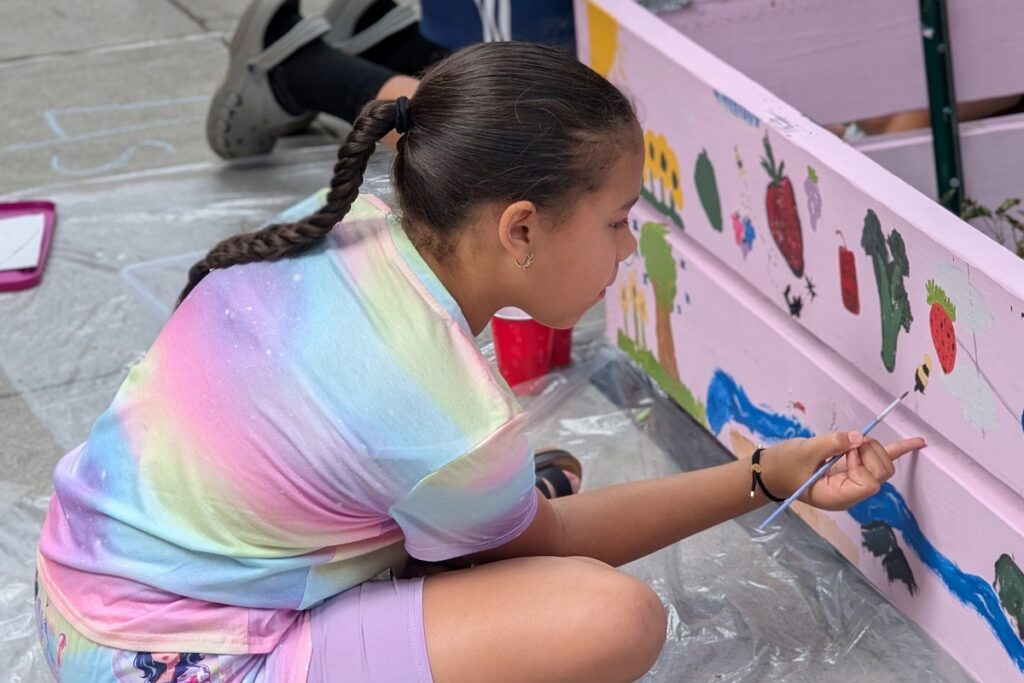
He got to work planting flowers and building plain wooden tree guards around neglected city tree pits in Washington Heights, lining an entire block with them over the course of two months. Then, without posting anything to the internet, he passed out printed flyers inviting his neighbors to paint the guards and enjoy lunch and music, courtesy of a hired DJ.
It was the first block party there in 38 years, he said, adding that it was a huge success. “It was so meaningful to the community, and people were crying. They’ve been thanking me profusely in the streets since then.”
Clarke, who graduated from Columbia University in 2024 with a degree in Middle Eastern studies, said he noticed a decrease in litter in the area just from installing the tree guards and flowers alone. But the painting party was about engaging the neighborhood more and handing off what had, in his mind, become a community garden — something everyone was responsible for.
“I’ll tell you what it feels like,” he explained. “I lived there for about two years, from 2024 to 2026, when this account started, and I felt like I had no agency at all to affect the block. I thought everything was owned by the city or by my landlord, and there was nothing I could do. And I think that’s how everyone felt on the block.”
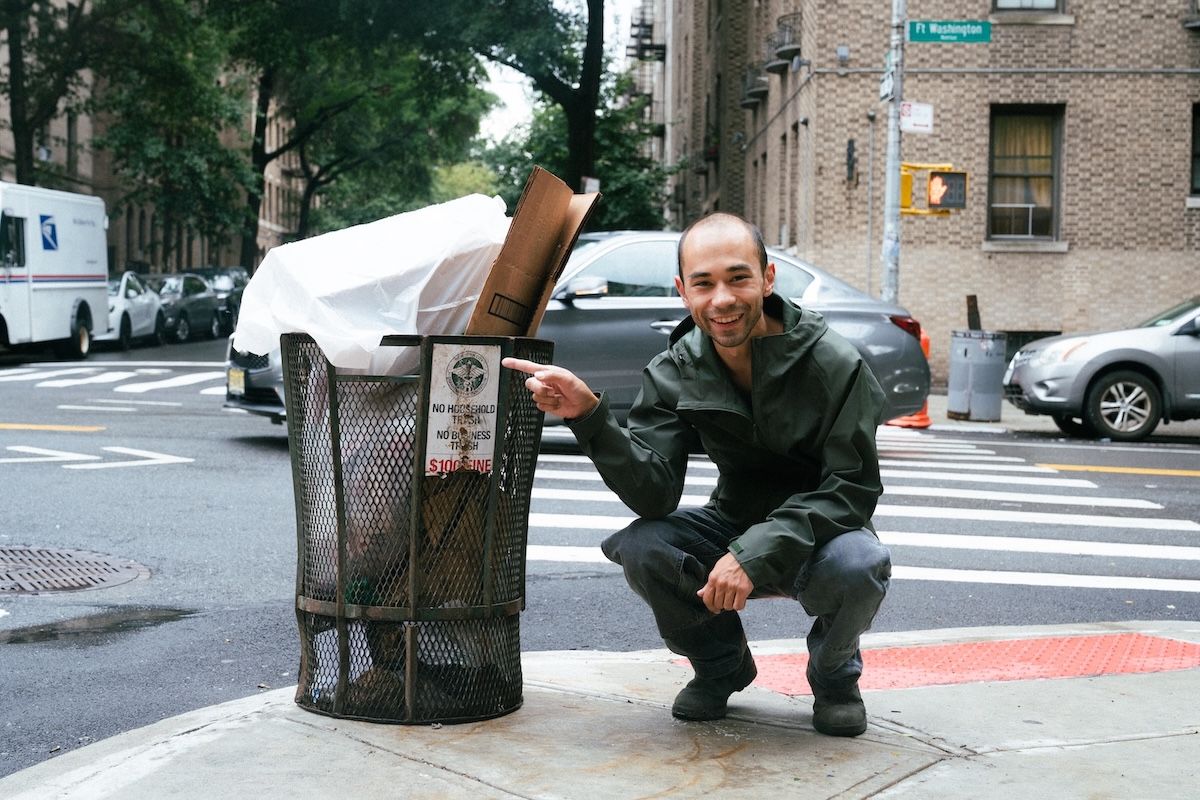
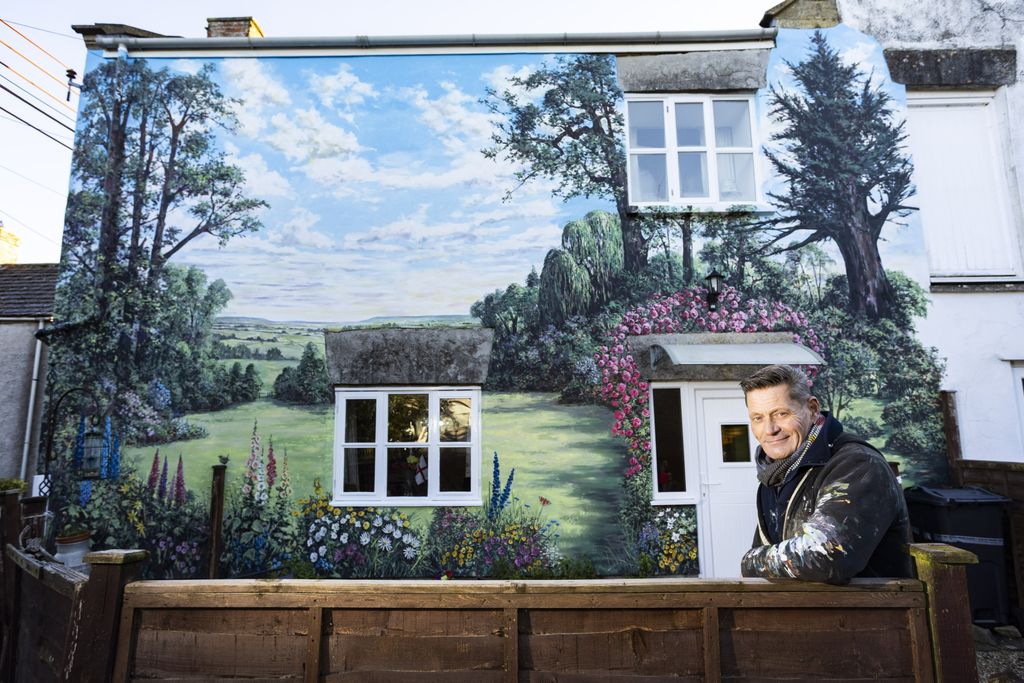
David Clarke on Sept. 12
But the community now has an annual reminder of its own agency, in the flowers protected behind the beautifully painted guards: “They’re perennials, so they come back,” Clarke said. “But they only come back if we work together and make sure the dogs don’t pee in the beds and that we don’t oversalt in winter when we have snow. It takes a community to make it work, but they now have this sense that they can control their environment. And that is so rare.”
Prior to going viral, Clarke was working as an academic tutor. Trash Talk NYC is now his full-time job, and it continues to evolve. He told us he’s been working with nonprofits and city council members, and that he’s starting to host corporate cleanups as well. He plans to continue holding weekly volunteer beautification and litter clearing events around the city but is also aiming to get back to basics with his accounts and schedule: filming himself picking up trash solo, heading home to edit, and then putting the videos out in the world.
It’s about having a conversation with the country regarding what we’re all capable of.
“It’s an 80% U.S. audience. But New York is not all of that. I think that Americans as a whole seem to be interested in this,” he said, “which is something I am very cognizant of. Because the same themes here apply to any city or anywhere in the U.S. Power to the people.”