Before joining the team at Nice News, Rebekah was a contributing writer for Los Angeles Magazine and BuzzFeed and taught creative writing workshops for people living in memory care facilities. One of her favorite perks of reporting on the world’s good news is always having a ready answer to the question, “What did you learn today?” She’s a storyteller and animal lover with an extensive background in performing arts and an endless fascination with language. A long-term California transplant, Rebekah never tires of LA’s 70 degrees-and-sunny weather.
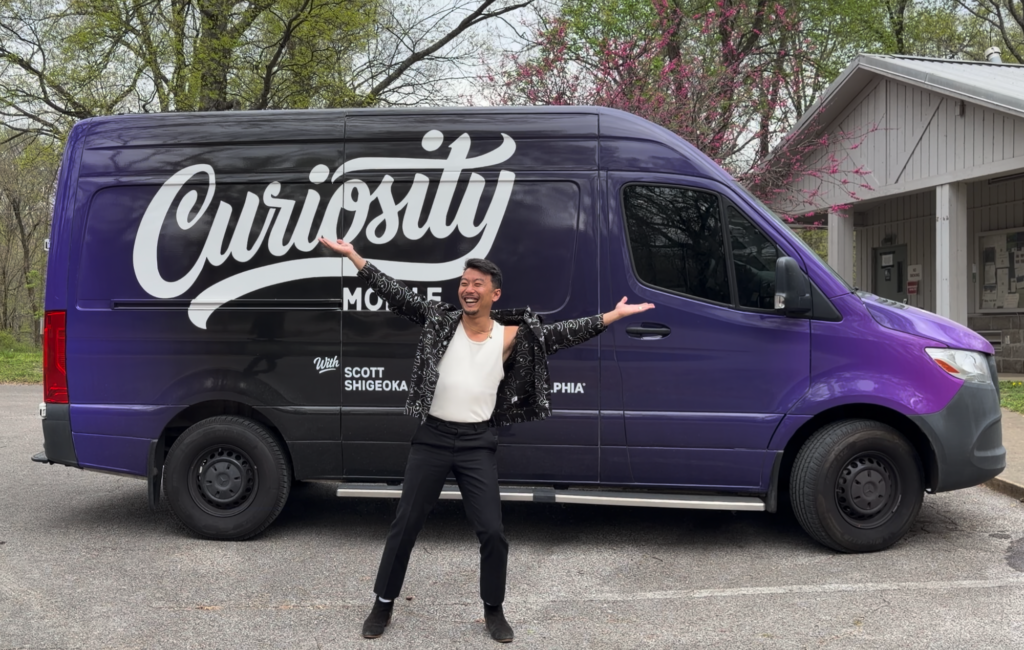
Before setting out from Los Angeles in a “giant purple van” emblazoned with the words Curiosity Mobile, Scott Shigeoka was feeling unusually pessimistic about the state of the country. Like most of us, his newsfeed had been dominated by negativity, and despite his sunny disposition, he wasn’t exactly brimming with hope.
That would soon change. During a six-month road trip across the U.S. that concluded June 13 at the TED Democracy event in Philadelphia, the author and curiosity expert connected with everyday people effecting meaningful change in their communities. He aimed to address what he calls the “belief gap,” a concept based on research that suggests most Americans desire to live in a democracy where everyone is cared for but don’t believe that such a thing is possible.
What if the first thing you experienced in a new country wasn’t confusion or isolation, but a whole community waiting to welcome you home? That’s exactly what @canopynwa is building in Northwest Arkansas. Canopy is a refugee resettlement organization doing the deep and life-changing work of helping people who’ve fled everything they’ve ever known actually belong somewhere new. I spoke with Khalid, who walked me through their program called the “Long Welcome,” which is a structured, community-embedded approach to resettlement. Rather than the typical 6 months of relocation support that many organizations provide for refugees, the Long Welcome is a FIVE YEAR program. It integrates welcoming and belonging at the heart of it – where neighbors are able to show up for those who are newly arrived. Neighbors knock on their doors to welcome them, and to let them know that they’re here if they need anything at all. They band together to stock the fridges for refugee families. They drive them to job interviews or carpool their kids together. They have neighborhood potlucks and dinners. They attend events together. Aziz said it best himself: “We truly feel a part of this community – this is home.” What Canopy has built in NWA is a blueprint for what community can look like when neighbors choose curiosity over fear. How it deepens social cohesion & belonging in a community. The Long Welcome isn’t special just because of its lengthened timeline of integration or the ways refugees and immigrants benefit from this program. The specialness lies in how the entire Northwest Arkansas community benefits. As a result of all of this, both the welcoming community and the newly arrived gain a deeper sense of belonging. #canopynwa#thelongwelcome#northwestarkansas#refugees#belonging#curiosity#curiositymobile
“We know from the research that one of the best ways to close a belief gap is by showing people real stories of people who are already doing this work, to remind people that not only is it possible, it’s already happening today,” Shigeoka told Nice News.
Courtesy of Curiosity Mobile
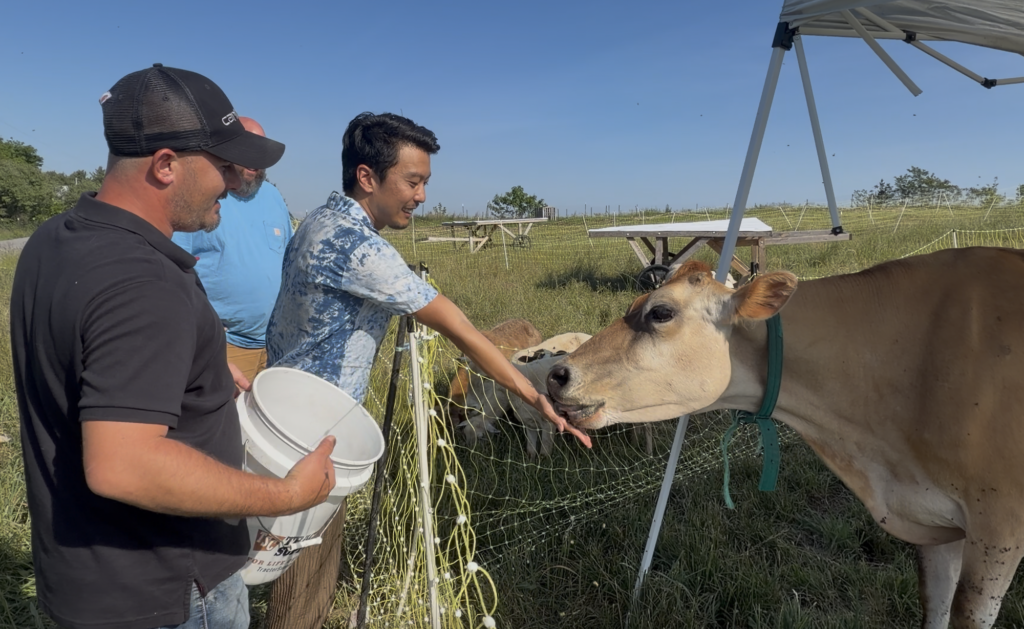
In Arkansas, he met with a group of residents helping resettle refugees in their community, and watched 49 individuals be sworn in as citizens. In West Virginia, he interviewed a man from a coal mining family who helped transform a former coalfield into a regenerative agriculture farm.
Advertisement
“Now this farm is feeding not only the people in the community but the local food bank, and it’s providing jobs to people in the county, which obviously is so important in West Virginia,” Shigeoka shared. “So the idea is, like, ‘Wow, if we can do this at one strip mine or one coalfield, what’s the possibility of doing this all over West Virginia?’”
One curiosity practice to try out in these divided times is to “See the Person, Not the Label.” More info on how to practice this below! We often see others in terms of the groups they belong to. When we judge people solely based on the labels that represent them or the groups they belong to, we tend to feel more threatened by them and count them as “the other.” But according to research, when we instead view people in terms of their own individuality, recognizing that labels do not define a person (because no group is a monolith), we feel less threatened by those who might seem “not like us.” The essence of this curiosity practice is to view someone not through the lens of the groups they belong to, but rather as unique human beings. A simple and obvious practice, but since our silly brains tend to fall back on stereotypes – interrupting these biases requires intentional practice. I loved meeting Bryce on the road who said it best in his own words: “One thing I wish is that people would actually get to know people before you make those jumps (and assumptions). Just because of your job, race, sexuality, I can’t assume what your morals are. I can’t assume what you think about different issues.” Rather than leaning into our judgments, let’s tap into our curiosity instead – you might be surprised by what you hear. I will be sharing more curiosity practices and conversations with the Curiosity Mobile’s awesome partners @Builders – I’m proud to be a founding Movement Partner. #curiositypractice#hardconversations#streetinterview#interview
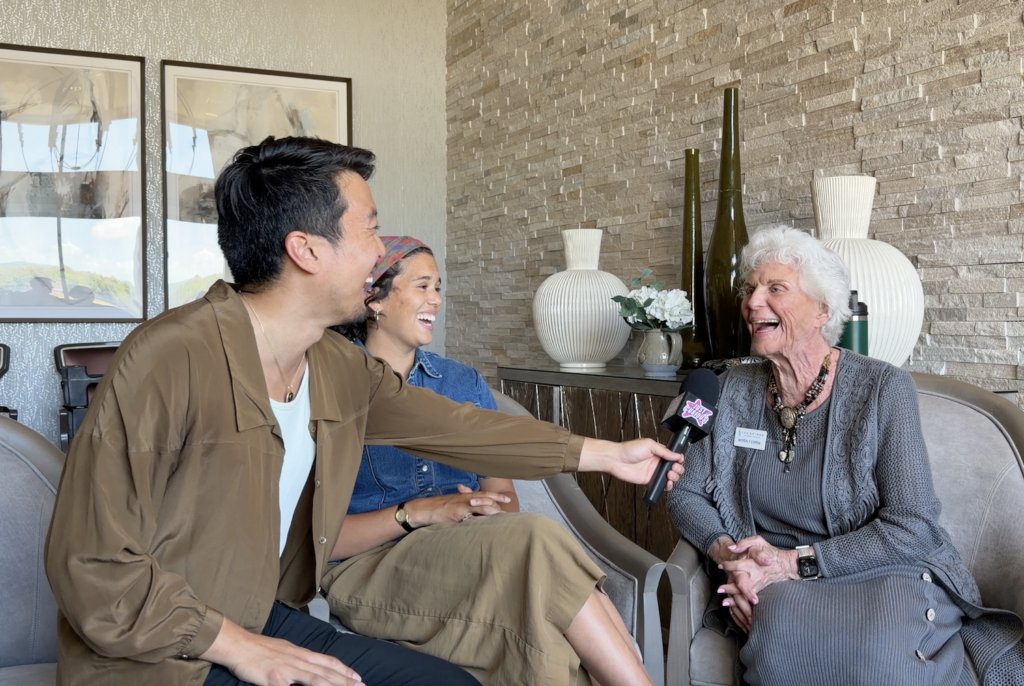
A young member of the military; the Indigenous founder of an upcycled clothing brand; a 16-year-old speaking out against data centers; residents of a senior living community who hold intergenerational “curiosity sessions” with college students — the people Shigeoka interacted with represented “all political beliefs and ideologies, religious backgrounds, ages, and races.” He added: “We wanted to make sure that we were representing the stories of the totality of America.”
Courtesy of Curiosity Mobile
Shigeoka has been posting footage from his journey on social media and will continue to release content in the coming months. He said people from across the country have been reaching out to share the positive impact the project has made on them. “Their reservoirs of hope are being refilled. And they’re also asking themselves, ‘What can I do in my community?’ And that’s the whole point.”