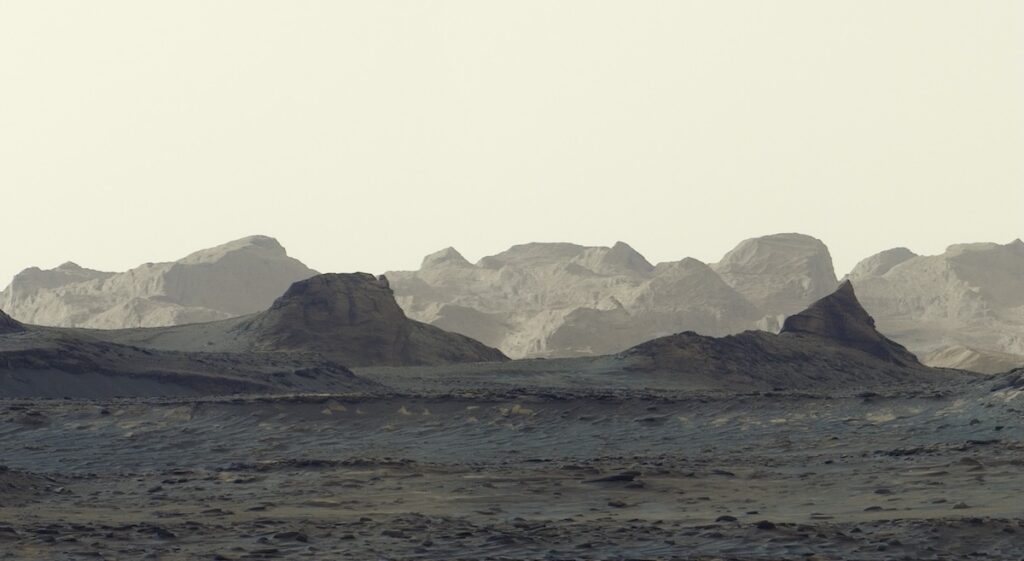
If you’ve ever wondered what it would be like to wake up on Mars, you’re in luck. NASA’s Curiosity rover recently snapped pics of dawn on the red planet, showing us the beauty of the morning light roughly 140 million miles away and offering scientists a deeper look at Mars’ wind-carved cliffs.
The resulting panoramic view (stitched together from six pictures) is the most detailed image ever captured of the cliffs, according to a statement from the NASA Jet Propulsion Laboratory. It shows a serene scene of distant crags illuminated by early light, highlighting features that the Curiosity mission team has “long been waiting to see up close.”
📍Gale Crater, Aug. 11, 2026, 8:30 a.m. local Mars time. The Curiosity rover captures the Sun rising on crags known as yardangs, a scene that scientists have long been waiting to see up close. 1/2 https://t.co/NJQH9yNEYR
— NASA Mars (@NASAMars) October 6, 2026
“Unlike most of Curiosity’s Mastcam images, this one was processed without white balancing, preserving the early morning appearance,” NASA explained, noting the team expects to receive even more images from the rover that could help them determine how the cliffs were formed.
Called yardangs, the cliffs extend for about 10 miles across the 3-mile-tall Mount Sharp, a mountain that Curiosity has been climbing for over a decade. In August, the same month that the photos were taken, the rover marked 0.6 miles in elevation in total, the most ever ascended on Mars.
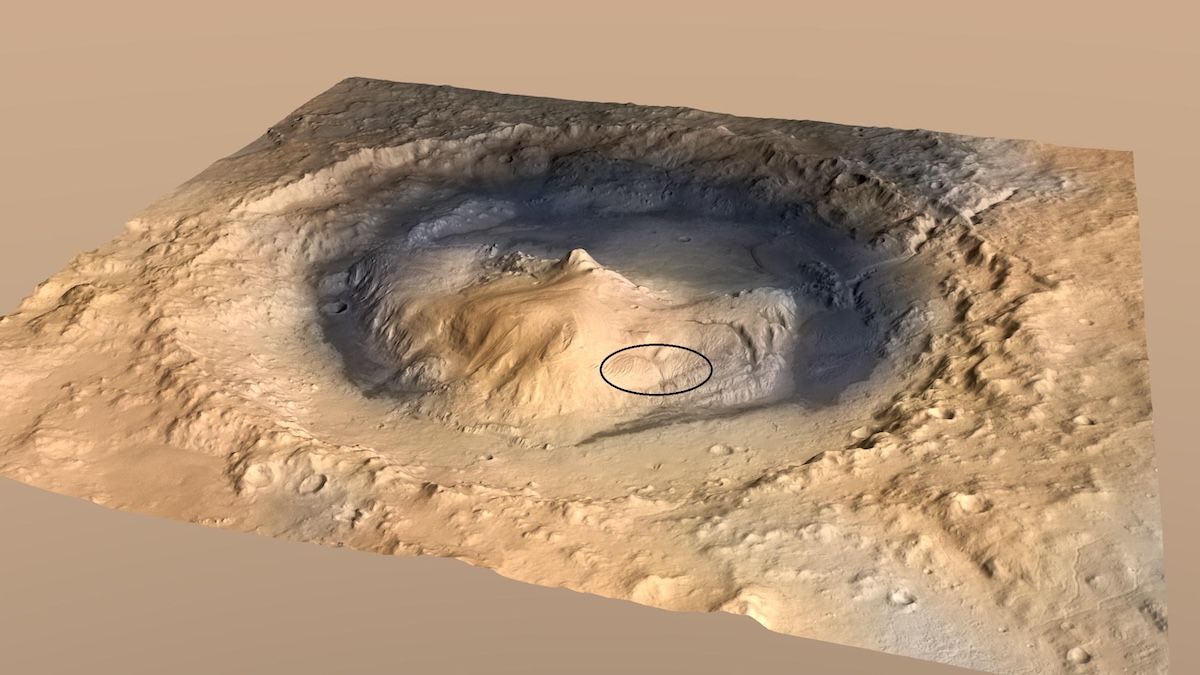
Ann artist’s concept of Mount Sharp, with its yardang layer indicated by the black circle
NASA explained that Mount Sharp is made of layers that each records a distinct period in the planet’s history. Scientists studying the layers have been able to glean insight about the lakes and streams that covered Mars billions of years ago, leaving salty minerals behind after drying up. One theory is that after this ancient material stopped settling on the peak, wind may have stripped some of it away, creating the layer of cliffs.
“The yardang layer looks out of place. It’s the wrong color, the layers tilt at an odd angle, and it almost appears plastered on,” said Curiosity project scientist Ashwin Vasavada. “But that’s what makes it exciting to reach. No one is sure exactly what created this layer, but one idea is it may be ash deposited by ancient volcanic eruptions.”

Over the next year, Curiosity will drive through layers of the mountain that are enriched with sulfates and carbonates, indications of water having dried on the surface. Scientists aim for the rover to reach the base of the yardangs at some point in 2027, where it will use its robotic arm to collect samples offering “one-of-a-kind data” on these enigmatic terrain features.
RELATED: NASA Launches First-Ever Study on UFOs