This article was originally written by Filipa Gaspar for SWNS — the U.K.’s largest independent news agency, providing globally relevant original, verified, and engaging content to the world’s leading media outlets.
Alan Boddington was just a kid when he first took an interest in space after gazing at the moon through a brass telescope with his uncle. His fascination was further sparked when Neil Armstrong landed on the moon in 1969 during the Apollo 11 mission. “It was one of those things that your parents let you stay up for,” he told SWNS.
Decades later, as the world celebrates another successful lunar mission, the 67-year-old is still captivated by the cosmos — and he invites others to take part in his passion at an observatory in the back garden of his pub.
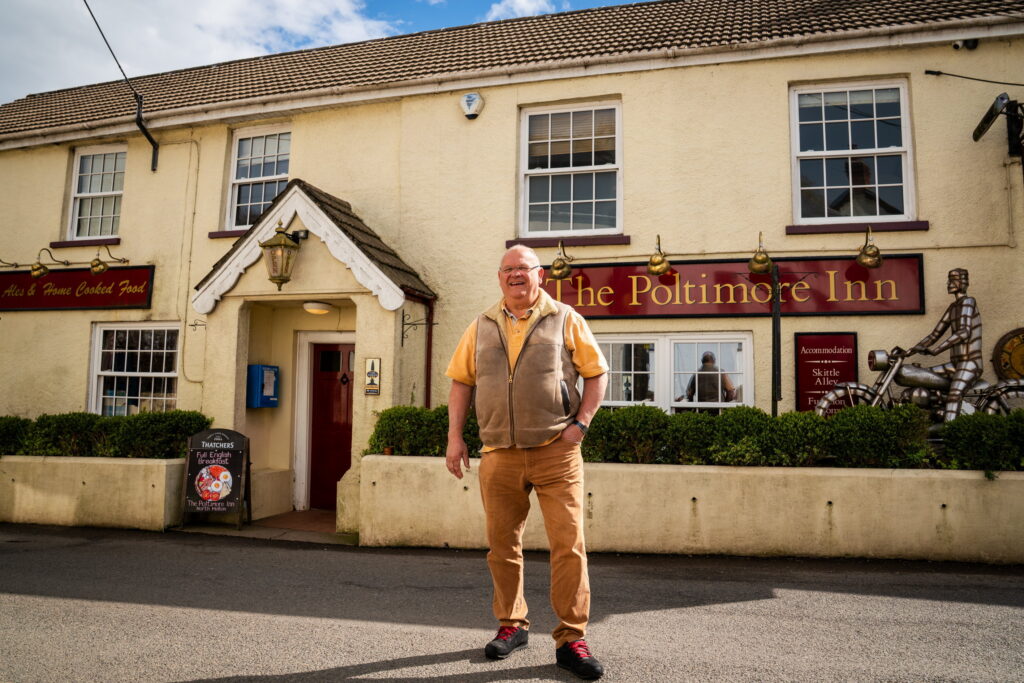
When Boddington took over The Poltimore Inn in 2012, he saw an opportunity. Located in the English village of North Malton, Devon, the pub sits on the edge of Exmoor National Park, Europe’s first-ever dark sky reserve. Minimal light pollution and cloudless nights means the Milky Way and thousands of stars and astronomical sights can be spotted.
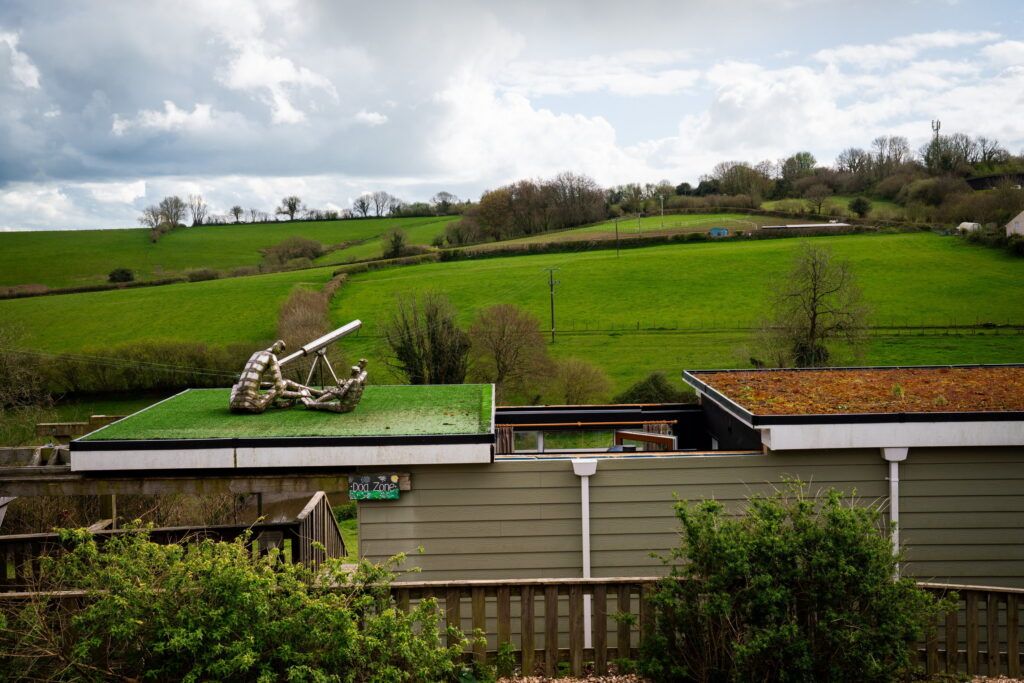
“It’s an unusual thing to have a pub with an observatory,” Boddington said, noting that the outdoor experience goes hand in hand with the indoor attraction. “When a cloud comes over, it means you can pop into the pub, have a pint, and maybe sit by the fire to warm up. Once the sky clears, you can come out with your pint and appreciate the dark sky.”
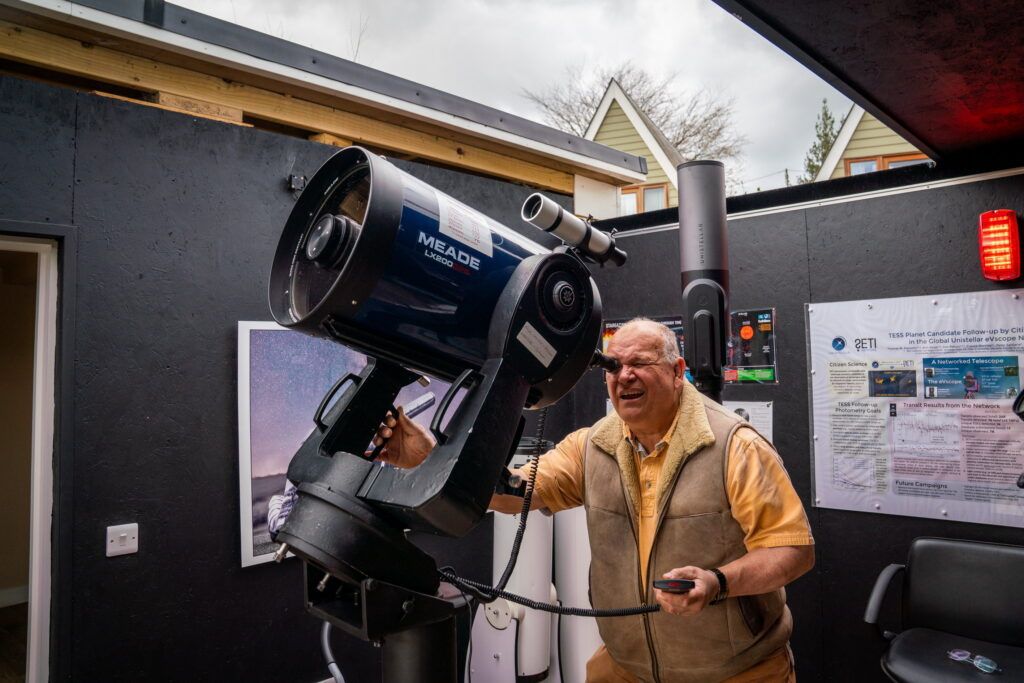
He set up the observatory five years ago, funding and building it himself. The telescopes cost around $14,000 and the building about $36,500.
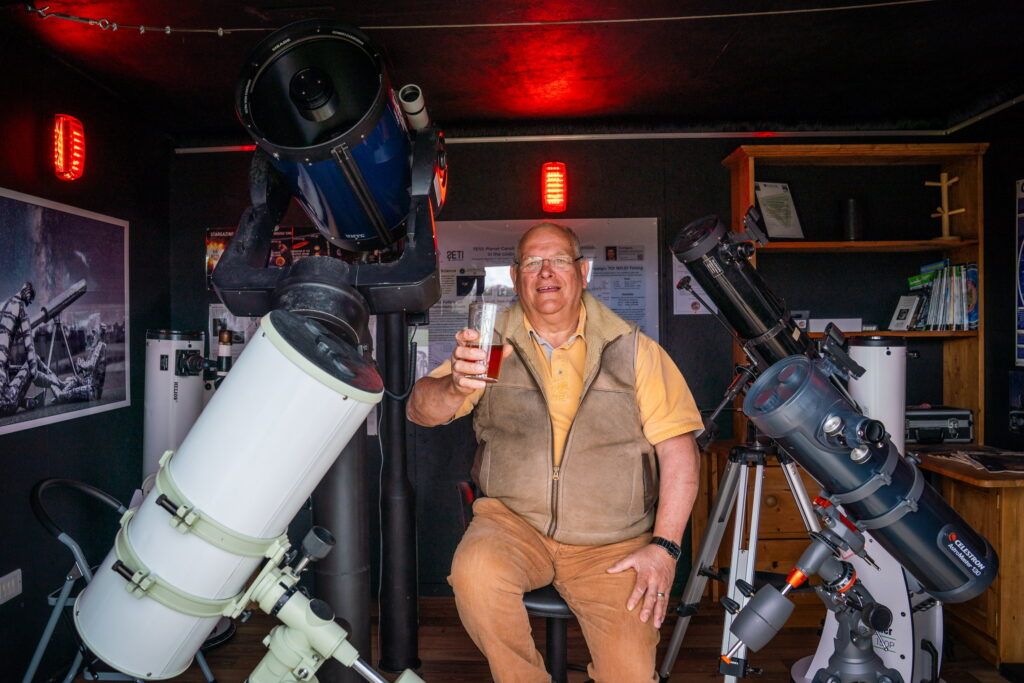
Within the observatory, there is a permanently polar- and star- aligned Meade LX200 12-inch telescope and a new era “smart” telescope called the Unistellar Ev-Scope. There are also numerous other manual telescopes and Sky-Watcher Dobsonians for beginners.
The building features an electronic roll-off roof and a private outdoor decking observation area, as well as private amenities, and tea- and coffee-making facilities.
“This has been a great boost. To go from being a youngster seeing the Apollo [11 mission] to seeing this venture Artemis going off and going looping round the moon is amazing,” he said. “Also the technology that is gone with it — we are going to be looking at tremendous pictures for the next six months as they are released. The dark side of the moon is something that we don’t generally see and I think we will have a lot of surprises from that.”
He added: “I hope it really stimulates the whole space idea in Europe, in England, and with the scientists in this country.”
The observatory helps him share his passion for astronomy and space exploration with others besides everyday bargoers. Regular monthly events are run by astronomers Jo and Pete Richardson, and students from the local elementary school also visit as part of their education.
Boddington said he hopes his observatory keeps inspiring both young and old about the sky and space.