This article was originally written by Lauren Beavis for SWNS — the U.K.’s largest independent news agency, providing globally relevant original, verified, and engaging content to the world’s leading media outlets.
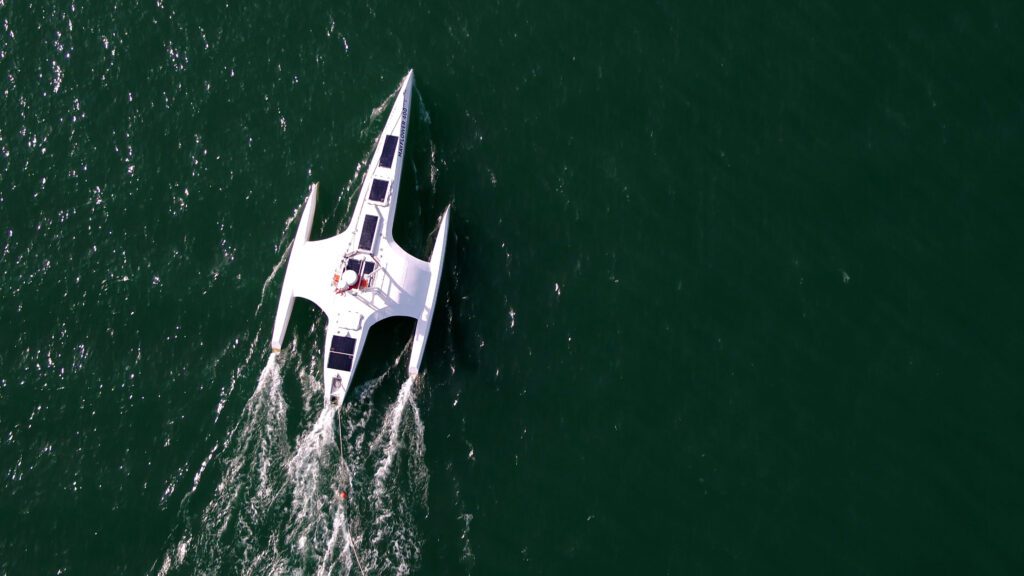
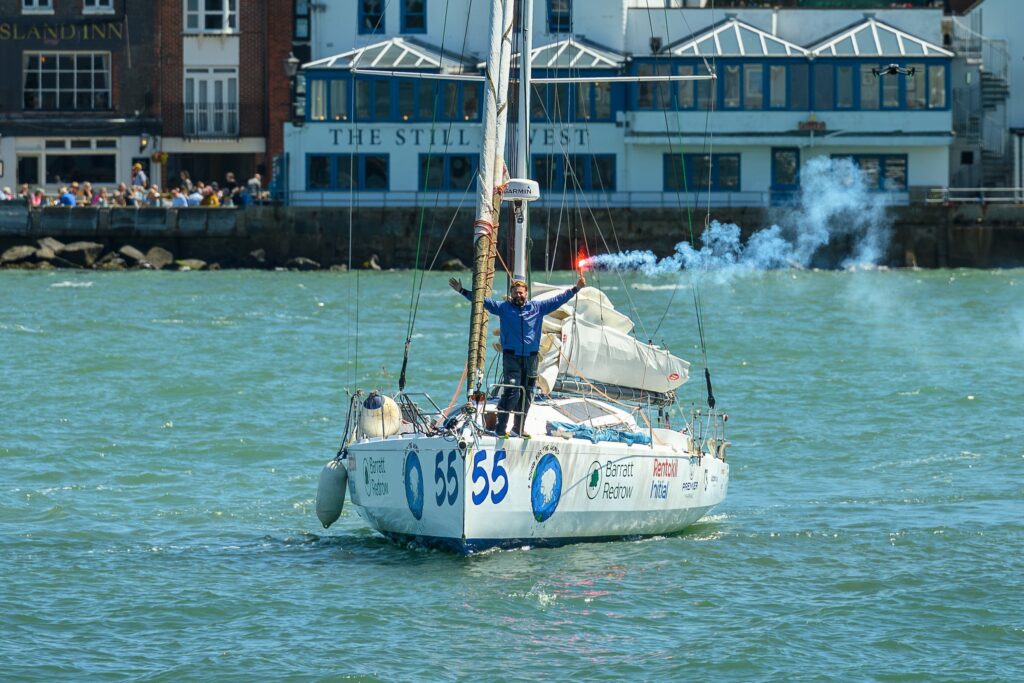
In a display of tenacity and daring, a British explorer became the first person to circumnavigate the globe by air, land, and sea. Earlier this month, James Ketchell completed a 34,000-mile journey around the world in a 40-foot boat called Mindset.
The achievement is his third circumnavigation: He marked 18,000 miles by bike in 2014 and earned a Guinness World Record for the 27,600-mile venture by gyrocopter, a type of rotorcraft, in 2019. He embarked on his latest excursion last July, setting sail from the town of Gosport in Hampshire, England.
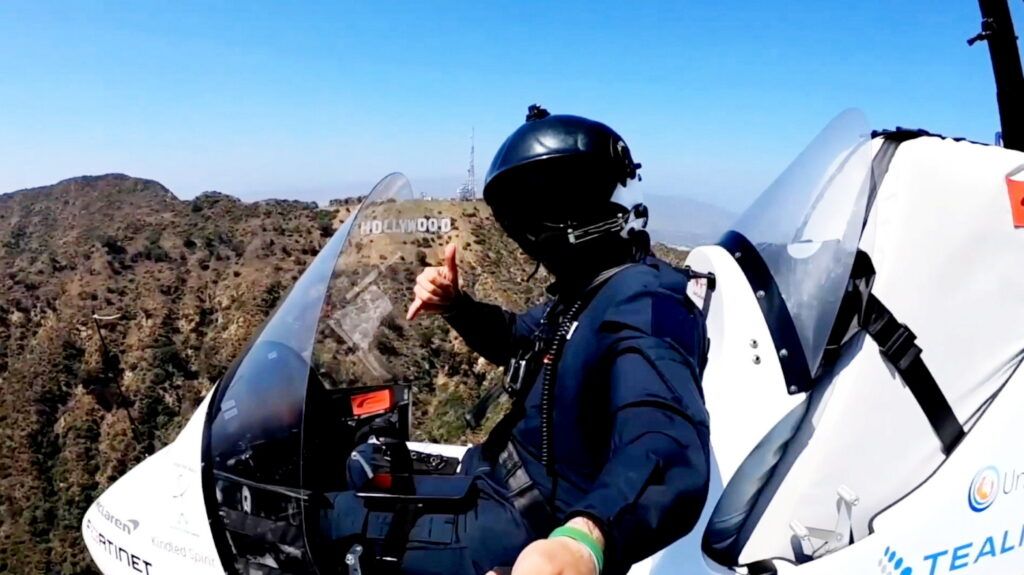
“It is really nice to be back but it still hasn’t really sunk in. The novelty of having clean clothes and lovely food certainly has not worn off yet,” Ketchell, 44, told SNWS. “It was only when I crossed the virtual finish line coming back into Gosport marina that I felt a sense of relief, like a weight had been lifted off my shoulders and I could finally say we did it.”
His journey took him to Lanzarote, Cape Verde, Brazil, South Africa, Tasmania, and Argentina via the three landmarks of South Africa’s Cape of Good Hope, Australia’s Cape Leeuwin, and Chile’s Cape Horn. Before returning home, he stopped in Cape Town to address critical repairs on his boat. He then arrived in Gosport on June 13.
“I had so many people help me on this journey, and I feel so happy and very grateful that everything came together, even the things that were out of our control,” he said. “The best thing was seeing my friends and family again after all that time away — I was quite emotional.”
A public speaker in addition to an adventurer, Ketchell was able to share inspiring talks to over 10,000 children during his trip, both online while at sea and in person.
“When I was back from flying around the world, I made a decision that I was going to sail around it too. It was only then I realized that no one had circumnavigated the globe by air, sea, and land — and I just knew that I would regret it for the rest of my life if I didn’t do it,” he shared. “I didn’t even do it to try and be the first, I was just determined to do this. It took three years of constant rejection and efforts to find the backers and partners to fund the project and the boat, but I was stubborn and did not give up.”
Powerful Life Lessons
Ketchell explained one of the hardest challenges that took place was when the boat’s autopilot, which steers the vessel and “is the single most important” part of machinery, stopped working in the middle of the South Pacific — when he was the farthest from land that he could possibly be.
“It definitely put me outside of my comfort zone but that made me a better sailor,” he said, explaining that he worked through it with the one other person on the boat with him at the time.
Of the three modes of his circumnavigation travel, Ketchell shared that sailing was the hardest and most extreme. “The thing with land and air travel is that you can land if you want to, but you can’t do that when you are in the middle of the ocean where you are completely exposed. It is by far the most complex and risky out of all the three modes of venturing around the globe.”
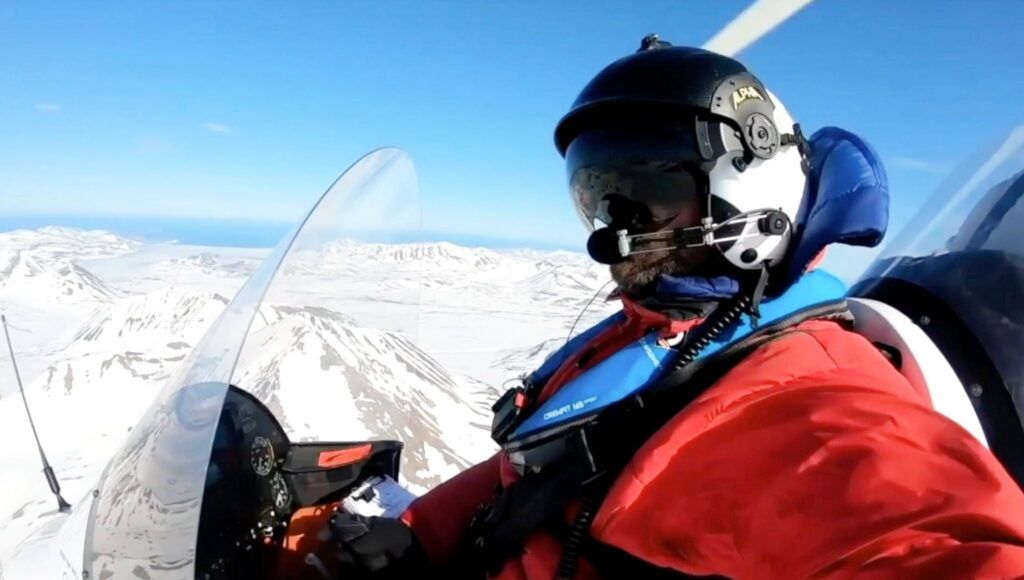
He added: “I trusted in the process, my preparation, and the people around me who helped me get to this point.”
Despite undergoing a serious motorbike accident in 2008, Ketchell refused to let anything stop him from breaking boundaries. From summiting Mount Everest in 2011 and catching pneumonia to rowing across the Atlantic and having to be rescued by a 110,000-ton oil tanker in the middle of the Indian Ocean, he’s clearly no stranger to challenges.
He called his motorbike accident, which temporarily left him unable to walk, “the best thing that happened” to him. “It forced me out of my comfort zone and inspired me to row a boat around the world across the Indian Ocean. I use it as an example to kids that a lot of good things can come off the back of hard experiences.”
Throughout his many adventures, he’s learned some powerful lessons about humanity. “The common theme across all my trips is that humans are amazing and ultimately we are the same. Kids from all over the world will ask you the same questions, and most humans are kind, generous, and intrigued,” he shared. “I will be paying forward favors for the rest of my life because so many people have helped me.”
Supporting Our Planet
Ketchell, who is an ambassador for the National Oceanography Centre, supported three ocean science missions on his epic sailing voyage.
The first involved deploying a robotic “Argo” float in the Indian Ocean, which contributed to a global network of over 6,000 devices that collect and transmit real-time ocean data for researchers around the world.
The second saw him collect microplastic samples to help improve our understanding of the distribution and impact of microplastic pollution throughout the ocean.
He noted this was of particular significance due to the amount of waste he saw on his latest voyage compared to when he crossed the Atlantic in 2010, when he didn’t see “one piece of rubbish.”
Ketchell’s final mission helped contribute to the Nippon Foundation-GEBCO Seabed 2030 Project, a flagship program of the United Nations Decade of Ocean Science for Sustainable Development. The initiative, which aims to produce the first complete map of the ocean floor, meant every mile he sailed generated scientific data to help advance our understanding of the sea.
The author of two books about his travels, Ketchell is determined to motivate young people to go after ambitious goals of their own. “I want to try and encourage other kids to pursue their dreams,” he said. “I never thought I would be in this position, but it’s by purpose.”
His next adventure? Getting married to his fiancée, Lisa Bulmer.