
Brad Stulberg starts his new book, The Way of Excellence, by clarifying what his subject is not. Excellence isn’t perfectionism. It isn’t optimization. It isn’t obsession or flow or happiness. Setting that straight is important, the author told Nice News, because hustle culture has co-opted the concept and alienated the average person.
Indeed, this isn’t a status reserved for a select few genetically blessed individuals at the top of their game. As Stulberg puts it, “excellence is for everyone.” He defines the term fairly simply, and with no mention of achievement or ranking: “Excellence is involved engagement in something worthwhile that aligns with your values and goals.”
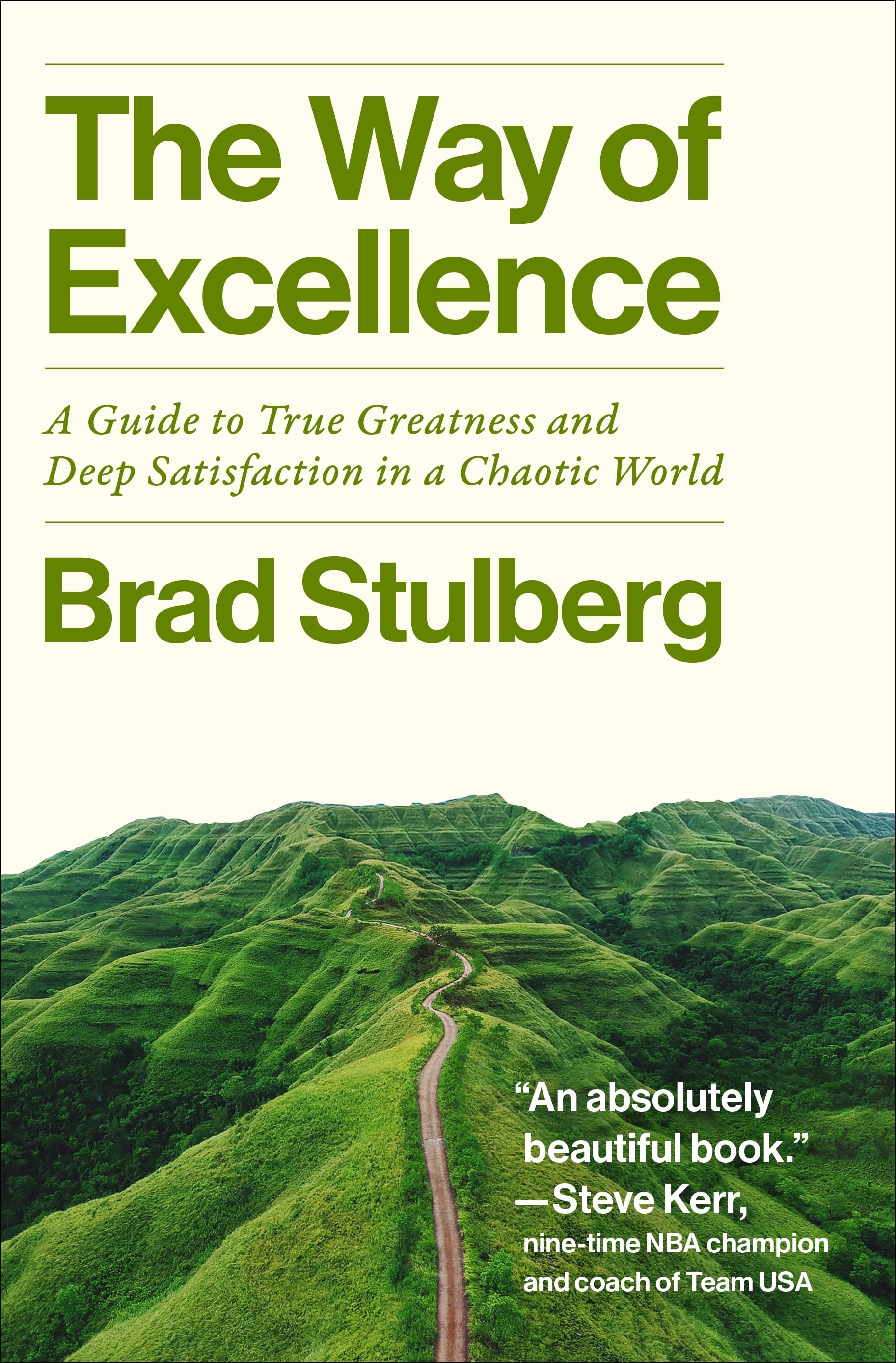
Rather than a destination, it’s the journey of being intimately immersed in a pursuit that helps us become the best people we can be, he explained. But why exactly — as many of us find it hard enough just to check off our chores, exercise, and put dinner on the table after a day’s work — should we concern ourselves with being excellent?
“The short answer is because so many people are seeking a sense of aliveness. And the pursuit of excellence is a conduit to aliveness,” Stulberg said, adding: “Decades of research shows that pursuing competence and mastery and excellence in any activity is a core contributor to meaning in life and satisfaction.”
Where to Start in the Pursuit of Excellence
Much like identifying a purpose in life, identifying the projects and goals through which we can cultivate excellence is a deeply personal process. For some people, a path may immediately spring to mind: “I want to pursue excellence as a mentor” or “I want to foster excellence as a musician.” For others, it may require more reflection.
Autonomy, Competence, Belonging
In his book, Stulberg writes that studies on human motivation, satisfaction, and fulfillment indicate that meeting three core needs is key to flourishing in the long term. Those needs are autonomy (“the ability to have some control over how we spend our time and energy”), competence (“a path toward concrete improvement in our chosen pursuits”), and belonging (“a sense of connection to something beyond ourselves”).

When evaluating a new opportunity or potential goal, consider whether it’ll increase or decrease these three needs. Another “simple yet powerful litmus test” that he suggests is to ask yourself if a project supports your core values — things like creativity, health, family, integrity, wisdom, and connection. (Learn more about core values in our previous interview with the author.)
Practical Steps
The first part of The Way of Excellence discusses the biology, psychology, and philosophy of excellence. The second part is dedicated to mindsets, habits, and practice. In our conversation with Stulberg, he elaborated on a few of those more practical considerations.
Determine Your Chronotype
“Nearly everyone who attains excellence relies on routines,” Stulberg writes, before quickly clarifying that “although routines can be magical, there is no magic routine.”
That means we must get in touch with how and when we function best, and design our days around those ebbs and flows of energy. Understanding your chronotype — your body’s natural preferences for sleep and activity in a 24-hour period — is a good first step in understanding how to establish a routine for yourself. (You can take a chronotype quiz here.)

“To the extent possible, if you can map the activities that you’re doing with the energy that you have, you get the best out of yourself, but you also feel the best because you’re not trying to put a square peg into a round hole,” the author explained.
Follow the 48-Hour Rule
While pursuing endeavors that matter to you, you’ll inevitably experience successes and failures. One of Stulberg’s most profound bits of advice is to follow “the 48-hour rule” after either one.
“After a big win or a tough loss, you give yourself 48 hours to celebrate the victory or grieve the defeat, and then you get back to doing the work itself,” he said. “The work is the best medicine. It keeps you rooted in the process. It keeps you from getting complacent and addicted to external validation after success. It keeps you from despair after failure.”
He notes that you don’t have to stick to this timeframe exactly — if you want to celebrate something huge for a week, go ahead. If you need four days to get over a stinging disappointment, that’s fine. Just give yourself a set limit to process what happened, and then return to what matters.
Adopt the Mantra “Brave New World”
When we take on new challenges, an element of fear often tags along with them. Being nervous about the unknown isn’t necessarily a bad thing, but if our trepidation stops us in our tracks, intentionally reaching for curiosity can help.
Stulberg suggests adopting a “brave new world” mentality when these moments arise. The idea started as something Stulberg’s good friend and weight training partner would say to him before a big lift and eventually evolved into a mantra. To tell yourself “brave new world” when facing something that scares you is essentially to say, “Let’s find out what this is all about.”
“You can either freak out or you can tell yourself ‘brave new world’ — you know, ‘I don’t know what’s gonna happen, but let’s find out,’” he shared, adding: “There is always going to be a sense of insecurity and fear. And the only thing that is an antidote and is more powerful is curiosity.”
When you buy books through our links, Nice News may earn a commission, which helps keep our content free.