Jason VanRuler is an author and psychotherapist specializing in communication, attachment, and relationships.
Have you ever walked away from a conversation thinking to yourself “That went really well,” only to learn later that the conversation did not actually go well?
I can remember early on in my marriage having a challenging talk about relocating to Boston and leaving the conversation thinking “That wasn’t too bad. I think we are on the same page about staying put for a year and we can circle back.” The next morning, however, my wife stood in our foyer and tearfully asked me when we were going to start packing up our house to move. As it turned out, my experience of our conversation and understanding of the outcome was much different than hers and dramatically so.
If this sounds familiar to you, you’re far from alone. In fact, almost everyone has had this experience at some point. The reason for this is simple; we often view our words and communication through the lens of our intentions rather than how they were received by others. Stephen Covey popularized this idea, and psychological research has supported it time and time again. What’s true is that it is hard to see outside of ourselves, especially when we aren’t sure about our communication type or why we communicate the way that we do.
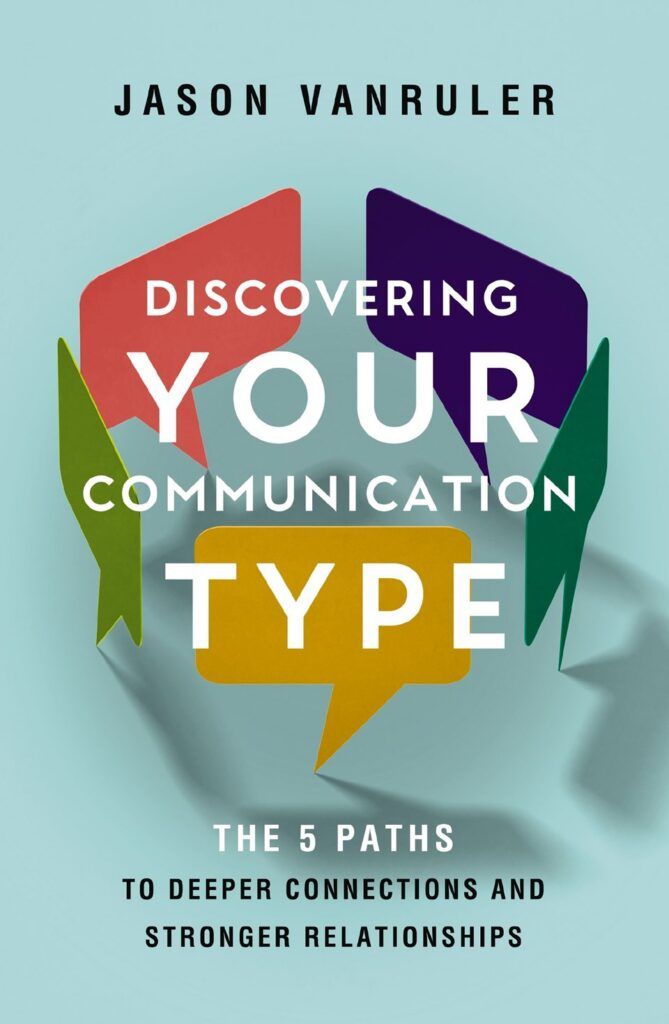
As a therapist, I have had a front-row seat to conversations between couples, teams, and others that have gone amazingly well, have ended badly, and everything in between. As I write about in Discovering Your Communication Type [published April 14], I noticed distinct communication types and patterns during the past decade working with clients and realized there are five main types. Underneath each was a powerful “Why” that explained the drive behind someone’s communication. And when you know “Why” you communicate, improving “How” you communicate becomes much easier to do.
The five communication types are:
Peacemaker
Strength: Creates peace and eases tension in difficult or trying moments.
Opportunity: Can avoid necessary conflict, which delays resolution and repair.
Advocate
Strength: Focused on justice, fairness, and upholding morals; advocates for their beliefs.
Opportunity: Can present as intense or overpowering or advocate when it’s not needed.
Thinker
Strength: Focused on logic, thoughts, facts, and getting things correct.
Opportunity: Can miss cues for feelings and appear distant or emotionally unavailable.
Harbor
Strength: Creates a safe space for others to go deep and talk about feelings and emotions.
Opportunity: May struggle to express their own needs, communicate boundaries, or be the focal point of a conversation.
Spark
Strength: Brings lots of energy, creativity, and momentum to conversations.
Opportunity: Can struggle with consistency and initiating difficult conversations.
The five types aren’t just labels: They’re ways of navigating relationships. They help us make sense of why conversations succeed or fail, why relationships thrive or stall, and how we can adapt our approach to communicate more meaningfully.
Healthy communication is as much about listening as it is about talking. Each path speaks a different “language,” and the more fluent you become in other styles, the better you can bridge the gap between you and the people you care about.
For example:
Thinkers need time to process. Give them space instead of pressure.
Sparks need engagement for connection. Respond to them with energy rather than silence.
Peacemakers need and prioritize safety. Approach them with grace, not urgency.
When you know your type and prioritize others’, connection isn’t just possible; it’s likely.
I met Rachel after giving a keynote address; she tearfully approached me and told me how she often felt at odds with her teenage son Cody. Rachel was gregarious and outspoken but said that whenever she spoke to Cody, she felt like he undermined her with his silence and disrespect. Rachel told me that this cycle had gone on for so long that she wondered if she and Cody would have any type of relationship after he graduated high school.
After Rachel took the PATHS Assessment I developed, she could hardly wait to tell me what she had learned. “He’s a Peacemaker, Jason!” she exclaimed. Rachel went on to share that she had found her primary type to be Advocate, while her son’s was Peacemaker. Knowing this difference helped her see that Cody’s silence wasn’t about opposition but instead about overwhelm. Although Rachel’s passion as an Advocate was contagious, it was also challenging to her Peacemaker son who valued agreement and harmony.

Knowing Cody’s PATHS type helped Rachel soften her message, which was the catalyst to Cody opening up and the relationship growing.
It’s important to note that there is not a perfect type. All have strengths and opportunities for growth. What matters most is that you understand your primary type and how that influences the ways you show up to conversation as well as the ways other types receive you. This knowledge provides opportunities to better connect with others and develop self-awareness. Connection happens when we learn to understand our path and someone else’s. But here’s the problem: A lot of us don’t even realize we’re on a path.
In any challenging conversation between you and another person, you might be talking about the same issue. You might want the same outcome. But if you don’t understand the path you’re on and the path the other person is on, you can feel stuck and misunderstood. Or worse, you’ll assume the other person is wrong just because their approach is different from yours.
When you understand your communication type and the communication type of others, you begin to see that most disconnect and conflict stem from differences in approach rather than intentions. Knowing this, your communication type can become your superpower rather than a stumbling block.
To have deeper, more fulfilling relationships, we must understand our own and one another’s paths. To find out your main communication type, take the assessment.
When you buy books through our links, Nice News may earn a commission, which helps keep our content free.