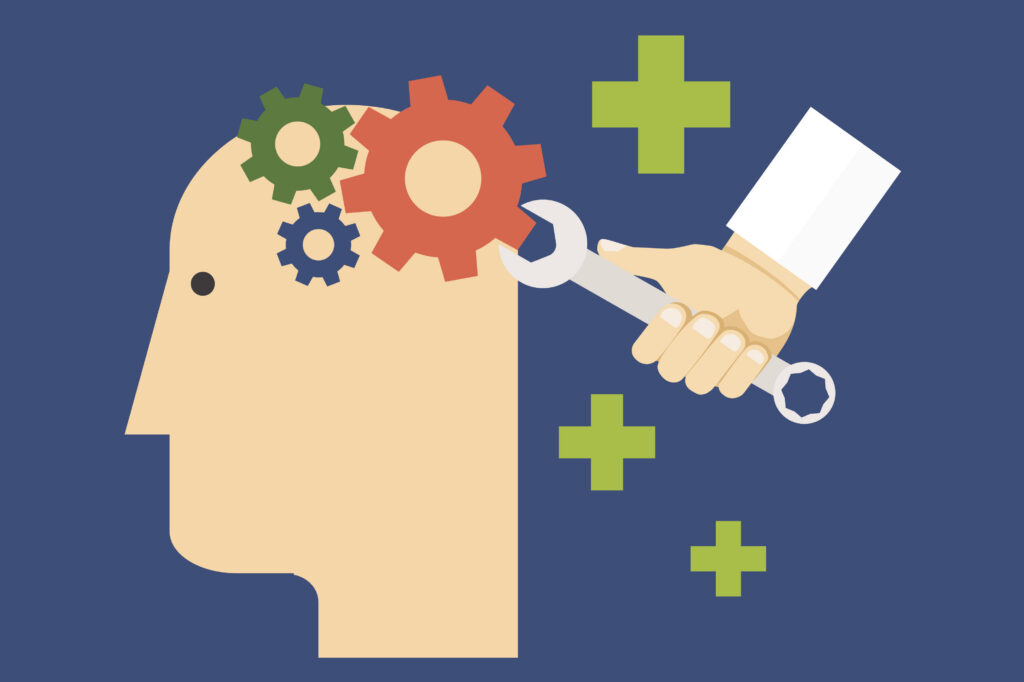
Do you have a mental health tool kit at the ready? Also called coping toolboxes, these are personalized collections of items, activities, and techniques that can help you self-soothe when you’re in a state of stress.
“When we’re in our feelings, it can be difficult to think rationally about how to cope,” Stella Kimbrough, a Pennsylvania-based trauma therapist and the owner of Calm Pathway, told Nice News. “When we plan ahead in a balanced state of mind, we help our future selves shift away from all-or-nothing thinking and back towards balance.”
Joel Blackstock, clinical director at Alabama’s Taproot Therapy Collective, explained that when we’re feeling significantly stressed or severely low, our threat brains become activated. If we don’t have tangible tools within our reach, our nervous systems can default to ingrained or primitive defense mechanisms — things like dissociating, doomscrolling, or lashing out at others.
“A real mental health tool kit is not about pampering yourself,” Blackstock said. “It is a biological emergency kit designed to manually reset your autonomic nervous system.”
Make It Physical

In service of not having to problem-solve when you’re in the midst of a negative state, the majority of your kit should exist outside of your head. Anything that isn’t a physical item should be written down, either on your phone or with pen and paper, and specific decisions should be made ahead of time.
For example, someone who is putting together a tool kit wouldn’t just write “listen to upbeat music.” They’d be more specific and write “listen to an upbeat music playlist.” Then they’d create said playlist, so all their future self has to do is press play.
Placing your list of exercises and activities somewhere you can see it frequently will remind you to actually use your kit, per psychologist Jennifer Caspari, author of You Are More Than Your Body: 30+ Evidence-Based Strategies for Living Well With Chronic Illness. “Also, it may be helpful to set out things that are relaxing or soothing, that you can easily grab and use, sort of like a self-care corner, so you don’t have to spend energy or time finding things,” she suggested.
A totable kit is another good option. “One of the benefits of keeping a physical kit ready is that it’s portable and clients can bring them to spaces where they anticipate they might need more support,” said Kimbrough.
What to Put in Your Mental Health Tool Kit
Not every well-being strategy will work for every person in every situation, so starting out with an arsenal of ideas and returning to the ones you connect with is a good way to go. Below is a list for inspiration.
Sensory Reset Items
- Sour candies
- Cinnamon gum
- Scented lotion
- Essential oils
- A ready-made bag of ice in the freezer
“Shocking your system with intense sour flavor or activating the mammalian dive reflex with cold water forces the brain to snap out of its cognitive loop and immediately ground itself back into physical interoception,” Blackstock said.
Kimbrough agreed, noting that using sensory items can get us out of our heads. “Engaging our five senses helps to shift focus away from worry thoughts or rumination and towards the present moment,” she said, adding: “It’s important to be mindful by paying attention on purpose to the sensations in order for the skill to be effective.”
Distracting and Self-Soothing Items
- Fidget spinners
- Squishy toys
- Stress balls
- Herbal tea
- A fuzzy blanket
- Photos of loved ones that bring you joy
Releasing energy through fidget or stress toys can facilitate self-regulation and focus, while cozy items like a warm cup of tea, a soft blanket, and a photo album of your favorite people may calm you down.
Practical Support
- Protein bars
- Water bottles
Sometimes we get so overwhelmed that we don’t even realize we’re not addressing our basic needs — which only adds to our state of stress. Having a nourishing snack and some water on hand can boost your energy and help you reset so you can better handle stress.
- A prewritten list of your strengths and accomplishments
It can be difficult to remember all our positive qualities when we’re feeling down, so having them pre-written can kick that all-or-nothing negative thinking to the curb when it strikes. “I often encourage clients who struggle with negative self-talk and low self-esteem to practice writing down their strengths and accomplishments to reference when they’re in an emotional state of mind,” Kimbrough shared.
- Index card with a somatic checklist
In moments of deep distress, the prefrontal cortex can “shut down,” Blackstock said. “You literally lose access to your executive functioning and problem-solving skills. He suggested having “a physical card that tells your body exactly what to do step by step. It should list basic biological interventions like drinking a glass of water, doing 10 physiological sighs, and walking outside for sunlight.”
Mood-Boosting Activities
- Listen to an uplifting playlist (or even just one song)
- Watch an episode of your favorite show or feel-good movie
- Listen to birds on your balcony for 10 minutes
These are rather self-explanatory: Sometimes we just need to boost our moods!
Exercises to Regulate Your Nervous System
Breathing
- Long exhales
Per Caspari, lengthening your exhale slows down the nervous system and can help you feel more relaxed and grounded. “For two to five minutes, practice inhaling to a count of 3 and exhaling to a count of 6,” she recommended. “Or, stop between tasks and take two to three long exhale breaths. Keep in mind that if you are feeling really stressed or anxious, it is helpful to breathe this way for at least 10 minutes.”
Movement
- Jumping jacks
- Squats
- Wall-sits
- A brisk walk around the block
“Activating large muscle groups by engaging in intense exercise helps to release natural mood-boosting endorphins, helping our minds shift towards a more neutral state,” said Kimbrough. “You don’t need to run a 5K in order to get the benefits — even doing just five minutes of intense exercise can help you calm down quickly.”
Visualizations and Affirmations
Eric Frazer, psychologist and the author of Coached Without Limits: 52 Skills to Unleash Extraordinary Leadership, recommended thinking about a positive memory when you’re feeling down, like “a big success, crossing a finish line (literally or metaphorically), a special person in your life, [or] a peak experience.”
He also suggested repeating an affirming mantra to yourself in difficult moments, such as “I can handle anything,” “The present moment is not bothering me,” or “I’m lucky to be here.”
Name Your Thoughts
Caspari pointed out that most people automatically believe what they think, even though inaccurate thoughts populate our minds every day, particularly about ourselves. “When you take unhelpful thoughts as the truth, they can lead to unhelpful behaviors,” she explained.
“Practice naming your thoughts as thoughts by using the phrase ‘I’m having the thought that …’ and remind yourself that the thought is not necessarily true and you don’t have to act on it. You can also remind yourself ‘Just because I think it, doesn’t mean it’s true.’”
Take It One Day at a Time
Whether you’re having a wonderful week and don’t need to use your tool kit at all or you find yourself utilizing it daily, take what comes in stride and try to refrain from defining your experiences in black-and-white terms.
“There is no such thing as ‘good days’ and ‘bad days,’” said Frazer. “There are just days, moments in time, which we all experience. Make a deliberate choice and say to yourself, ‘No matter what happens today, I’m going to accept it, handle it, and find a solution. If it’s a low day, I’m going to practice elevating my positivity. If it’s a positive day, I’m going to acknowledge it and be grateful.’”
When you buy books through our links, Nice News may earn a commission, which helps keep our content free.