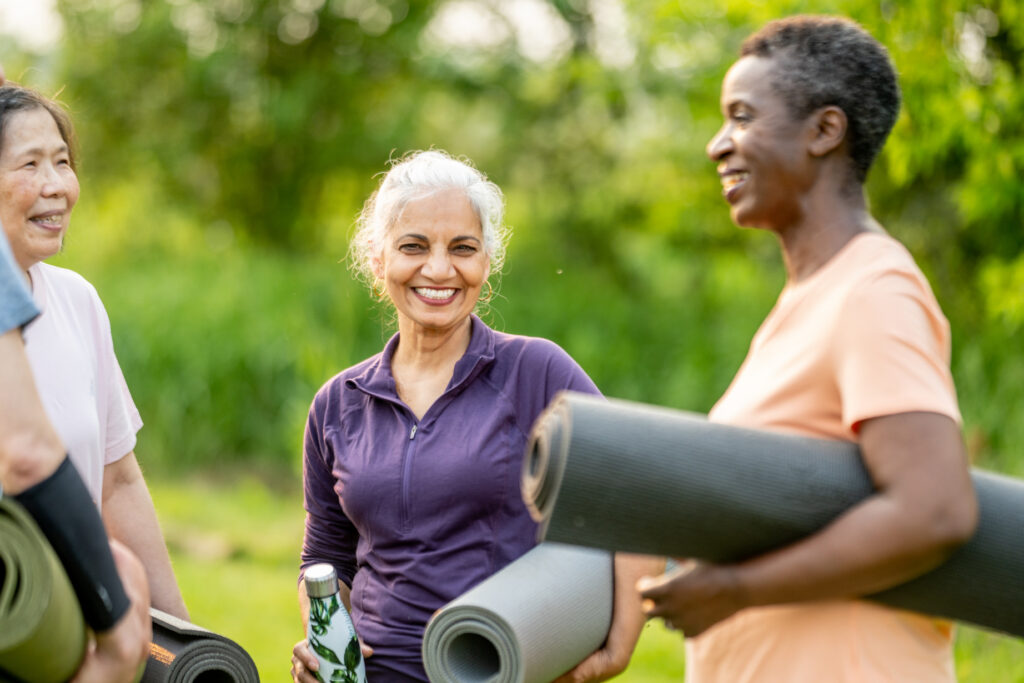
As the medical world catches up to the current cultural moment, women are enjoying greater access to menopause-specific health care than ever before. In turn, fitness programs tailored to menopausal women are becoming more prevalent as well.
When women’s hormones change — whether they’re shifting unpredictably during the pre- and perimenopausal years or dropping off dramatically following the transition — a host of other things are affected, Jenny Liebl explained to Nice News. “[Hormones] impact our appetite, they impact the way our body responds to food, they impact the way that we sleep, they impact our mood.”
Liebl is a personal trainer and a senior product developer for the International Sports Sciences Association, an org that educates and certifies fitness professionals. She’s in the process of developing a course that covers all stages of menopause, from pre to post, for both male and female trainers seeking to better understand and serve their clientele.
“I think there’s a lot of women out there who want to be more active longer,” said Liebl. “Before, [menopause] was something we never really talked about. Something nobody really understood fully. We understand it now. We really understand what’s going on and how it impacts somebody’s ability to perform later in life.”
Lifestyle medicine coach Teresa Tateossian owns The House of Rose, which offers restorative retreats that combine yoga, meditation, and strength training with things like guided nature walks and chef-prepared meals.
The retreats are geared toward women in midlife or older and include workshops on mindsets and nutrition as well as time to fully rest. “Women step out of daily routines and responsibilities and into a space where they can slow down, reset, reconnect with themselves and other women on the same journey,” Tateossian shared in an email.
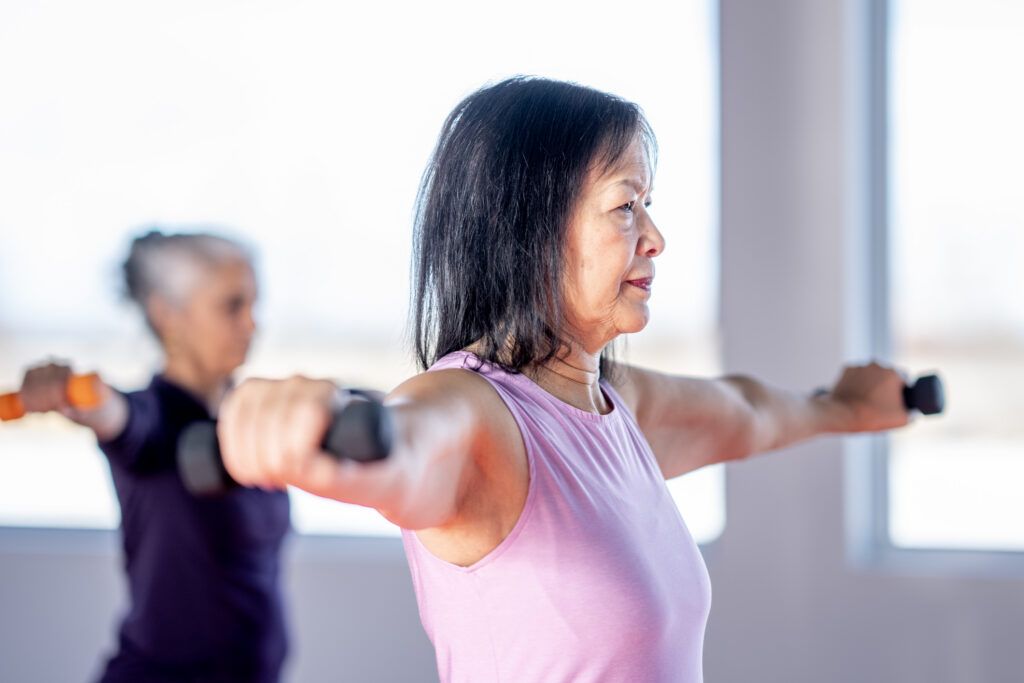
Programs like these don’t just help build muscle; they also help build community, whether that’s literally — through physical retreats or on virtual platforms — or more broadly speaking.
“There’s billions of other women on this planet that are probably going through something similar or who will at some point, but it’s very easy in the human experience to feel like it’s just you,” said Liebl, adding: “When we’re aware of what’s happening, it makes the experience a lot more livable. … It makes it a little bit more relatable and it makes it less of a ‘Oh my gosh, I’m doing something wrong. Something’s wrong with me.’ Versus, ‘I can get through this. I understand what’s happening and let’s come up with a plan to work around it.’”
5 Areas to Focus on
Here’s a roundup of fitness areas to consider focusing on if you’re in menopause. But remember: There’s no single approach that applies to every person.
“Menopause is a time to question the ‘shoulds’ in life. It’s less a question of specific fitness practices that women ‘should’ be doing and more a question of ‘What can I do?’, ‘What do I want to do?,’ and ‘What works for me?’” explained Alexandra Howson, owner of BodyWise, an evidence-informed yoga and well-being program for women 40 and older in the menopausal transition. She added: “It’s a time for exploration, rediscovery, and redirection.”
Resistance Training
Resistance training is paramount for all people past a certain age, as the loss of muscle mass and bone mass make falls and fractures more likely. Menopause only speeds up these losses. By putting stress on bones through muscle-building or aerobic exercise, we’re encouraging osteoblasts (“bone-forming cells,” per Harvard Health) into action, resulting in stronger, denser bones.
“The real focus is gonna be resistance training,” Liebl said. Tateossian agreed, noting that working the lower body, the glutes, quads, and hamstrings “provides the biggest shift when it comes to metabolism, body composition, bone density, longevity, and independence. We also know that leg strength is directly related to overall health outcomes as we age.”
In addition to building muscle and supporting bone health, strength training exercises reduce the risk of falls and “improve self-esteem,” Howson noted.
Balance
Howson encourages her menopausal students to stand on one leg while brushing their teeth, switching legs halfway through. “It’s an easy way to use weight-bearing to maintain muscle and to fine-tune proprioception, or sense of where we are in space,” the Washington-based practitioner said, adding that “there are lots of things (micro-practices) we can do to build a fitness mindset into everyday life.”
Mobility
Lower estrogen levels can cause cartilage to break down more rapidly and inflammation to occur, leading to joint pain and difficulty in movement. Exercises that center mobility can help. Strengthening joints and the muscles around them also aids in preventing falls and injuries.
Cardiovascular Health
Cardiovascular risk increases in menopause, so regular aerobic activities that maintain heart health are “vital to fitness,” said Howson, who gave running, dancing, and cycling as examples. It can be the same things you enjoyed in your 20s and 30s, just less intense, she explained.
Mindfulness
“Fitness in peri-to-post menopause also needs to support emotional and social changes,” said Howson. “Practices like yoga, meditation, [and] mindfulness create space for women to explore these changes and to nourish themselves.”
Liebl agreed, saying the second most important aspect of well-being, after resistance straining, is “absolutely mindfulness.”