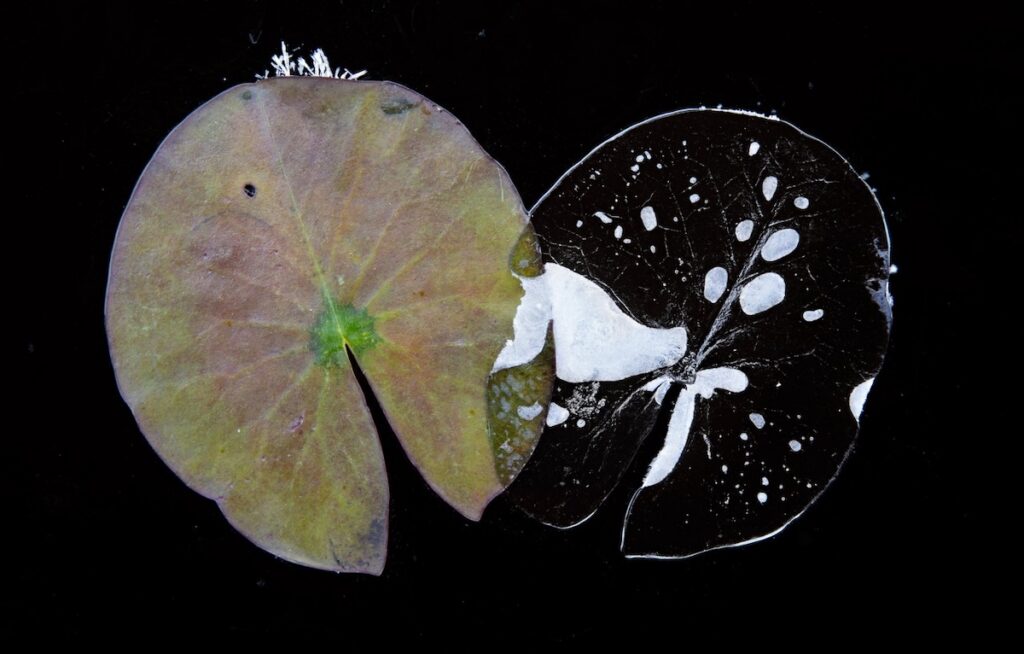
This year’s Nature Photographer of the Year competition received 27,108 entries from photographers in more than 96 countries — and the overall winner, announced Nov. 14, stands out in more ways than one.
Titled “The One That Left and the One That Stayed,” Hannu Ahonen’s shot of a water lily leaf beside a mirror-image frozen replica is stunning in its own right, but it’s also a “rare” example of a plant photo winning the annual contest, according to the chair of the judging panel, Theo Bosboom.
“It is not often that a photograph of a plant is crowned the overall winner of a major photography competition, but the jury could not overlook this fascinating image by Hannu Ahonen,” Bosboom said in a press release shared with Nice News. “First and foremost, the photograph captures a unique situation: a water lily leaf with an almost perfect black-and-white replica of it lying next to it in the water.”
He continued, “It takes a moment for the viewer to realize what has happened here: A thin layer of ice that had formed on the leaf has been blown away by the wind. The shapes in the sheet of ice are delicate; even the veins of the water lily leaf are clearly recognizable. Because the water lily and the sheet of ice are still touching, a sense of connection emerges; you realize that they belong together, like yin and yang.”
In addition to being named overall winner, the Finnish photographer took the top spot in the Plants and Fungi category. Scroll on to see the other category winners and read commentary from the judging panel on each one.
Birds: “Painting From the End of the World” by Lucas Mugnier-Lavorel (France)
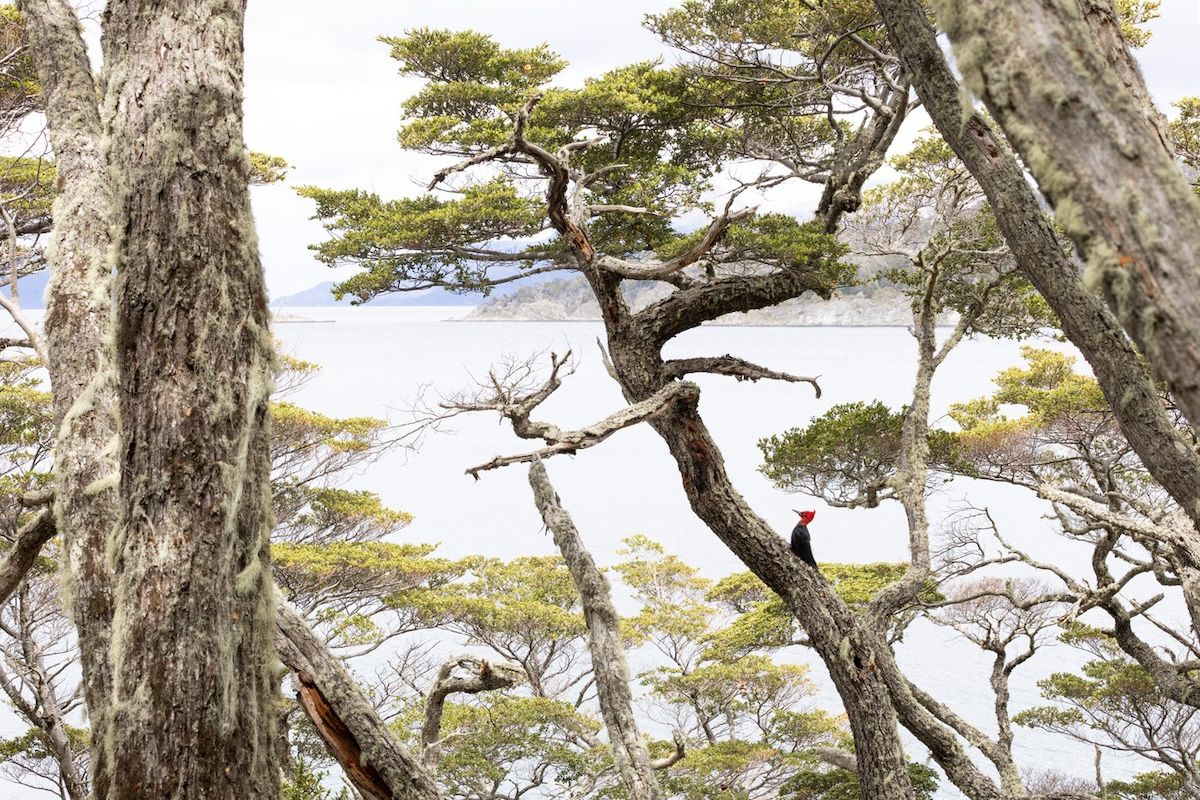
“Environmental portraits of wildlife can make us feel closer to the animals despite being farther away from them, when done right. This image of a Magellanic woodpecker in its gorgeous habitat was a perfect example. It stood out from thousands of submissions because of its understated sense of place, beauty, simplicity, and timing. Diagonal lines formed by several trees guide the eyes to discover the bird — expertly framed against the backdrop and placed off-center — while encouraging exploration of the forest and the Patagonian landscape beyond it. Overall, it was a very successful reminder of how the portrayal of nature in its literal state can still be the most powerful of photographic expressions.”
– Jury member Steffen Foerster
Mammals: “Play Misty” by Paul Goldstein (U.K.)
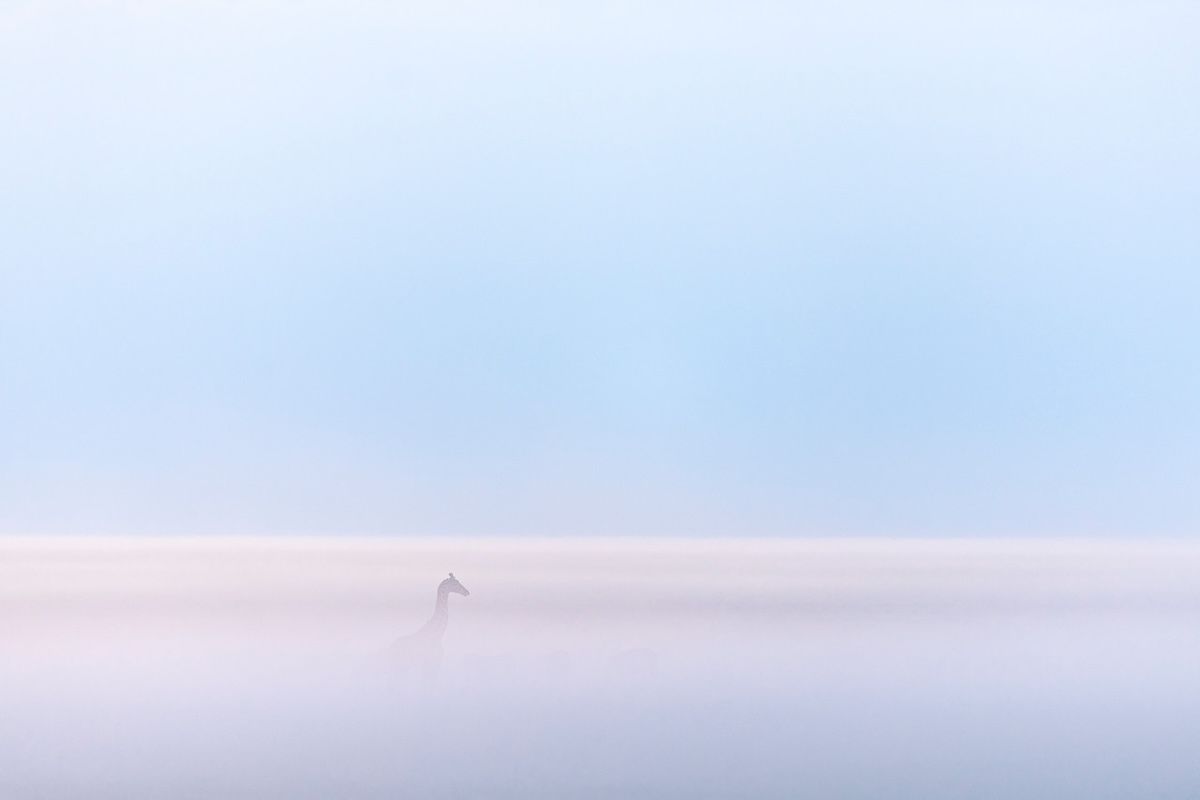
“Quiet images can be easy to overlook in the fiercely competitive mammal category, one of the largest in NPOTY. This ethereal image of a giraffe peeking out of the mist revealed its strengths gradually. Initially a little disorienting, it offered just enough of a visual puzzle to keep the viewer engaged until the image resolved. The soft pastel colors create a soothing atmosphere, while the image’s simplicity and quiet emotion ultimately made it stand out among the category’s strongest contenders.”
– Jury member Steffen Foerster
Other Animals: “The Pitcher’s Micro Kingdom” by Marcus Kuan (Singapore)
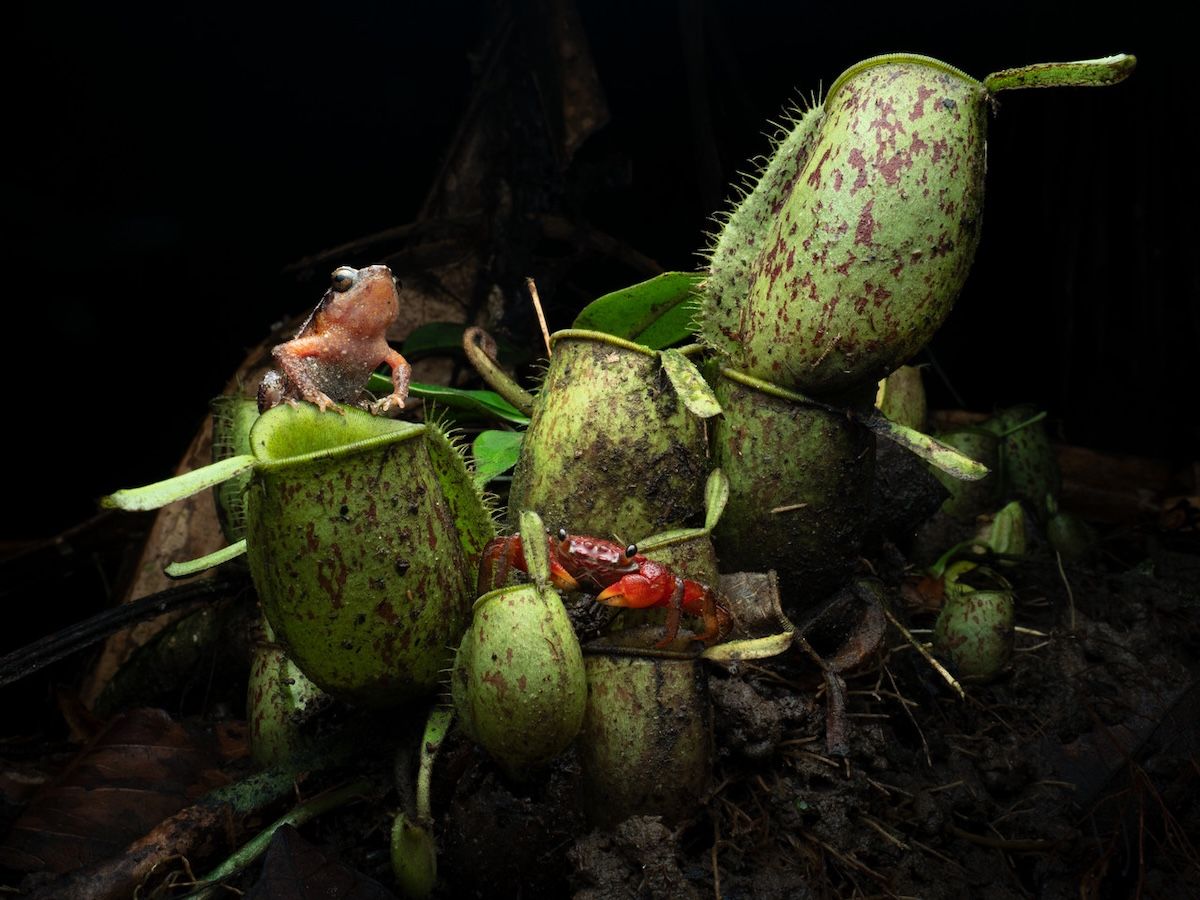
“The lighting, colors, and unexpected gathering of species immediately caught our attention. Kuan beautifully captured a world where crustaceans, amphibians, and carnivorous plants cross paths. As judges, we were drawn to the possibilities unfolding within this single frame. Could the pitchers be digesting invertebrates? Might the frog be exploring a potential egg-laying site, while the crab continues its daily search for food among the plants? The image invites us to imagine the separate lives of these organisms, briefly brought together. The carefully balanced composition, beautifully controlled lighting, and rich greens and reds against the dark nighttime background make this a striking photograph.”
– Jury member Louis Guillot
Landscape: “In the Circle of Vultures Around the Falls” by J Fritz Rumpf (U.S.)
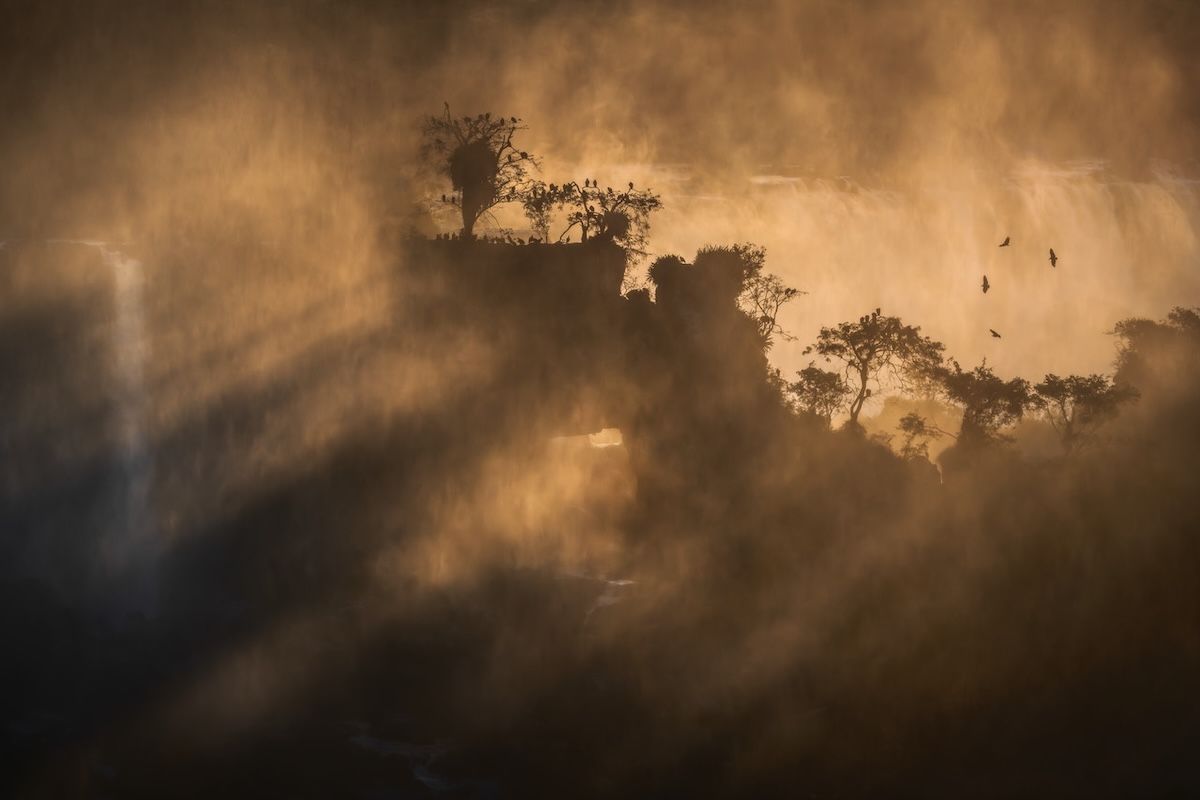
“What immediately caught our attention was the incredible light and atmosphere in this photo. The longer we looked, the more fascinating it became. There is so much to discover: the last light of day illuminating the mist rising from Iguazú Falls, the silhouettes of trees and rocks, the birds circling above, the sunlight streaming through an opening in the rock at the center, and the subtle waterfall on the left. The interplay of light and shadow transforms the immense power of the waterfalls into something intimate and almost dreamlike. A beautiful example of how an iconic natural wonder can be captured in a truly extraordinary way.”
– Jury member Ilse Koks
Underwater: “Beneath Aquatic Constellations” by Matt Pérez (U.S.)
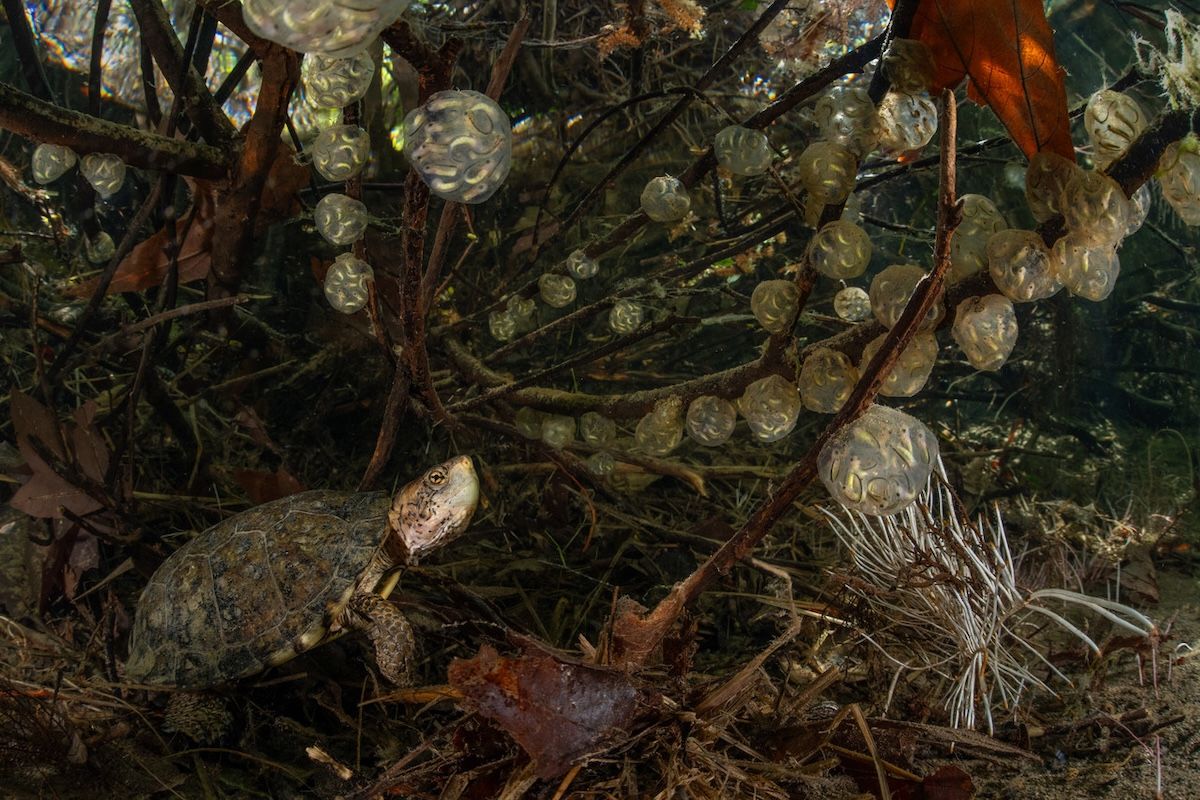
“Pérez’s photograph immediately drew us in. As a jury, we wanted to linger over it, exploring the details and wondering what we were seeing. Newt egg masses decorate the submerged branches like baubles on a Christmas tree, framing the scene and guiding our eyes towards the pond turtle with its piercing yellow eyes.The scene feels almost otherworldly, busy with intricate details yet still peaceful to look at — an impressive balance to capture in a single photograph. Its beautiful composition, striking lighting, and balance of rich detail and serene feel made this photo stand out to the jury. Matt Pérez also deserves credit for stepping back from the turtles’ courtship behavior to capture this wider view of a male pond turtle within an extraordinary habitat.”
– Jury member Louis Guillot
Nature Art: “Peach Blossoms in the Snow” by Xuzhong Liu (China)
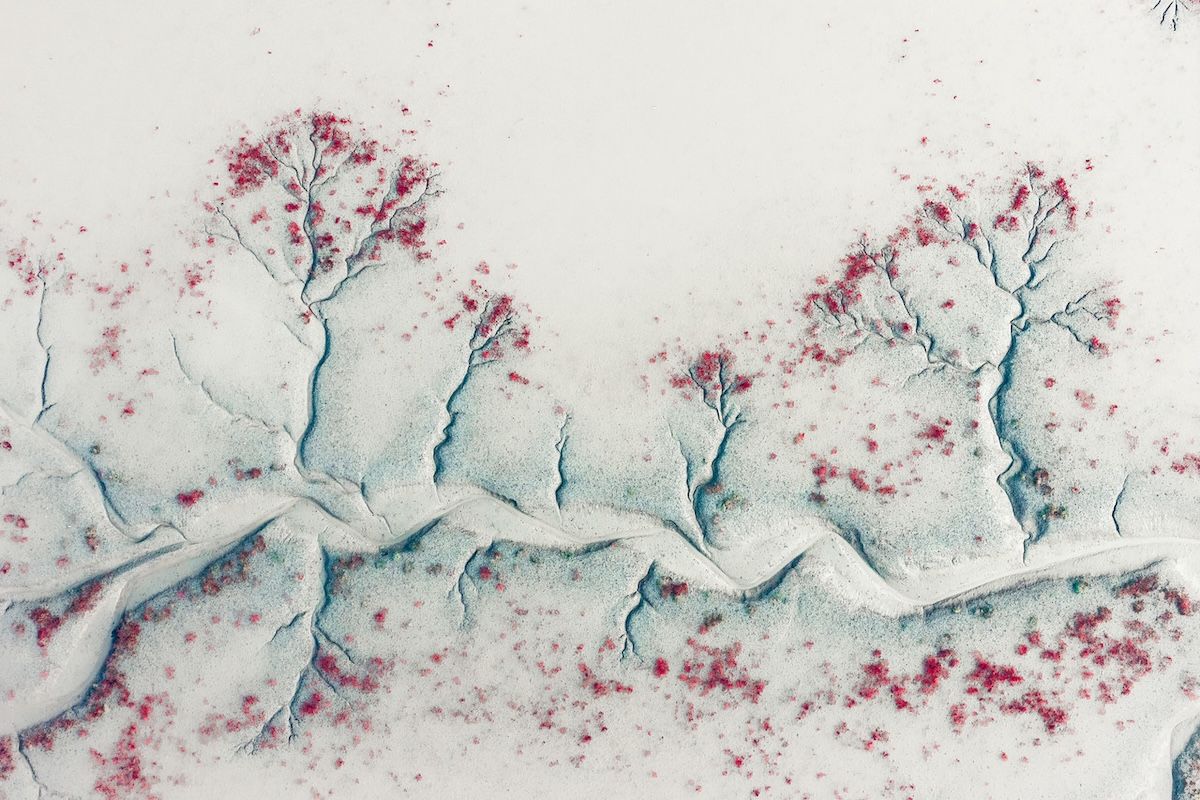
“This photograph has everything that can make a drone shot interesting and fascinating. First and foremost, there are beautiful shapes and subtle colors, but there is also a sense of alienation. What am I actually looking at, and what is the scale of the landscape in the photograph? The image was taken in September in a wetland area in China, but it reminded the photographer himself of peach blossoms he had previously photographed during a spring trip to Tibet. A good abstract photograph like this also leaves plenty of room for the viewer to decide for themselves what they see in it. This makes it the perfect winner of the nature art category.”
– Judging panel chair Theo Bosboom
Human and Nature: “Evolution” by Petr Bambousek (Czechia)
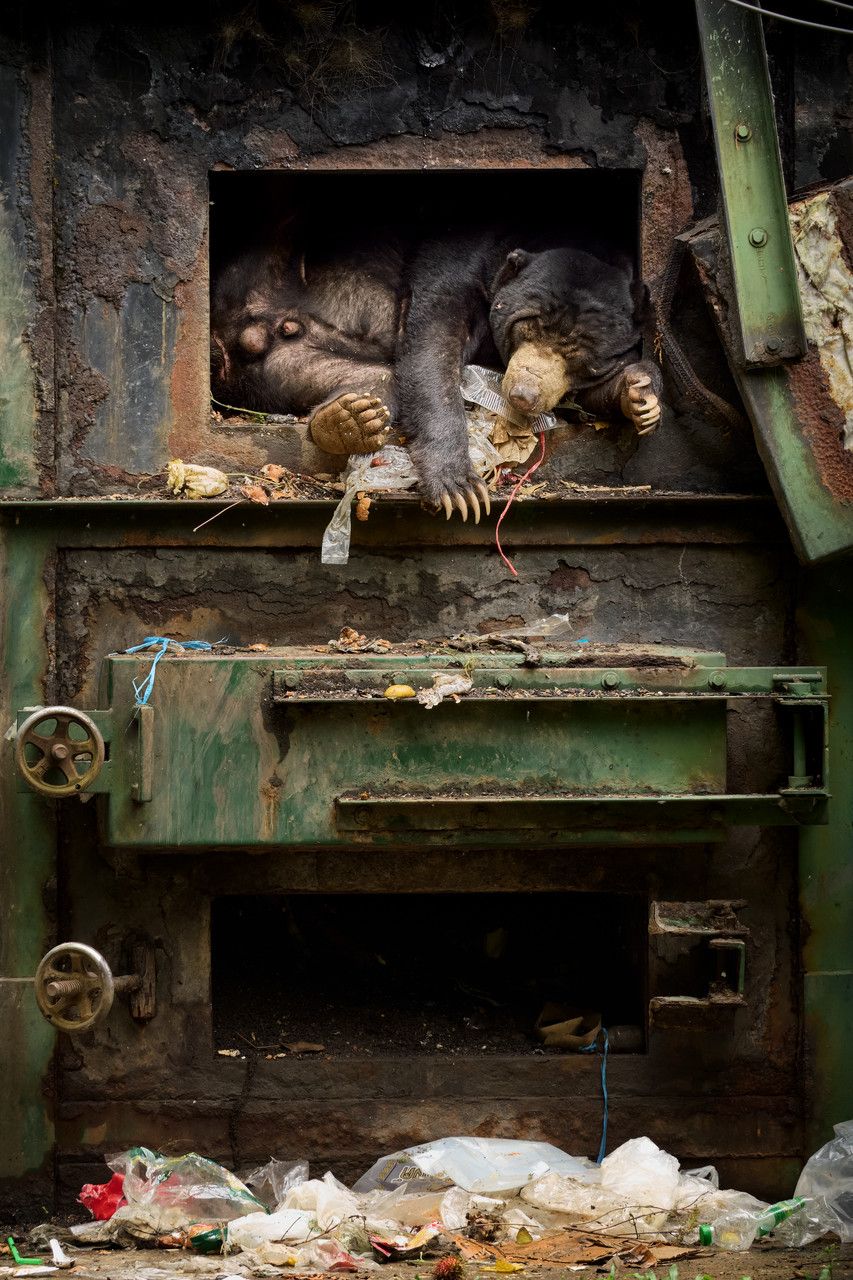
“The winning image stood out for its striking depiction of the impact human activity has on local wildlife. The sleeping Malayan sun bear inside a garbage incinerator creates a powerful visual contrast, showing how habitat loss and human waste increasingly force wild animals into close contact with human environments. The image is both unexpected and unsettling, capturing a broader story of how wildlife is forced to adapt as its natural surroundings are altered and destroyed.”
– Jury member Lana Tannir
Black and White: “Storm on the Sea” by László Tóth (Hungary)
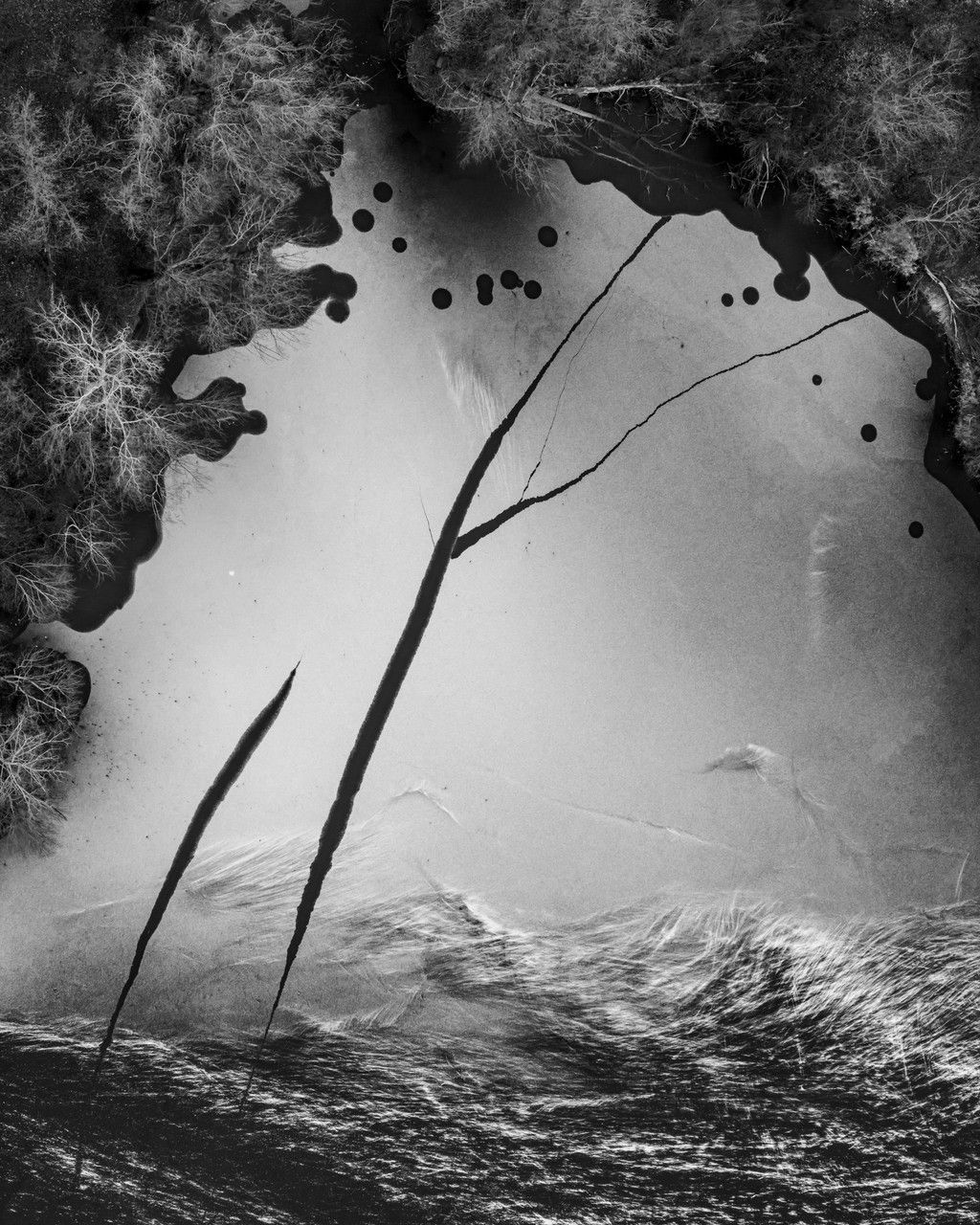
“This photo really stood out to us. At first, we were not quite sure what we were looking at. It sparked some wonderful discussions among the jury and made us look even closer. The black-and-white contrast, dark diagonal lines, and striking patterns create a fascinating abstract composition. It looks like a storm at sea, but in reality, it is a thin layer of snow shaped by strong winds on a frozen lake, captured from above.”
– Jury member Ilse Koks
Animal Portraits: “A Seal’s Worst Nightmare” by Audun Rikardsen (Norway)
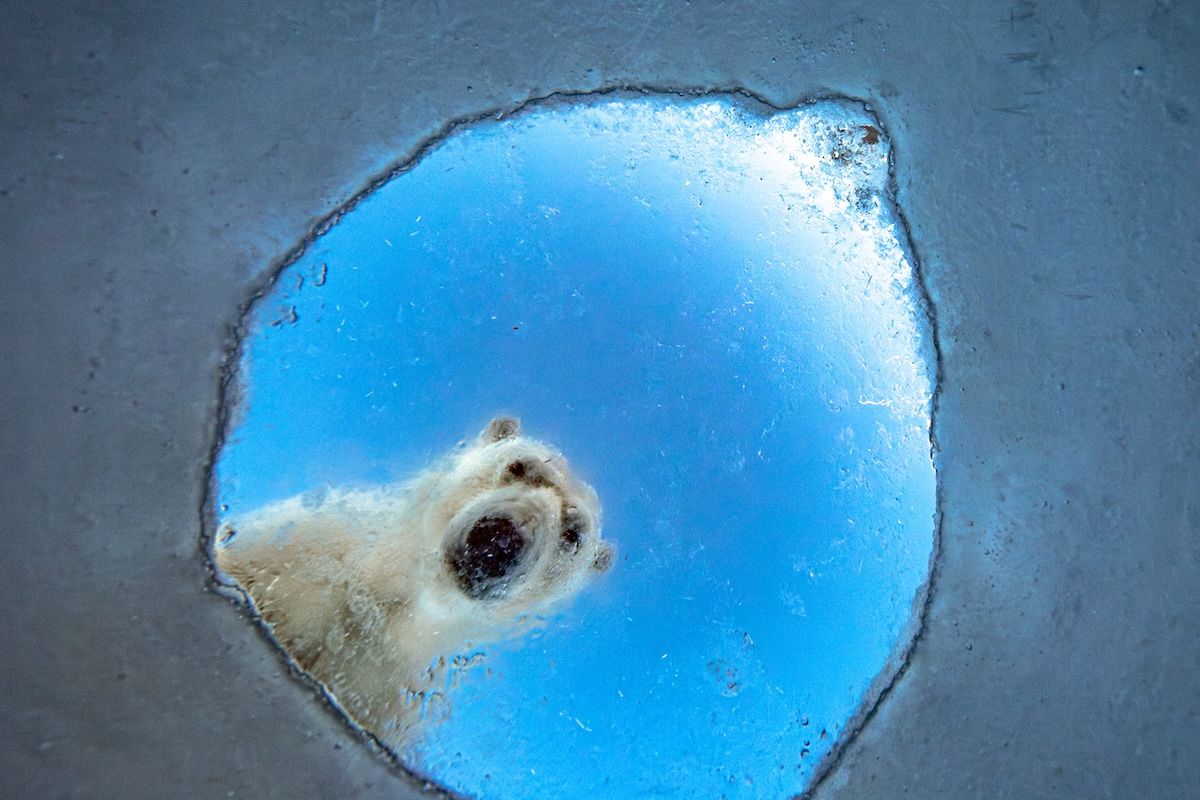
“Just when we thought we had seen about every kind of polar bear image there is, along comes this shot taken from inside a hole in the ice looking up at the bear. Once you realize what is happening, you start thinking about how this shot could possibly have been taken. Then it dawns on you that it seems almost impossible, no matter how. Showing something never seen before is a pretty effective method of captivating an audience, and one that carried this image all the way to the top. With oceans warming and ice melting, the ‘What’s going on down there?’ look gives the image a deeper layer of meaning that I appreciate. Right now humanity is looking back up at the bear and shrugging its collective shoulders in pretense. For how much longer?”
– Jury member Steffen Foerster
Nature of “De Lage Landen”: “Fairies” by Enikő Kálovics (Hungary)
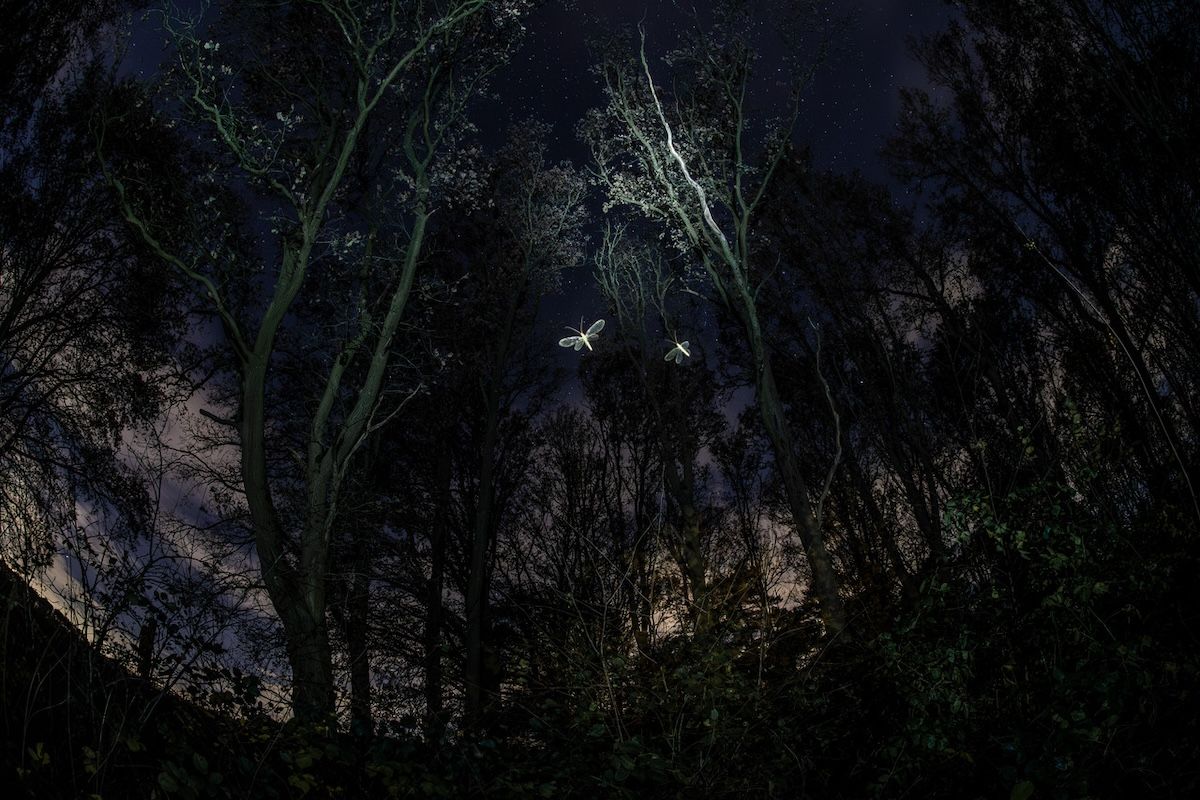
“The winning image stood out for its ability to transform a familiar landscape into something dreamlike and unexpected. The combination of the tiny lacewings, the autumn forest, and the purplish night sky creates a delicate, atmospheric interpretation of the nature of ‘De Lage Landen.’ The thoughtful use of double exposure adds another layer to the image, capturing not just the insects themselves, but also the sense of wonder and atmosphere of their natural habitat.”
– Jury member Lana Tannir
Fred Hazelhoff Award, Portfolio: “Eagle Owls in the City” by Simone Baumeister (Germany)
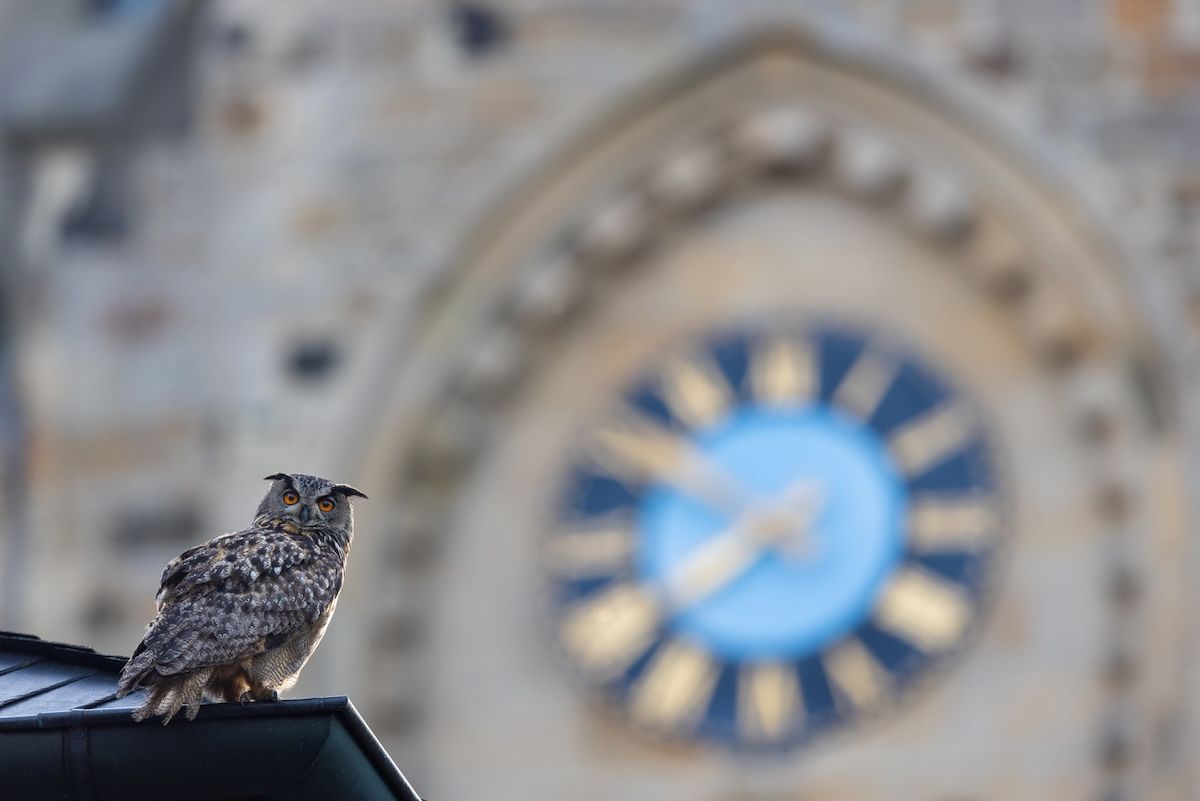
“In the portfolio category, the bar is set considerably higher for participating photographers than in the individual categories. Whilst a single fantastic photograph is sufficient there, in the portfolio category you need a whole series of outstanding images that not only complement one another but also fit together well in terms of style and theme. Simone Baumeister has succeeded brilliantly in this with her portfolio on eagle owls in the city. It is clear that she has put a great deal of time into creating the series: She has managed to capture all sorts of special moments with her camera, and the series showcases a wide range of situations, locations, and atmospheres. In doing so, she offers a unique glimpse into the world of a bird that is making a comeback in Germany and which, despite its size, often goes unnoticed by the people around it. Or, as the photographer herself puts it, her images make the invisible visible. And that is one of the great strengths of (nature) photography!”
– Judging panel chair Theo Bosboom
Youth Photographer of the Year: “Tree of Life” by Parham Pourahmad (U.S.)
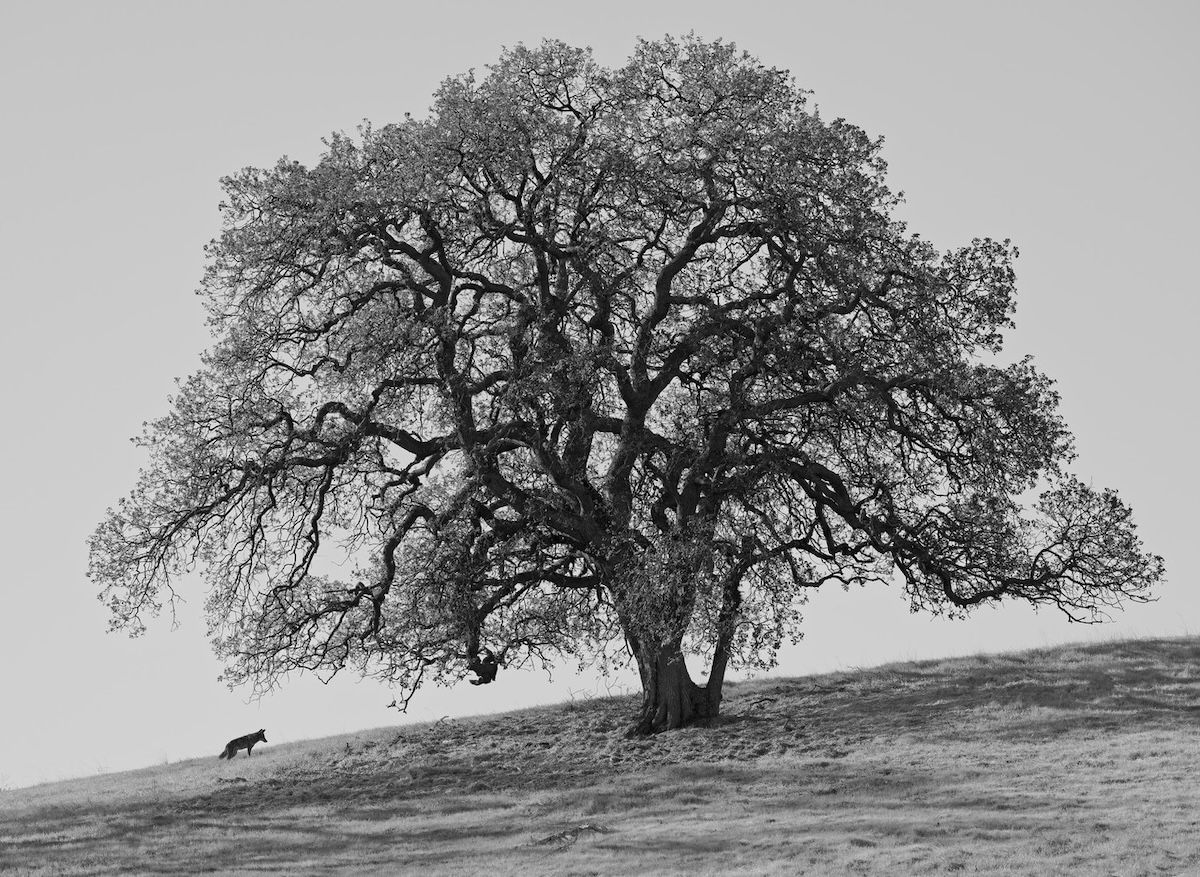
“In ‘Tree of Life,’ Pourahmad captured a striking scene that could comfortably hold its own in the adult categories. Black and white was an excellent choice, defining the coyote’s silhouette and revealing the majestic oak’s intricate network of branches. Even within this wider scene, the coyote’s downward gaze is clear. Pourahmad explained that it was searching for rodent prey, a small detail that brings the photograph to life. The image combines a beautiful portrait of the animal’s habitat with an intimate glimpse of its hunting behavior.”
– Jury member Louis Guillot