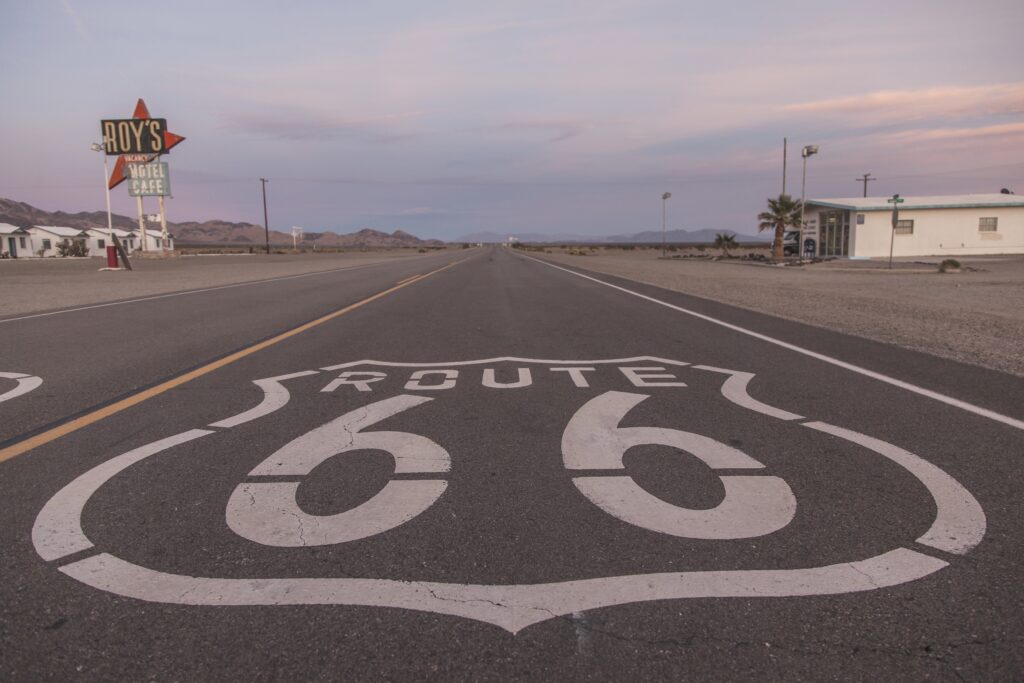
If you’re itching to hit the pavement this summer, there’s perhaps no better year to take a spin on Route 66. In honor of the iconic highway turning 100, cities and towns across the U.S. are celebrating throughout 2026, with official national events kicking off tomorrow.
Road trippers coasting along the famed thoroughfare won’t be bored: Route 66 boasts more than 250 sites listed on the National Register of Historic Places, including diners, bridges, and historic hotels. But a century ago, it was just a patchwork of local, state, and national roadways made largely from materials like dirt, gravel, and bricks. Only 800 of its initial 2,448 miles were paved — it would take another 12 years to complete the rest.
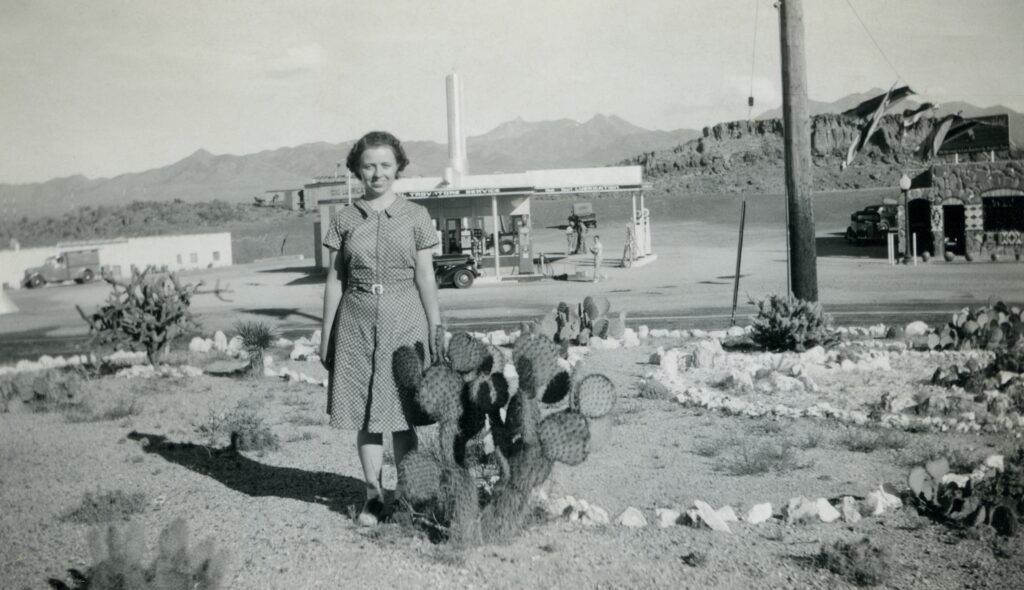
Arizona, 1939
However, the route, also known as the Mother Road, was groundbreaking for its time. Its primary predecessor, the Lincoln Highway, opened the door to cross-country travel, but mostly for wealthy folks who could afford the pricey vehicles of the 1910s. Route 66’s debut coincided with the automobile boom of the 1920s, which helped lower the cost of long-distance trips and enabled more drivers to get on the road.
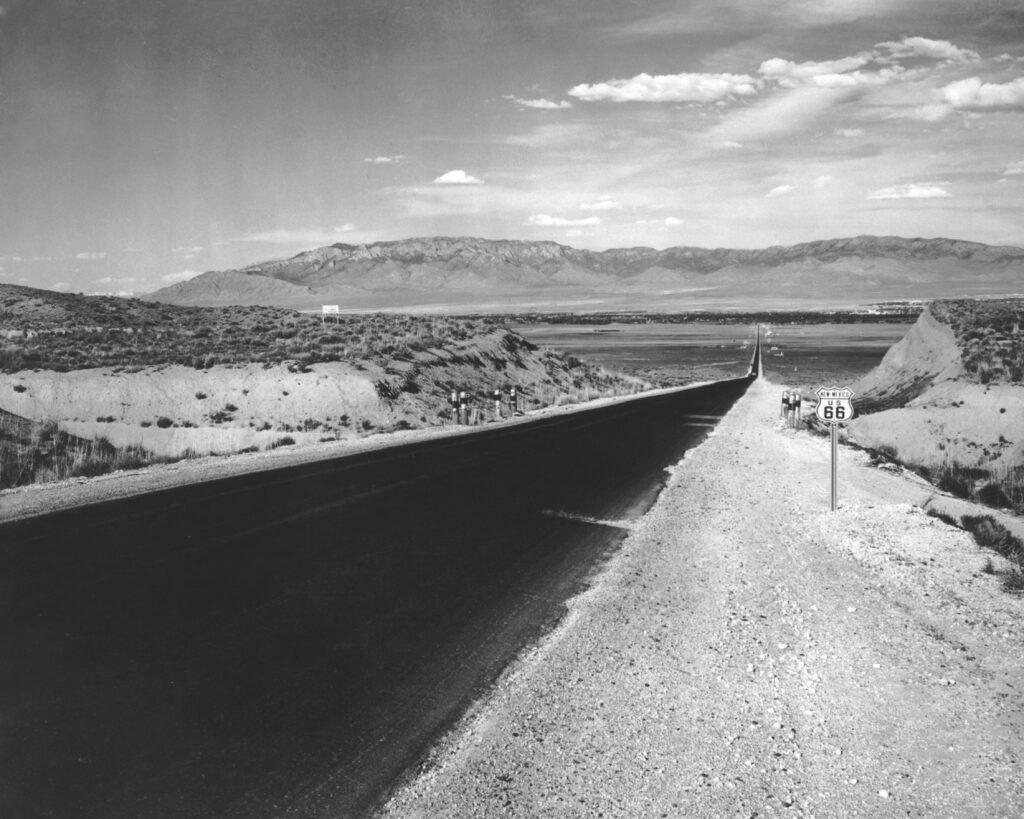
New Mexico, 1940
When it received its official designation in the summer of 1926, the U.S. 66 Highway Association described it as “the shortest, best, and most scenic route from Chicago through St. Louis to Los Angeles,” per the National Park Service. It also served as a lifeline for residents in rural communities. In the eight states it passes through — Illinois, Missouri, Kansas, Oklahoma, Texas, New Mexico, Arizona, and California — it increased traffic to small towns, which helped boost population growth and economic development across the West.
In the ’30s, Route 66 became a saving grace for those looking to migrate westward and escape the Dust Bowl in the south-central U.S. This plight was famously documented in John Steinbeck’s The Grapes of Wrath: “Highway 66 is the main migrant road,” he wrote, adding, “66 is the path of a people in flight, refugees from dust and shrinking land.”
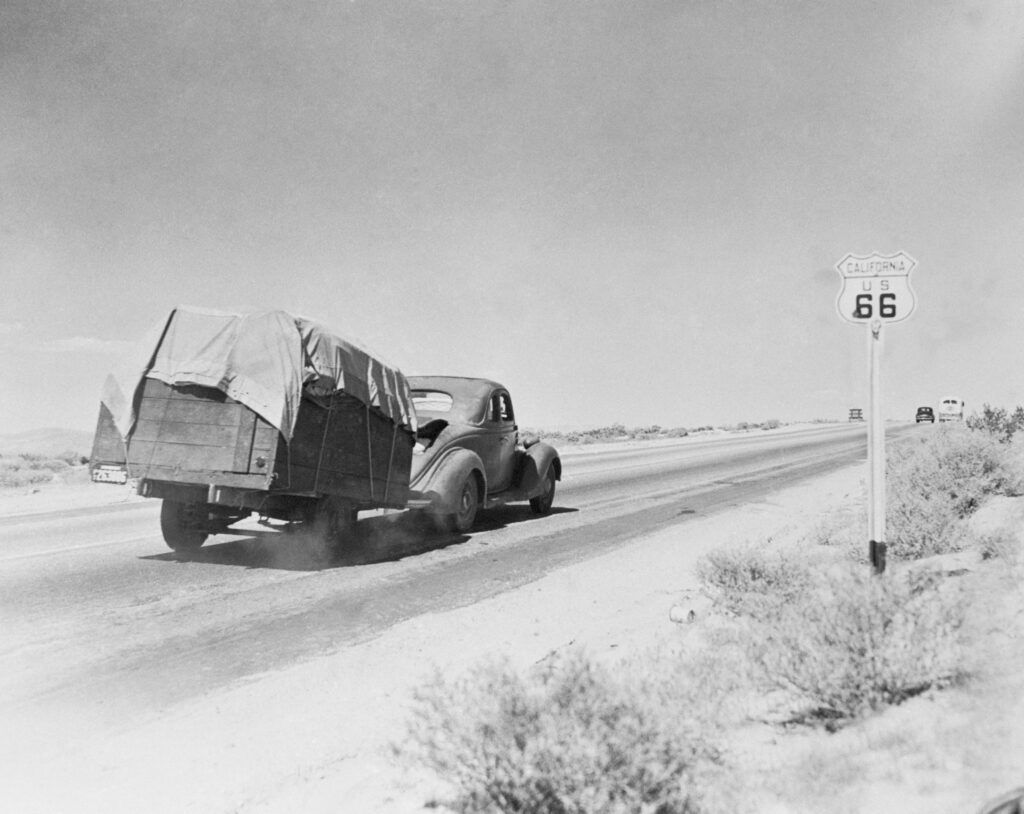
California
During World War II, particularly after western states were identified as ideal locations for military training bases, the country relied on the highway to transport troops and defense supplies. And after the war was over, Route 66 experienced a tourism boom — inspiring the lyric “get your kicks on Route 66” by jazz musician Bobby Troup.
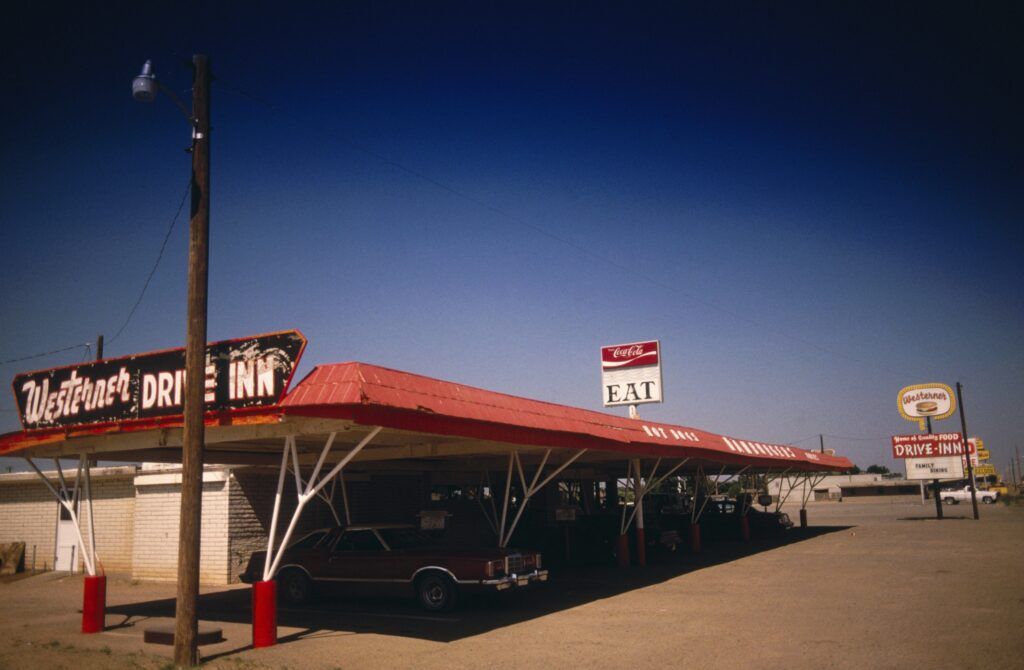
New Mexico
“For the first time, Americans were beginning to think about automotive travel on a mass basis,” David Dunaway, author of A Route 66 Companion, told History. “This is a period when Americans had vacations, thanks to the boom in manufacturing and unionization drives that helped people earn a decent salary. And they wanted to drive west in their new car on their vacation.”
Many of the highway’s now-nostalgic rest stops thrived during the ’40s and ’50s — think diners, gas stations, and convenient accommodation such as motels, auto camps, and motor courts. But 1956 marked the beginning of the end of Route 66’s glory days. The Federal-Aid Highway Act sparked the creation of nationwide interstate highways, which provided faster ways to cut across the U.S. but were often located away from small towns. By 1985, The American Association of State Highway and Transportation Officials voted to remove Route 66’s highway signs, and it was officially decommissioned.
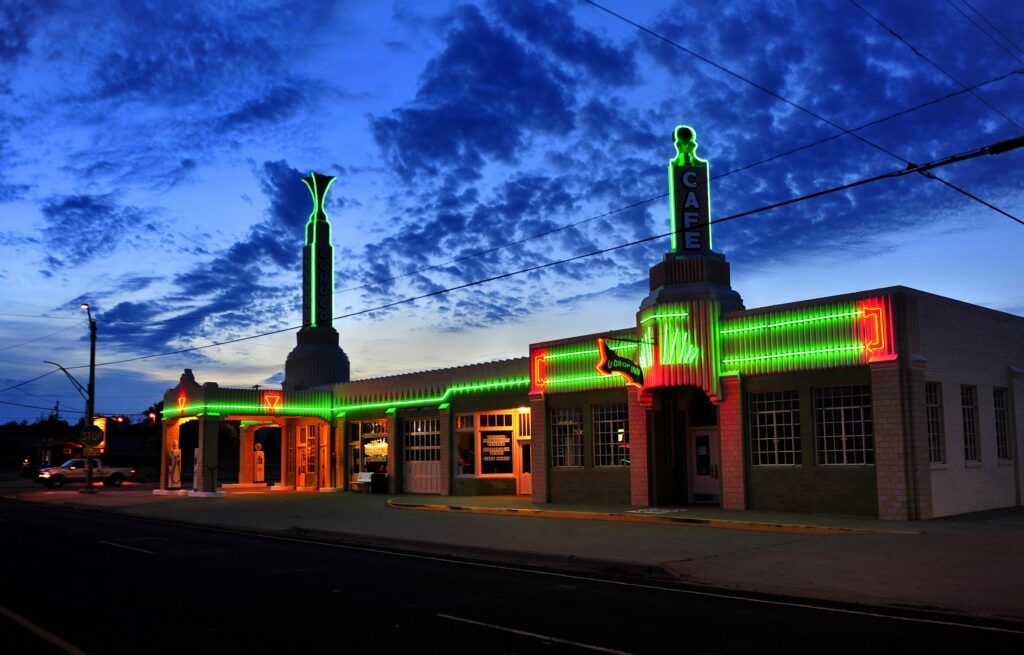
Tower Station and U-Drop Inn Café, Texas, built in 1936
Since then, however, efforts have sprouted to preserve the route as an important piece of American history, as well as support its communities and establishments. One of those is the Route 66 Study Act of 1990, which declared that the highway had “become a symbol of the American people’s heritage of travel and their legacy of seeking a better life” and had “been enshrined in American popular culture.”
And that memorialization is certainly on display in 2026. On April 30, the centennial’s official kickoff event will feature the National Route 66 Centennial Telegraph Ball, a concert, and a parade in Springfield, Missouri — and the nationwide festivities will include everything from an auto show to a “light capsule.” See what else will be driving the celebrations, and if you want to road-trip the full Chicago to Santa Monica route, check out this guide.
RELATED: Driven by Purpose: New 2026 License Plates Celebrate History and Support Worthy Causes
When you buy books through our links, Nice News may earn a commission, which helps keep our content free.