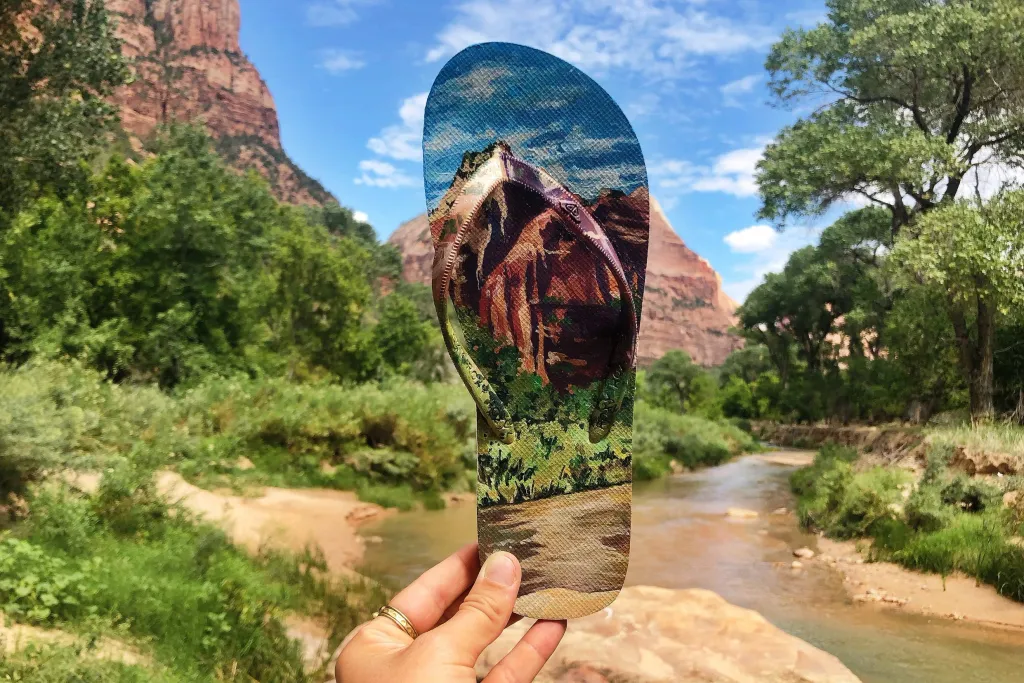
Our human footprint on national parks is undeniable: a crushed can littering the ground in Denali, a lone flip-flop left behind in Zion. Trash sullies these sights of natural beauty, but eco-artist Mariah Reading has found a way to merge the two and promote mindfulness about our environmental impact.
At public lands across the country, she collects pieces of debris and paints landscapes on them, then photographs the makeshift canvases against their reference settings, creating the illusion that the garbage is part of the scenery. It’s an “approachable way to discuss pollution and climate change,” she told Nice News, “and kind of bring the soul into it.”
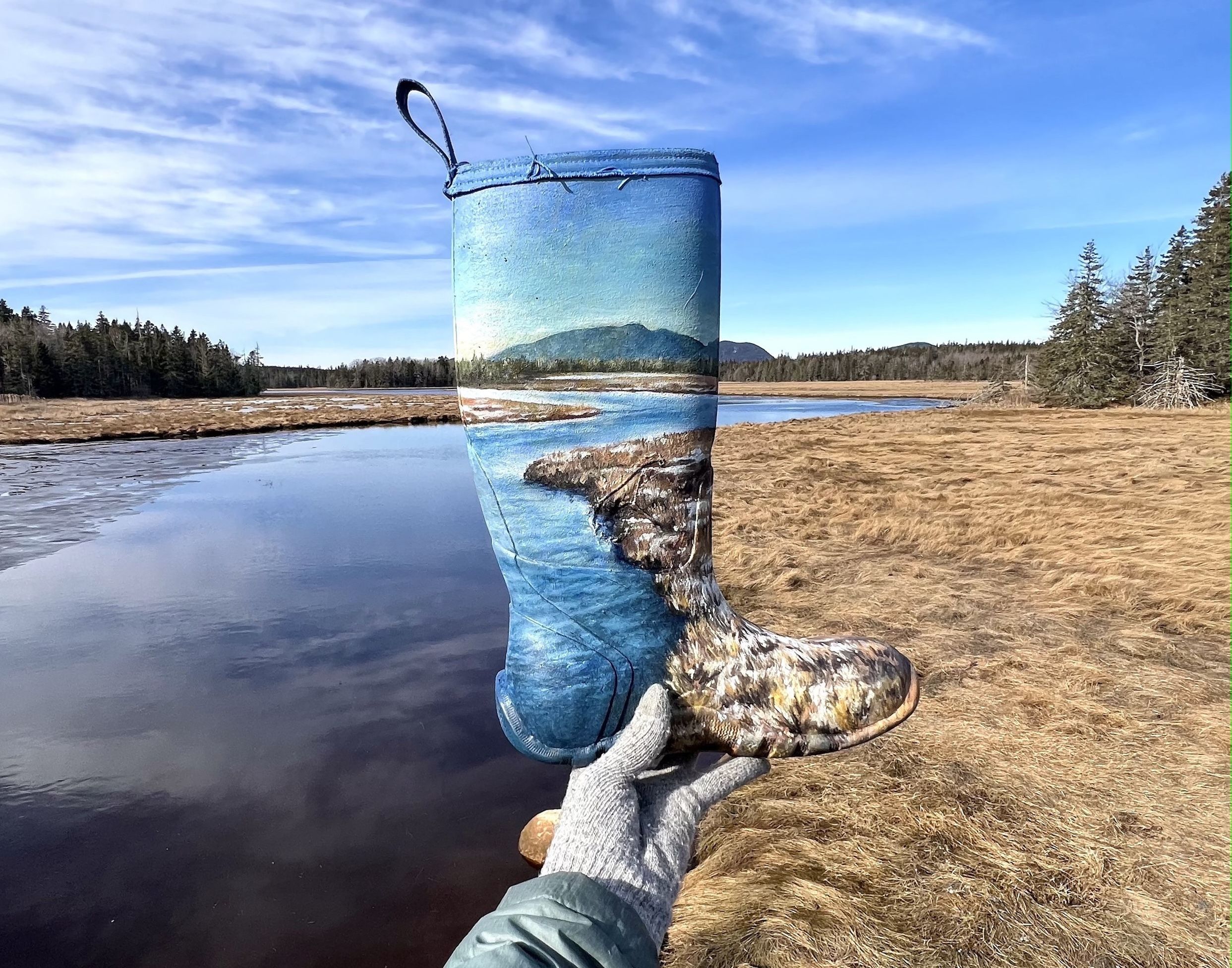
Acadia National Park
The ongoing series is a reflection of the limited-waste ethos she’s adopted in her larger body of work. “I started to see the amount of trash that I accumulated as an artist, and being so inspired by landscapes and the environment, it just didn’t really make sense or sit well with me that I was contributing to landfills with my art,” said Reading, 32.
She started with her own trash. She’d gather broken paintbrushes and empty paint tubes, arrange them together into a sculpture, and paint it. Her work involving national parks began in 2016, the centennial of the National Park Service. Reading had gotten a job teaching art in California and planned a cross-country road trip from her native Maine to her new locale.
Stopping at parks along the way, she collected detritus that was representative of where she’d found it — buoys and fishing nets in Acadia, for example — and labeled individual trash bags with the names of the parks. The idea for the optical illusion element came to her during the summer of 2017, when she lived and volunteered at Guadalupe Mountains National Park in West Texas. A trucking route goes through the park, so random car parts often end up strewn about it, and inspiration struck when she came upon a cracked hubcap.
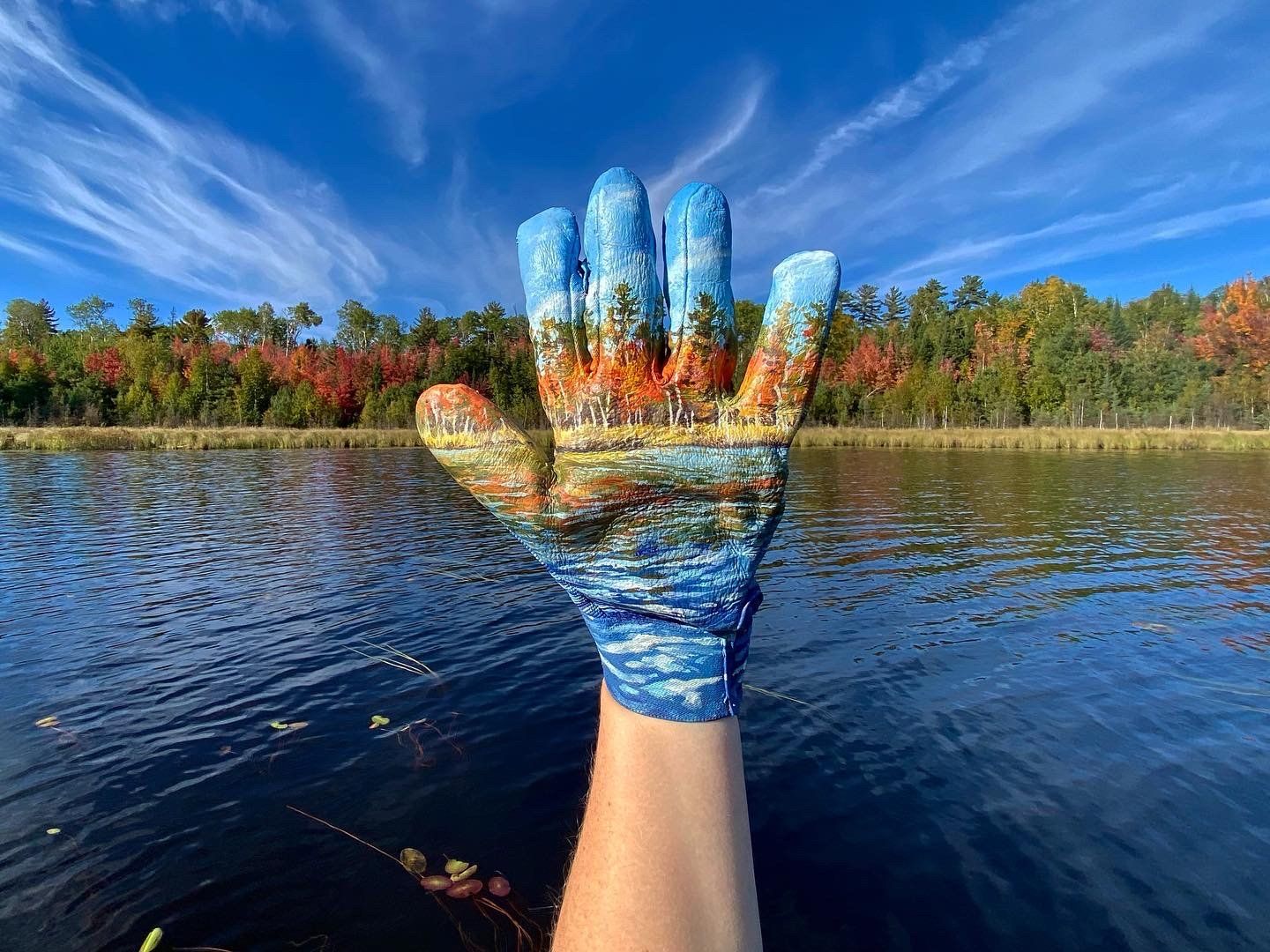
Voyageurs National Park
“The ridge of the crack was so similar to the mountain range skyline, I was like, ‘Oh my gosh, this is wild,’” she recalled. “So that was the first piece where [I thought] the item itself could kind of speak for the larger landscape around it.”
She’s now visited nearly 40 national parks (not including state and community parks), and has completed artist-in-residence programs at Zion, Acadia, Glacier, and Denali. She’s also worked as a park ranger.
Reading enjoys painting the debris en plein air, referencing the scenery in real time. But when the weather or timing necessitates it, she’ll take a photo of the setting and bring her found canvas home. The latter method allows for more detail in her paintings, though photographing the piece in the place where she originally picked it up can be trickier.
“My max is like seven hikes where I’ve had the trash and gone outside and the lighting isn’t quite right or the clouds come in and it doesn’t quite align,” she explained, adding: “But I’ve also been kind of open to if it doesn’t fit perfectly, that’s OK, because that shows the cycles of the day and the year and kind of the movement of these landscapes around us.”

Guadalupe Mountains National Park
Reading said she hopes people who engage with her work walk away with a deeper understanding of our impact on the natural world, something she believes art is uniquely positioned to deliver — more so than esoteric studies or doom-and-gloom headlines.
“Art is such a powerful tool. It really shows passion,” she said, adding: “We are so bombarded with change and disruption, and it’s just kind of chaotic right now. It’s hard to latch onto the news or stay up to date with scientific findings. … So I feel like art has a lot of power in allowing people to grasp onto those concepts in tangible ways and maybe more approachable ways.”

Denali National Park
Her intention isn’t to highlight the negative effect we can have but rather the positive. “Many hands make light work, and small changes in our everyday lives can make the world more beautiful,” she said, sharing that one of her favorite books as a kid was Miss Rumphius by Barbara Cooney. The illustrated story is about a woman whose artist grandfather had told her when she was a child that she must find a way to make the world more beautiful.
“So she ends up spreading lupine seeds around her home, and every year in June, there’s beautiful cascades of purple and pink and blue flowers. That’s her way of making the world more beautiful,” said Reading. “I’ve taken that to heart. ‘What is a small way that I can make the world more beautiful?’ And I hope that by seeing my work, other people can find their ways of making the world more beautiful.”
RELATED: “Everything Tells a Story”: Artist Creates Hyper Realistic Dioramas of ’90s New York City