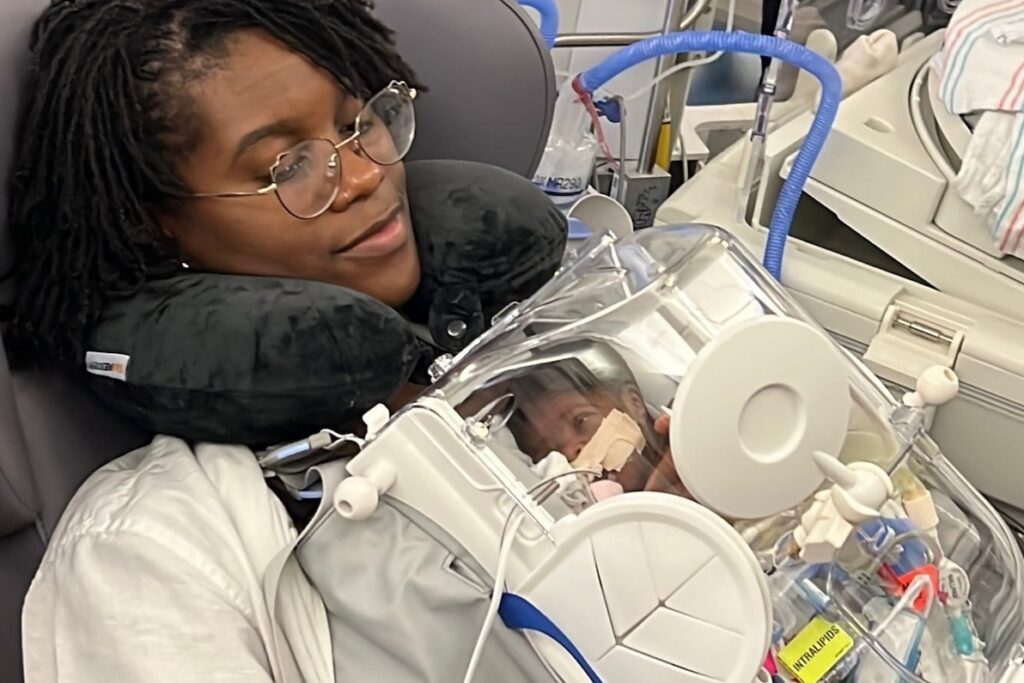
Skin-to-skin contact, the practice of a newborn being placed directly onto the mother’s or father’s chest, is considered essential — sometimes lifesaving — care for preterm infants. The World Health Organization recommends it for at least eight hours a day beginning at birth for all babies born before 37 weeks.
Incubators can also be critical for these newborns, however, and yet the carefully controlled environments prevent parents from performing that crucial skin-to-skin contact. A pioneering new technology has now bridged the two forms of care, allowing parents to hold their babies to their bodies without disrupting the essential treatments they require.
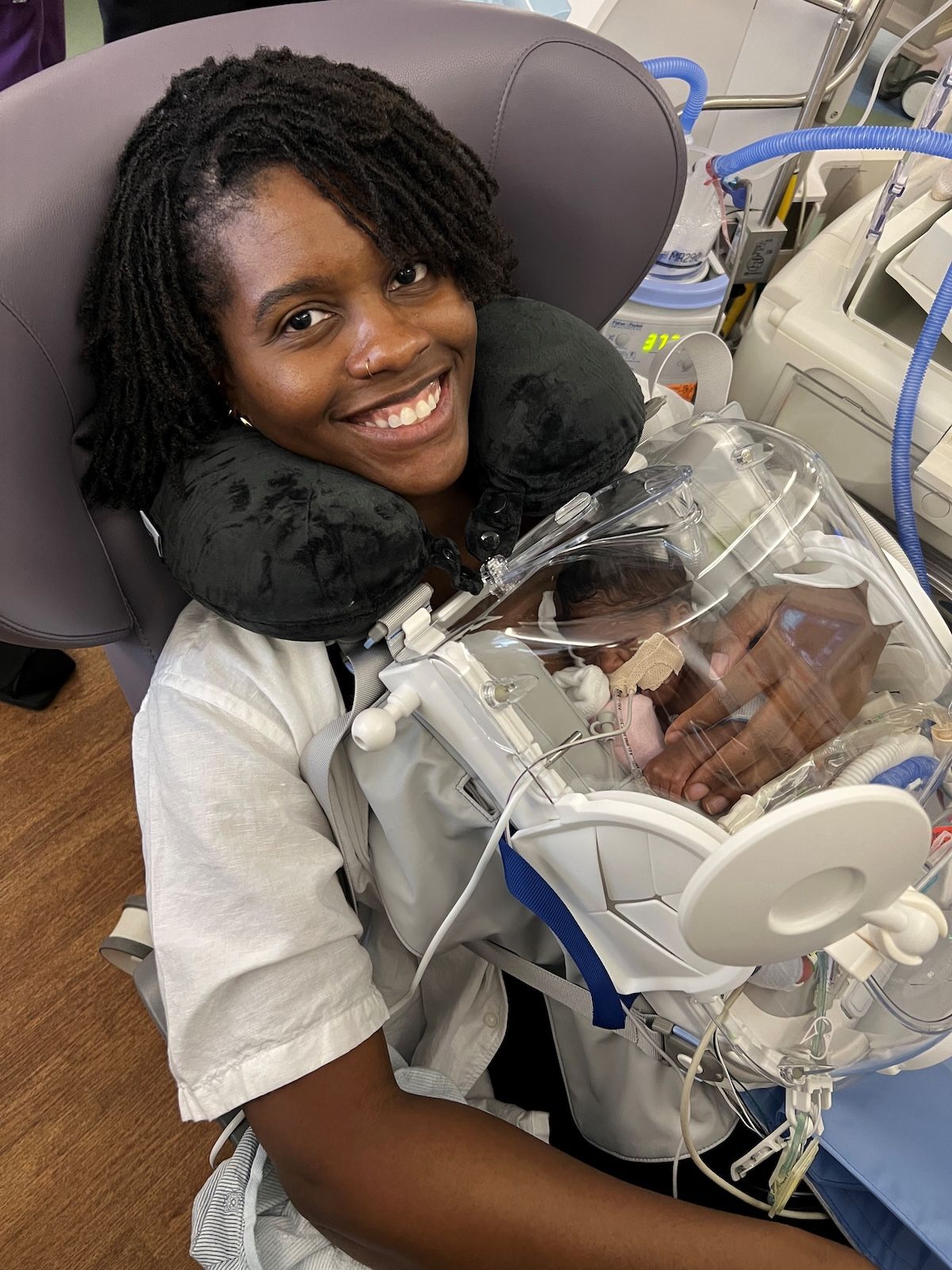
The Skincubator is a wearable medical tool designed for preterm infants weighing under 4.4 pounds that enables prolonged skin-to-skin contact beginning as early as the day of birth. A couple at Children’s Memorial Hermann Hospital in Houston, Texas, recently became the first in the U.S. to experience the difference it can make.
For about 10 days after their twins were born in August, Tiffany Ikwuagwu and Dorian Ojemen weren’t able to hold the babies, who arrived at just 26 weeks. “This is a great invention,” Ikwuagwu, herself an obstetrician and gynecologist, said in a video from Memorial Hermann upon using the Skincubator. “I think the fact that I can help regulate the babies’ heart[s] and help the babies relax and just have that connection to them, is very special.”
Added Ojemen in an interview with CNN earlier this month: “Just the fact that you can have them on your chest, you can look in their eyes, you can hold them, feel them breathe, like, that immediately makes you feel like, wow, I’m a parent.”
The tech, which was developed over four years, was granted FDA Breakthrough Device designation last December. With the Skincubator, parents can relax or rest while bonding with their baby for hours at a time, taking turns with other caregivers and family members if they so choose. Infants’ arterial, umbilical, feeding, and airway tubes all remain in place.
“The baby is already in their incubator, and they’re transferred from the incubator to the Skincubator while they’re in their isolate,” explained Dr. Jaclyn Ruggiero, principal investigator for an ongoing clinical trial, adding: “The baby’s medical lines and breathing tubes or breathing support are all secured to the Skincubator base. And the way the baby gets into skin-to-skin care is there’s a retractable pad under the baby, and that pad is pulled down slowly.”
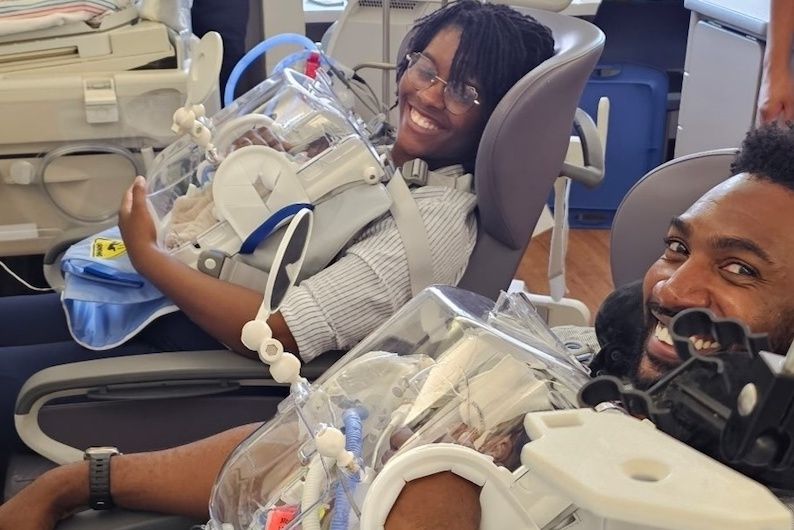
Skin-to-skin contact is standard practice for all babies, helping to stabilize their heart rate and breathing, stimulating digestion, regulating temperature, providing protection against infection, and fostering the bond between parent and child.
“It turns on a part of the nervous system that’s really important for connection and feeling calm,” Ruggiero said.
Per the website, clinicians interested in bringing Skincubators to their NICUs can book a call with the company to begin a pilot program. Learn more.
RELATED: Hope Is at the Core of Every Mother Counts’ Mission to Make Childbirth Safe for All