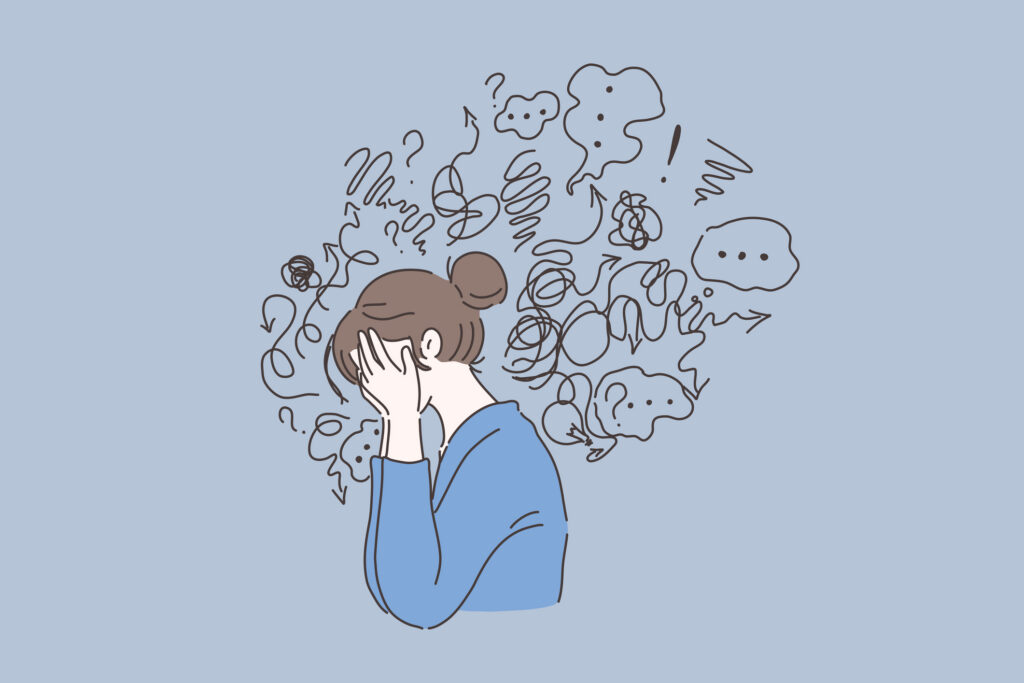
Picture this all-too-familiar scenario: You send a heartfelt text to your crush and excitedly watch those response bubbles appear on the screen — but then they vanish, only to be followed by hours of silence. By the time the object of your affection does reply, you’re already devastated, because clearly, you tell yourself, they don’t feel the same about you. In reality, though? They simply lost their phone signal while on a family camping trip.
Unwarranted heartbreak aside, filling in the gaps when we don’t have the full story can at times be helpful or necessary, Shima Baronian, a counselor and systems and care coordinator in Buford, Georgia, told Nice News. In certain contexts, negative assumptions may even protect us from harm. But assuming things too often or too broadly can also hold us back, preventing us from getting the most out of our life and relationships.
“Our brains are pattern-recognition machines, meaning they use past experiences to predict what’s coming next. It’s an adaptive survival mechanism,” Baronian explained. “If something hurt you before, your nervous system wants to spot it early the next time. The problem is that this system doesn’t distinguish between actual and perceived threats.”
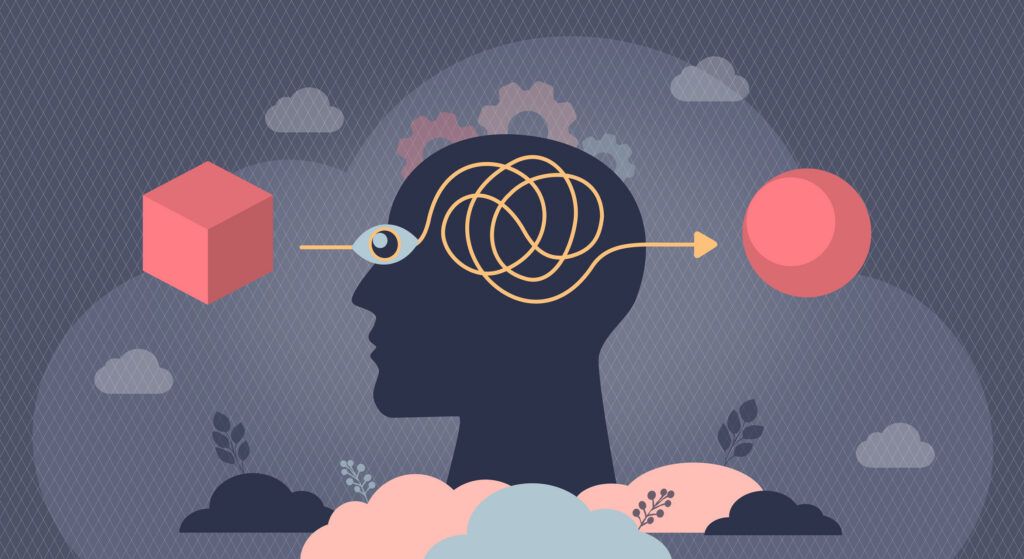
Another issue is that our negative assumptions are often wrong. Research suggests that we tend to hold certain cognitive and implicit biases, both of which influence our thoughts, feelings, and behaviors — often without us realizing. For example, confirmation bias prompts us to look for and overvalue information that confirms our existing beliefs, while ignoring and undervaluing information that challenges them. Meanwhile, negativity bias makes us more likely to focus on and prioritize unfavorable information, and to interpret things pessimistically rather than positively.
As with judgments, which are subjective and critical evaluations, assumptions tend to intensify how we feel about things, said Stella Kimbrough, a psychotherapist and owner of Calm Pathway in Pennsylvania. For instance, assuming that your coworker ignored you when they didn’t respond to your morning greeting can lead to you feeling hurt, sad, or even angry. It’s more helpful to instead consider that perhaps they didn’t hear you or were distracted by something else. “When we stay grounded in the observable facts and consider all possible reasons rather than assuming the worst, we feel more grounded and emotionally regulated,” Kimbrough noted.
Arati Patel, a psychotherapist based in Ventura, California, echoed this. Besides being exhausting, “living in a state of preemptive defense” — or always assuming the worst — can narrow your worldview, leading you to avoid people, places, and experiences. “You also rob yourself of the chance to be surprised, to be wrong, to have your expectations exceeded,” she explained. “Over time, this creates a self-fulfilling prophecy. When you expect the worst, you often get it, not because people are terrible, but because you’re relating to them through a filter of suspicion.”

Some assumptions, particularly those shaped by bias, can also perpetuate cycles within families and communities, Baronian said. Research suggests that confirmation bias, for example, plays a significant part in sustaining stereotypes, which are closely linked to prejudice, discrimination, and other forms of harm.
“People feel it when you’ve already decided who they are before they’ve had a chance to show you,” Patel pointed out. “It’s dehumanizing as you’re relating to your projection of them rather than the actual person in front of you.” She added that women, those who identify as BIPOC, and members of other marginalized groups constantly navigate negative assumptions, including presupposed beliefs about their competence, intentions, or worthiness.
“These assumptions shape how we’re treated in health care, education, employment, and daily interactions. They accumulate; they become the water we swim in,” Patel said. “When someone has already decided you’re a threat, incompetent, or untrustworthy, you don’t get the same access, benefit of the doubt, or room to be fully human.”
Eschewing negative assumptions doesn’t mean being naive or overly optimistic, or ignoring red flags, she noted. Rather, it entails acknowledging that you don’t know the whole story and staying open-minded about what it might be.
Tips to Shift Your Mindset
Assume complexity: Always assuming the best of others can also be problematic, Baronian said. Instead, she recommends assuming complexity, or recognizing that people contain multitudes and that our first read isn’t the full story. This, she added, creates room for both protection and connection.
Focus on the facts: Unless you can observe something using your five senses, it’s impossible to accurately understand all the facts, noted Kimbrough: “When we stick to the facts, we stay emotionally centered and don’t get caught up in negative thought spirals.” Patel advised to “lead with curiosity” and ask clarifying questions when possible, noting that “curiosity keeps connection alive.”
Become comfortable with uncertainty: Many of us are deeply uncomfortable with the unknown, per Baronian, and so we rush to fill it in with assumptions. “Learning to tolerate the discomfort of ‘I don’t know yet’ creates space for people to actually show you who they are,” she said.
Question negative emotions: If you’re feeling upset, Kimbrough suggested asking yourself if it’s due to a negative assumption. “If it is, try to challenge the assumption,” she said, adding that being emotionally attuned is an important step to changing our thought patterns and the way we feel.
Notice patterns: Pay attention to who you assume the worst about — and when. Is it those who remind you of someone from your past, people in positions of authority, or others who look different from you? “Your patterns reveal where your unhealed wounds and unexamined biases live,” Baronian explained. “You can’t change what you won’t acknowledge.”
Practice mindfulness: Ample research suggests that mindfulness — being fully present and aware of your current thoughts, feelings, and surroundings — supports mental and emotional health and overall well-being. It may also help counter negative assumptions. “Before assigning meaning, slow down,” Patel said. “Even one mindful breath can help shift you from automatic interpretation to awareness.” Mindfulness-promoting practices, such as meditation or yoga, can help you get into the habit, noted Kimbrough.

Separate impact from intent: Sometimes people harm us without meaning to, even when they’re trying to help. “When you assume complexity, you can hold both truths: ‘This hurt me’ and ‘This person may not have meant to hurt me,’” Baronian said. “This isn’t about excusing harmful behavior,” she added, but seeing people as their whole versus reducing them to their mistakes or your own fears.
Consider context: Finally, Baronian suggested considering context and systems, not just individuals. “Sometimes what looks like someone’s character flaw is actually them responding to circumstances you can’t see,” she said. “The colleague who seems dismissive might be drowning. The friend who canceled might be struggling.” Again, this doesn’t mean you accept poor treatment, but it allows you to see the bigger picture. And, Baronian noted, it’s important to remember you can assume complexity and protect yourself: “You can recognize someone’s humanity while also recognizing that they’re not safe for you, the same way you can understand that someone’s bias comes from somewhere while still refusing to absorb it.”
RELATED: Stop the “Good” vs “Bad” Snap Judgments and Watch Your World Become More Interesting