Every culture has its own unique array of ideologies, and learning about those outside our own can help us form a more vivid and nuanced worldview. It’s similar to the idea that expanding our vocabulary to include words from other languages can translate into richer and more diverse emotional experiences.
In Japan — where Shintoism, Zen Buddhism, and Confucianism have long shaped society — many ancient philosophies are deeply enshrined in daily life. Several of them share common tenets, emphasizing themes like simplicity, harmony, acceptance, and intentionality.
Scroll down for eight Japanese life lessons we can all apply in pursuit of a more intentional existence.
Ikigai
A reason for living
A combination of the Japanese terms “iki,” meaning “life,” and “gai,” meaning “to be worthwhile,” ikigai essentially describes a reason for being (or a raison d’etre, if you ask the French). The word is believed to date back to Japan’s Heian period, between 794 and 1185.
While 21st-century Western writers have popularized a four-component Venn diagram approach to discovering ikigai, Japanese denizens have a broader understanding of the concept. Rather than a framework to be fulfilled, it can be thought of as any elements that make life feel worthwhile. For example, a person’s children or career may be their ikigai, but one may also derive it from a morning coffee ritual with a friend or time spent gardening.
To apply ikigai to your life, focus on cultivating small joys and rituals while also considering your larger purpose.
Kaizen
Continuous improvement
Kaizen is a more modern concept that took off in post-World War II Japan and was actually influenced by American ideas. Following the conflict, Japan faced production issues, and U.S. scientists were brought in to aid in revitalizing the economy. An organizational philosophy evolved that emphasizes continuous improvement, commitment, and discipline. The word is a combination of the terms “kai,” meaning “change,” and “zen,” meaning “good.”

While the concept is often put into practice by businesses, individuals can embrace kaizen in their daily lives as well. “One of the core pillars of kaizen is the belief that small, consistent changes can lead to significant transformations over time,” the Kaizen Institute explains, adding: “The key to getting started is identifying a habit or area of improvement that, while seemingly minor, delivers an immediate positive impact.”
That may mean incorporating a few more weekly servings of veggies into your diet, adding 10 more minutes of intentional movement to your day, or creating a morning routine that prioritizes your mental health. Then, challenge yourself to continue improving in each area while celebrating your small wins along the way.
Mottainai
Regret over waste
Loosely translated, the term “mottainai” means “what a waste,” and it’s used to express regret or sadness when something is squandered. As a philosophy, it centers gratitude and “embodies the principles of reduce, reuse, and recycle, fostering respect for the objects we use and the environment they come from,” according to the Japan National Tourism Organization, which added: “This ethos has shaped a culture that values sustainability and finds beauty in objects that have been repaired or transformed.”
RELATED: How Kamikatsu, Japan, Is on Pace to Become the Country’s First Zero-Waste Town
Mottainai encourages us to be mindful of our consumption and grateful for the things we have. To help implement this, try to reduce and reuse as much as possible. Make sure you’re recycling correctly to limit waste, and explore tips for reducing and reusing.
Oubaitori
Don’t compare
The term “oubaitori” comes from the kanji, or Japanese characters, that symbolize four flowering trees: cherry blossom, plum, peach, and apricot. It’s an ancient idiom meaning that people, like the flowers on those trees, bloom and flourish at their own rate and in their own way. The overall takeaway: Don’t compare yourself to others.
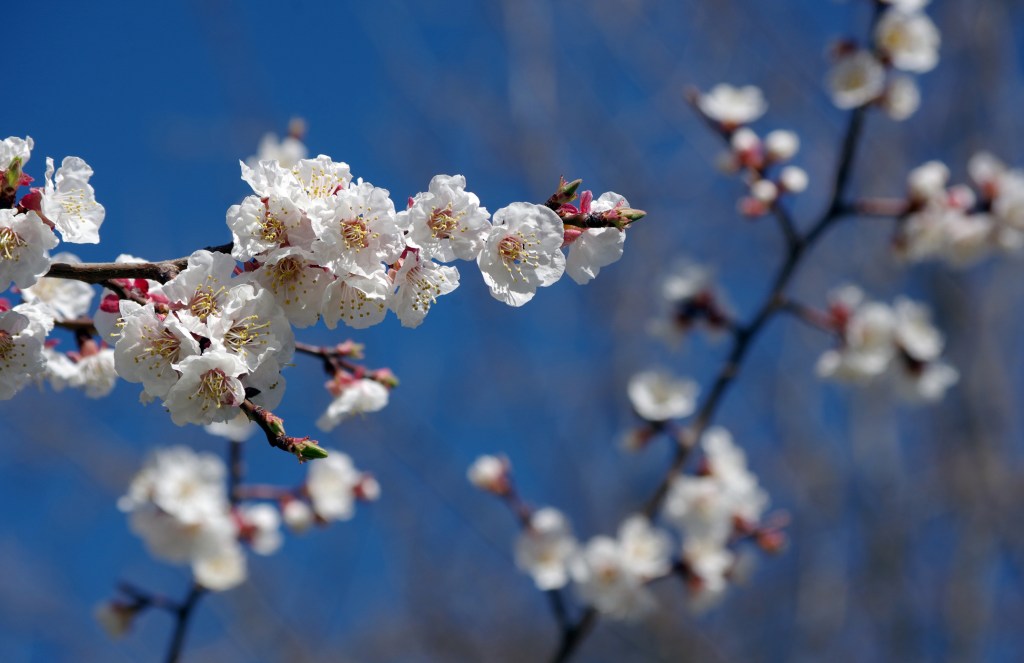
Embrace oubaitori by focusing on your individual journey and happiness while celebrating your inherent uniqueness. And remember, we don’t need to be superstars to be happy or live meaningful lives — revisit our piece on the power of embracing an average existence.
Shikata Ga Nai
Accept what you cannot control
Loosely translating to “it cannot be helped,” this term is used similarly to the French phrase “c’est la vie,” meaning “that’s life” (or, less poetically, the American term “s*** happens”). At once both fatalistic and freeing, to say shikata ga nai is to encourage yourself (or someone else) to let something go and focus on that which is under your control.
A way to invite the spirit of shikata ga nai into your life is to practice gratitude for what you have rather than yearning for what it is you’ve lost or wish were different. It may also help you release frustration by encouraging you to step back and reflect on what you’re fighting for or against.
Shoshin
A beginner’s mind
A Zen Buddhist concept, shoshin very roughly translates to “beginner’s mind.” It’s the belief that no matter your age, education, or experience level, there’s value in approaching life through the lens of a beginner: one of excitement, openness, and a willingness to learn.
As cognitive neuroscientist Christian Jarrett explained in a piece about shoshin for Psyche, research suggests that those with degrees or expertise in a specific area may often overestimate their own knowledge or close their minds to possibilities or suggestions put forth by others.
“By practicing being flexible rather than dogmatic, more humble and less brazen, you will be sensitive to other people’s perspectives and needs, making you a better sister, brother, father, mother, partner and friend,” Jarrett writes. “With eyes and mind wide open, it’s so much easier to enjoy the wonders of the world, to grow, to learn, and to listen.”
Wa
Harmony
Wa is a single Japanese character that contains multiple meanings, but overall represents social harmony — a peaceful, interdependent existence. It’s a deeply held value in Japan and also one of the four principles in the traditional Japanese tea ceremony.
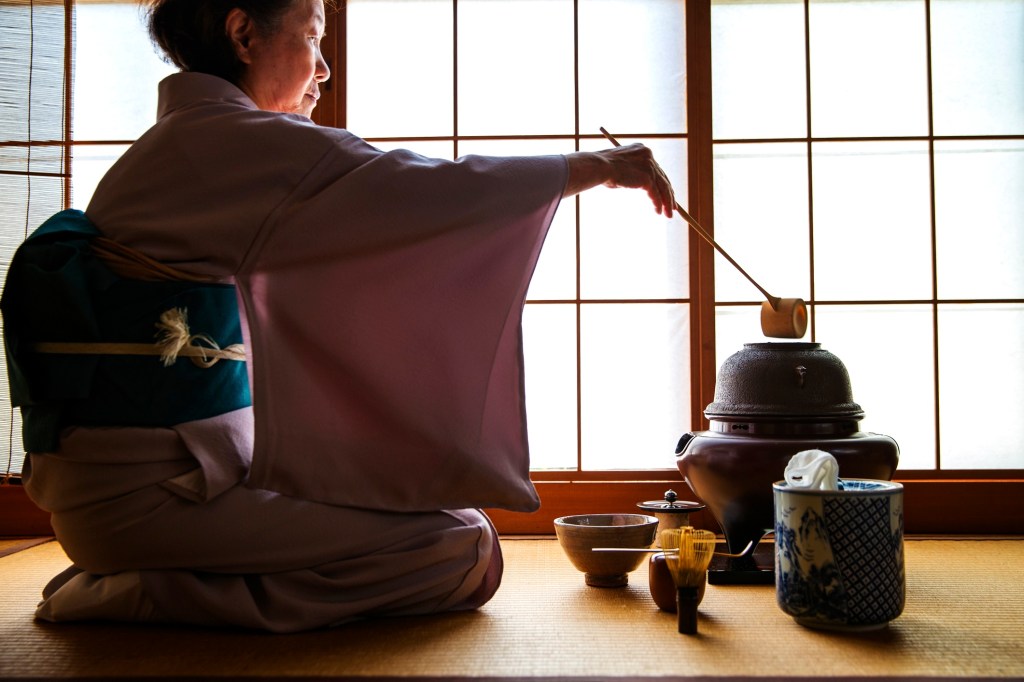
“Harmony is the aesthetic and core value that drives Japanese people, embedded deep down in our subconscious mind,” writes author and cultural communicator Azumi Uchitani. “Harmony with people, nature, season, and the life force energy.”
Incorporating wa in your own life is a matter of embracing humility and prioritizing accord with others over protecting your ego.
Wabi-Sabi
Embrace imperfections
Similar to kintsugi, a centuries-old ceramics technique that involves repairing broken pottery using lacquer typically mixed with a gold or silver powder, wabi-sabi is all about celebrating imperfections. It’s an aesthetic and a philosophy that can be applied to personal progress, interior design, daily life, and any other aspect of our existence — and it’s recently been having a moment on social media.
The meaning of wabi-sabi as it’s understood in the Western world comes down to three basic ideas, psychology professor Trevor Mazzucchelli explained for The Conversation: “Things are flawed, things change, and things are never fully finished.”
To adopt a wabi-sabi worldview, consider that imperfections make us who we are, that everything is constantly in flux, and that there’s always room to grow.