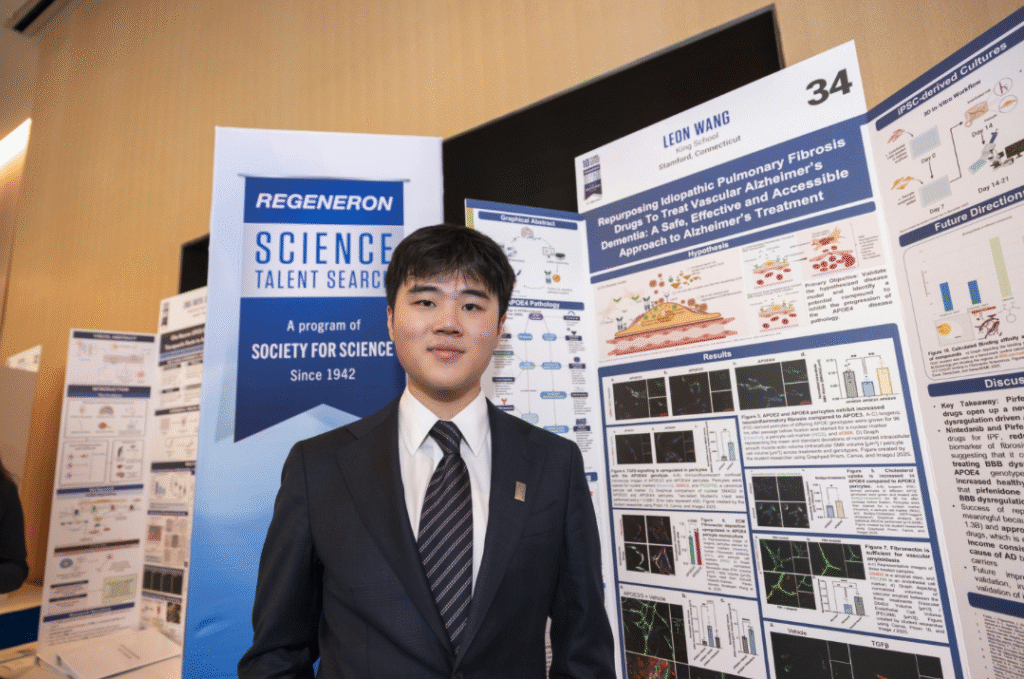
When Leon Wang’s grandfather was diagnosed with Alzheimer’s, a disease that impacts over 7 million Americans, the science-minded teenager’s interest in researching treatments was piqued. He then decided to pursue that interest through his high school’s research program — and last month, his resulting project was awarded eighth place in a prestigious nationwide STEM competition.
Wang, a senior at King School in Stamford, Connecticut, focused his efforts on identifying existing FDA-approved drugs to repurpose and potentially treat vascular Alzheimer’s dementia: an avenue he found particularly intriguing after learning that it could be a more efficient and affordable path to treatment.
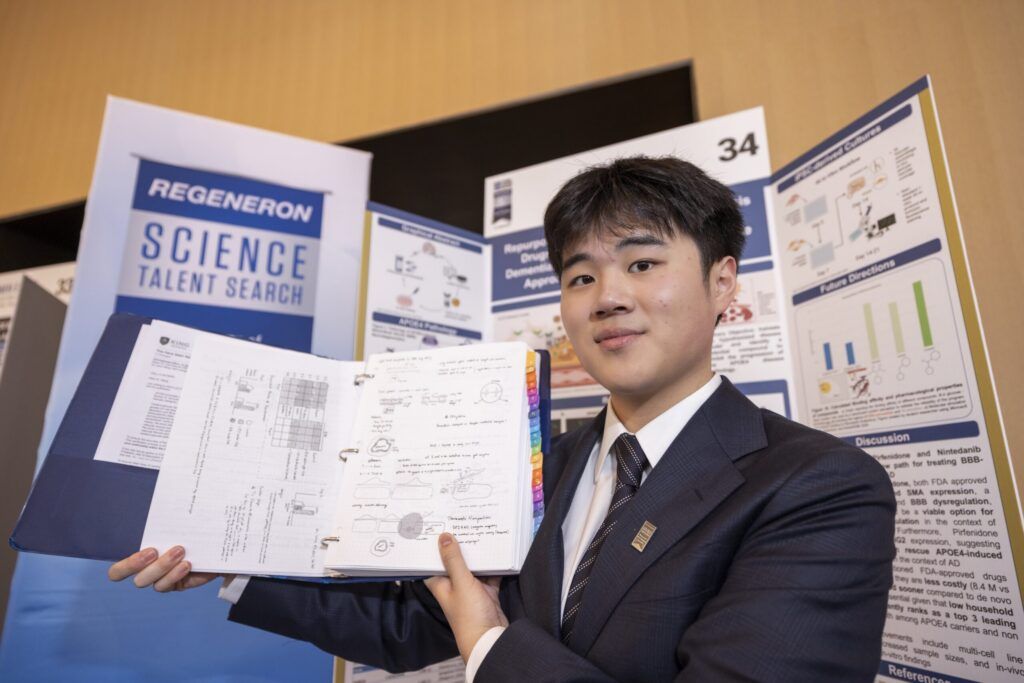
“Early in my research, I found that using already in-market drugs for new applications can significantly shorten FDA approval timelines and reduce development costs,” Wang, 17, told Nice News, adding, “This approach is especially important given that low household income is among the top three social determinants of Alzheimer’s risk, underscoring the need for more affordable treatments.”
Wang looked at the gene variant APOE4, the strongest genetic risk factor for Alzheimer’s. Using public data from previous studies and his own research with lab-grown cells, he verified that APOE4 carriers led to higher activity of the protein TGFβ, which in turn damaged cells protecting blood vessels in the brain.
Then, Wang pinpointed two FDA-approved drugs for lung fibrosis — nintedanib and pirfenidone — that inhibit TGFβ in the lungs, and investigated whether they could do the same in the brain. After testing both, “I found that they did, in fact, reduce the hallmark symptoms of blood-brain barrier vascular degeneration,” he said in a video presentation for the competition, adding, “Once you add these drugs, the amount of damage that are seen in these cells are significantly reduced.”
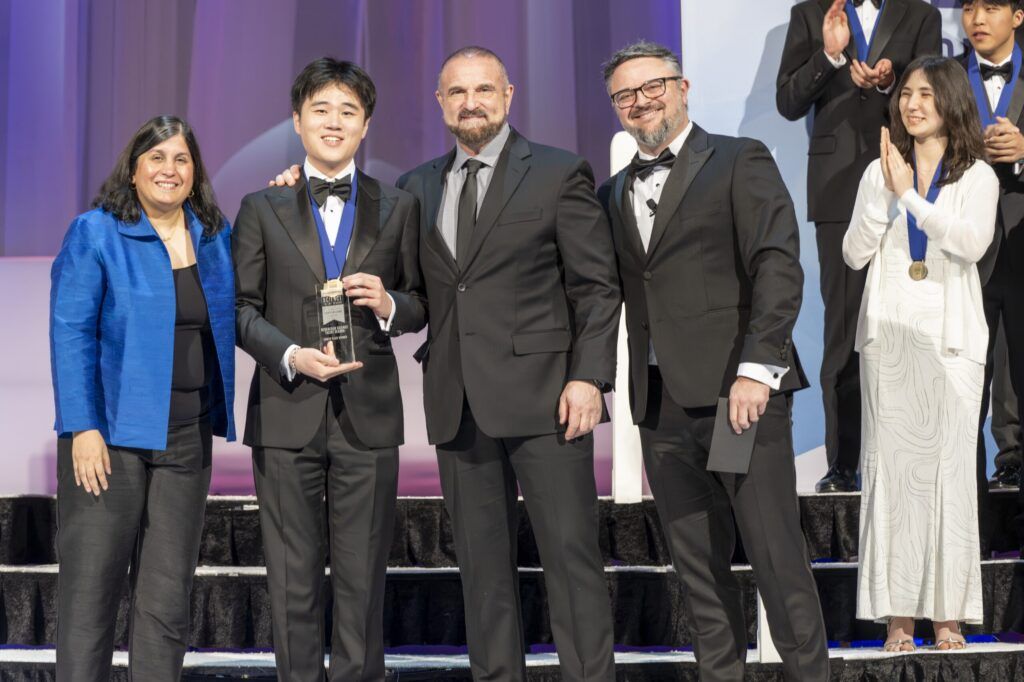
In addition to landing Wang a $60,000 prize, these findings could one day lead to the two drugs being used for Alzheimer’s. “It’s imperative that patients who cannot have the financial means to currently afford treatment be given access to potentially life-saving treatment in the future,” Wang explained. “And I hope that this project can eventually give them just that.”
His entry to the Regeneron Science Talent Search was one of over 2,600 submissions of original student research. Sponsored by biotech company Regeneron and produced by scientific literacy nonprofit Society for Science, the competition is the oldest and most prestigious of its kind for U.S. high school seniors. Currently in its 85th year, the contest selected 40 finalists representing 35 schools across 15 states to be recognized at a ceremony in Washington, D.C., in March, when they were collectively awarded more than $1.8 million.
And when Wang heads to the University of Pennsylvania in the fall, he’ll continue his scientific pursuits: He plans on studying neuroscience and is considering a career as a doctor.
Maya Ajmera, Society for Science’s president and CEO, said in a press release that his discovery “highlights the potential of innovative research to uncover new uses for established medicines. We are excited to see where his scientific journey leads.”
RELATED: Teen’s Award-Winning Robot Turtle Could Help Underwater Ecosystems Thrive by Detecting Threats