Lauren Paul and Molly Thompson are the co-founders of Kind Campaign, a nonprofit that brings awareness and healing to the negative effects of bullying on school-age kids.
At the end of the day, every mother wants the same thing: to raise a good human. To watch her child move through the world with a heart open enough to really see other people and treat them with care.
That instinct has always mattered. But in a world that can feel increasingly divided and noisy, it matters more than ever. Kindness isn’t a personality trait that kids either have or don’t. It’s a skill. And like any skill, it has to be taught, practiced, and most importantly, modeled.
We’ve spent almost two decades traveling the world with Kind Campaign, speaking in schools and connecting with millions of students, parents, and educators. We’re also raising kids of our own and, throughout it all, we’ve learned one thing for certain: Kindness starts at home.
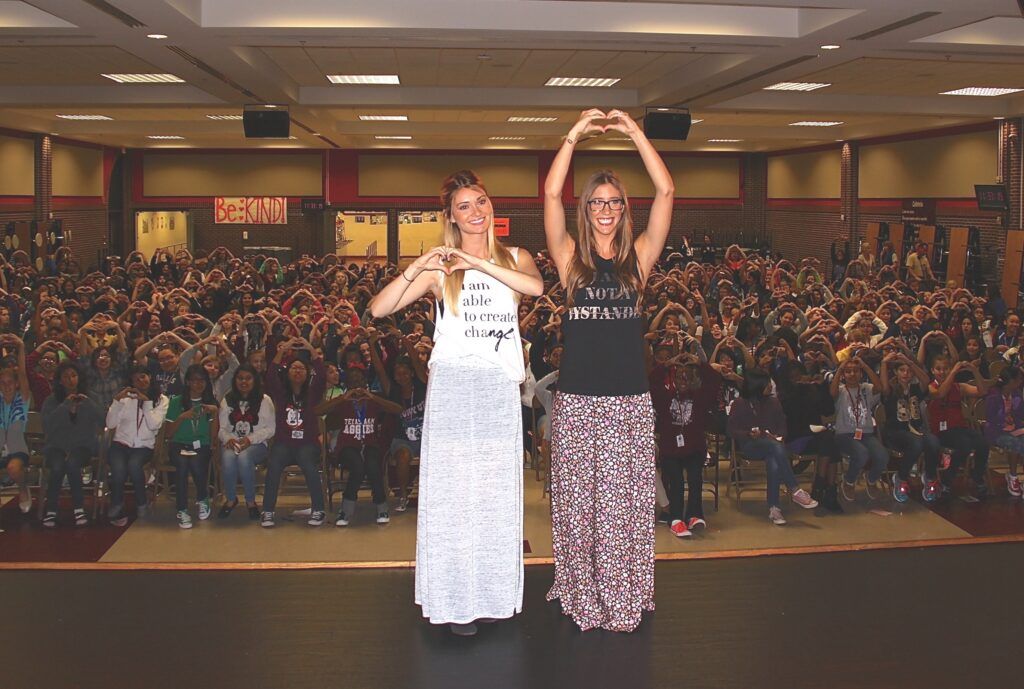
Lauren Paul (left) and Molly Thompson
These are our five most important tips for raising kind kids:
Model it first.
Kids are always watching. Long before they absorb what we say, they absorb how we live, how we treat the person at the checkout counter, how we talk about our friends and neighbors, how we handle conflict with the people we love.
And as beautiful as motherhood is, we all know that the role can come with layers of stress and pressure. We’re not always going to show up as the perfect example to our kids and that’s OK. Some of the most powerful moments and lessons will come from when we mess up but have the awareness to acknowledge it, talk about it, and make amends.
The most powerful kindness education isn’t a conversation you sit down to have. It’s the thousand small moments your child witnesses every single day. When you lead with empathy, they learn to do the same.
Start small.
Acts of kindness don’t have to be grand to be life-changing. It’s as easy as smiling at a stranger or sitting with that kid who eats alone at lunch. We have watched moments exactly like this transform entire rooms full of students and we promise you, the people impacted remember them forever. Remind your children that they don’t need a grand gesture or the perfect words. They just need to keep their eyes open for the opportunity to show someone that they are seen, that they matter. That’s where kindness begins.
Teach them to repair.
One of the most underrated kindness skills we can give our kids is the apology. Not the reflexive, get-out-of-trouble “sorry,” but the real kind. The kind that says: I see that I hurt you, and that matters to me.
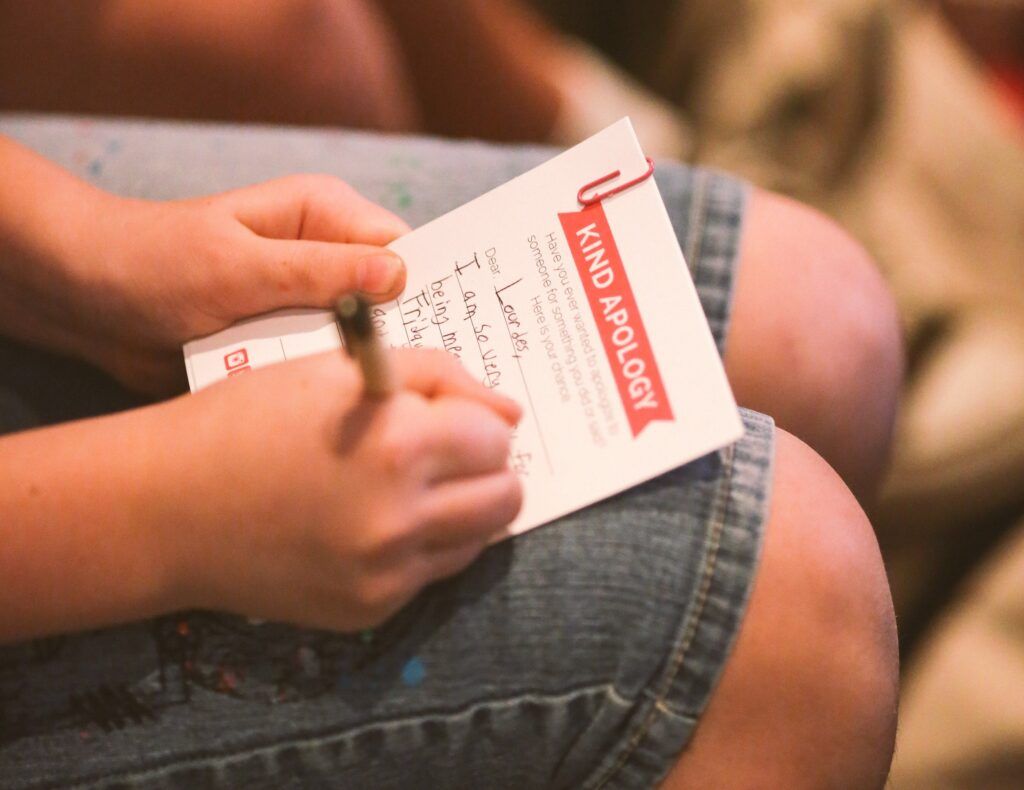
During our Kind Campaign assemblies, we give students the opportunity to write a Kind Apology to someone they’ve wronged, and what we witness in that room is nothing short of extraordinary. Friendships mend, tension dissolves, and kids who were feuding just an hour ago leave side by side. When we teach kids that messing up doesn’t make them “bad,” it just means that they made a mistake (like we all do from time to time) and they now have the chance to make right, we give them something they’ll carry for the rest of their lives.
There’s so much power in reminding your kids that apologizing is not only healing for the person they’re apologizing to but that it can be healing for them as well.
Remind them that everyone has a story.
This is something we say to every single student we meet, and we mean it every single time: You have no idea what the person sitting next to you is carrying. You don’t know what they came to school with that morning or what they’re going home to when the bell rings. Inhumanity so often comes from forgetting this. When we help our kids slow down enough to remember it — to choose curiosity over judgment, and kindness over indifference — we raise humans who make the world feel a little safer for everyone in it. It doesn’t cost anything to be kind. You never know how much it truly matters to someone.
Create space for the hard conversations.
Raising kind kids doesn’t mean pretending the world is always kind back. It means talking about it when it’s not. Ask your kids what they’re seeing at school. Listen more than you advise. Help them find the words for things that feel confusing: exclusion, mean behavior, the pressure to go along with the crowd even when it doesn’t feel right. Kids who have a safe place to process the hard stuff are far better equipped to respond with kindness instead of keeping quiet or going along with it. You don’t need to have all the answers. You just need to keep the door open.
As co-founders of Kind Campaign, we have had the remarkable privilege of watching kindness change lives in real time — in school gymnasiums and auditoriums, in handwritten apologies and unexpected friendships. We have seen what happens when a child feels truly seen, and we have seen what happens when they don’t.
Mother’s Day is a moment to reflect on the journey of raising another human being and all the ways we hope, worry, and try our best to get it right. More than anything, we want our kids to turn out good. Kind. The kind of people who make the world around them feel a little better.
We’ve seen firsthand, in thousands of schools and in our own homes, that kindness is something we can actually teach. So keep showing up, leading by example, talking about the good and the hard, and helping your kids take small steps toward being the people who show up for others. Choose kindness, and help them do the same.
RELATED: Small Acts of Kindness Can Have Big Impacts on Recipients, Study Finds