On the site that is now Mesa Verde National Park in southwestern Colorado, the Ancestral Pueblo people lived for centuries in dwellings built into cliffs and on the mesas. Many of those structures, some of which date back nearly 1,500 years, are still standing and can be toured by park visitors.
Many other Indigenous houses are also available for the public to view and enter — at places like Taos Pueblo in New Mexico, an area inhabited for over 1,000 years, where ancient pueblo homes are maintained by current community members. These kinds of residences were built long before the land they’re on became the United States of America, and thus they certainly have the distinction of being the oldest homes in the country.
Some centuries-old houses, however, were constructed by settlers who traveled here across oceans to make lives for themselves. As the U.S. celebrates its 250th birthday this year, we rounded up five of the earliest that still open their doors to visitors.
Fairbanks House (1637-1641) | Dedham, Massachusetts
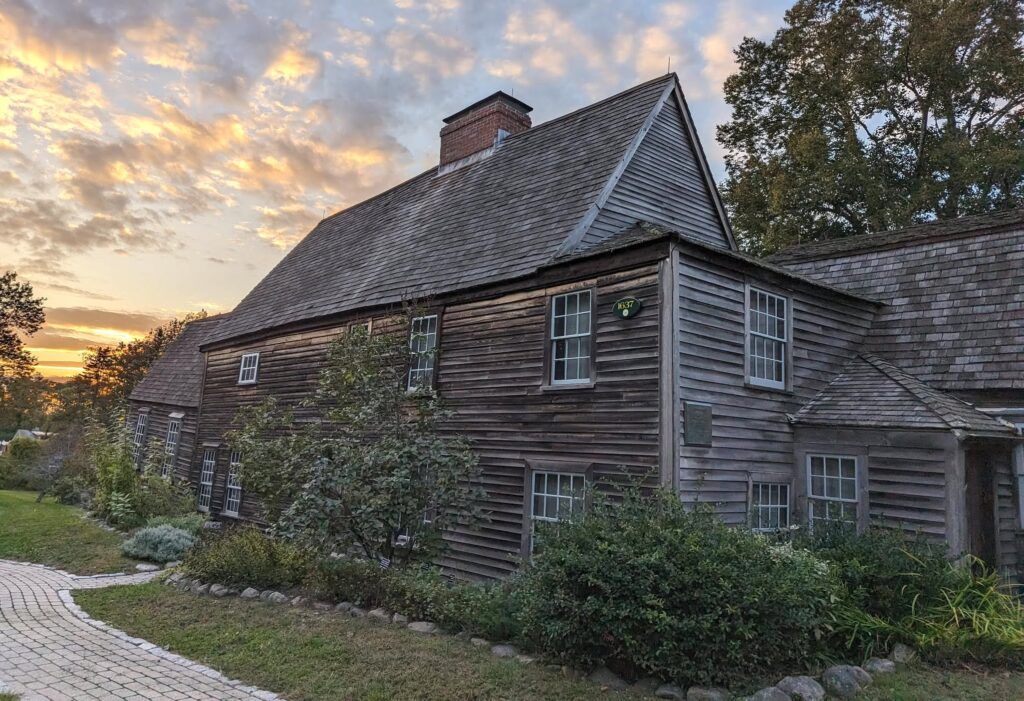
In 1636, Jonathan and Grace Fairbanks were among the founding members of Dedham, Massachusetts, having arrived at nearby (by today’s standards) Watertown three years earlier with their six children. They built this home — considered the oldest known wooden structure in North America — between 1637 and 1641, a timeline determined through tree-ring dating.
Eight generations lived in the house before the last descendant moved out in 1904. It has served as a public museum for over a century, and the family continues to be involved in its preservation. Learn how you can pay the home a visit.
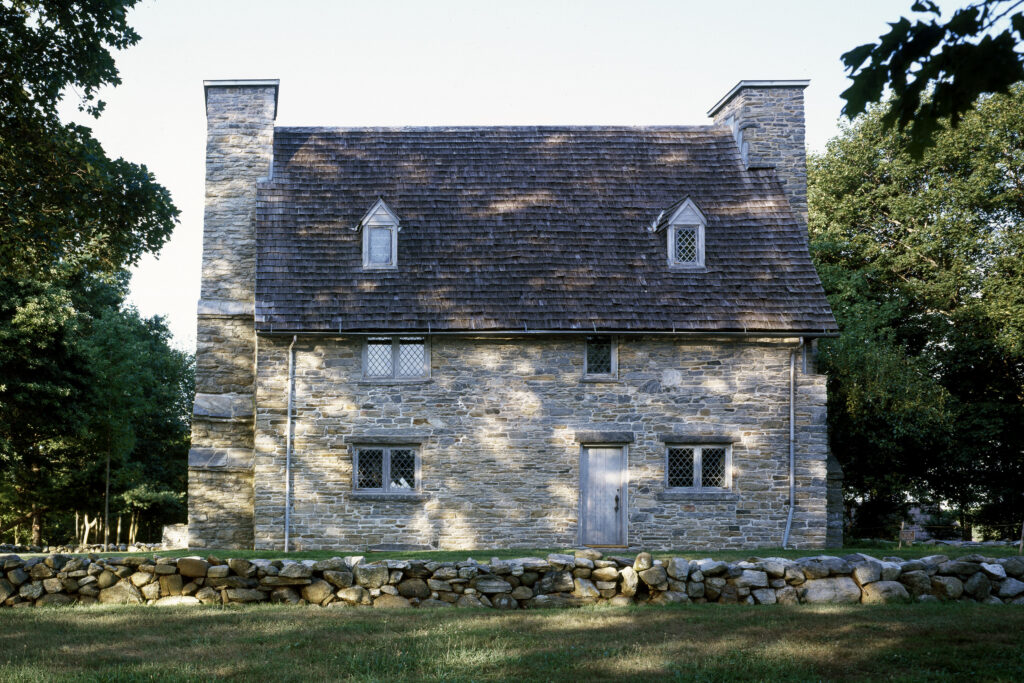
Henry Whitfield House (1639-1640) | Guilford, Connecticut
The Whitfield House, named for the Rev. Henry Whitfield and his family, is the oldest stone house in New England. Construction started on it in 1639, when a group of English Puritan settlers established an arrangement with the Menunkatuck band of the Quinnipiac tribe, renaming the area Guilford. The home was completed the following summer with the continued help of the settlers’ Menunkatuck neighbors. It was made into a museum in 1900, and the site is also an archaeological preserve.
Per the Connecticut state website, the museum is currently in the process of “changing its interpretation — confronting the facts about the site’s history to acknowledge past injustice, recognizing how that injustice manifests in society today, and working toward an equitable future for all people.” It remains open for visitors, and you can take a virtual tour as well.
Richard Sparrow House (1640) | Plymouth, Massachusetts
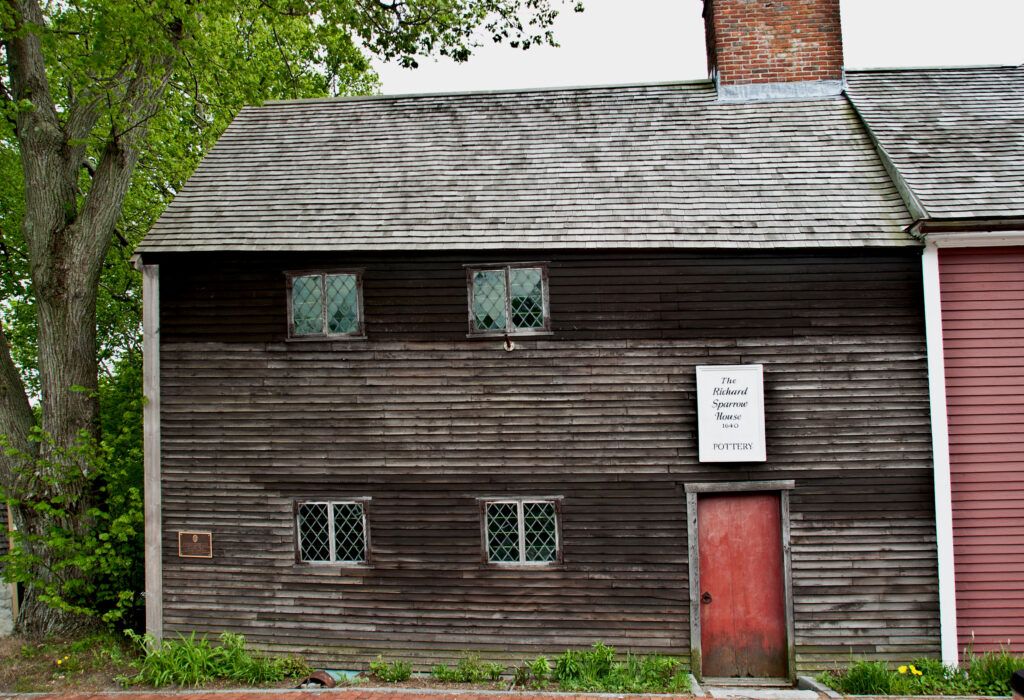
If you really want to feel like the Puritans who got a shock when they landed on Plymouth Rock, you can cosplay as Richard or Pandora Sparrow, who arrived in the area with their son in 1633. By 1640, the family had built this home on a six-acre tract of land. Now a museum, the original two-story house was a “grand” one, per its official website, with “large rooms, leaded glass windows, and paneled walls.”
Plymouth’s oldest surviving wooden-frame home, it’s open to guests for just $2 ($1 for children), so you should hopefully have enough left in your museum budget for admission to the nearby Mayflower II.
Wyckoff House (1652) | Brooklyn, New York
New York’s oldest structure is this Dutch frame house in the Flatbush neighborhood of Brooklyn. It was constructed around 1652 by a farm laborer named Pieter Claesen Wyckoff, who arrived in New Netherland (now New York) as a teenager in 1637.
Following a period of indentured servitude, he settled in what’s now the landmark home and became a successful magistrate and farmer. He and his wife had 11 children, establishing a family line that’s grown to more than 50,000 descendants, according to the Historic House Trust.
While most of the home that’s open to visitors consists of additions built in the 19th century, a small section of the original house still stands and is available for public viewing, per Atlas Obscura. Guided house tours are available by donation from mid-February to mid-December on Saturdays and select Sundays.
González-Alvarez House (1702-1727) | St. Augustine, Florida
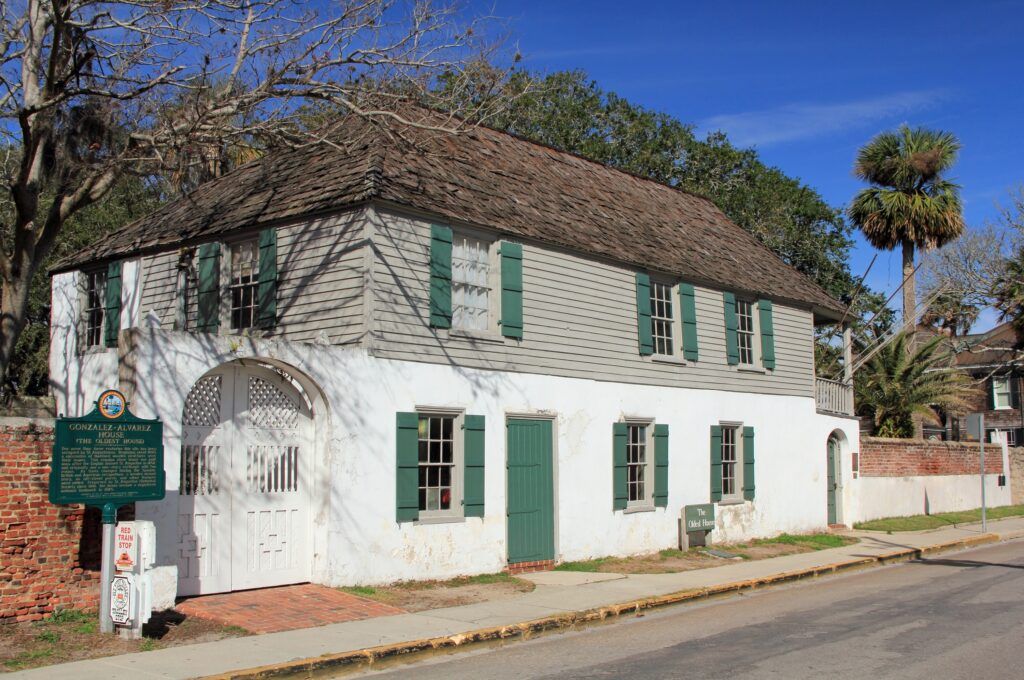
While there are older homes than the González-Alvarez House, we wanted to branch out of the North and take you down to Florida. “It very well may be the oldest standing Spanish-built residence in the U.S.,” per the St. Augustine Historical Society, which gives daily guided tours of the home and grounds.
The first name associated with the home is that of artilleryman Tomás González, who came to the military garrison town from the Canary Islands. The house was likely built between 1702 and 1727, with some estimates leaning toward 1723, when González married. It changed hands over the years and was bought by Gerónimo Alvarez, a native of Spain, in 1790. Online, the historical society offers a fascinating account of the home’s history and colonial life in St. Augustine that we recommend reading if you can’t get there for a visit.