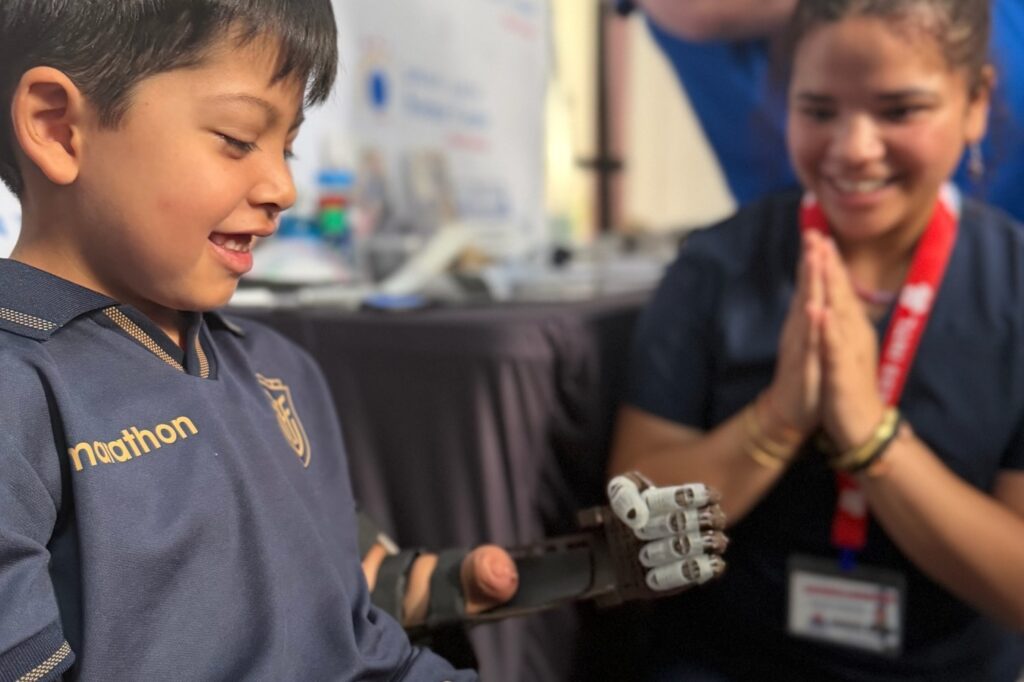
A group of six Ohio teens spent some of their summer break this year overseas, but they weren’t on vacation — they were delivering free, 3D-printed prosthetics to pediatric patients in need at Hospital General Ibarra in Ecuador.
As part of a community service project through the Great Lakes Science Center Robotics Initiative, the Cleveland-based high school students developed the assistive devices — custom-made to fit small hands and arms — using the skills they’d honed creating robots for competition.
Typical prosthetics can cost between $1,000 and $10,000, putting them out of reach for many families in poor and underserved areas. The body-powered devices the students created cost under $150 to build, and the teens personally fitted them onto children during the trip, which took place June 22-July 2.
“Everyone we met was incredibly kind, welcoming, and genuinely grateful for our work,” 16-year-old Sajayah Stephens told Nice News. “It also made me appreciate the small things I often take for granted, from access to health care to everyday opportunities. Seeing the joy and gratitude on the faces of the children and their families reminded me how meaningful even a small act of service can be.”
The humanitarian project, called Hands Across Borders, kicked off in 2022 and has since delivered 3D-printed hands and arms to over 80 children in four countries. For this year’s trip to Ecuador, a Cleveland reporter accompanied the teens, documenting them fitting the prosthetics and training local students and medical professionals to do the same — and even make their own.
“Four [Ecuadorian] high school students spent two full days with our students, learning every step of the process,” explained Dominic Winans, robotics program coordinator at Great Lakes Science Center. “We left them a 3D printer and plenty of supplies to continue on the work now that we are back home.”
The robotics initiative is a collaboration between the science center and the Cleveland Metropolitan School District — whose student body is over 80% Black and Hispanic — and was launched to empower historically underserved youth who are interested in STEM.
For Stephens, a rising junior who served as the official spokesperson for this year’s Hands Across Borders team, the aspect of the mission that stuck with her most was the excitement of the kids she provided prosthetics to.
“Watching them smile, explore what they could do with it, and share that moment with their family was incredibly rewarding,” she said. “Experiences like that reminded me that we weren’t just providing prosthetics. We were helping give children greater confidence, independence, and hope for the future.”