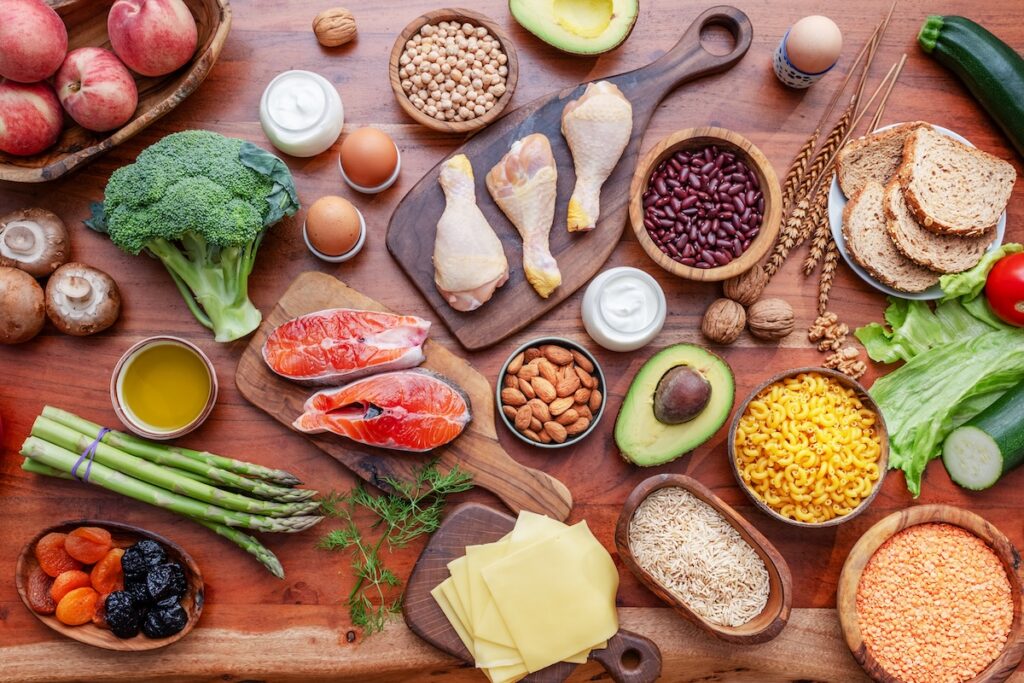
Dietary guidelines seem to run the gamut depending on where you live. In Japan, grain-based dishes are the main focus, while Greece promotes the Mediterranean diet and the U.S. emphasizes protein. So nutrition scientists from around the globe recently came together to develop a compendium of advice that’s adaptable across cultures (and takes the health of the planet into account). Enter: the International Food Guide Pyramid.
The team compared national and regional dietary guidelines from the United States, Canada, Germany, Australia, China, the Netherlands, and the Nordic countries, in addition to analyzing more than 250 scientific publications, to pinpoint the shared fundamentals of healthy eating. As it turns out, they may be more universal than it often seems.
“Despite what people often hear, there’s actually substantial agreement in nutrition science about the foundations of healthy eating,” study lead Karen Della Corte said in a news release. She added that a balanced diet will look different for each person, so the guidelines are designed to be adjusted to include local, affordable, and culturally appropriate foods.
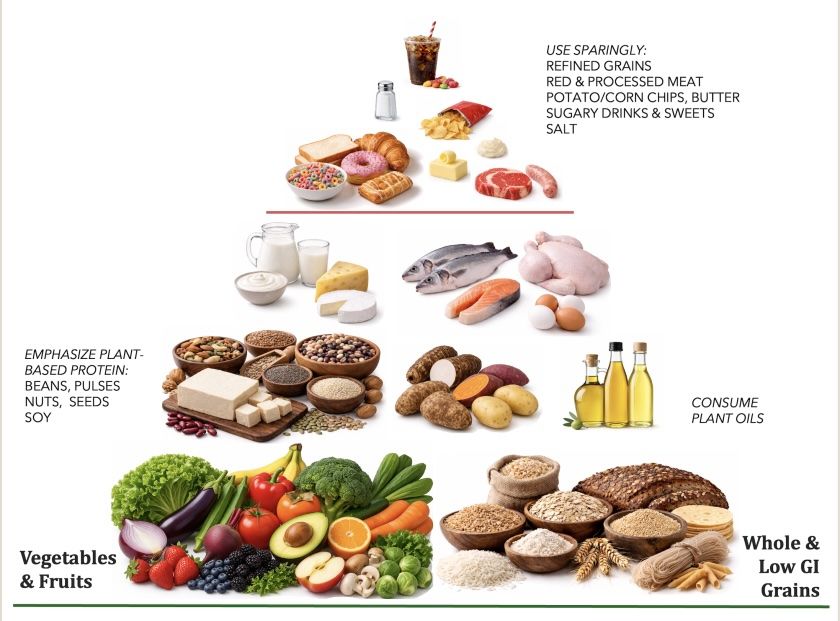
The new food pyramid focuses on plant foods, healthier sources of fat and protein, and high-quality carbohydrates.
At the base — representing the foundation of a nourishing diet — are vegetables and fruit as well as whole and low-glycemic index grains. Above that are plant-based proteins like beans, nuts, and seeds, as well as plant-based oils. Next up are fish, poultry, eggs, and certain dairy products, and at the top, for use sparingly, are refined grains, red and processed meats, butter, chips, sugary drinks and snacks, and salt.
A 2025 report from the EAT-Lancet commission called for similarly plant-forward international guidelines, suggesting they could prevent 15 million premature deaths per year and reduce environmental impacts like greenhouse gas emissions. “Our diet has to be not only for our own health but also for the health of our planet,” said David Jenkins of the University of Toronto, creator of the glycemic index. “Our science base has to be appropriately comprehensive to include that.”
Corte offered the following advice for putting the pyramid’s principles into practice:
- Design your meal around the plant food you want to emphasize, first thinking about which vegetables, whole grains, beans, or lentils you could include.
- Opt for beans, peas, lentils, fish, poultry, or yogurt more frequently than red or processed meats, and don’t make meat the biggest part of any meal.
- Reach for snacks like nuts, seeds, fruit, or vegetables with hummus over less nutritious processed options.
- Choose whole-grain bread over refined white bread and whole-grain or high-fiber cereals rather than refined, puffed, flaked, or popped cereals.
- Use canola or olive oil in your cooking instead of animal fats like butter or tallow.
- Drink water instead of soda.