When’s the last time you walked barefoot in the dirt or lay in the cool grass staring at the sky? In childhood, that was just part of everyday life. In adulthood, it has a name — earthing — and there’s a solid case for giving it a go more often.
Also referred to as grounding, the practice involves making direct skin contact with Earth’s surface. The theory is that doing so essentially “recharges” our bodies with the planet’s electrons, which have an antioxidant effect. A few small studies found that it reduced inflammation and improved sleep, but there’s not enough replicated research to back up any serious health claims. What isn’t in question, though, is simply how good earthing can feel.
“There’s something powerful that happens when we take off our shoes and feel the ground. It brings us out of our heads and into our bodies. There’s a slowing down that brings us back to a rhythm and pace set by nature rather than clocks and deadlines, which our nervous systems love,” Leslie Davenport, a licensed therapist and climate psychology consultant, told Nice News.
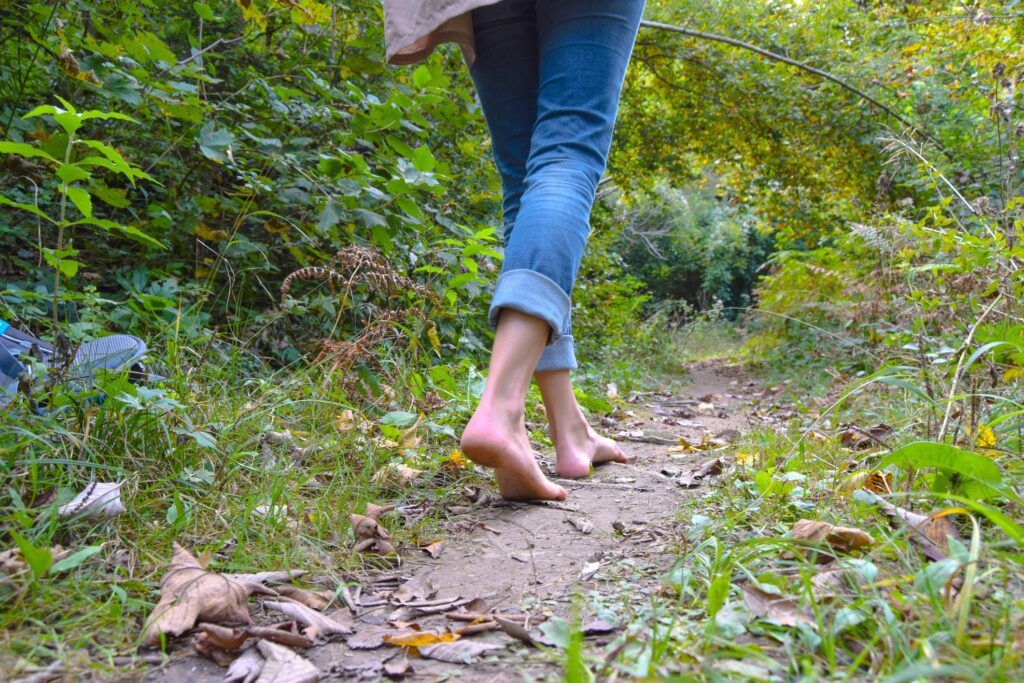
She continued: “It’s a kind of reset that can go beyond stress relief to a quality of belonging to something larger than ourselves. It’s almost as though there’s a genetic memory in our feet that we are gifted from our ancestors. Stepping onto the grass is stepping into a greater sense of our humanity.”
Earthing has received renewed interest in recent years, but it dates back millennia and can be traced to multiple cultures. In traditional Chinese medicine, the term “qi” refers to “vital energy,” and walking barefoot is a means of stimulating the flow of that energy through the body. In the ancient Indian medical system Ayurveda, grounding is thought to help balance “vata,” one of three bioenergetic forces. Native American cultures have also long embraced the healing power of direct contact with the Earth.
In 19th-century Germany, natural health movement leader Adolf Just, an early naturopath, helped popularize the idea of Earth’s electrical current being central to well-being. “In inflammatory maladies, fever, etc., lying on the bare earth will be found specially serviceable,” he wrote in his 1896 book, Return to Nature.
He added: “It is, of course, of the greatest advantage to be on the bare ground under the open sky. Under the great dome of heaven, especially at night, a wonderful secret health-giving strength from above works upon man, revivifying and strengthening his whole body.”
That’s a pretty hard sell for cozying down on a spot in your backyard and stargazing, but you don’t need your own patch of land to start earthing. And while the practice itself has limited science behind it, interacting with nature in general has been shown many times over to improve well-being — shoes or no shoes.
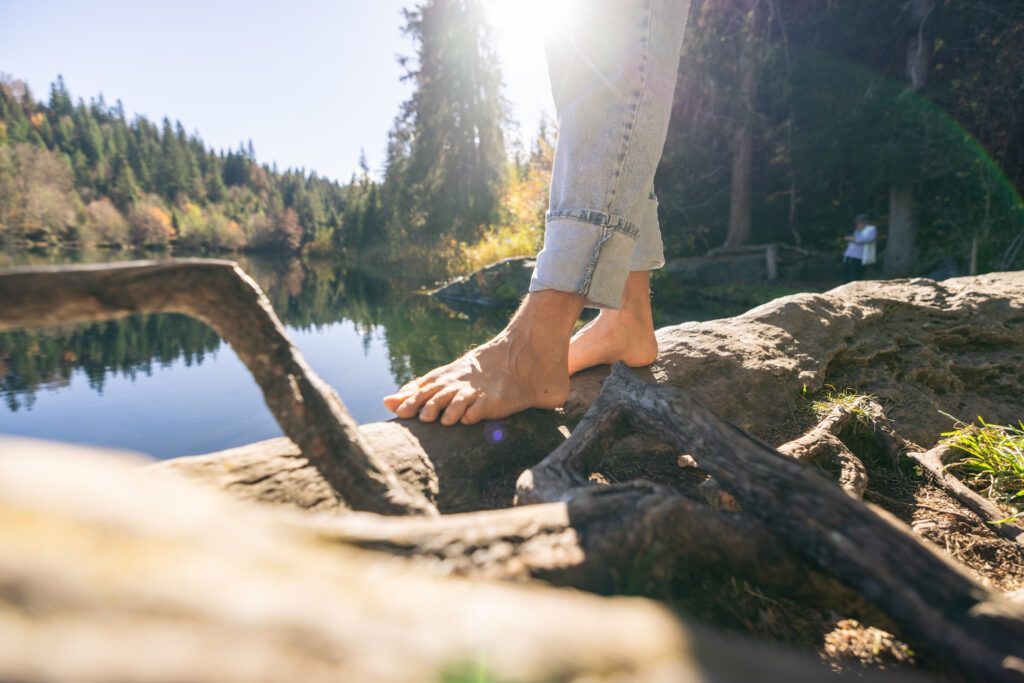
“Spending time in nature can reduce inflammation, improve sleep, and lower stress,” Cory Reid-Vanas, a licensed therapist and founder of the Rocky Mountain Counseling Collective in Colorado, told Nice News, adding: “Accessing nature can happen in lots of different ways. You don’t have to walk barefoot. You could sit on a bench. There are different levels based on your individual needs and interests in getting those positive results.”
But if you ask Kenneth Posner, a runner and hiker who calls himself Barefoot Ken, no shoes is the way to go. He’s run over 100 races sans footwear — and he even walks around New York City without anything covering his feet (!).
“I call it the original human mindfulness,” he said of the practice. “It is surprisingly focusing and calming. This is coming from someone who never went around barefoot as a kid, and only got into the practice in his 50s. Does it have anything to do with electricity? I doubt it, but who knows.”
Feeling up to a little sole searching? Here’s a short list of ideas for how to make earthing part of your regular routine.
- Go to your local park and kick off your shoes (just be mindful of what you’re walking on!)
- Practice yoga barefoot beside a lake
- Remove your sandals during a beach stroll
- Do your gardening without any footwear
- Have a stargazing sesh in the backyard
- Play in the mud (it’s OK — you’re allowed!)
- Take off your boots at the top of a hilly hike or on a forest trail