When it comes to emotional states, we’d all love to vacillate between being just plain happy and having the time of our lives. But research into an idea called emodiversity suggests that experiencing many different emotions — even negative ones — is a good thing, associated not only with improved well-being but also with better life choices.
Jordi Quoidbach, a professor of behavioral science who studies happiness and decision-making, spoke to Nice News about the reasons behind that connection, and how we can put the concept of emodiversity into practice.
What Is Emodiversity?
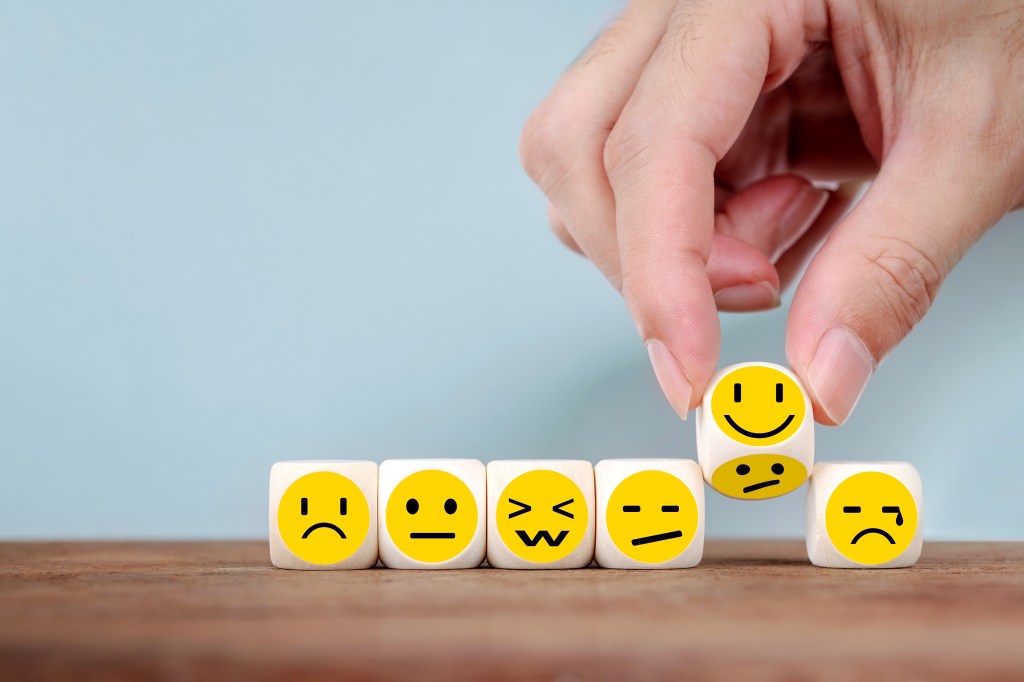
Emodiversity is a concept borrowed from the notion of biodiversity (which is vastly important for the health of our planet), and it encompasses two elements. The first is a rich emotional life, one that includes the experience of many emotions over the course of a day or month — “dozens and dozens,” Quoidbach said, like frustration, disgust, jealousy, gratitude, tranquility, and elation.
“But it’s not just about richness. It’s about the relative abundance of these emotions,” he explained. “You are emodiverse if you experience emotions in relatively balanced proportions. Not only do you experience many different emotions over the course of a month, but also you tend to experience as much fear as anger, as joy, as different kinds of emotions.”
How Does Emodiversity Correlate With Well-Being?
“What we found in our research is that people who experience a diverse range of emotions, both in terms of balance but also in terms of pure richness, tend to be healthier, mentally and physically,” Quoidbach shared, adding that when emodiversity increases, several variables decrease, including depression, number of visits to the doctor, and days hospitalized per year.
“What was particularly interesting to me in the research is that it is not just having a diverse range of positive emotion, but we also find that having a diverse range of negative emotion is better than having a narrower range of negative emotion.”
How Does Emodiversity Affect Our Decision-Making?
Quoidbach’s research has determined that diverse emotions correlate with good decisions — but before we get into the relationship between the two, let’s first define what a “good” decision is in this context.
“The way we think about it is that a good decision is a decision that aligns with your core values and the kind of person you aspire to be,” he explained. “A good decision is a decision from which you derive some long-term happiness. It might not be in the short run, but retrospectively you’re like, ‘Yeah, that actually helped me live a happier life.’”
He went on to point out that sound choices are also free of decision-making biases — systematic decision “traps” that people tend to fall into, including loss aversion and sunk cost bias.
As for why emodiversity translates into better decisions, Quoidbach offered an answer, while pointing out that his research has determined correlation, not causality.
“If you have more diverse emotions, it sort of prevents one emotion from taking over. So if something bad happens — you lose your job or you’re breaking up with your partner — and all you experience is fear or all your experience is shame, that negative emotion can sort of spiral into depression.”
Add other emotions into the mix, though, like sadness and anger, and they offer “different motivational effects.” Sadness may drive you to hunker down alone in bed, whereas anger spurs action. He gave another, broader situation as an example: a person’s general attitude in their career. If you’re motivated only by the feeling of pride, you may work yourself to the bone and experience burnout, whereas if you experience only gratitude, you may fail to take the proper credit for your efforts and risk getting passed over for a promotion.
How Do We Become More Emodiverse?
When it comes to increasing your emodiversity, Quoidbach offered three suggestions.
Create an Emotions Matrix
First, try “auditing” your emotions for a week or two, writing down the different feelings you experience each day. He recommends placing each emotion in one of four categories: the quadrants of affect. (See a similar example here.)
One quadrant is for pleasant, high-energy emotions. These are feelings that energize you, like joy or excitement. Another is for pleasant, low-energy emotions, feelings like serenity and relief. The same goes for the negative feelings. Unpleasant, low-energy feelings might include boredom and sadness, while unpleasant, high-energy emotions might include anger and disgust.
“Maybe you always experience high-activation emotions both in the negative or the positive domain, or maybe most of the emotions you experience are in one quadrant,” said Quoidbach.
“Then the question is: Why am I not more diverse? Is it often because I’m afraid of experiencing specific feelings? I’m afraid of slowing down and experiencing boredom or experiencing calmer states? Maybe [that’s] because I’m afraid that some stuff will come out,” he continued. “So this small exercise will already sort of indicate where you may want to improve your emodiversity.”
Put Yourself in Situations That Evoke Certain Emotions

Once you’ve established the areas in which you may want to expand your emotional life, Quoidbach recommends making a point to engage in scenarios that could evoke those feelings. This will address the balance component of being emodiverse.
“If you never get mad [and] you’re never in the high-negative quadrants, maybe you can have that tough conversation. And you prepare it in advance, but you allow yourself to experience anger once in a while,” he advised.
Likewise, if you’re someone who’s constantly cheerful and upbeat, consider scheduling a soothing massage or sound bath once a month, an experience that allows you to be still and calm.
Expand Your Emotional Vocabulary
To increase the richness of your emotional experience, the second element of emodiversity, Quoidbach suggests expanding your emotional vocabulary — the words you have for different emotional concepts. And you don’t have to stick to your own native language to do this. In fact, it may be most beneficial to look beyond your mother tongue.
He pointed out that many resources exist on the web that share foreign words with English speakers, for example (including this collection of emotion concepts from non-English languages, and this article by Nice News).
“When you learn new words for emotions, you start paying attention to the situations differently,” said Quoidbach. “You start seeing, ‘What I’m experiencing here is just an instance of whatever new emotion word I just learned. And by doing that, you sort of cognitively expand the range of emotions you experience.”

As for an emotion word that he himself enjoys? “I’m a native French speaker, and we have a feeling that is very specifically French, I guess, which is called l’esprit de l’escalier. And it’s this sort of wit, but also frustration, you experience once you’re back home at the bottom of your staircase and you’re thinking about the perfect thing you should’ve said to a person 10 minutes ago.”
Another example he gave is the Japanese concept of “mono no aware,” which refers to the poignant emotion one feels when contemplating the fleeting nature of beauty and life in general.
“I think this is fascinating, to expand our vocabulary as a way to expand our emotion diversity,” he concluded, adding: “And if you experience that situation once with that new emotion concept label that you have now, in a way, you pay more attention to it, and you’re expanding the range of feelings that you’re experiencing on a daily basis.”
Curious about how diverse your emotional life is? You can find out and contribute to Quoidbach’s future research by taking the free Emodiversity Challenge on his website.
RELATED: Author Brad Stulberg Breaks Down “Rugged Flexibility,” a Nuanced Way to Approach Change